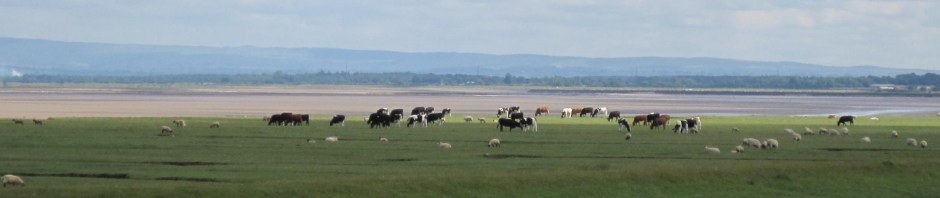
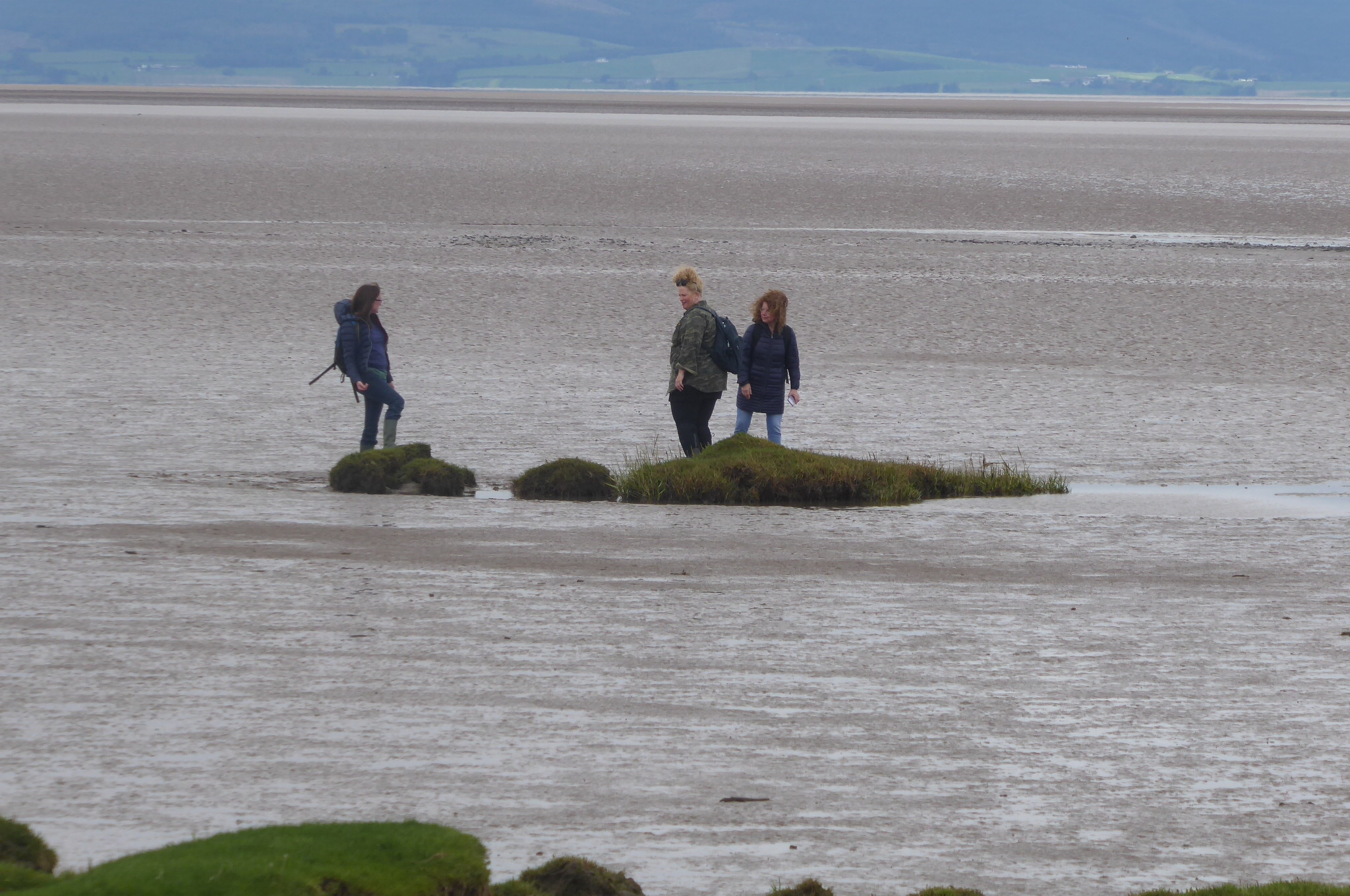
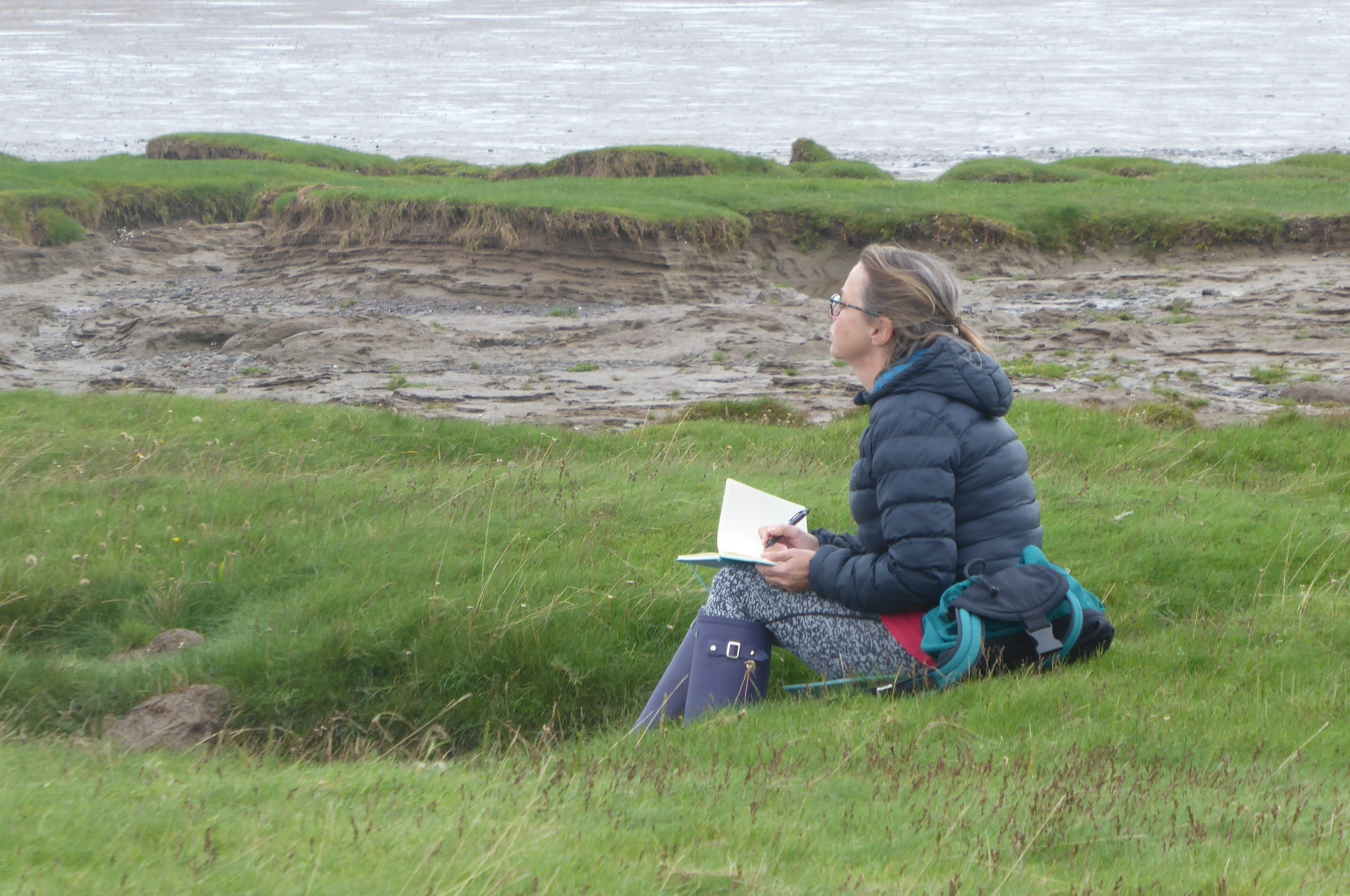
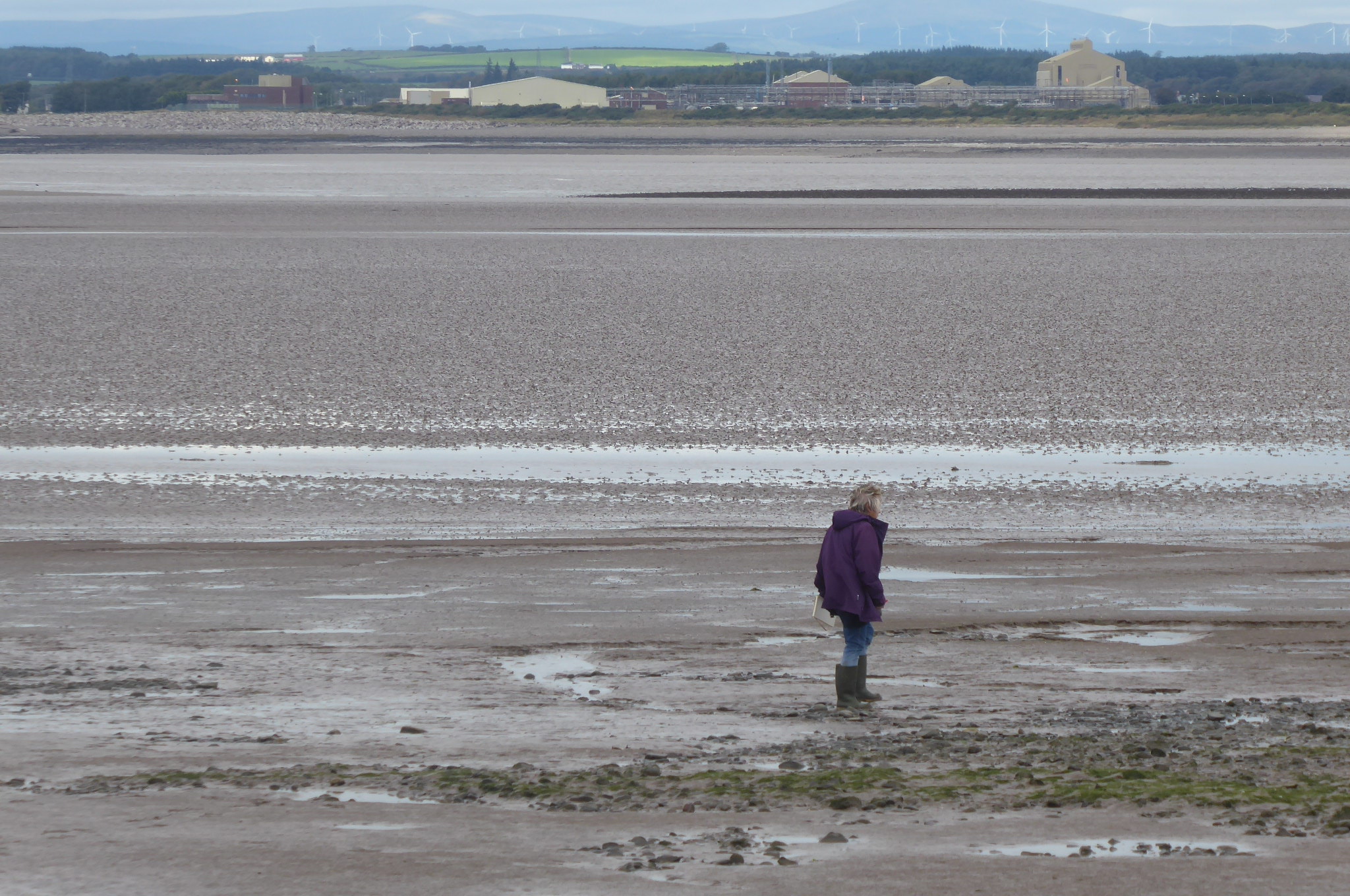
The RSPB’s Campfield Reserve near Bowness on the Upper Solway is a perfect place for a writing workshop, especially if you want to ‘experience’, think about, and write about saltmarshes; they form a land- and sea-scape that most people probably do not consider as particularly interesting or important. Saltmarshes are, according to poet Norman Nicholson, ‘neither land proper, nor sea proper’.
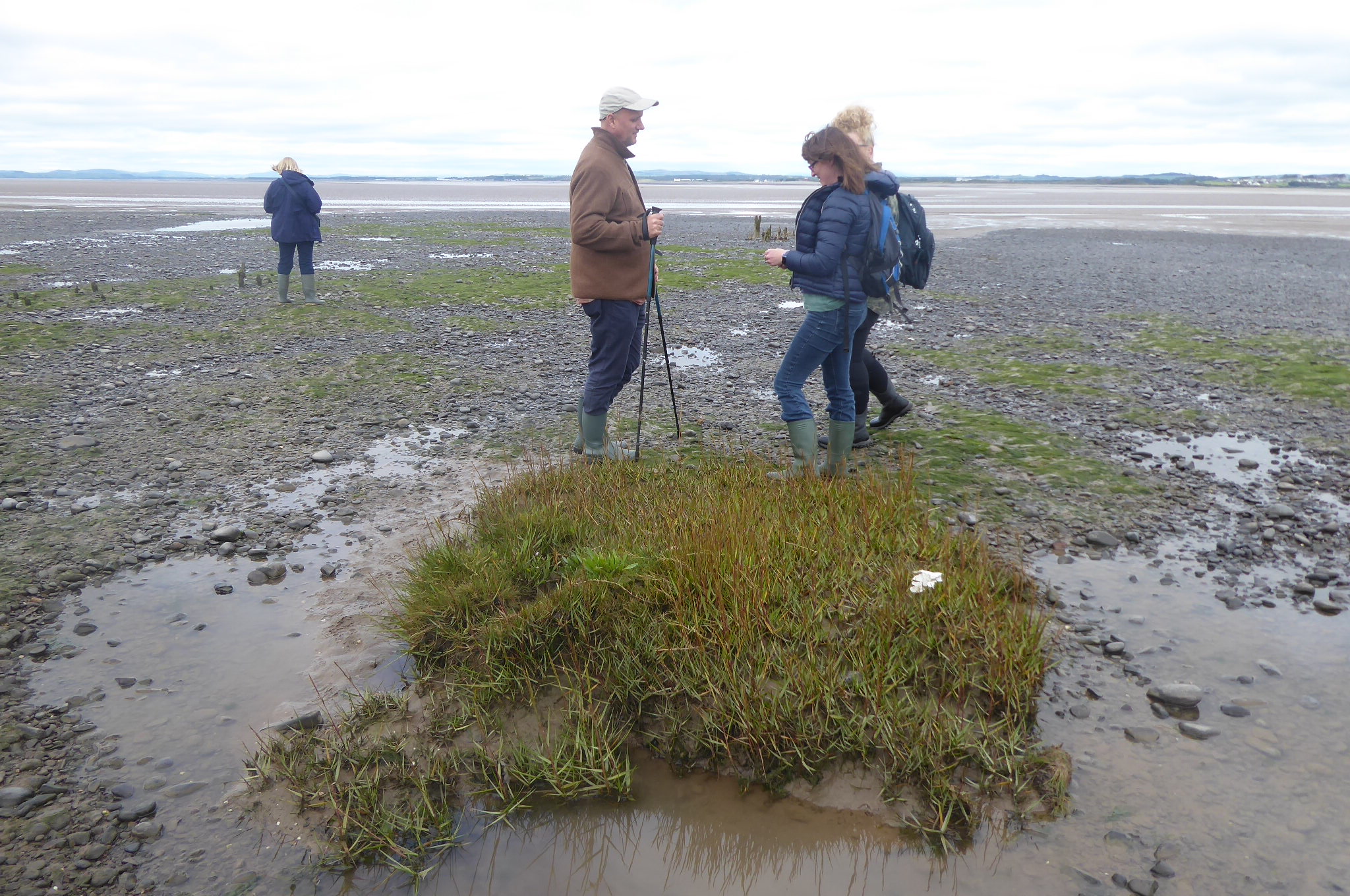
My third ‘saltmarsh writing workshop’ was held at Campfield in mid-September, timed to coincide with a low spring tide so that we would have plenty of time to explore the marsh and mudflats without having to worry about the incoming sea.
As always, my reason for running the workshop is to encourage writers to see saltmarshes in a new way, and hopefully begin to understand why they are so special – and to find a way of conveying this to other people, in their writing and conversation. The key to this is, to use Attenborough’s important statement: ‘No-one will protect what they don’t care about; and no-one will care about what they have never experienced’. Saltmarshes need our protection.
It was a day of changing patterns of light, a shifting beam that picked out fields in Scotland, pale ochre bands of sand that floored the estuary, the far-distant glimmer of the Firth, the partly-demolished towers of Chapelcross. We spent time outside – and returned mid-afternoon to watch the now high tide reaching up through the creeks into the marsh – and time inside, in the Wetlands Centre’s meeting room. It was a day of laughter, and the exchange of ideas and viewpoints (nine people offering nine completely different ways of viewing the saltmarsh and mudflats), some intense work – plus a rescued jellyfish, and a water-filled welly. I introduced everyone to some new words, too – and was asked if I could make a list so that the anyone who wanted could refer back to them, and perhaps use them in their writing.
I also agreed to post some images as aides memoires, and some links to articles that were mentioned. So, here we are, some words and pictures…
The marsh:
Some words that we used: accretion, erosion; stratification and history, ‘stories’; ‘topping tides’ and ‘mucky tides’; tiers, and pioneers; ‘merse bergs’; creeks and dubs.
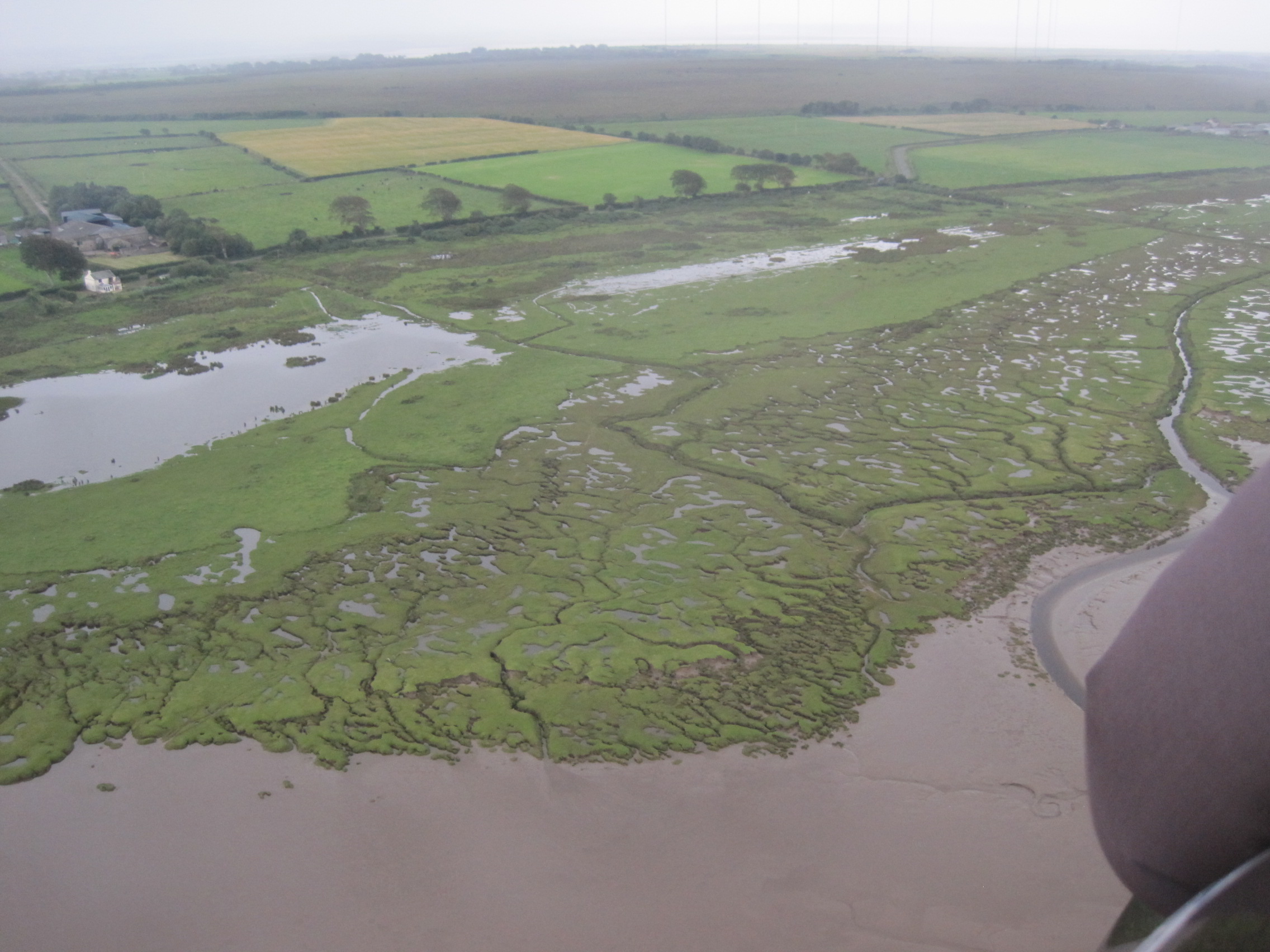
The fractal edge, intercut with creeks; and the expanding marsh at Rockcliffe between the Rivers Eden & the Esk. For more on my gyroplane flight, see this post.
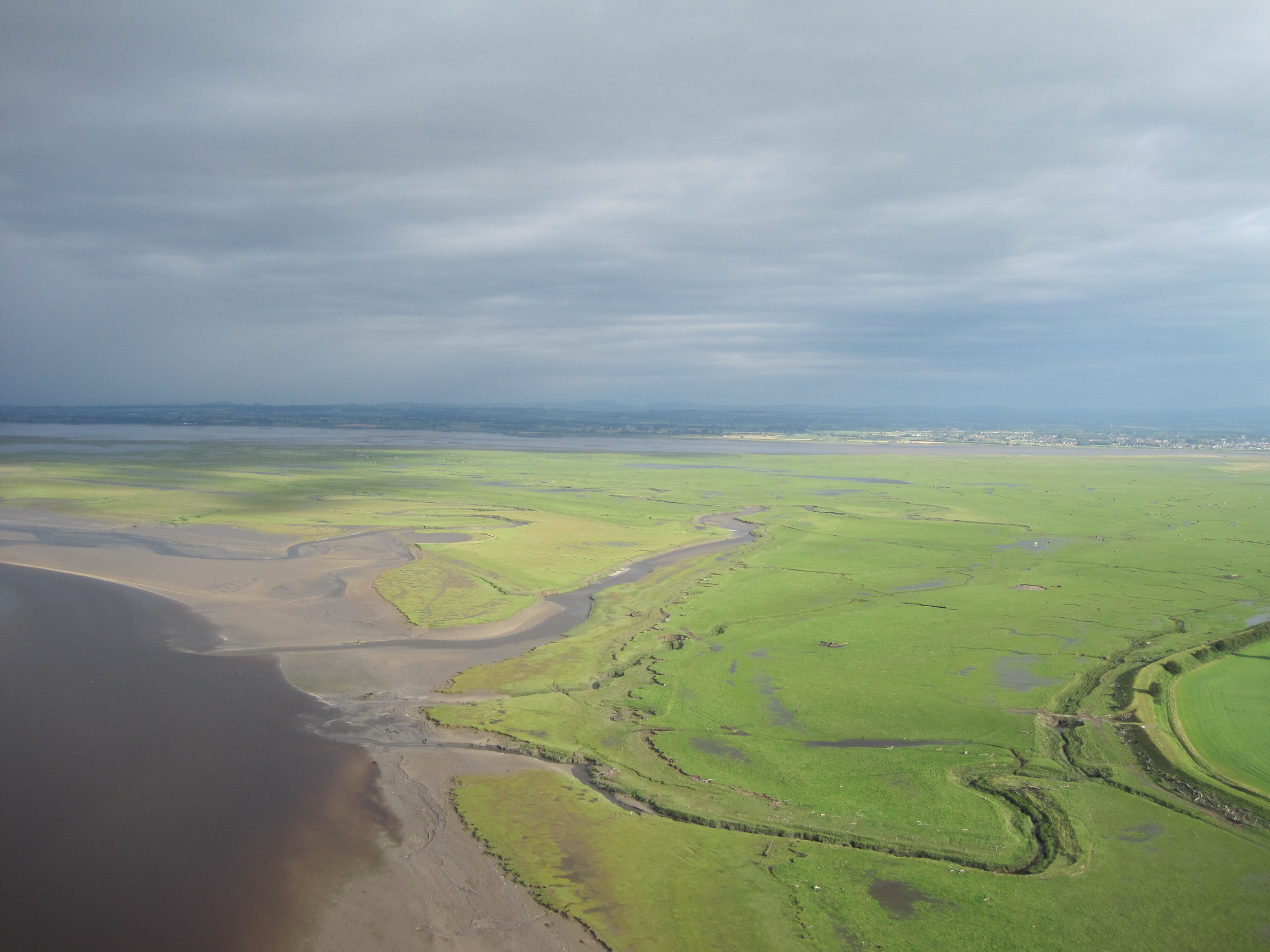
A ‘classic’ saltmarsh has three tiers, formed as it grows outwards (accretes) and upwards, gathering and trapping and compacting sediment. The new edge, next to the estuary, is stabilised by the growth of pioneer plants like samphire, Salicornia, and the ‘invasive non-native’ grass, Spartina (it originally came from America) which trap sediment between their roots and in the ‘stationary layer’ of water at their base.
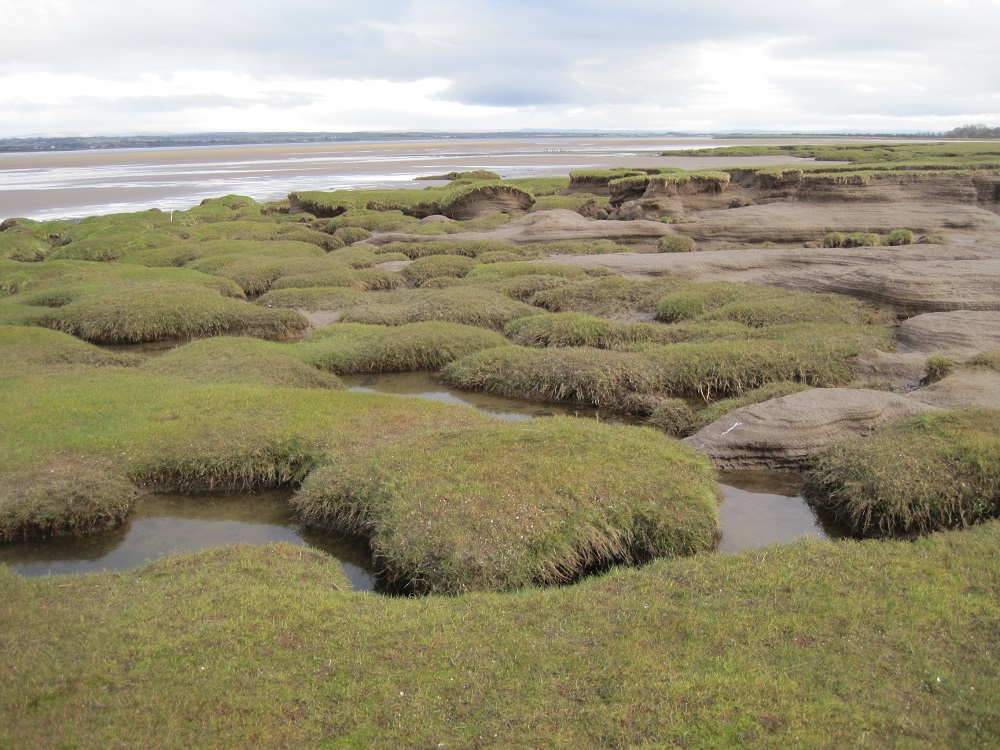
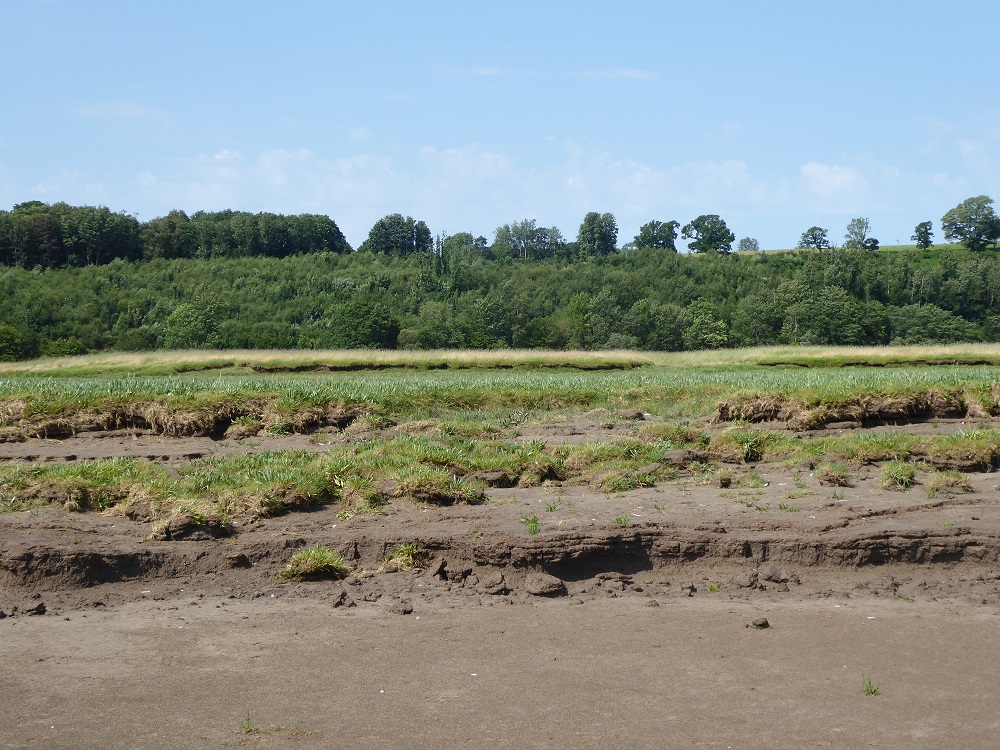
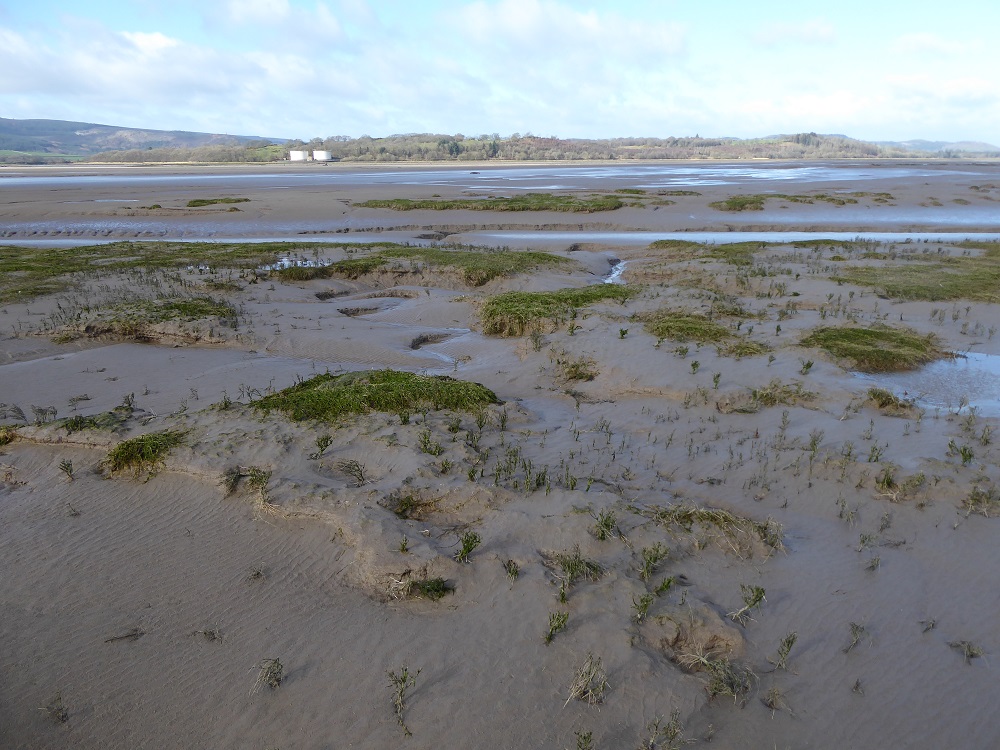
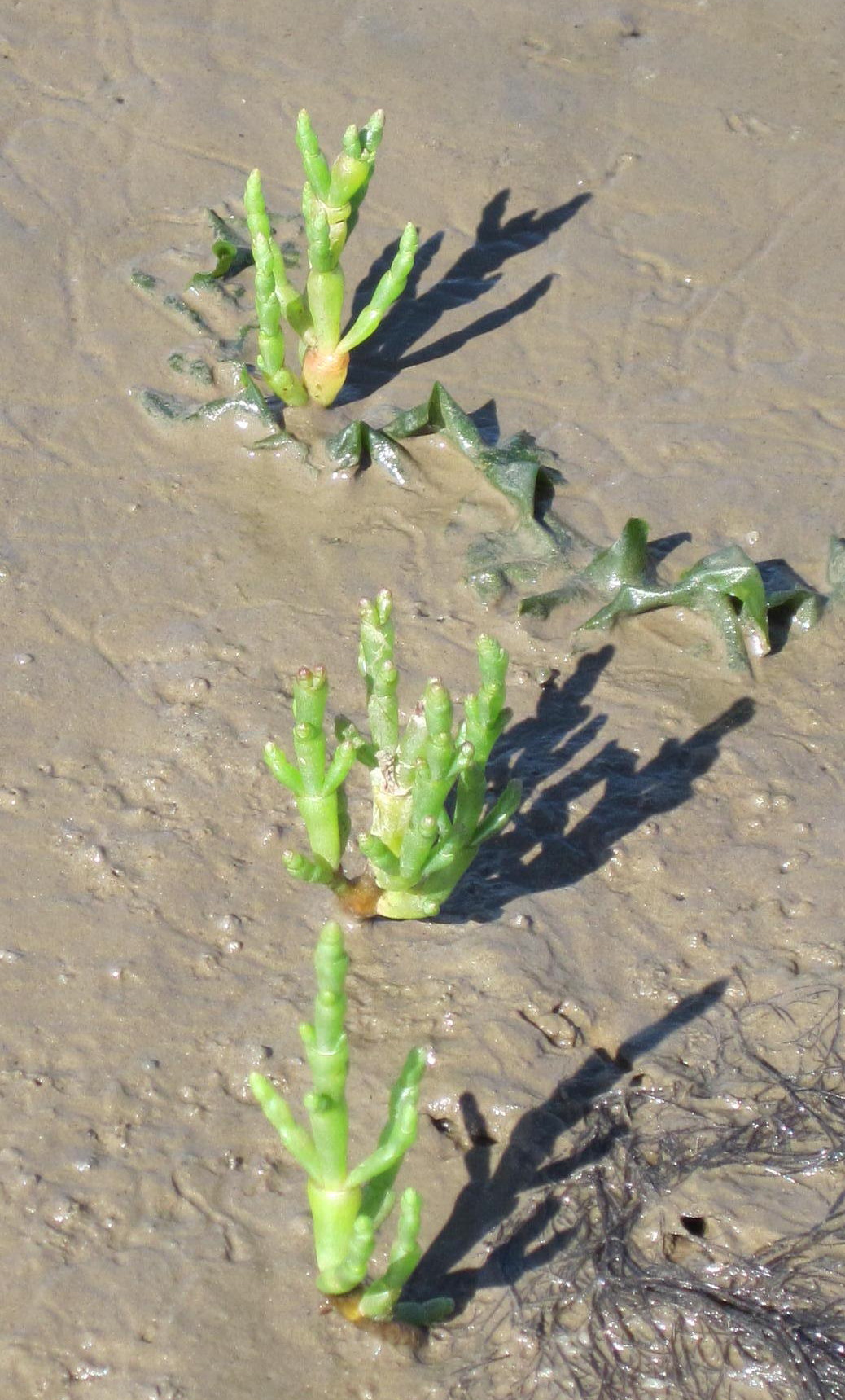
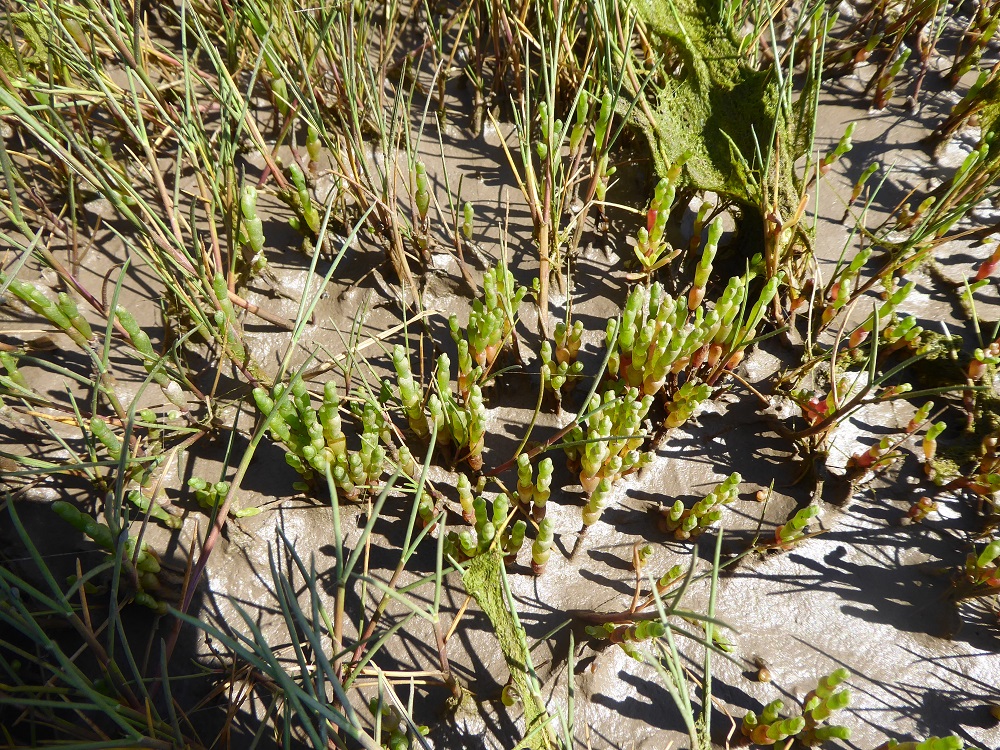
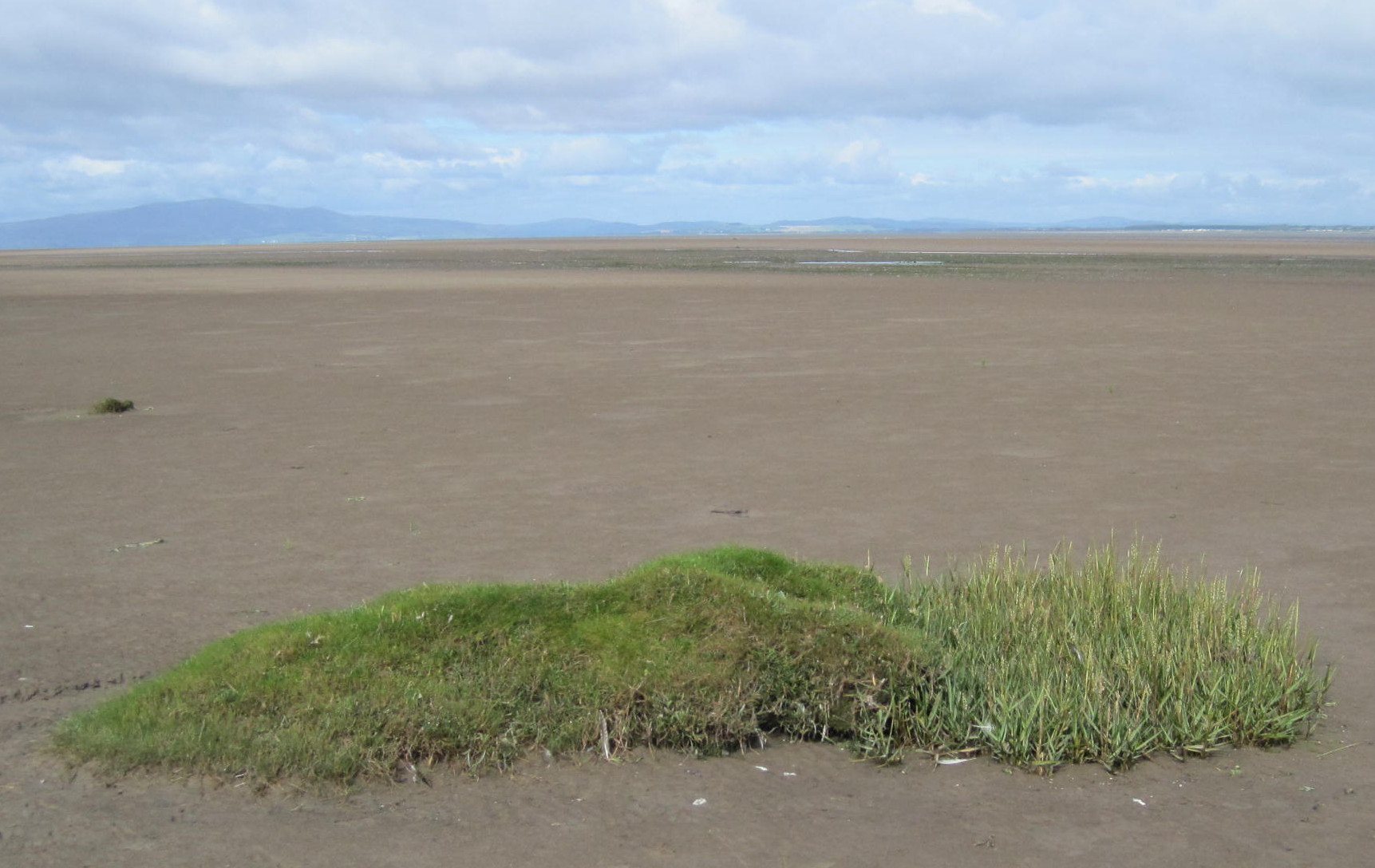
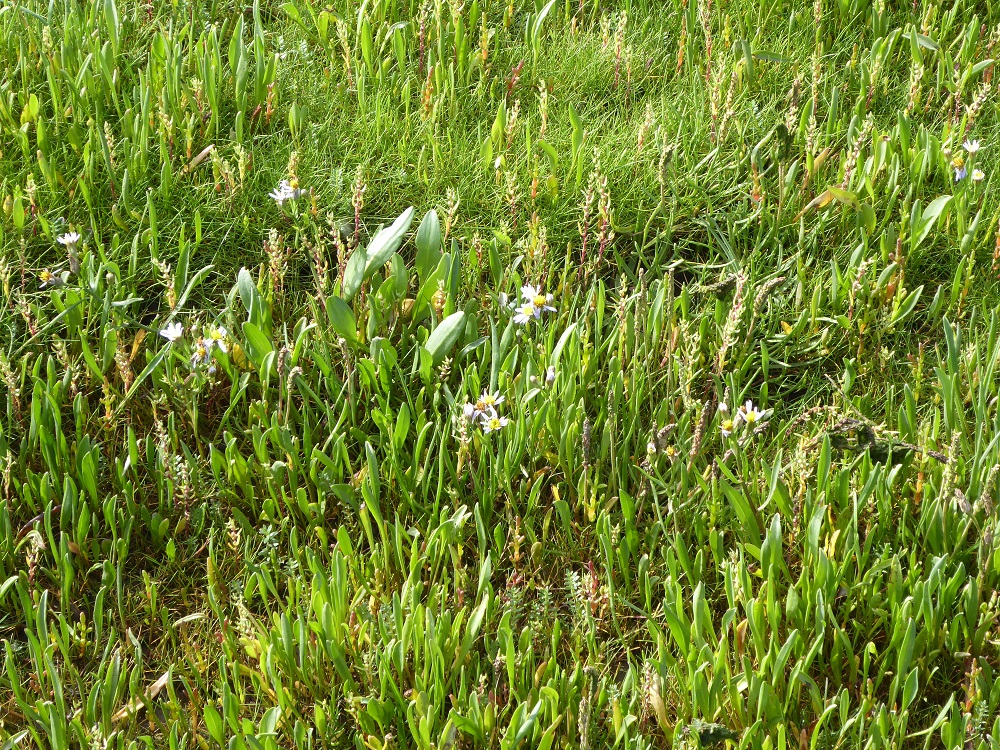
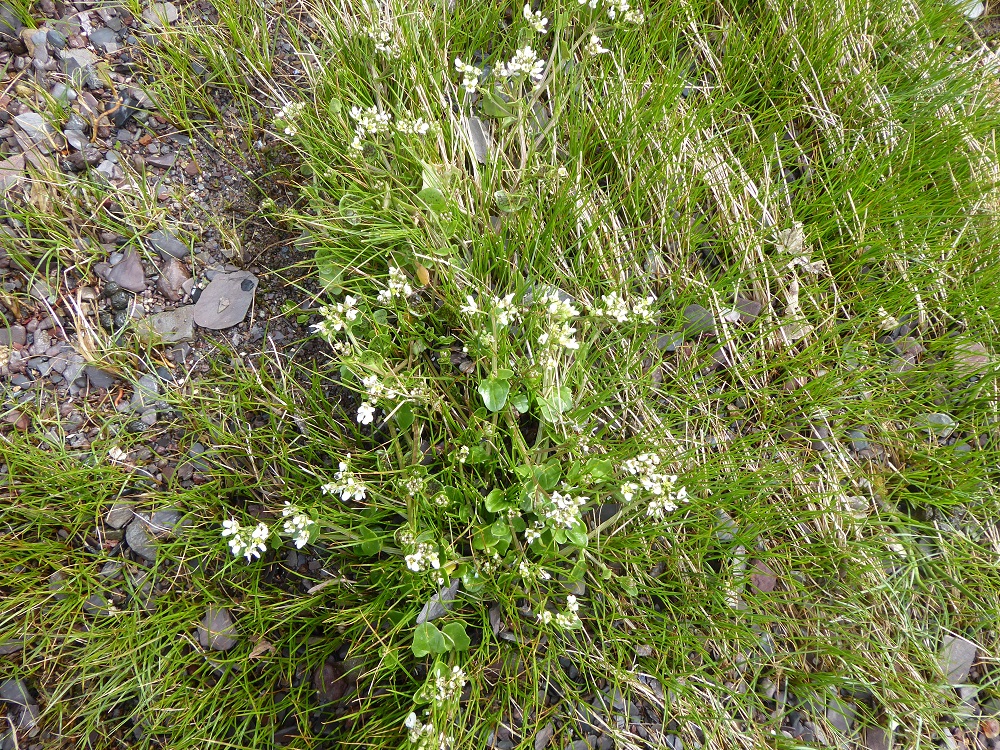
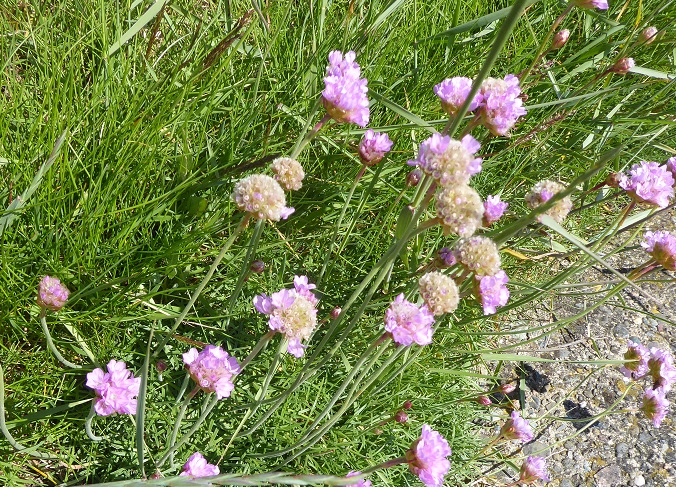
The different tiers have characteristically different vegetation, the less salt-tolerant species at the top (like gorse, rushes); many of the flowering plants (salt-tolerant ie halophiles) are in the middle layer, flowering at different times of year (only a few asters were in flower when we were there).
Sediment is deposited over the years, decades, even centuries: each layer tells a story – of weather, climate, sea-level, human activity.
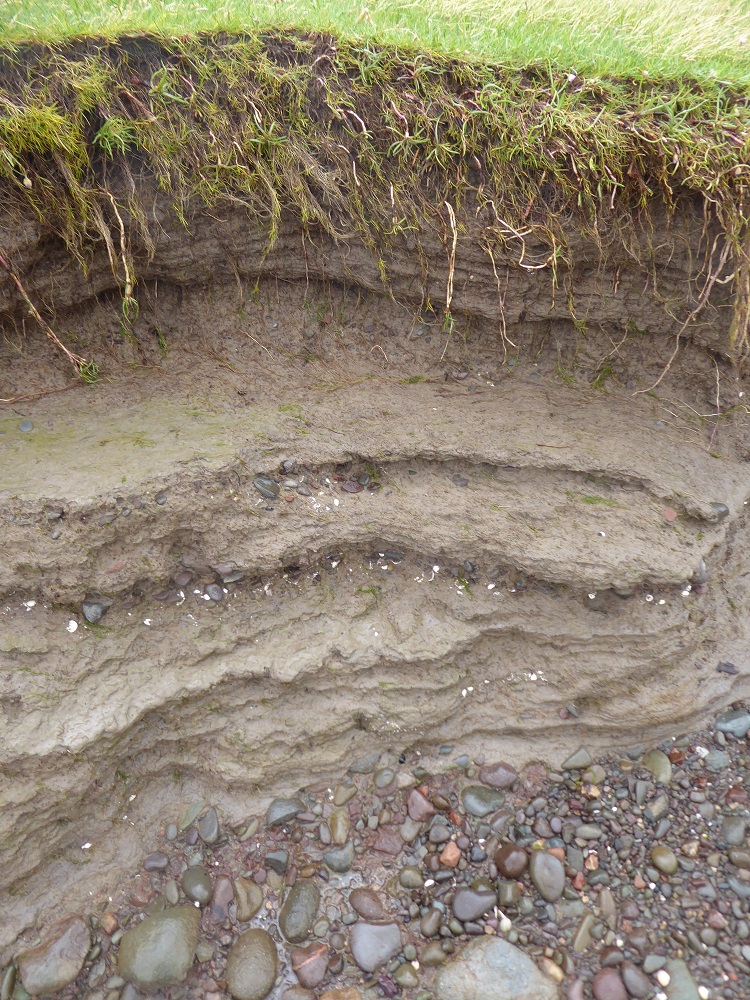
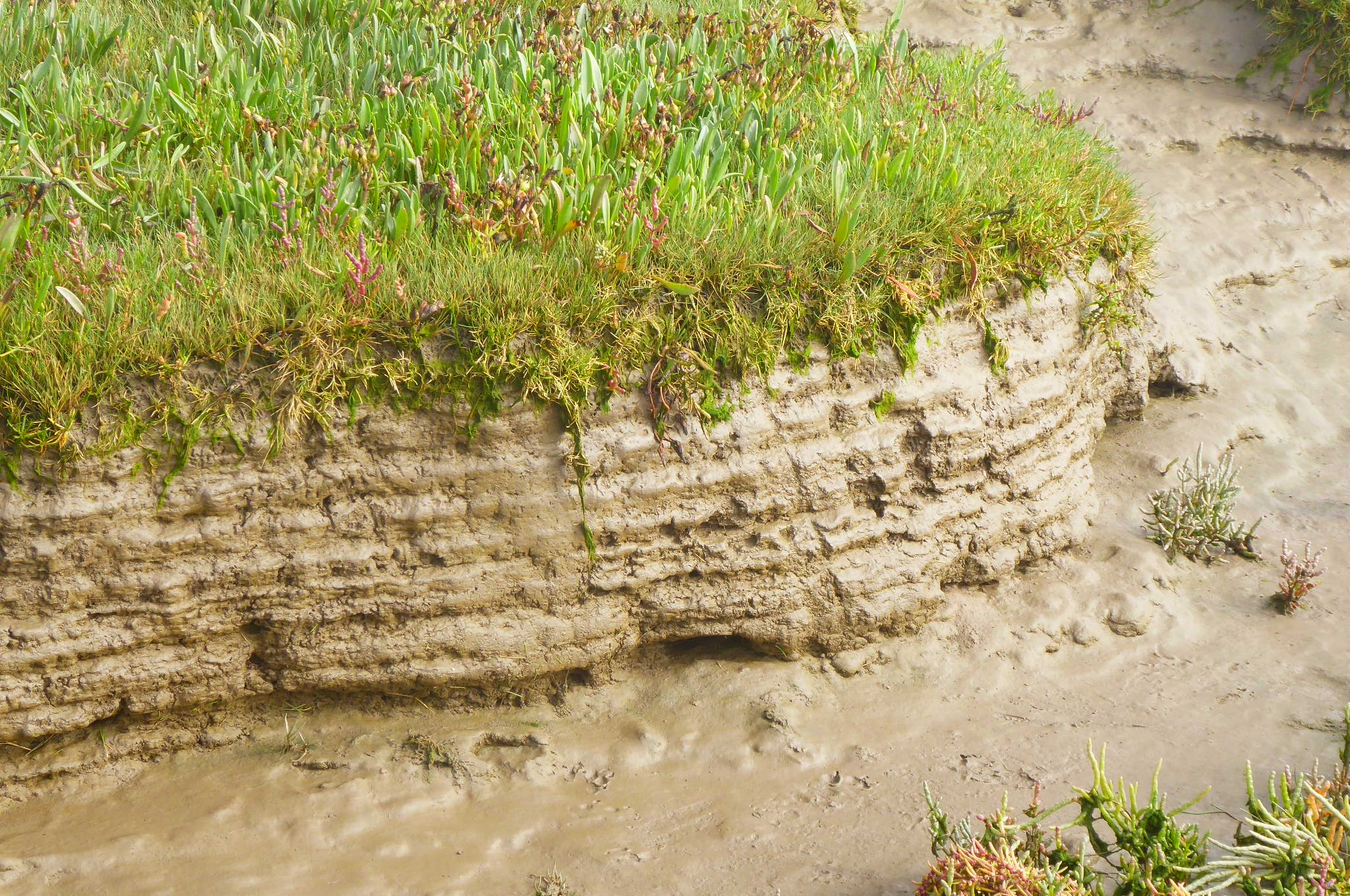
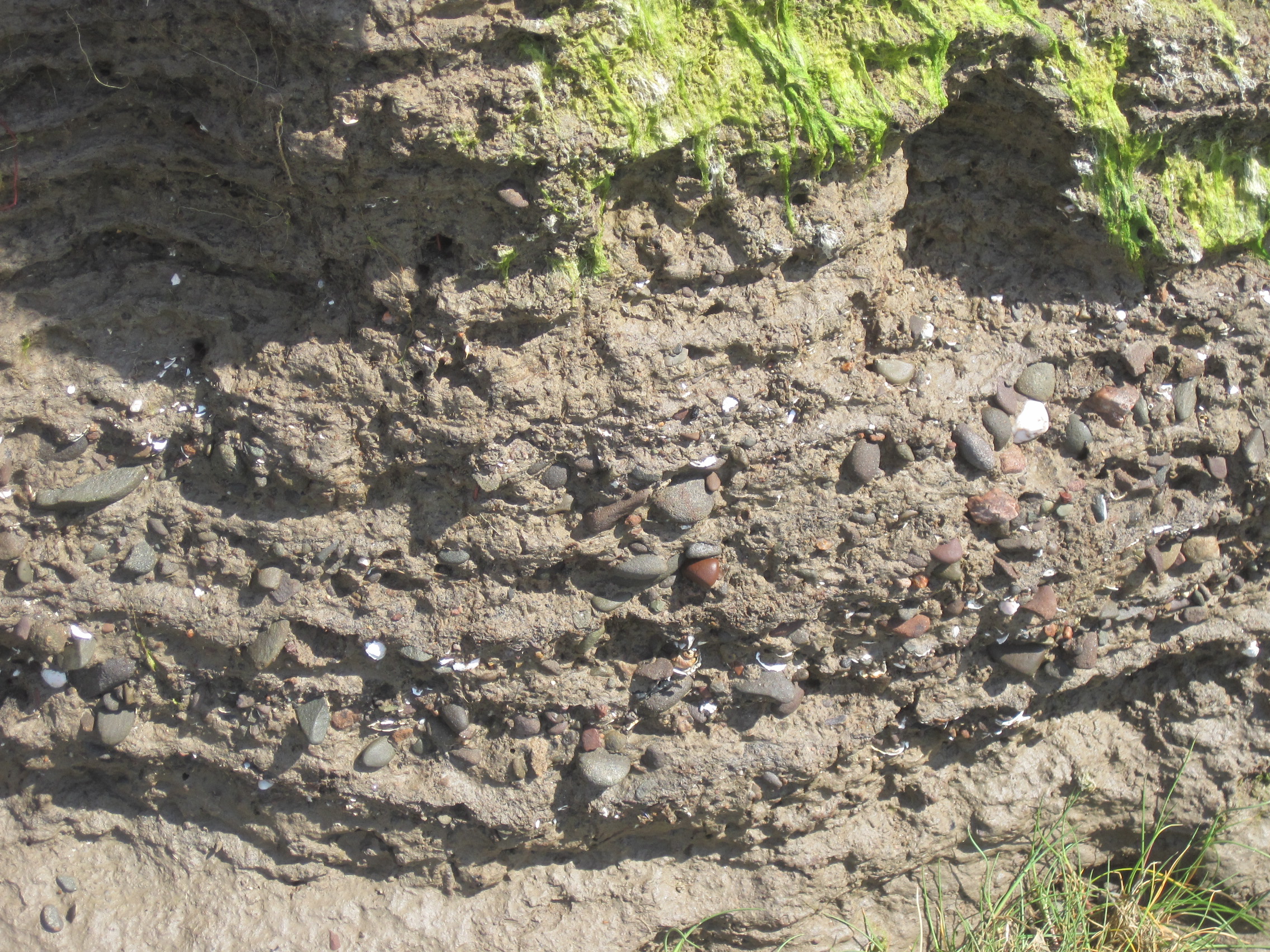
Sediment is dumped in very high or stormy tides – the Solway is famously brown after storms, resulting in ‘mucky tides’, ‘topping tides’.
There’s more about Rockcliffe Marsh here.
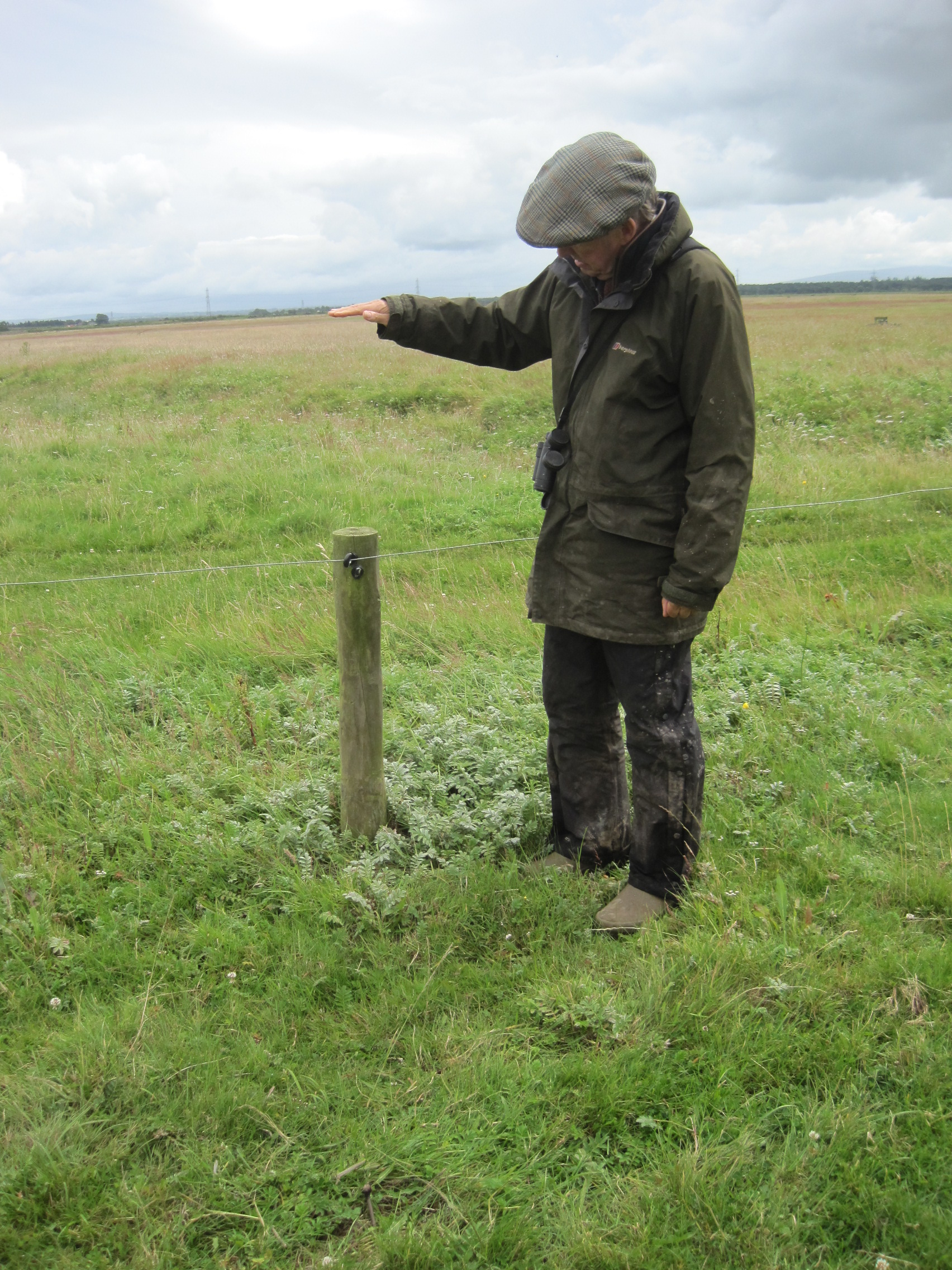
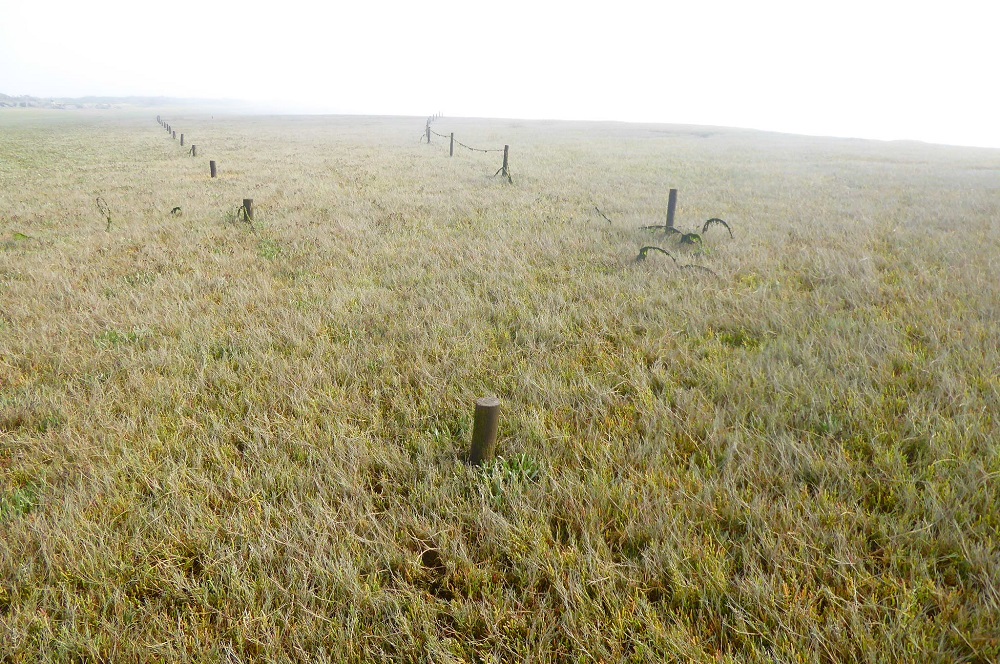
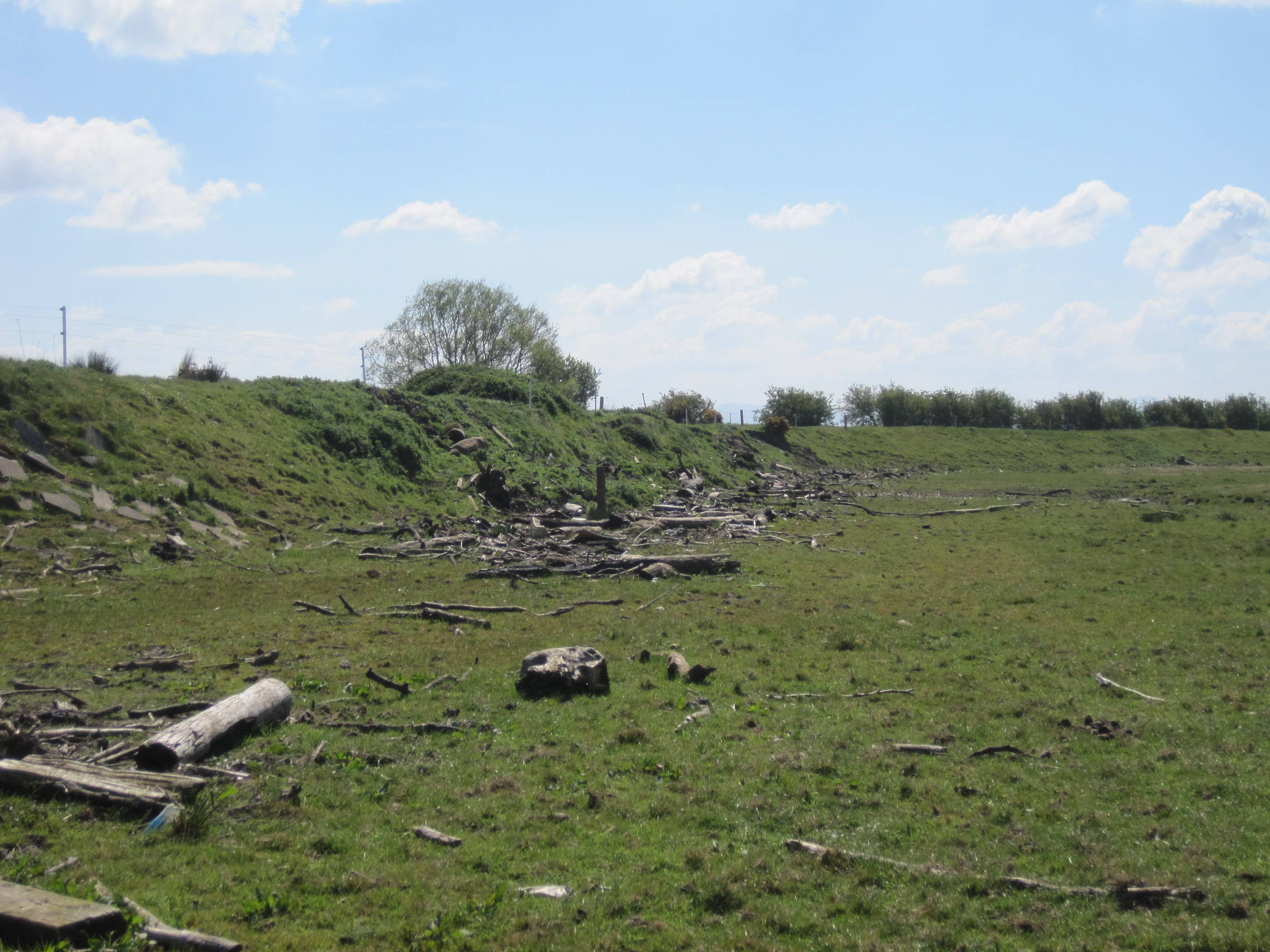
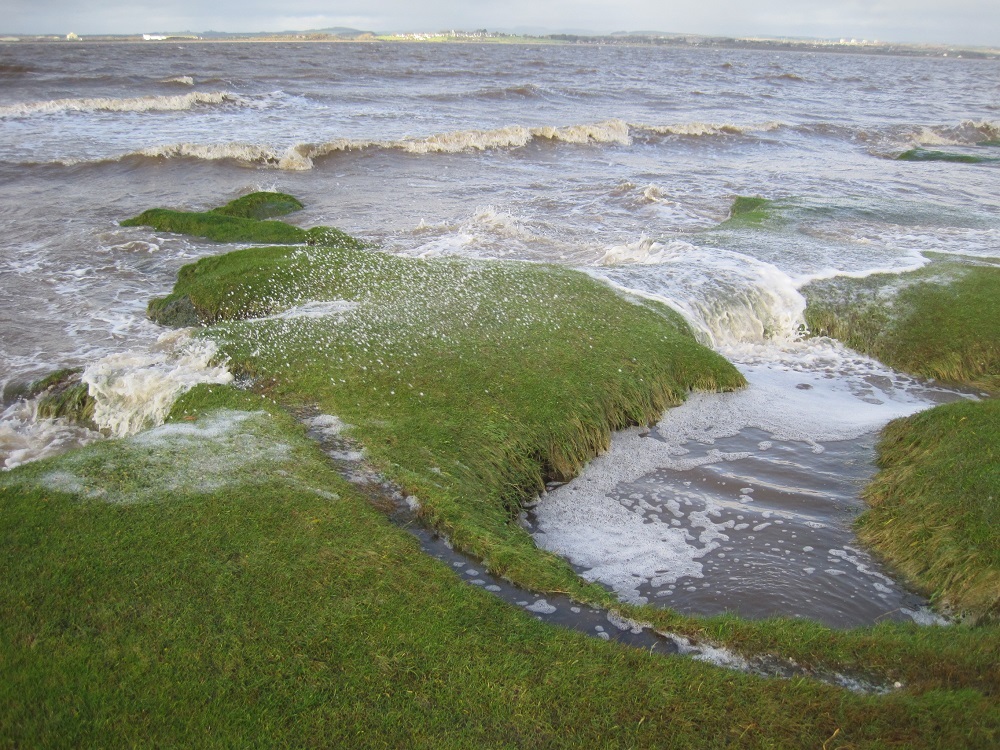
But the crenellated edges of the marsh – the creek-mouths and the dubs (‘pools’ or hollows) – dissipate the energy of the waves. Saltmarshes are an important intermediary between the water and the land.

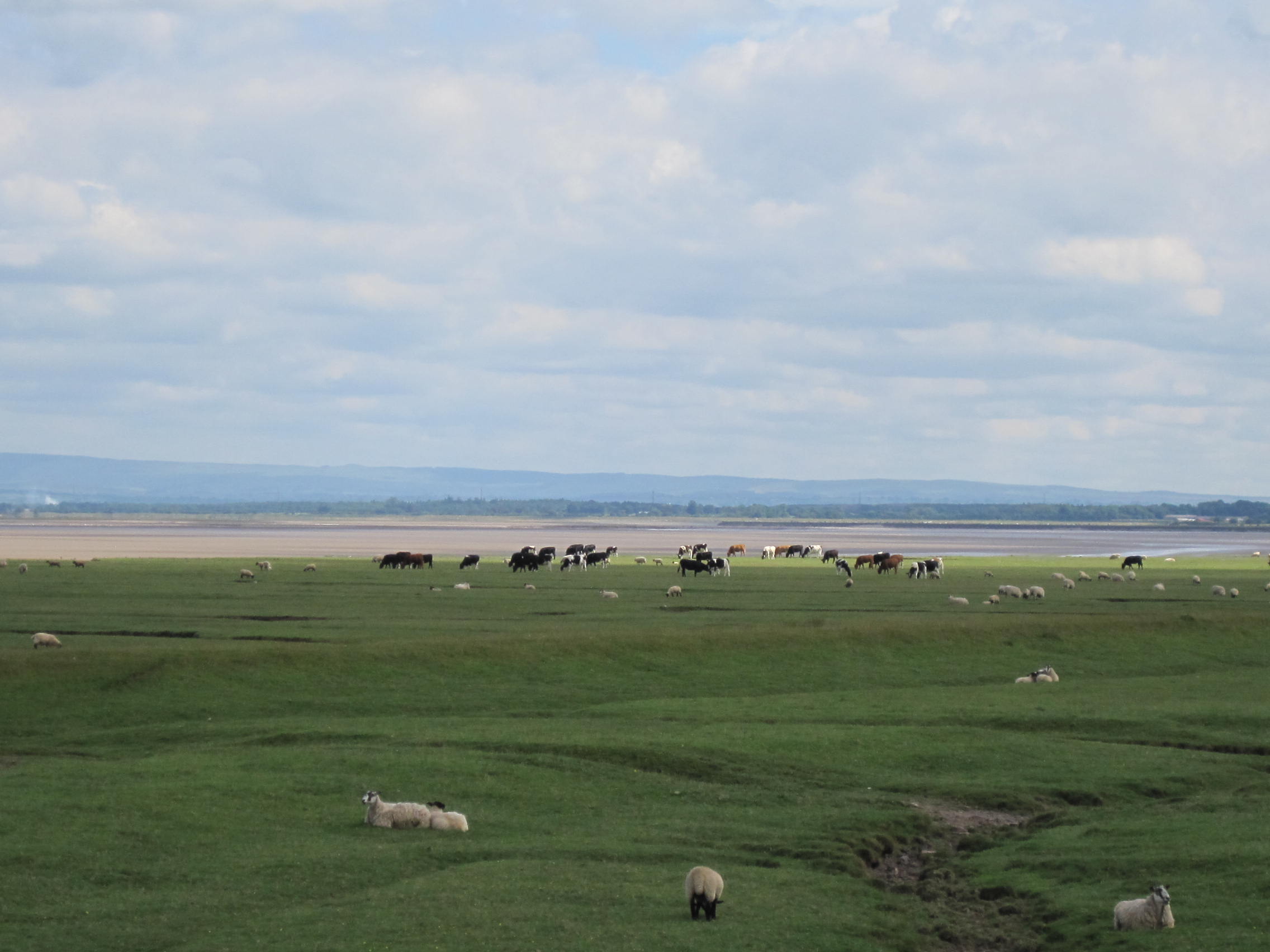
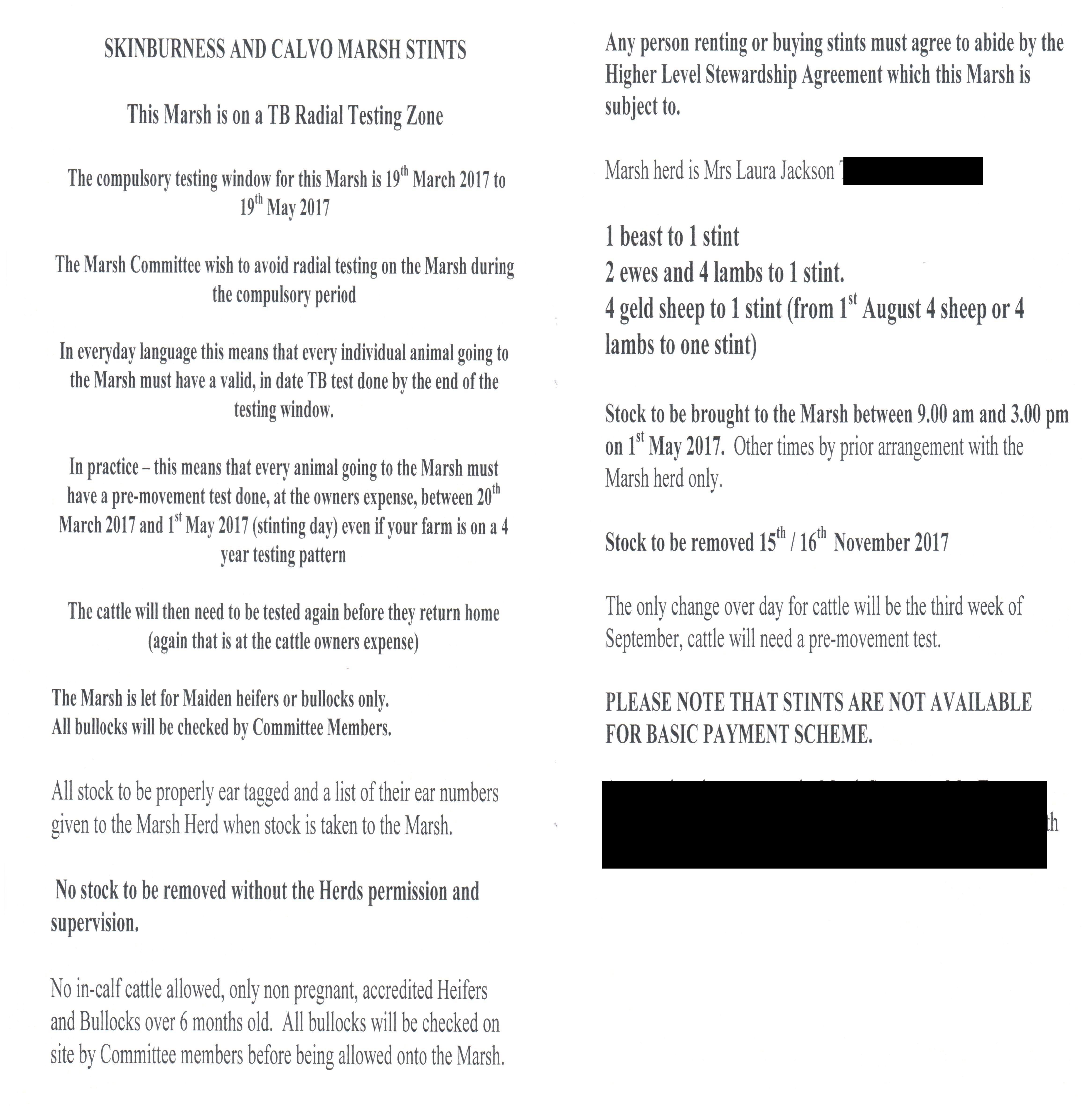
Human activity on the saltmarshes includes farming – the grazing of livestock during the summer months. On the Cumbrian coast, marshes are divided into stints, the grazing of which is auctioned each year.
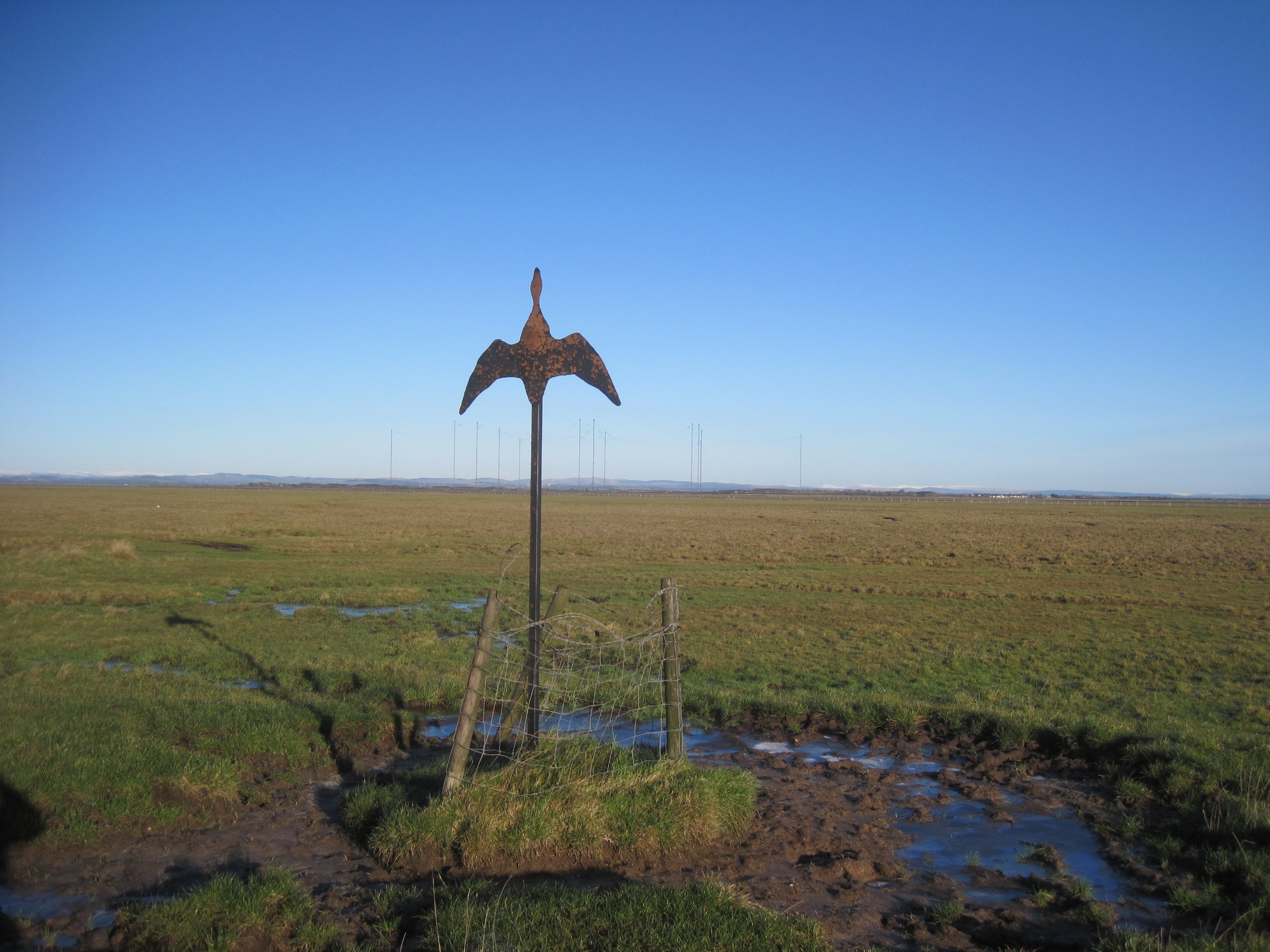
Wildfowling is permitted on Calvo & Border Marshes and Rockcliffe on the English side, between September-February; permits are necessary and the numbers and species of birds regarded as targets are strictly regulated. The rules are different on the Scottish side, although tightly regulated at Caerlaverock, for instance. See the final chapter of The Fresh and the Salt for a discussion of this (nuanced) topic.
The mud:
Microphytobenthos (MPB): the bacteria in the top layer of the mud and the marsh, which migrate up and down depending on the amount of light and the state of the tide. Photosynthesis – using, thus ‘storing’, carbon dioxide – the top layer of bacteria and the middle layer of cyanobacteria need light and oxygen; sulphide-using bacteria in the black, anoxic layer, do not, and do not photosynthesise.
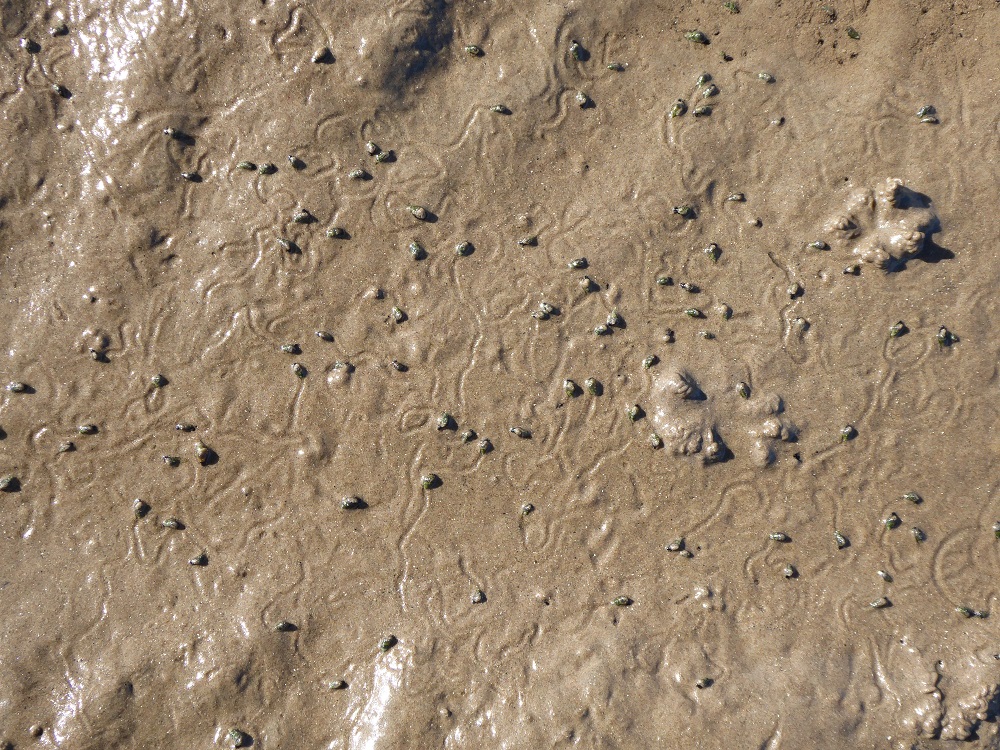
Mudshrimps (Corophium), mudsnails, ragworms, and lugworms – live in or on the mud.

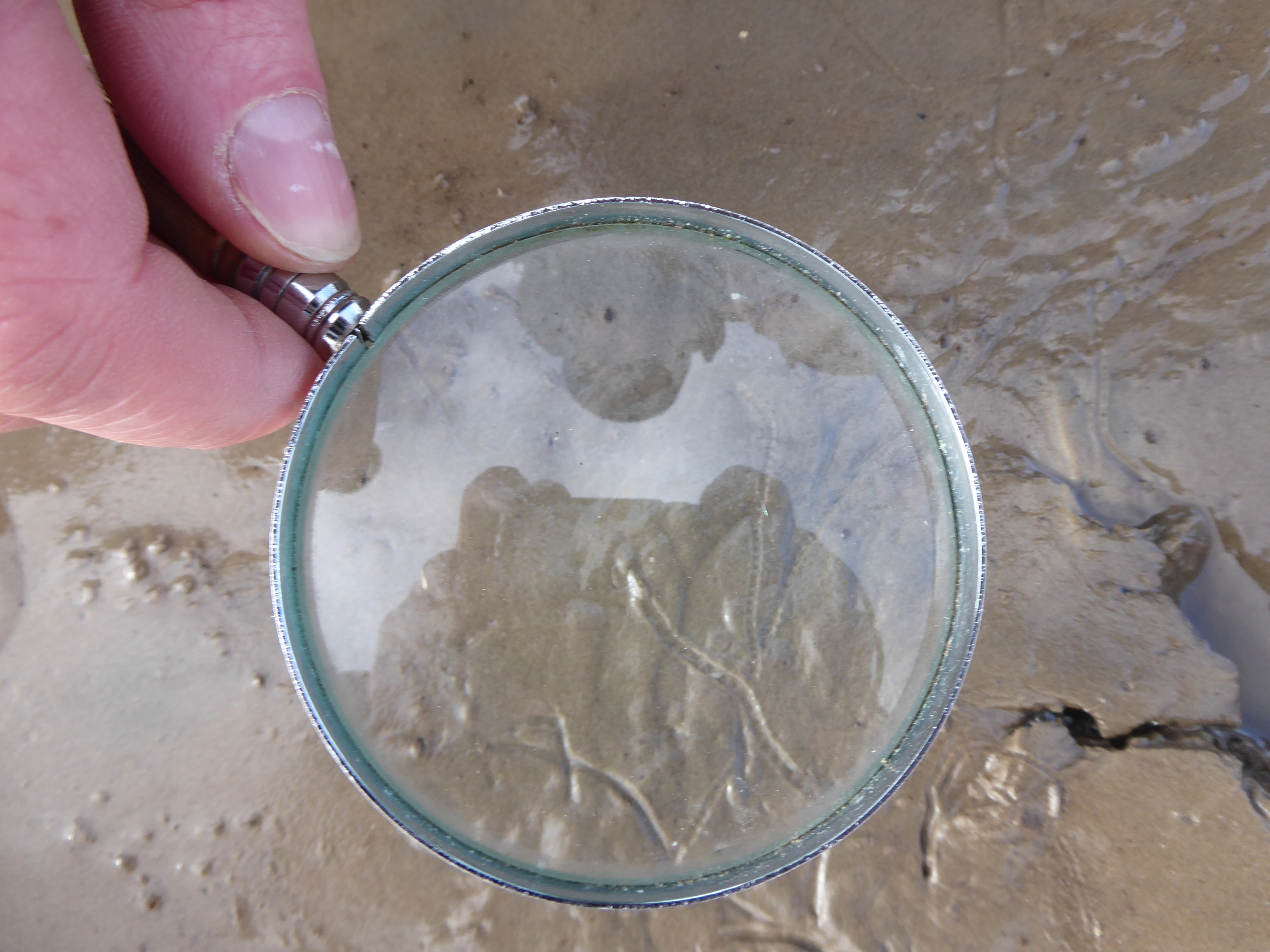


Corophium limbs and how the animal feeds – the ‘naming of parts’ blogpost – with a link to Jenny Bell’s song. The blogpost also refers to bioturbation and bioengineering – and silk-lined burrows!
Tides and tidal bores:
We touched on this briefly: bores on the R Nith, the R Wampool, and up near Burgh marsh, for example There are images and weblinks in this blogpost, and videos of the bore on the R Wampool here (scroll down to the bottom of the page).
Tidal charts are here – choose your piece of the coast.
Miscellaneous:
For the former Solway viaduct, damage to and repair of Bowness Common (peatbog, part of RSPB Campfield), and the Solway Junction railway, see Crossing the Moss.
Writing:
Norman Nicholson. Collected Poems. ed Neil Curry, (1994) Faber & Faber
Discussions and insights into ‘new nature writing’: just a few references here (there are more recent articles too, but mostly ‘re-inventing the wheel’ – the topic has been around for a while and it’s easy to get bogged-down).
Alex Preston https://www.theguardian.com/commentisfree/2018/jan/14/landscape-belongs-to-us-all-stop-romanticising-it-michael-gove?CMP=Share_iOSApp_Other “ The very idea of landscape implies separation and observation.” …“In order to preserve what is precious, we need to understand the source of its value. Before we change our landscape, we need to change the perspectives of those who look upon it.”
George Monbiot’s Gaia talk https://www.youtube.com/watch?v=uE63Y7srr_Y
Peter Reason’s blog. On writing the world: the Cocker-Macfarlane exchange https://peterreasondotnet.wordpress.com/page/20/
Richard Mabey: owls as neighbours https://www.littletoller.co.uk/the-clearing/owl-winter-richard-mabey/
Carbon-storage and protecting the coast
This is now a topic of major importance: bacteria and plannts sequester carbon dioxide, taking it out of the atmosphere, during photosynthesis, and as they die and are buried, so that carbon is stored. Damage to saltmarshes (like damage to peatbogs) releases the stored carbon again, as carbon dioxide. Many efforts are being made to map the extent of marshes around the coast, and to protect and restore them where possible.
Hopefully, after our writing workshop and discussion, you’ll now understand a bit more about the drama and dynamics and uniqueness of the saltmarshes, and will stand up for them when they are under threat.
And spread the word in your conversations and writing; pass on your experience. Remember, ‘No-one will protect what they don’t care about; and no-one will care about what they have never experienced’.
 Solway Shore-walker