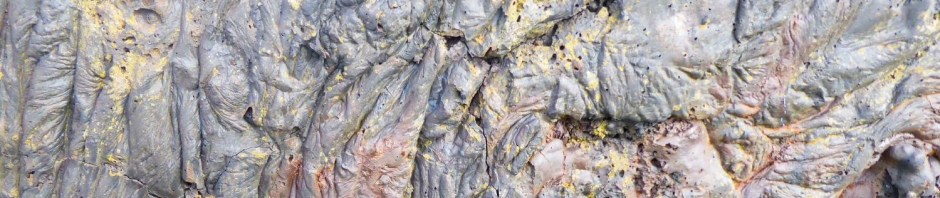
As I write this, the twelfth eruption in four years of lava and magma is occurring on the Reykjanes peninsula in the South-West corner of Iceland. Webcams, aerial videos from drones, and photographs capture the flows and colours and forms of the fresh and cooling lava. There are lumps of shiny black obsidian and the thin glassy spikes of Pele’s Hair, and the smooth swirling waves of pahoehoe. Aerial views of the insides of earlier, now dormant, cones show walls that are coloured purple, ochre, red and black, impregnated with burnt minerals.
A few years ago I wrote about ‘the volcanoes of Workington’ – the platforms of slag on the shore and the multi-coloured faces of the cliffs, the very visible remnants of West Cumberland’s industrial heritage: slag that was scooped off the top of the iron-smelting furnaces and dumped, still white-hot and molten, into trucks or ‘ladles’. Pulled by a small locomotive along rails above the shore, each chain of ladles was tilted, one by one, and the slag poured from the cliff down to the shore. There are links to photos from that time in the ‘volcanoes’ blog, but you can get a very good idea of the tipping process from this video taken at a smelter in America (the ladles are here referred to as ‘pots’; my thanks to my geologist husband John Lackie for finding this link).
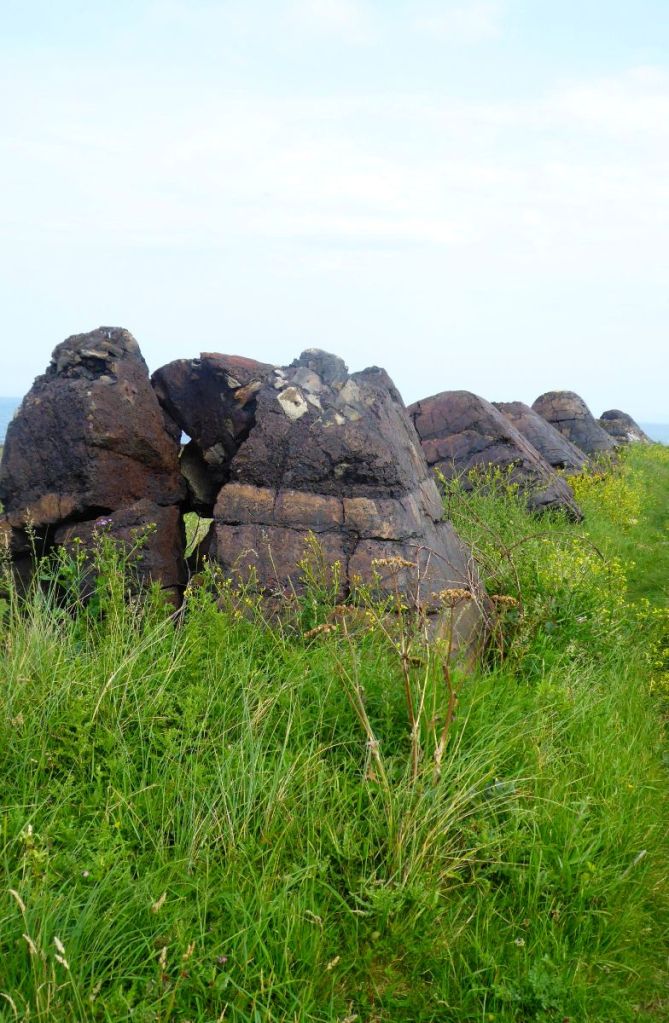
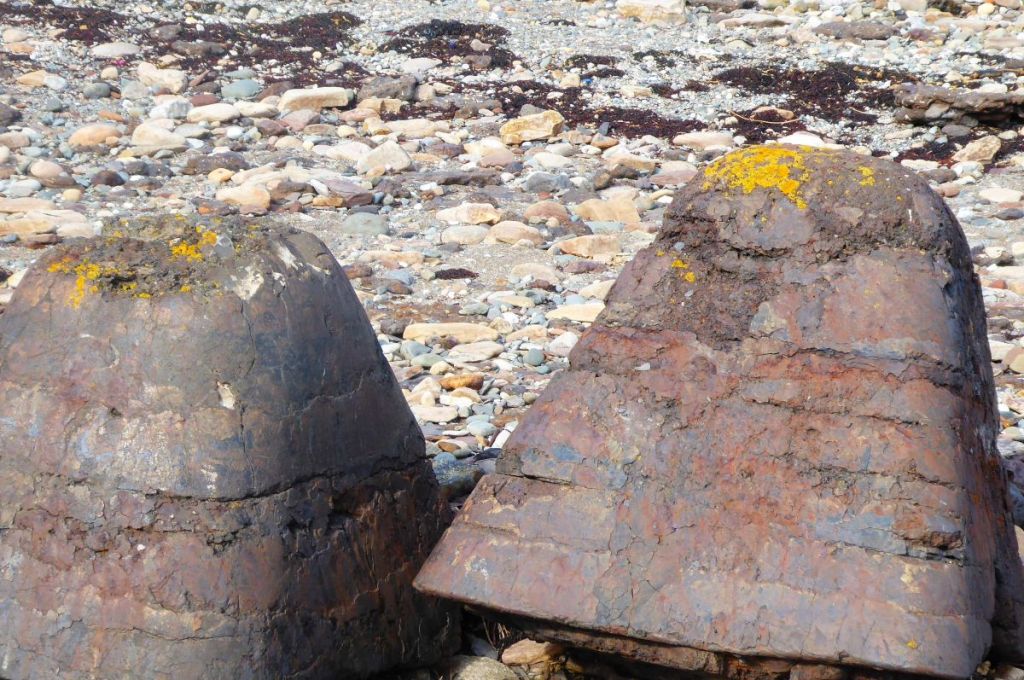
The shore to the North of Harrington marina is even more dramatic than that shore near Workington, almost extravagantly so. If you leave the sailing club’s carpark and head North, almost immediately you reach a line of tall, reddish-brown pyramids, their tops truncated and smooth. They are the solidified contents of the ladles or tubs, up-ended onto the shore. They vary individually, with different patterns of colours and textures; some have a pattern of rough squares on their faces, imprints of the ladles’ linings. There are occasional small yellow patches where lichen, Caloplaca, has found a foothold and started to grow.


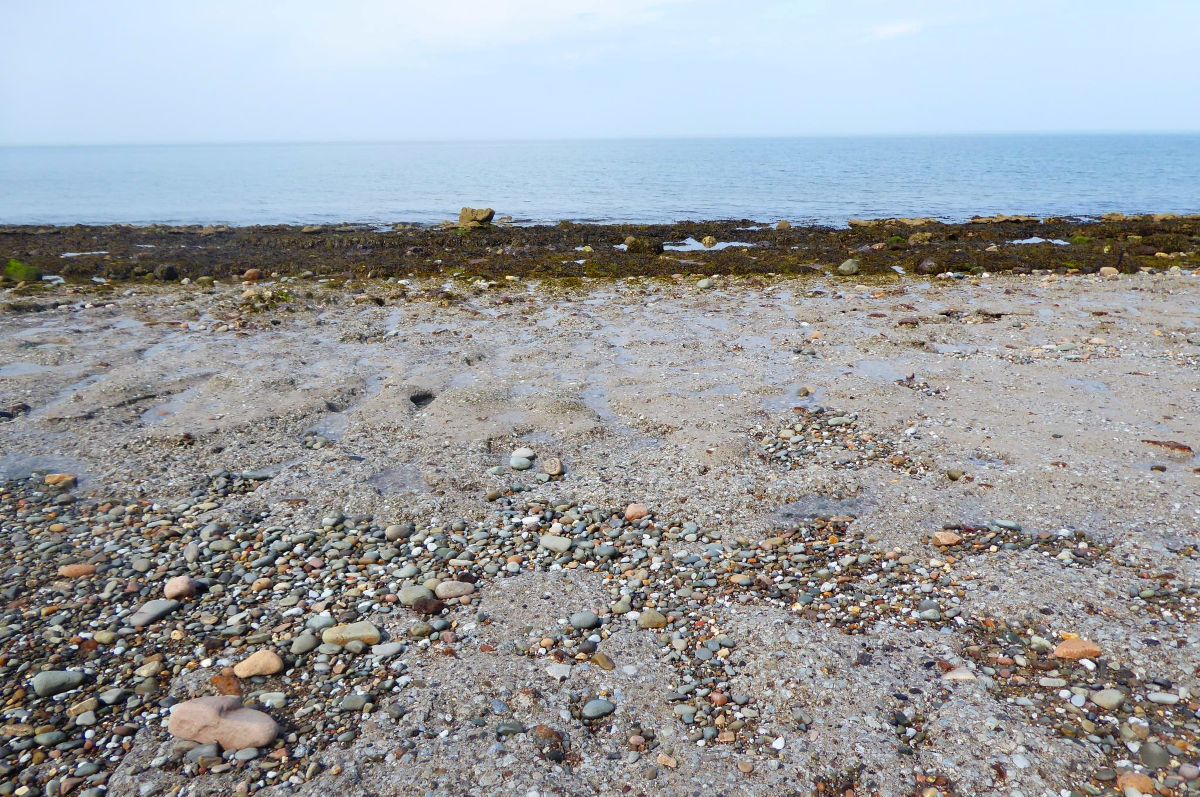
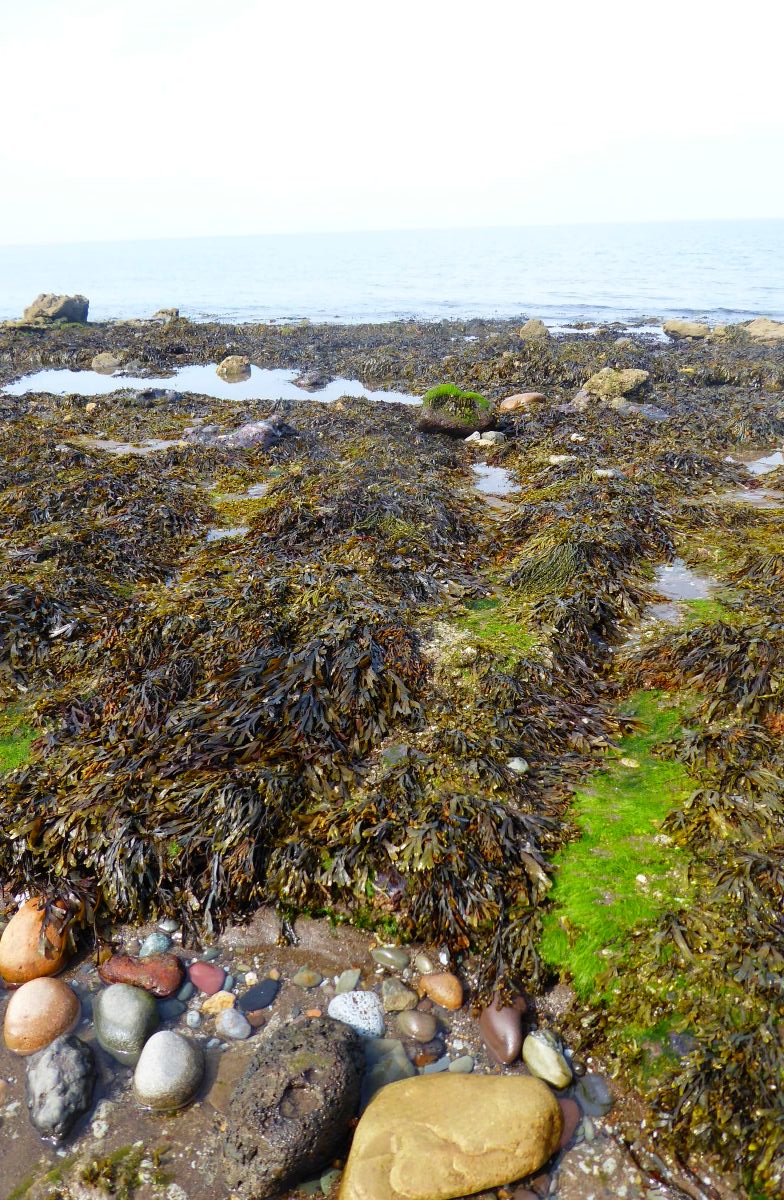
Keep walking along the rough grassy-edged path and then clamber down onto the shore. Between you and the edge of the tide is a greyish platform, flecked with green and blue and brown pebbles. Near the top of the shore it’s bare and rough, but from about mid-shore the algae, green and brown, are starting to colonise it, and provide shelter for sturdy marine creatures like barnacles and winkles.

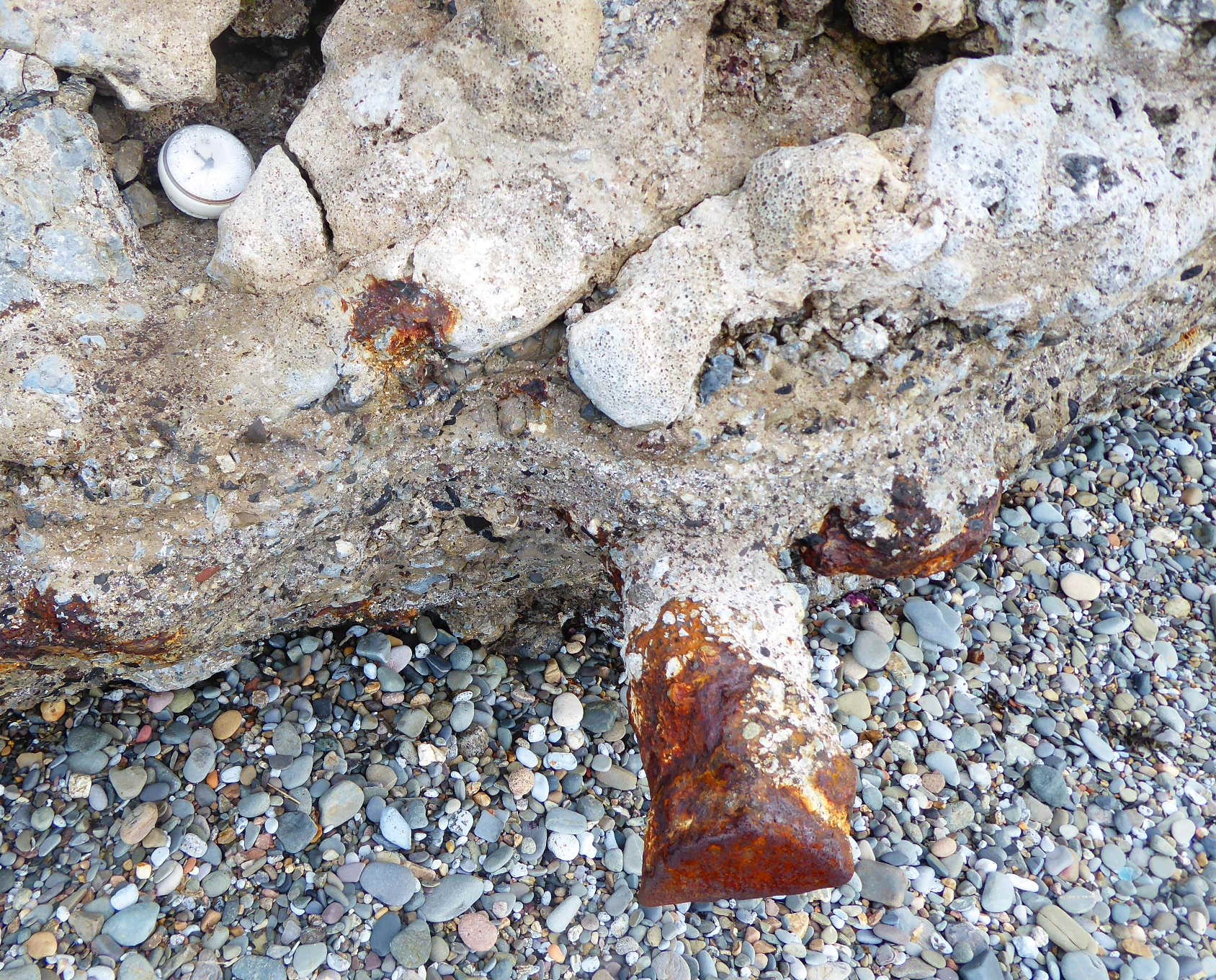
At your back, at the top of the shore, is a cliff. And when you turn the corner there is an astonishing sight. A tall and undulating cliff stretches North for hundreds of metres, as vertical as the famous White Cliffs, but hollowed and sculpted by the waves and the vagaries of tipping – for this magnificent cliff is made entirely of slag, interspersed with the reddish-brown of ore and the impurities of the smelting process. In a couple of places, rusty iron bars protrude, perhaps broken bits of the rails on which the train pulled the ladles.


It seems impossible that such a huge element of the landscape has been manufactured, a dump of materials, brought up from below the ground, and burnt.

How many thousands of ladles were dragged along this stretch of the coast to deposit glowing-hot, molten waste? It is such a strange place, so improbable and unexpected, that it’s hard to leave. But the tide is in charge and we need to retreat to the path at the top of the shore.


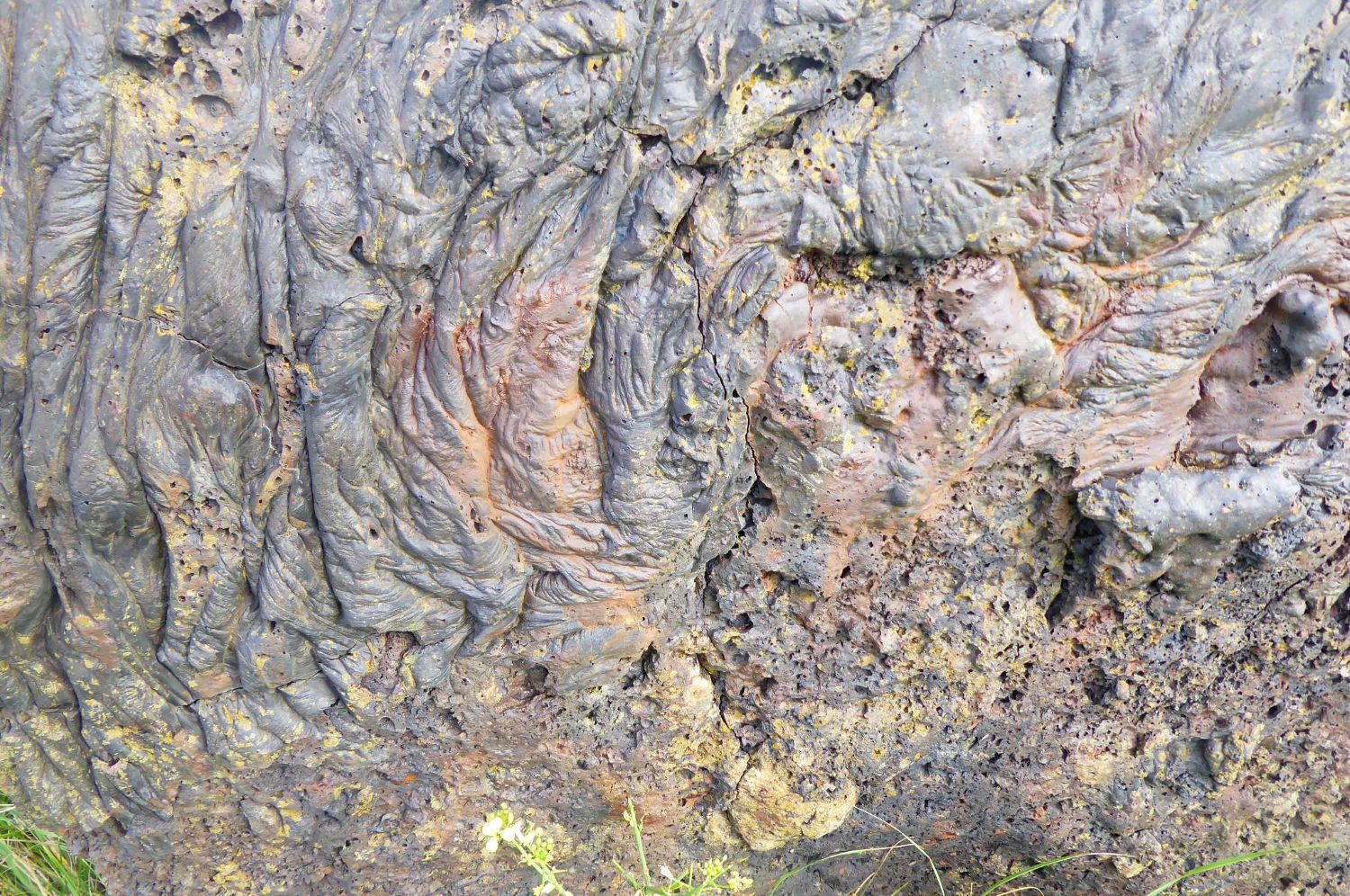
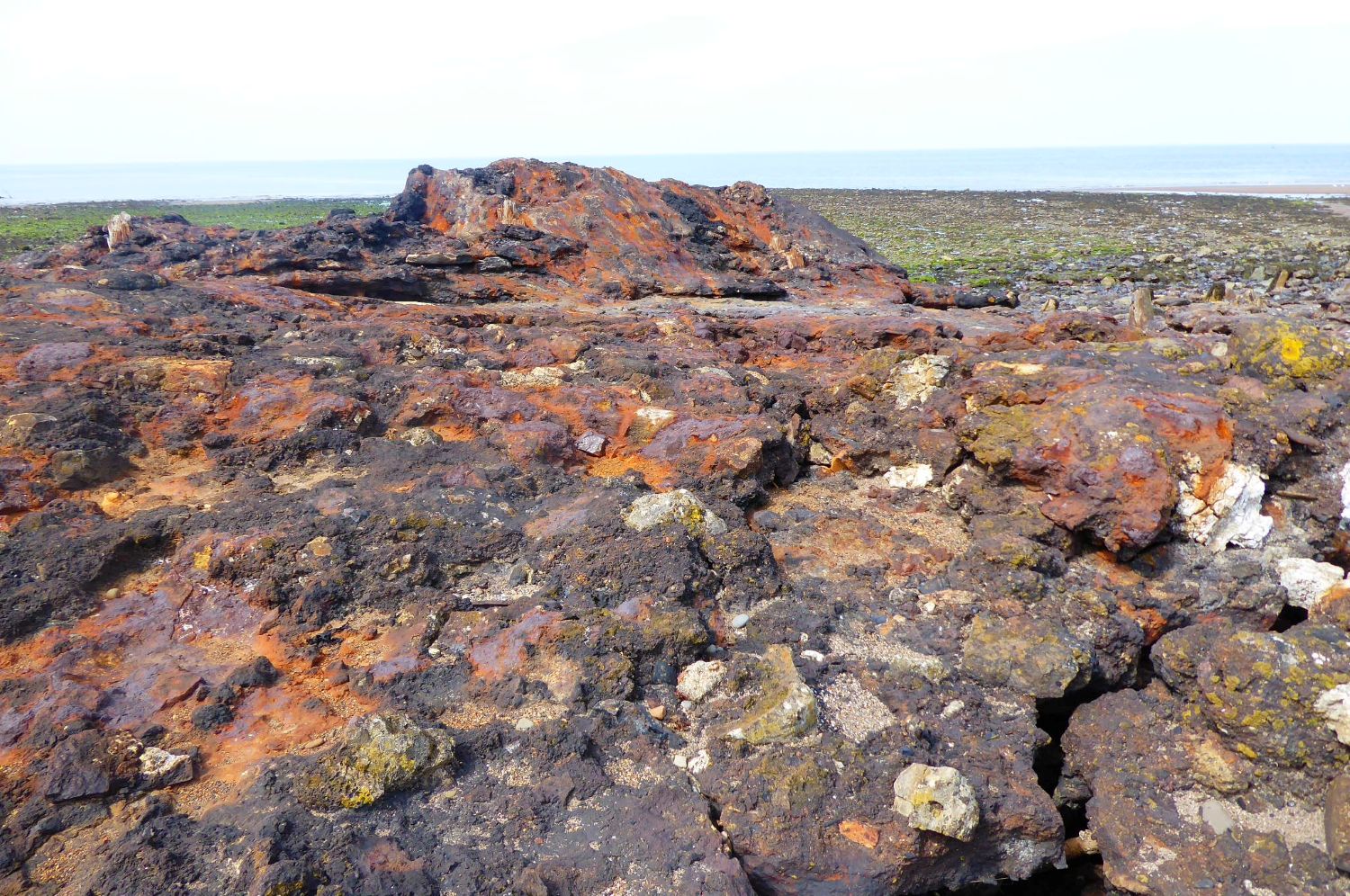
Back near the carpark, we find shiny black lumps that glisten like obsidian, and heavy, rusty pebbles of once-molten ore. There’s another ‘volcano’, too, the base of a gaudy red and purple mound of slag.
Data sheet and geotrail:
Cumbria GeoConservation exists to highlight the county’s amazing wealth of geological sites, and for many of the accessible ones GeoCon members have written illustrated datasheets and Trails. There is now one for the Harrington shore – to find it click on the ‘Geological Sites Map’ in the menu on the CGC website: https://www.cbdc.org.uk/cumbria_geoconservation/cumbrialgs-publicmap/ Find the ‘green dot’ for Workington, and click on it – and a pdf with photos and instructions will download. Well worth a look – and check out some of the other trails too!
 Solway Shore-walker