A local Cumberland councillor, who sits on the Board of the cross-border Solway Firth Partnership, often refers to the Cumbrian coast as being the ‘soft side’ of the Firth, in contrast to the rockier Scottish, side. And once you have travelled North-East from Maryport, the softness and malleability of the Cumbrian coastline is very apparent: shingle slides into sand, which slips into mudflats, backed by dunes or saltmarshes.
During high spring tides and stormy weather, the brown, sediment-laden waves pound against the margins, shifting the sand, gnawing at the mudflats and pummelling the edges of the saltmarshes. Year by year – and more so now that ‘extreme’ weather events are occurring – the border between land and not-land is shifting. The coast road from Maryport to Silloth is continually being threatened, and is sometimes closed to be cleared of pebbles and seaweed or – in the worst cases – have its seaward side shored up. The loss of the coast road is a major inconvenience; the potential loss of houses and shops a disaster for human lives and livelihoods. So how can they be protected from the force and height of the water?
Mangrove swamps would be effective and a very pleasant and interesting addition to the Solway coast … but meanwhile saltmarshes certainly do their bit to dissipate the force of the waves. Leaving aside these natural (and importantly, carbon-sequestering) coastal defences, the usual answer is ‘hard engineering’, the construction of unnatural defences using concrete or rocks.
Around the British archipelago’s coast, horrifyingly large volumes of cement, requiring massive costs in quarrying, crushing, transport and the use of energy have been poured and moulded into various types of defensive wall to hold back the sea. Some of these constructions are more effective than others, as illustrated in a simple set of experiments in a wave tank by researchers at the Jeremy Benn Pacific Trust (JBA Trust). In the video, which is on YouTube, the researchers set up different shapes of hard engineering at one end of the tank, and then measure the volume of water that has overtopped the defences after 5 waves. For example, for a ‘beach with a sea wall’, the overtopping volume is 50ml; for a wall with a sloped revetment, like the new concrete defences at Dubmill Point, considerably more – 125ml;
The sloped concrete revetment by Seacroft farm, Dubmill Point, during a stormy high tide
for a wall with a stepped revetment – just like the steps on the long promenade at Silloth (see below) – 100 ml.
The ‘stepped’ promenade at Silloth
But, for a wall with a recurved top – rather similar to that of the concrete promenade at Maryport – no water overtops the defences in the research tank. (I’m not entirely convinced by the reality of this, having got soaked by spray on Maryport prom, during a stormy high tide!)
The (slightly) recurved top of Maryport promenade
And also at the high end of protection against the tank’s waves are gabions – wire cages of boulders – and rock armour (only 5ml overtopped). This a very nice demonstration of how the rocks reduce the energy and therefore eroding power of the waves, breaking up the flow and forcing it in many different directions simultaneously.
Away from the wave-tank, bunds of gabions and rock armour have been constructed along vulnerable stretches of the Cumbrian Solway coast from Whitehaven to Allonby Bay, to Skinburness and Grune Point.
Intact gabions at Crosscanonby (left); displaced and damaged gabions at Crosscanonby (top) and at Dubmill Point
But the wire gabions, containing smaller stones, that protected the historic saltpans and the coast road at Crosscanonby, were severely damaged – ripped apart and their contents scattered – by one of the winter storms; in their place the defences have been repaired during the past year with boulders of a harder rock, an igneous dolerite probably from somewhere along the Whin Sill (my thanks to geologist Ian Francis for the identification).
Dolerite rock armour being put in place at Crosscanonby, 2022
The use of dolerite is a new departure, because nearly all of the other stretches of rock armour are of limestone – and this is where rock armour becomes fun. Fossils! Corals, solitary and colonial; crinoids; brachiopods; and ‘trace fossils’ – they are all there, if you have the patience and courage to clamber amongst the boulders to search.
Trace fossils at Parton
I first became aware of fossils in limestone rock armour some years ago when I stopped at the shore-side carpark at Parton, just North of Whitehaven; these were ‘trace fossils’, traces left by an animal rather than of an animal. Imagine, say, a polychaete worm or a bivalve mollusc that lives in a burrow in the sand. It’s sedentary, staying put in one place, so, rather than roaming around on the surface to look for food (and exposing its own vulnerability as prey), it waits for food to come to it. In the case of the polychaete, the worm extends its crown of tentacles like a net in the water, or sweeps its tentacles over the surface of the sand around the burrow. The burrowing bivalve, on the other hand, has a muscular tube, the siphon (rather like an elephant’s trunk in its mobility and sensitivity) which hoovers up food particles from the sand around its burrow. These feeding movements could leave the sort of arcs of indentation that are seen in the Parton traces. What class of animal left the fossilised traces of its feeding? It’s impossible to tell although geologists, hedging their bets, often refer to the marks as ‘zoophycos’.
Limestone rock armour, North Shore, Whitehaven
At North Shore beach, Whitehaven, the fossils in the rock armour are even more impressive. As I scrambled over the rough, pale boulders I was asked a couple of times what I was doing by local dog-walkers, who were then surprised and impressed when they saw the (previously unnoticed) fossils of solitary and colonial corals. There were thick bands of colonial corals; there were curving longitudinal sections, and the packed circles of colonies broken transversally. It was easy to imagine the colourful masses of the little filter-feeders extending their tentacles to capture food borne by the incoming tide. Here too were pale curved sections through the dished shells of brachiopods, sometimes solitary, sometimes clumped together by the currents of the warm Carboniferous sea, to lie on the sediment surface.
Whitehaven: crinoids, brachiopods, and solitary and colonial corals
Further along the shore, there is a sudden sharp demarcation where the limestone blocks have been replaced by boulders of pink Shap granite, studded with large shining crystals; perhaps there was a BOGOF on a few truckloads of the stone.
Shap pink granite armour
But there is more limestone rock armour a little further North-East, dumped in an attempt to protect the Maryport golf course at Netherhall from being eaten by the sea: more fossil corals, brachiopods, and sections of ‘sea lilies’, crinoid echinoderms. Here, too, are piles of bricks and broken concrete, tossed aside contemptuously by the waves.
Dubmill Point; the shuttered farmhouse, and debris thrown across the road
Further up the coast again, to Dubmill Point at the north end of Allonby Bay, to huge sloping revetments of concrete, which have been repaired and extended yet again; despite this, the stormy waves throw large pebbles and sand onto the coast road, and hurl spray high over the farmhouse on the Point. You pass the ‘Road Closed’ signs at your own peril.
North of Dubmill: a mixture of groynes, concrete ‘steps’, and 2 types of rock armour
The concrete gives way to rock armour again, in which fossils are scarce. On a sunny day a few summers ago, I noticed a figure in a skin-coloured bathing suit (perhaps) sunbathing against the radiating warmth of the stones.
And so to Skinburness and the finger-like promontory of Grune Point that protects the western edge of the shallow expanse of Moricambe Bay. Here the rock armour is a tumbled line of large limestone boulders, some with a thin red crust and speckled with rusting iron-rich nodules.
Grune Point; limestone rock armour; half-buried groyne; and limestone pebbles on the beach
The shore here is dazzlingly white in the sunshine, and glimmers even on a dark and cloudy day, for it is covered in pebbles of limestone that have been churned and cleaned by the waves. The pebbles are round and smooth, and too numerous to have been broken off and eroded from the large boulders; they are likely the ‘quarried cobble’ referred to in the Cumbria Coastal Strategy for Silloth to Skinburness (see note below).
Grune: a thin iron-bearing crust; pebbles on the shore containing corals
As with all this rock armour, I try to discover where the limestone was quarried, and when it was brought to the coast; indeed, how the rocks and pebbles were placed in situ – for there are often no roads, and clearly barges were not used. It has been – so far – almost impossible to discover these simple facts [but see important note below], despite asking the County Highways Department and highways representatives on Borough Councils. But Grune Point is part of the Solway Coast AONB and, as I expected, the former Manager, Dr Brian Irving, knew the answer: the rock came from the large limestone quarries at Rowrah, and was deposited in the late 1990s… But that is all I learnt. Yet to know its geographical origins within the county would be to know more about the geological history of the stone, and to be able to guess at the reasons for the inclusions of iron ore and different species of animals.
Whatever their origins, the piles of limestone boulders at the top of Cumbria’s ‘soft’ shores look incongruous; but perhaps it helps to think of them as a man-made complement to the ring of limestone that surrounds the rocks of the Lakeland Fells.
Notes:
This blogpost is part of my former ‘limestone lockdown’ project. For an Introduction to the project, and a guide to the list of related posts, see Limestone in the Lake District: an Introduction – and the ‘categories’ list in the right-hand bar.
A very useful summary of sea-level change projections and ways of mitigating damage, and much more (including useful links), is to be found in Chapter 4 of the updated Solway Review, produced by the Solway Firth Partnership.
Chapter 1 of the Solway Review, on Coastal Change, includes links to pdfs of the Cumbria Coastal Strategies, Technical Appraisals: this might sound dull, but the documents are very interesting, looking at the type of coast, the attempts to mitigate damage, and with discussions about possible future work. The PDFs for Maryport to Dubmill, and Silloth to Grnue, are especially worth downloading.
Dry stone wallers need to be pragmatists, building around or over problem areas, or incorporating boulders too big to move.
A ‘jumping wall’, Orton in the Westmorland Dales
At Bents, near Newbiggin-on-Lune on the edge of the Westmorland Dales, red sandstone and pale limestone are strikingly juxtaposed. Huge rounded knolls and whalebacks of faded red-brown sandstone, mottled with white lichen, push up out of the moorland and pasture. And running alongside them, over them, around them, leaving narrow paths beside them, occasionally incorporating a boulder’s bulk in the boundary, is the purposeful line of a limestone wall; a barrier between the grazed green farmland and the moor. The wall is tall and well-fettled, built of shallow, sharp-edged plates of limestone; it is a double wall, with large flat through-stones, and coping-stones that are tightly-packed and tilted. High and solid, it is a daunting challenge even for adventurous sheep.
BentsBentsBents: unused limestone
At the eastern end, near Bents farm, names have been carved in the sandstone boulders. Many are weathered and, part-obscured by lichen, are difficult to read; the beautifully-engraved J Smith (or is it Smillie?) Bolland dates back to 1888; other names are even older.
Nearby, layered shelves of limestone – the origin of the stones for the wall – peep out of the eroded side of a hill. Here it’s easy to see the dramatic mix of the two types of rock, the Ashfell Sandstone Formation, which is part of the Great Scar Limestone Group. According to the information on the Cumbria GeoConservation website, “ The Ashfell Sandstone Formation is interpreted as the deposits of a river-delta system that spread into the shallow carbonate seas that covered this area during the early Carboniferous. Thick sandstone layers, like the one at Bents, may represent sands deposited in large river channels or as offshore sand bars. The reddish colour is due to the presence of iron oxide and suggests deposition near an arid shoreline.”
Limestone outcrop above the sandstoneUsing the sandstone for the wall
Where the limestone wall jumps to the top of a Bents boulder, the waller has incorporated chunky sandstone blocks to give the free end extra stability and majesty: limestone and sandstone intermingling their organic and inorganic origins.
Not far away, next to Natural England’s Great Asby Reserve , we are looking for something marked on the OS map as ‘Thunderstone’. On our left, a rubbly, part-tumbled limestone wall, and the clatter and growl of an approaching, as-yet hidden, quad bike. The noise stops, there is some muttering and swearing, and a man, round-faced and with thick brown hair, dressed in a mud-smeared jacket, appears by a gap in the wall. Although surprised to see us, he grins and asks, ‘All right, then?’, and we chat about the weather, and how the yows will always break down the walls. ‘Look at this!’ He gestures at the fallen stones, which he has come to fix. ‘See, it’s just bloody rubble round here – no good for walling.’ It’s true, on this stretch the limestone is fragmented and irregular, and the wall is only a single layer thick and barely four feet high: a determined tup could send it flying. We ask about the thunderstone and are told, ‘it’s just along there, you’ll see it on the corner’. And so it is, a smoothed, rounded boulder with the wall built around and on top of it. It’s a little underwhelming in terms of size, but its provenance is greater – an ‘erratic’, a boulder that was once caught up in the ice of a moving glacier; a boulder that was seized from another area, a different type of rock – Shap granite – carried away and dropped where it didn’t belong; and now incorporated in a dry stone limestone wall. [2]
‘Thunderstone’ in a wall near Great Asby Scar
Although it might seem odd that the farmer’s wall was ‘bloody rubble’ compared with the grandeur of the nearby and more recent wall around the Great Asby Scar Reserve, this reflects the properties of the local rock – wallers use the rock that is ‘to hand’. The pavements on the Scar are themselves very varied in structure and appearance, depending on how the limey skeletons were deposited and subsequently eroded. This new wall around the Reserve’s perimeter is nearly two metres high, built of blocky stones, with two layers of projecting throughs, and sturdy, slanting coping stones. It is a text-book example of ‘how to build a dry stone wall’.
‘Dry Stone Walling, a practical handbook’ [1] makes surprisingly gripping reading! I read it at breakfast and over lunch, enjoying the technical terms and their local variations, showing diagrams to my husband (who has done a fair bit of walling himself).
‘Dry stone walls are semi-flexible structures,’ Brooks and Adcock explain, ‘with the stones settling over time. The basic principles involved in building a dry stone wall are aimed at reducing the potential for movement during this settlement.’
The wall that encloses the Great Asby Reserve Great Asby Reserve wall: a ‘textbook’ example of walling
So there are the footings, which support two faces of stone courses; these are held together with throughs that straddle the wall, connecting one face with the other, ‘tying the two faces together in a single unit’ and stopping them bulging outwards. The interior of the wall is filled with rocks – without the filling (also known as packing or hearting), the face stones would settle inwards and the wall would collapse into the centre. Finally, a row of coping or topping stones caps the wall, weighing down and bonding the faces below, and protecting them and the filling ‘from the weather, animals and people’. The angle of each vertical face to the horizontal is the ‘batter’, for which a frame or template is sometimes built. There are many variations in style or height or shape, depending on the local stone and what is required of the wall – sheep (especially Herdwicks) are more agile than cattle and need a higher barrier.
Waller Arthur Robinson talks with humour about long stones and flat-sided stones, and the ‘golden rule’ of wall-building, placing the stones “one over two, and two over one” in a delightful ‘Countrystride‘ podcast with Mark Richardson [3].
Meandering wall near Great AsbyMeanders near Potts Gill, Little Asby
The Great Asby walls are tall and ‘tight’ – they march across the moor with straight lines and sharp corners, but walls nearer to the road are freer and more curvaceous, as they drop down into the shallow valley. Walls wiggle to avoid obstacles, such as sinkholes or springs or patches of bog. In areas where there is a shortage of stone and the wall is only one stone thick, wiggles might also be constructed to give the wall strength, against the lateral pressure of the wind. (Such sinuously-wiggling walls, usually built of brick rather than of stone, are known as ‘crinkle-crankle’ walls.)
Last summer, while walking past Opinan, near Laide on the NW coast of Scotland, we stopped to chat to a woman who was clearing vegetation off a single-thickness drystane wall right by her house. The stones there were sea-worn boulders, balanced apparently precariously on each other, and she said that she had been told that because the wall looked unsteady, with gaps revealing the view on the further side, sheep would not climb it. (Our conversation led, of course, to Herdwicks – for it turned out that the woman, who had lived there for 30 years, originally came from Cumbria.) In their book, Brooks and Adcock also refer to this style of wall: ‘Single dyking is surprisingly stable, but looks so unsteady that all stock, including the notoriously adventurous black-faced sheep, are supposed to be deterred from climbing it’.
A single-thickness granite wall at Kippford
Limestone is rarely used in single-thickness walls – it’s more usual to use tougher stone like granite (as at Kippford on the Scottish side of the Solway) – but on the fellside amongst The Clouds near Ravenstonedale, there are scrappy limestone walls, some single, some built from stones cleared from the fields around the now-derelict Harry’s House. Many of the walls not ageing well, and are strung about with posts and wire.
Harry’s House and enclosure built of cleared stoneSingle-thickness wallA strong waller worked here
I’ve written elsewhere about the grikes and clints of my local limestone pavement at Clints Crags, but it is the dry stone walls along the northern approach that I love most. They urge me to examine them, carefully; there is a strong sense of human stories, and of the wallers’ understanding of the stone and the land around them. The walls each side of the narrow, grassy, occasionally boggy, track differ markedly from each other, indicative of different wallers for different landowners.
The track to Clints
On one side a stretch of wall is intact, constructed of chunky blocks and with large coping stones. There is an unusual pit, looking man-made rather than a natural sink-hole, in the field beyond. The fraying blue twine that fastens the nearby metal gate to its sandstone stoop has been chewed by the sheep to make a tangled knot, so I climb over, and poke around in the shallow, rectangular depression in the field. It has clearly been a small quarry, hacked out by the wallers as a source of stone: water-worn vertical joints and horizontal layers have presented the limestone in handy blocks, ready for prising out and manoeuvring to the wall.
On the way to ClintsThe ‘quarry’ in the fieldThe quarry
Further along the track, and abruptly, the copings vanish and the courses of stones on the face are loose and ill-fitting. In places the wall is scarcely double, more of a hybrid with a double base and single upper part; many of the stones are thin and flaky. Not all are limestone – there are broken pieces of terracotta floor tiles, still with cement adhering; there are occasional small round ‘erratics’ of grey granite; and other stones coated with a red crust, which I can’t identify.
The wall on the left had been a low jumble of stone, but now it gains height and becomes tight and topped. It wiggles sharply – and when I climb up to look, I see that the waller has had to divert around a sinkhole. Further on, the wall rises and falls, taking its footing on a small hummocky outcrop.
The neat wall on my right now degenerates into little more than a hopeful boundary. Sheep and the weather and old age have taken their toll on its integrity. In the field beyond, a Border Leicester tup, long-legged and Roman-nosed, stares at me imperiously from where he is standing possessively by two Swaledale ewes. I wish him ‘good morning’ and stare back, and then the light glints on something smooth and out-of-place in the interior of the tumbled wall: not a bone, but the stem and part of the bowl of a clay pipe.
A possessive tupThe waller’s clay pipe
Note:
This blogpost is part of my former ‘limestone lockdown’ project. For an Introduction to the project, and a guide to the list of related posts, see Limestone in the Lake District: an Introduction – and the ‘categories’ list in the right-hand bar.
[1] ‘Dry Stone Walling, a practical handbook’. Alan Brooks & Sean Adcock, illustrations by Elizabeth Agate & Linda Francis. 2nd ed 1999. Publ The Conservation Volunteers. https://www.conservationhandbooks.com/dry-stone-walling/
[2] For more about thunderstones (the erratics, not the fossilised sea-urchins which are also given that name) watch the interesting talk by Sylvia Woodhead about the Westmorland Dales (from 29’25”)
The RSPB’s Campfield Reserve near Bowness on the Upper Solway is a perfect place for a writing workshop, especially if you want to ‘experience’, think about, and write about saltmarshes; they form a land- and sea-scape that most people probably do not consider as particularly interesting or important. Saltmarshes are, according to poet Norman Nicholson, ‘neither land proper, nor sea proper’.
My third ‘saltmarsh writing workshop’ was held at Campfield in mid-September, timed to coincide with a low spring tide so that we would have plenty of time to explore the marsh and mudflats without having to worry about the incoming sea.
As always, my reason for running the workshop is to encourage writers to see saltmarshes in a new way, and hopefully begin to understand why they are so special – and to find a way of conveying this to other people, in their writing and conversation. The key to this is, to use Attenborough’s important statement: ‘No-one will protect what they don’t care about; and no-one will care aboutwhat they have never experienced’. Saltmarshes need our protection.
It was a day of changing patterns of light, a shifting beam that picked out fields in Scotland, pale ochre bands of sand that floored the estuary, the far-distant glimmer of the Firth, the partly-demolished towers of Chapelcross. We spent time outside – and returned mid-afternoon to watch the now high tide reaching up through the creeks into the marsh – and time inside, in the Wetlands Centre’s meeting room. It was a day of laughter, and the exchange of ideas and viewpoints (nine people offering nine completely different ways of viewing the saltmarsh and mudflats), some intense work – plus a rescued jellyfish, and a water-filled welly. I introduced everyone to some new words, too – and was asked if I could make a list so that the anyone who wanted could refer back to them, and perhaps use them in their writing.
I also agreed to post some images as aides memoires, and some links to articles that were mentioned. So, here we are, some words and pictures…
The marsh:
Some words that we used: accretion, erosion; stratification and history, ‘stories’; ‘topping tides’ and ‘mucky tides’; tiers, and pioneers; ‘merse bergs’; creeks and dubs.
The fractal edge, intercut with creeks; and the expanding marsh at Rockcliffe between the Rivers Eden & the Esk. For more on my gyroplane flight, see this post.
View from a gyroplane: Campfield marshView from a gyroplane: Rockcliffe marsh
A ‘classic’ saltmarsh has three tiers, formed as it grows outwards (accretes) and upwards, gathering and trapping and compacting sediment. The new edge, next to the estuary, is stabilised by the growth of pioneer plants like samphire, Salicornia, and the ‘invasive non-native’ grass, Spartina (it originally came from America) which trap sediment between their roots and in the ‘stationary layer’ of water at their base.
Creeks & dubs at CampfieldKirkconnell, by the R Nith – a tiered marshThe lower edge, new marsh forming (R Nith)Samphire, Salicornia: marching outwardsSamphire trapping sediment; a pioneer plantAnother pioneer: the grass Spartina (at the right-hand end)Spartina and friends
The different tiers have characteristically different vegetation, the less salt-tolerant species at the top (like gorse, rushes); many of the flowering plants (salt-tolerant ie halophiles) are in the middle layer, flowering at different times of year (only a few asters were in flower when we were there).
Purple astersScurvy grass in flowerThrift or sea-pink
Sediment is deposited over the years, decades, even centuries: each layer tells a story – of weather, climate, sea-level, human activity.
The tops were once this high above the surface: Rockliffe marshBuried fences at Grune PointTree-trunks and baulks of timber, carried up to the top of Rockcliffe marsh during winter storms
But the crenellated edges of the marsh – the creek-mouths and the dubs (‘pools’ or hollows) – dissipate the energy of the waves. Saltmarshes are an important intermediary between the water and the land.
Stormy high tide, CampfieldCampfield
Human activity on the saltmarshes includes farming – the grazing of livestock during the summer months. On the Cumbrian coast, marshes are divided into stints, the grazing of which is auctioned each year.
Sheep and cows grazing a stintStints: grazed from May-September/October (depending on the marsh, and on the tides). Part of a Hope’s Auctioneers catalogue
Wildfowling is permitted on Calvo & Border Marshes and Rockcliffe on the English side, between September-February; permits are necessary and the numbers and species of birds regarded as targets are strictly regulated. The rules are different on the Scottish side, although tightly regulated at Caerlaverock, for instance. See the final chapter of The Fresh and the Salt for a discussion of this (nuanced) topic.
Border & Calvo Marsh: Wildfowling permitted here
The mud:
Microphytobenthos (MPB): the bacteria in the top layer of the mud and the marsh, which migrate up and down depending on the amount of light and the state of the tide. Photosynthesis – using, thus ‘storing’, carbon dioxide – the top layer of bacteria and the middle layer of cyanobacteria need light and oxygen; sulphide-using bacteria in the black, anoxic layer, do not, and do not photosynthesise.
Mudshrimps (Corophium), mudsnails, ragworms, and lugworms – live in or on the mud.
Mudsnails, Hydrobia
The density of mudshrimp burrowsA mudshrimp’s trailU-shaped mudshrimp burrows on a spadeMudshrimps, Corophium, with their long first pair of antennae
Corophium limbs and how the animal feeds – the ‘naming of parts’ blogpost – with a link to Jenny Bell’s song. The blogpost also refers to bioturbation and bioengineering – and silk-lined burrows!
Tides and tidal bores:
We touched on this briefly: bores on the R Nith, the R Wampool, and up near Burgh marsh, for example There are images and weblinks in this blogpost, and videos of the bore on the R Wampool here (scroll down to the bottom of the page).
Tidal charts are here – choose your piece of the coast.
Miscellaneous:
For the former Solway viaduct, damage to and repair of Bowness Common (peatbog, part of RSPB Campfield), and the Solway Junction railway, see Crossing the Moss.
Writing:
Norman Nicholson. Collected Poems. ed Neil Curry, (1994) Faber & Faber
Discussions and insights into ‘new nature writing’: just a few references here (there are more recent articles too, but mostly ‘re-inventing the wheel’ – the topic has been around for a while and it’s easy to get bogged-down).
This is now a topic of major importance: bacteria and plannts sequester carbon dioxide, taking it out of the atmosphere, during photosynthesis, and as they die and are buried, so that carbon is stored. Damage to saltmarshes (like damage to peatbogs) releases the stored carbon again, as carbon dioxide. Many efforts are being made to map the extent of marshes around the coast, and to protect and restore them where possible.
Hopefully, after our writing workshop and discussion, you’ll now understand a bit more about the drama and dynamics and uniqueness of the saltmarshes, and will stand up for them when they are under threat.
And spread the word in your conversations and writing; pass on your experience. Remember, ‘No-one will protect what they don’t care about; and no-one will care aboutwhat they have never experienced’.
Snowdrifts! Small semicircles and rippling lines of white on the grass of the saltmarsh: the cast exoskeletons of thousands of mudshrimps. My friend and former colleague Professor Geoff Moore (himself an expert on amphipod crustaceans including Corophium) once told me how, on the Isle of Cumbrae, he had seen drifts of cast skeletons “lying along the tideline like snowflakes”. I had been envious – but now, here on the marsh at Grune Point, I had at last seen the same phenomenon.
‘Snowflakes’: cast cuticles of CorophiumCast cuticles: antennae clearly visible
***
As the tide ebbs the level of the salty sediment-laden water at Moricambe Bay is dropping, turning increasingly brackish as water from the saltmarsh creeks and the rivers Wampool and Waver dominates. The edges of Calvo Marsh stand proud above mudflats that are glistening sweeps of ochre, sienna-brown and grey; the smooth glossiness of their upper slopes shades down into roughness, speckled with stones and weed at low-tide level.
That smoothness, as seen from the comparative safety of the saltmarsh, is an illusion, for if I step – squelch, glissade – out onto the glutinous surface and look down, the surface is pockmarked with tiny holes and the wriggling trails of wandering creatures. Other larger animals have been here before me, too: there are bird footprints – the precise three-toed prints of waders, the webbed prints of gulls and aggressively sharp footsteps of oystercatchers; rough-edged holes where beaks have probed; and a line of paw-prints of an otter who has looped to and fro between the water and the short, silty grass of the saltmarsh.
These are signs that animals have been busy on the surface while the tide is out, but the minute holes hint at other animals that are here for much longer periods, burrowed down below. For to live on this apparently featureless and changeable shore means there is nowhere to hide – except within the mud.
The density of burrows (photo of the mudflats of the R Nith)
To find the mud-dwellers I search for where the density of holes is greatest, and then use the spade. The divot is heavy and sticky; at the top are sections through U-shaped burrows opening to the surface. Each is the home of a tiny pale brown mud-shrimp: mud-shrimp – a uninspiring name for a small animal that is so beautifully adapted to where it lives – the crustacean, Corophium volutator.
Mud on the spade: rectangles mark burrows with mudshrimps
The elegance of limbs
I carefully extract some of the mudshrimps from the divot on the spade, and place them in water in a white enamel pie-dish. Unlike shrimps in rock-pools or the Silloth brown shrimps cooked and ‘potted’ in butter, Corophium belongs to a group of related animals, the amphipods, that are dorso-ventrally flattened – from top to bottom – rather than laterally, from side-to-side. Also unlike shrimps and lobsters, Corophium doesn’t have a carapace – its head and the middle segments of its body aren’t covered by a single curved piece of armour but all the segments are visible from above. With a hand-lens it’s easy to see how different parts of a mudshrimp’s body are perfectly adapted for different functions. There are flexible joints between the segments so that – lacking a carapace – the animal can straighten or flex its body. Each segment has a pair of jointed limbs, and groups of adjacent limbs are modified in size and shape to carry out different functions.
A pie-dish of Corophium
At the head its appendages are adapted to ‘read’ the surroundings, and to find and deal with food. The pair of long, flexible antennae that are so characteristic of Corophium have a sensory function, but a second pair are also used as rakes to pull food towards the mouth. Behind the antennae and on the underside of the body, are small ‘feeding limbs’ with different sizes and shapes – the maxillae, maxillipeds and gnathopods (‘jaw feet’) – all specialised for separate roles in the capture, handling and ingestion of food. Inside the mouth (unseen by my lens), a pair of hard mandibles act as macerating-machines. Some of those feeding limbs have a second function, too – they have small thin-walled flaps of gills at their base to take up dissolved oxygen from the water.
Under the middle section of the body are the legs, the pereiopods (‘transporting feet’), by which Corophium crawls on the surface of the mud, and further back, tucked beneath the abdomen, are small, feather-like limbs, the pleopods (‘swim feet’). The pleopods beat like paddles when the Corophium swims, or they can beat more slowly to send a current of oxygenated water over the gills. I am happy to be re-visiting old friends – it was watching how these pleopods beat perfectly in unison that so captured my imagination so long ago.
At the back end of the body, a broad flat telson and a couple of leaf-like uropods form the tail fan, a small version of a lobster tail: if the abdomen is suddenly flexed forward, the fan acts as a paddle that drives a current of water forward – and the animal backwards: a useful method of escape from a predator.
This then, is what a live Corophium looks like under a magnifying glass.
Just as taxonomists look for relationships between animals and, god-like, name the formerly unknown, so anatomists look for relationships and name the parts. Every part of the body has a name. Every segment of the jointed legs has a name. Even though I’m not an anatomist I love the music of the names, to be chanted like skipping-songs. Watching the crawling Corophium, I struggle to recall the knowledge I had as a student, so long ago. With the edge of an empty mussel shell I try to draw the outline of a jointed leg on the mud’s surface – the physical act of drawing helps retrieve the words: coxa, basis, ischium, merus, carpus, propodus and the pointy-fingered dactyl. I love the words for themselves, and their Greek or Latin derivations. (Later, singer and composer Jen Bell composes a song about these names, for Pentabus’s stage production, ‘On One Side Lies the Sea’ [1].)
We don’t need to know the names of the parts, but by knowing them and their provenance we can trace the beautiful economy of evolution – reuse this bit slightly differently, take a little bit of this and a little bit of that, try out the effect of this gene in controlling that later sequence and if it brings advantage, keep it.
Synchronicity
In retrospect I realise that Corophium set me on the road to becoming a research scientist. When I was an undergraduate in London, the field-trip for our marine biology course took us to Swansea and the Gower for ten days, where we were offered a range of short projects to help us learn about research: the constructing of hypotheses, the practicalities of ‘materials and methods’, the gathering and interpreting of data. This brought, too, the realisation that the lives and activities of intertidal animals worked to a different schedule than our own, their lives governed by the shifting clock of the diurnal tides: depending on your project, evenings might be spent in the lab, not in the pub. I chose to investigate how Corophium responded to the falling oxygen levels in its burrow – did it become quiescent and sit out the low-tide period, or did it pump the water in its burrow more rapidly over its gills?
So how do you watch an animal that lives in a burrow? You fill a narrow glass chamber with muddy sand from a Corophium colony, and hope the animal will construct its burrow next to the glass … You fill the chamber with seawater of different oxygen concentrations, you hope you can see the delicate pleopods and count their rate of beating … A short project, naïvely simple through ignorance, yet a mixture of logic, planning – and hope. As the lecturer in charge drove me back to the lab one evening, he asked, ‘Do you really enjoy doing this?’ Yes, I really did! (What were the results and conclusions of this research? I can’t remember. All I remember is the delicate, synchronised beating of the pleopods, and the animal’s elegant, questing antennae.)
I didn’t go on to research the physiology of marine animals but, years later, when I moved to Glasgow University, one of the other lecturers in the department was Peter Meadows, whose early research, in the 1960s, had been on the burrowing and feeding behaviour of Corophium [2]. Mudflats might look fairly uniform to us, but Corophium swim about and use their antennae to test the nuances in the size of sediment. Peter Meadows had written that the animal is ‘apparently quite deliberate’ in choosing where it burrows: some patches of mud are perfect, others are rejected like Baby Bear’s porridge. The sediment must be not too fine or the burrow might collapse, and not too coarse. Most important, the particles must be coated with organic matter – a slimy biofilm of bacteria, microalgae, and other organic material: a larder as well as a building block. Having found the right conditions, the shrimp burrows into the mud using its antennae and pereiopods, and stabilises the compacted particles of the walls with a sticky secretion
Dimensions and planes
Our own lives are carried out on the surface of our world; few humans penetrate above or below that single plane. But an animal that burrows in the intertidal zone, has an extra freedom – to pass through that plane in either direction, from solid to liquid, liquid to air, depending on the tide; to live, crawl, swim, mate, feed, in three dimensions.
There is, too, the extra dimension of time. For an intertidal animal, time is synonymous with tide. There must be periods of waiting, when the animal keeps a low profile, hiding from predators, ‘house-keeping’, digesting, defaecating – and anticipating the return of the water that brings fresh oxygen and food (and sometimes, sex and procreation).
This coming and going of the sea, and the behaviour and activity of these marine creatures – and of all the animals that depend upon them – are influenced by the moon and sun, on a daily and seasonal schedule. A couple of months before I found the ‘snowflakes’, the phase of the moon would have sent the signal that it is the time for mating. When an adult female mudshrimp is receptive to a male, she releases ‘come hither!’ pheromones into the water, and a male comes swimming or crawling to her burrow. If they approve of each other, the male releases sperm which are swept into the female’s special brood-pouch – her marsupium – where the now fertilised eggs develop into embryos (Corophium, unlike other crustaceans such as barnacles and crabs, say, doesn’t have a planktonic larval stage). About two weeks later they hatch as miniature adults, ready to make their own way out, onto and into the local neighbourhood. As mudshrimps grow, they must moult their old exoskeletons and expand the underlying new one; the ‘empty’ cuticles line the tideline, pale ghosts of their former occupants.
The ‘juddering trail’ of a mudshrimp
Food-chains and engineers
I step off the saltmarsh and slide out onto the mud. The surface of the mud is squiggled with trails, and I squat down to watch mudshrimps as they part-crawl, part-swim in the shallow film of water that remains on the surface. The upper reaches of the Solway Firth have multiple conservation designations [4], reflecting the enormous importance of the mudflats in providing food for local and visiting waders such as dunlin, knot and redshank. Corophium and the snail Hydrobia are special favourites, and the birds scurry hither and thither, following the falling tide, rapidly probing the mud.
But to think of the Corophium colonies merely as unwitting suppliers of thousands of tasty snacks for visiting birds is too simple: we have to turn the idea on its head – the invertebrate animals and single-celled organisms, the algae and bacteria are the core of the life of the mudflat, and without them the ‘mudflats’ would be a sterile shifting slurry of mud and sand, washed this way and that at the whim of storms and tides.
The shrimps themselves feed in several ways: by using their mandibles to scrape and gnaw the biofilm that coats the sediment particles; by raking around the burrow-mouth with their large second antennae; and by using bristles on their gnathopods to filter and sort organic particles like diatoms from the water that the pleopods circulate through their burrows. Look again at the contrasting colours of the mud on the spade. The deeper mud is black and anaerobic, containing little oxygen, but around the mudshrimps’ burrows it is pale and yellowish-brown, oxygenated by the animals’ activity. We can think of Corophium as the engineers of the mudflats, through their feeding on biofilms, their burrowing and ‘bioturbation’ of the sediments – they are so much more than food for wading birds.
Bioturbation: oxygenated mud around the burrows, black anoxic mud below
A foreign shore?
Corophium are almost unknown, rarely seen – for why would anybody bother to venture out onto a sticky muddy shore? Indeed, mudflats and saltmarshes are probably as foreign as another country in most people’s imaginations, and as David Attenborough has said, “No-one will protect what they don’t care about; and no-one will care about what they have never experienced”.
A repetitive and well-worn argument about ‘nature-writing’ is that we ‘need new words’, simpler concepts to talk and write about the places that we share with other living things. Richard Mabey, writing about barn owls, found he was constructing “extravagant phrases” and “was rather pleased with my poetic metaphors….” Then, delightfully, he saw that he should think of the owls as his neighbours. “For much of my working life I have been trying to find way of talking about other organisms that neither reduces them to mechanical objects nor turns them into sentimentalised versions of ourselves. Neighbours are fellow creatures, but independent souls. You share their territory (their parish) and often their fortunes, but you can care about them in full knowledge they may not even recognise you.”[3] We may not share the mudshrimps’ territory but we can visit them, physically or in our minds, and perhaps this will help us to care about them – and their neighbourhood.
***
I notice that the mud in front of me is prickled with coruscating light. The mudshrimps are reaching out and waving! All across the mud, they are waving their antennae – they are not scraping up food, but seem to be signalling or sensing the air. Each is rapidly extending and then withdrawing one of its long antennae, and the incident sunlight is catching and high-lighting the movement. It is a ‘Lopez moment’: suddenly, “You know that the land knows you are there” [5].
Whatever the weather or state of the tide, Fleswick Bay never disappoints. Sheltered within the two arms of the St Bees headlands, it is an anomaly on the Cumbrian Solway coast – tall cliffs, caves, rocky platforms pitted with deep Corallina-encrusted pools, and a shore of multi-coloured pebbles as smooth as ball-bearings.
The cliffs and platforms are a breath-taking mixture of art and of the visualisation of scientific processes, as well as the desires of humans to leave their mark. Even as you lean into a wind that whips clumps of foam from the incoming waves, it’s a bay that requires close study and contemplation.
I’ve written about the New Red Sandstone of Fleswick elsewhere [1]: about the 200 million year-old deposits of sand and sediment, lifted and dumped and swirled by ancient rivers and flash-floods, compressed, lithified and eroded; about the coal-miners who worked the nearby undersea pits and who swam with basking-sharks; about the names carved into the cliffs, and especially the story of ‘Judy McKay’; about the sculptors who love to work with the stone; about the small reefs of the tubes of the honeycomb worm Sabellaria …
But here, instead, the pictures and the patterns speak for themselves.
Cliff and wave-sculpted pavement (photo by Peter Stanier)Sculpted rock (photo by Peter Stanier)HollowsLithified ripplesLines of reduction (where ferric iron is reduced to ferrous)
And the pebbles, so varied, so round and smooth: jasper, agates, quartz, granites and cornelian. A geographer friend, pointing out the scarcity of jetsam and sea-borne rubbish on the Bay’s tidelines, suggested that longshore drift had passed it by, and that the pebbles had stayed in situ, being rolled to and fro, to and fro, with every tide – perhaps for decades, perhaps for centuries, who knows?
There are, too, patterns made by human hands: pickmarks and names, of all which will tell their own stories; most of the stories now long-forgotten.
And nesting guillemots, cormorants and fulmars make their own patterns on the pitted shelves, their guano fertilising the ‘hanging gardens’.
Along the top of the shore between Maryport and its golf club is a high and wide promenade, constructed in the 1930s from an astonishing volume of concrete. At weekends it’s a perfect walkway for families with pushchairs, small hairy dogs, and toddlers on bikes. There are occasional slipways and steps, coated with slithery green seaweed, that allow you to reach the shore 3-4 metres below, but few people attempt the treacherous descent because so much of the shore is rocky and offers little opportunity for play. In fact a large area of the northern stretch is a fine example of a wave-cut platform [1] of New Red Sandstone; there are naturally straight-edged blocks, and channels, and the indentations of lithified ripples dating from when the rock was still in the form of sandbanks and river channels. Loose blocks are strewn on top of the platform, shunted here and there by the storms.
The sandstone platforms of Maryport foreshore, looking North
Earlier this year a geologist friend, Ian Francis (one of the authors of a recent excellent book on Lake District geology [2]), wondering if I knew what the structure was, emailed a photo of a rectangular basin that had been cut into the rock at the top of the shore, close to the base of the promenade. Of course, ‘an expedition’ was required!
‘Basin 1’, with thanks to Ian Francis for the photo that stimulated this blogpost
The tide was high but on the ebb, and complex local currents were swirling the incoming waves and sending spray shooting into the air and over the edge of the prom. We walked, and sat, and waited until the top of the rock platform was uncovered – and there below us was Ian’s rock basin (let’s call it No.1 for convenience), the sea still sloshing in and out through a narrow channel. Nearby was what could be another basin, less exactly hewn with one side partly missing; and the remnants, further off, of possibly a third. Basin No.1 was about 1.5 metres at its longest side and perhaps a half-metre deep, and partly filled with shingle and a loose slab of sandstone. As Ian had written, the basin leads “via a square-cut gutter to another wider half-basin cut parallel to the sea wall. Only the seaward edge of this larger area is extant. There are cuttings in the basin edge just behind the gutter which look like the supporting beds for some sort of cross-beam.”
Basin 1Basin 2Basin 3
The basins looked to me like storage containers for shellfish – for sacks of crabs or winkles, perhaps. I put my own photos on Twitter and someone local tweeted a comment that they were to do with salt manufacture, probably the Netherhall or ‘Bank End’ saltpans owned by the Senhouses and functioning from 1650-1735. (When I was on the prom, trying to photograph the basins on a later visit, an elderly man stopped to ask if I was “looking at the saltpans”.) But the basins seem too small, even for storing seawater and are certainly not ‘pans’ where brine was concentrated – see the post about the Crosscanonby saltpans elsewhere on this blog).
Another regular Twitter contributor, Paul Montgomery, [@stonefishweirs] kindly emailed me a couple of pdfs about saltworks. One of these articles, on salt production in post-medieval Ireland, is an archaeological investigation of the basins cut into the rocky shore, and related remains, in the Ballycastle region, on the north coast of Northern Ireland [3]. But these Irish basins are considerably larger than the Maryport ones – for example, one is about 6 x 4 metres and about 2 metres deep – so were able to contain a large volume of seawater, which could be transferred to the metal pans onshore and evaporated by burning coal from the local mines.
I also sent photos to my archaeologist friend, Mark Graham of Grampus Heritage, who has done a considerable amount of work researching saltworks on the Cumbrian Solway coast. He suggested I got in touch with Andrew Fielding, one of the Directors of EcoSal-UK, an organisation engaged in ‘Preserving the history and heritage of traditional salt making’ [4]. I had watched Andrew’s webinar, Salt on the Solway (organised as part of the Coastal Conversations series by the Solway Firth Partnership and Solway Coast AONB [5]) back in autumn 2020. In that webinar Andrew too mentioned the Senhouses’ Netherhall Saltworks at Bank End, Maryport – the stone ‘basins’ had been identified as being part of the Netherhall works and had been the subject of a training day in survey methods run by CITiZAN (the Coastal and Intertidal Zone Archaeological Network) in July 2016 [6].
Andy Sherman, CITiZAN’s Discovery Programme Officer based in Liverpool, replied to my email, explaining that they had indeed had a session recording and measuring the rock basins, which were ‘noted by the local Historic Environment Record as being part of a saltworks’. The report included the measurements of the ‘No. 1’ basin, and some photographic observations. Andy suggested that ‘the majority of structures associated with this site were damaged or destroyed by the construction of the promenade’.
After I got in touch with Andrew Fielding, he wrote me several very interesting and helpful emails. I learnt, for example, of a Dr William Brownrigg (1712-1800) of Whitehaven, who had written a book on The Art of Making Common Salt, and who had been born at High Close Hall, Plumbland (possible the existing High Close Farm), near to where I live! Andrew says “Bank End is an intriguing site that no one yet has properly interpreted. … I think that it is likely that the remains in the rock at Bank End are only the bottom portion of features associated with the salt works and that there may also be remains still existing inland of the promenade. Some have suggested that Bank End Farm may also have been part of the salt works.”
The promenade is a mighty structure, nearly a mile long, about 5 metres wide and in places 3-4 metres high above the shore, and was apparently built during the war; even imagining the process of its construction takes some effort! Jane Laskey, Manager of the Senhouse Roman Museum, had been looking at documentation about the supposed Bank End saltworks, and she too thinks that important structures were buried when the prom was built.
With regard to the rock basins themselves, comparison of photos taken by Ian Francis, CITiZAN, and my own photos taken on two different occasions, shows the difficulty of finding and interpreting the basins and the channels on the shore. Pebbles and sand shift and fill in the hollows, revealing structures to different extents at different times.
Basin1, low tideBasin1, channel and troughsBasin1 pickmarks
‘No. 1’ is the nearest and clearest basin to examine. Its sides are pocked, hatched and cross-hatched with pick-marks; there are the two short troughs on the side that has the square-cut entrance gully, into which a gate or sluice might have been slotted, trapping seawater within the basin. The entrance gully opens into a channel cut parallel with the prom wall; on my second visit this had become much more obvious as it was now clear of pebbles, and its face, too, was pitted with the marks of the axes that had chipped away the sandstone.
Basin2 and possible channelBasin2Basin3 pickmarks
A few metres away is ‘No.2’ basin, slightly larger and with one wall apparently missing. Its opening empties into what looks like a channel that heads directly down towards the seaward end of the rocky platform – but it’s hard to be sure whether this is man-made or a natural gully in the stone. A little further away are traces of perhaps a third basin. As Andrew Fielding said, the site needs “another look”.
But are the basins really associated with salt-making? As a zoologist and ‘shore-guddler’ I still hope that the basins were used as temporary storage tanks for shellfish. Such things do exist. One evening, an email arrived from Mark Graham, who was camping over on the Northumberland coast: he sent a photo of an information panel from the top of the shore at Creswell where, he said, “I have just been reading about ‘Bratt Holes’, sometimes written ‘brat holes’. I believe that these are the best parallel I’ve seen for the rock cut basins near Maryport and were used to store crabs, lobsters, shellfish….” ‘Bratt’ is apparently a local word for turbot.
‘Bratt holes’. My thanks to Mark Graham of Grampus for this interesting photo
***
Postscript: there is a shallow basin (a few centimetres deep) cut into the rock at the top of the shore at Parton. Now, what could that one be for?
Ian Francis, Stuart Holmes & Bruce Yardley (2022). Lake District: Landscape and Geology. Crowood Press
Wes Forsyth, Rosemary McConkey & Colin Breen (2018) Persistence and risk: salt production in post-medieval Ireland, World Archaeology, 50:4, pp 603-619. To link to this article use https://doi.org/10.1080/00438243.2018.1487878
The shore at Parton, just North of Whitehaven, is a good place to find tiny sherds of pottery and china. Many of the fragments are of ‘blue and white’, of which some are willow-pattern – lucky finds are glimpses of the story where the princess and her lover are escaping over the bridge, or branches of the tree that look like three catkins are blowing like flags in the wind.
Pieces of china
There are pieces of fine china, and of lumpish earthenware storage jars such as ‘Dundee Keillor’ marmalade; patterns coloured green, or red or brown. The best ones are where the patterns are hand-painted, or of printed transfers that have been pressed onto the surface manually. My finds are stored in a yew bowl that was turned by my husband, and occasionally – usually when our granchildren are visiting – the sherds are tipped out, examined and sorted.
‘SHIP COMPANY’
Every time, this piece of white china with its brown markings stands out as something special. It’s not fine china; it’s about 5mm thick, with sea-smoothed and rounded edges, and it measures about 5cms by 3cms. ‘SHIP COMPANY’ – the chances of finding a fragment with the words so intact and clear seem astonishingly small! For a long time the design seemed indistinct, until one day, as I turned the piece this way and that, the content leapt out at me: a helmeted head, a bent arm; and some faint letters, perhaps ‘LIORA’. The helmet with the crest was surely that of Britannia? What was she doing amongst the trees?
For fun, I put a photo of the fragment on Facebook back in February, asking if anyone could thrown any light on it and, amazingly, I had a reply within a few hours from someone called Gemma, who posted a link to the British Museum’s website [1]. A friend of hers had shared my post, and Gemma said ‘I find it impossible not to chase up such things’, because she worked ‘with artefacts’. The BM link contained a photo of a shipping company’s medallion – the African Steam Ship Company’s medallion – and detailed notes and weblinks.
From the British Museum Collection’s website, see ref. 1 below
My pottery fragment fitted perfectly with the design. Britannia, with flowing cloak, and her spear and shield partly hidden behind her, is holding back a curtain to reveal a kneeling African, who appears to be proffering a pile of goods – elephant tusks, a pineapple, and fruits; behind him (or her – the person is bare-chested, but it is impossible from the BM’s image to guess the apparent gender!) is a view of a coast with palm-trees. Or, as explorer Sir Richard Francis Burton wrote in 1863 (using the language and attitudes of the time – there is a lot to unpick here, not least how ‘taking the knee’ now has a very different significance) ‘[The Company’s] device, I may observe, is a negress agenouillé, who presents to Britannia of the bare leg a little heap of (typical) “small potatoes” and “some pumkins”.’ [2]
‘LIORA’ is from ‘Spero meliora’, the company’s motto ‘I hope for better things’.
Why did part of this medallion, if that is what it was (see later discussion with Alex Whithorn) turn up on the shore at Parton? And what was the African Steam Ship Company (ASS)? My first thought was that it was connected with the trade from which merchants and ship-owners in the port of Whitehaven, just to the West of Parton, grew rich – the triangular trade between West Africa, the West Indies and Britain, in enslaved African people, sugar, and rum.
However the ASS was founded in 1852 by an Edinburgh man, Macgregor Laird – nearly 50 years after Parliament passed the Slave Trade Act of 1807 which outlawed international trade in people as slaves, and nearly 20 years after the 1833 Abolition of Slavery Act which made the keeping of slaves illegal within the British Empire. Macgregor Laird (1808-1861) was, according to the BM Curator’s notes, ‘An ardent evangelical protestant and opponent of the slave trade, [who] shared the view that Africa could be ‘civilized’ through the beneficient alliance of Christian missionary activity and ‘legitimate commerce’ replacing trade in human beings.’
His aim was to help the economy of West African traders by buying and then selling their produce, particularly palm oil, in Britain. To quote Burton again [2]: ‘The [shipping] line has already … been beneficial to the West Coast of Africa, and will be more so by encouraging the “tin-pot trader”, which in Oil-River-Slang means the merchant who has no ship of his own.’
Palm oil
PN Davies, in his 1969 essay about the African Steam Ship Company [3] wrote that the 1807 Slave Trade Act was ‘ a severe blow, particularly for Liverpool men who had come to predominate in the trade. However, the trade was prohibited just when an alternative to the export of men was presenting itself. This was the growth of the palm oil industry, and the quantity imported into Liverpool rose from 55 tons in 1785 to 1,000 tons in 1810 and to 30,000 tons in 1851.’
These Liverpool and Bristol slave traders were familiar with the multiple uses of palm oil in Africa, and had ‘already been buying it regularly as food for slaves being shipped to the Americas’ according to Pauline von Hellermann in her fascinating article [4] about the history of ‘red gold’, palm oil, in West Africa. So now they switched their trade to a different kind of ‘commodity’, palm oil. In Europe, the oil was used as an industrial lubricant, in street-lighting, in candle-making and soap production (which was why William Lever – later Lord Leverhulme – became involved in shipping and in new methods of palm oil production in Africa and at home); the British government’s abolition of import tax on palm oil in 1845 helped fuel a massive increase in imports (see Josie Phillips’ article [5]).
Lander and Laird
But this increased demand for palm oil required finding new routes into the ‘interior’ of West Africa in order to reach new supplies and new traders, and in 1830 the brothers Richard and John Lander – by travelling overland to the upper Niger and following it downriver in canoes – showed that the ‘Oil Rivers’ were actually branches of the Niger.
Richard Lemon Lander was born in Truro, Cornwall, in 1804, in the Fighting Cocks Inn. He has been part of my memories of schooldays since I was a teenager, when I walked up Lemon Street, past the granite Doric column of the Lander monument, every day during term-time. He was just a name and a stone statue to me then, and it’s strange to think that it is only now that I appreciate his significance, and can grieve that he died at such a young age, just a few days before his 30th birthday. The Fighting Cocks Inn later became the much more genteel Dolphin, where my parents and I sometimes had afternoon tea.
Richard Lander Monument, Lemon Street,Truro [Wikipedia, via Geograph.org.uk – see notes at end]
In 1832, Macgregor Laird became excited by the Landers’ discovery and the prospect of opening up the Niger to increased trade, and set up the African Inland Company [6]. Richard Lander wrote to him, keen to join him in the venture, and Laird commissioned two armed paddle-steamers to be constructed at Liverpool, the wooden Quorra and the iron-hulled Alburkah, which were not only ocean-going but of shallow enough draught that they would be able to negotiate the rivers. A sailing-ship, the brig Columbine, was also part of the expedition. Lander was appointed leader. A detailed and sometimes entertaining account of their adventures – despite the many horrors and difficulties incurred – was written subsequently by Macgregor Laird and the surviving surgeon, RK Oldfield (and has been digitised by the Wellcome Collection [7, 8].
The Quorra aground below the junction of the Shary and the Niger (from ref.8)
But illness frequently struck them, and the Quorra became stuck on a sandbank for several months. Lander especially was often weak and ill but despite this was able to carry out various journeys for trading purposes. But a letter from Lander, dated Jan 22nd 1834, was delivered to Oldfield ([8], p284): ‘I was coming up to you with a cargo of cowries and dry goods worth four hundred and fifty pounds when I was attacked from all quarters by the natives of Hyammah …. I am wounded, but I hope not dangerously, the ball having entered near the anus and struck the thigh bone: it is not extracted yet.” On June 29th, Oldfield wrote, ‘the pilot Footman came on board, bringing a letter from Col Nicolls, addressed to me,which had been left two months before, in which I was informed of the melancholy death of Mr Lander, who had expired in consequence of the wounds he had received at Hyammah.’ Until then, nearly five months later, neither Laird nor Oldfield had known that their companion was dead: poor Richard Lander had died on February 6th 1834, and had been buried in a cemetery in Fernando Po [9] .
The expedition was not in any way a success. According to something of an understatement by PN Davies [3], ‘Most significantly, of the 48 Europeans who took part in the venture, 39 died of disease.’
The disastrous end of the expedition ‘dissuaded [Macgregor Laird] from going back to Africa. He became an activist for the rights of African peoples’ instead [10]. And this eventually led him to found the African Steam Ship Company.
The African Steam Ship Company
The ASS [10] was in existence, separately, and later subsumed within other umbrella companies, between 1852 – when it was set up by Macgregor Laird – and July 1936.
Macgregor Laird ensured its viability from the start by obtaining a 10-year contract, which was later extended, with the Royal Mail to carry mail to Africa and ports en route; on return, the ships would carry goods from West African ports. He persuaded various ‘influential men’ to join the company, including James Hartlet, a director of the Peninsular and Oriental Steamship Company. The ASS started with five steamships – Forerunner, Faith, Hope, Charity, and Northern Lights, built at his brother John’s shipyard on the Mersey, and the company office was moved from London to Liverpool.
On her first voyage, Forerunner’s ‘Homeward cargo was loaded at Fernando Po, Cape Coast Castle, Sierra Leone, Bathhurst, Tenerife and Madeira. The main items of cargo were palm oil, gum, ginger, camwood, pepper, ivory, arrowroot, beeswax, cochineal and gold dust.’ [3]
As was all too common in those days, wrecks and strandings occurred, with the loss of goods, and often of lives. The explorer Sir Richard Burton, voyaging to Fernando Po on the ASS’s ‘Blackland’, notes that ‘the African Steam Ship line is cursed’, and adds a footnote to his account of the outward journey:
‘.. the ‘Faith’, the ‘Hope’, and the ‘Charity’. The latter three being large, slow and fitted with auxiliary screws, failed, and were sold…. The ‘Candace’, on board of which all the watch was asleep, was run into by a Dutchman, near Gibraltar. The ‘Niger’ was wrecked by hugging the iron-bound shore of Tenerife, and the ‘Forerunner’, which carried Dr Livingstone’s African journals, was lost on 25th Oct., 1854, close to Madiera …. Her gold is still on board… the ‘Cleopatra’, Capt. Delamotte, was lost on the 19th August, 1862, on the Shebar, at the mouth of the Shebro River, 40 miles out of her course. … Mr Hanson, Her Majesty’s consular agent, Sherbro River, was drowned, with his boat’s crew, as he came to their assistance – thirteen lives sacrificed by prodigious carelessness. A bad rumour went abroad that the old ship had been purposely lost.’ [2]
My long-time friend, Dr Peter Stanier, an industrial archaeologist who has also always been interested in shipping, discovered an article in the Western Morning News of March 16th 1881, describing the end of the ASS ship Benin, ‘run down and sunk’ by a steamship of the Ducal Line, the Duke of Buccleuch, off Start Point. Salvaged objects included barrels of palm oil, bales of cotton and two monkeys ‘found seated on pieces of the wreck’ [11]. (There’s another, indirect, Solway link here: the Duke of Buccleuch was built in Barrow in Furness. A few years after colliding with and sinking the Benin, she had yet another collision, with a sailing ship off Brighton, and sank [19].)
Peter, incidentally, also went to school in Truro and although his daily walk did not take him past Lander’s monument, he knew it well – and like me – he appreciates the connection between Macgregor Laird and Richard Lander.
The wrecking of the ASS ship, the Benin (see ref.11)
As well as outgoing mail (the Blackland carried ‘thirty-five huge mailbags, containing mental pabulum for some score of West African ports’), and incoming goods, ASS ships also carried passengers. Burton is amusing about the beverages and the size of the cabins; see below and ref [2]. He is amusing about much else, too.
Macgregor Laird died in 1861, while the company was active and profitable. His brothers William and John had been the first Liverpool agents for the company, but later, two of the agency’s employees, Alexander Dempster and John Elder, set up Elder Dempster Ltd, which subsequently managed the ASS and, in 1832 bought up the British and African Shipping Company, under the new name of Elder Dempster Lines Ltd. [12]
Davies has followed the tortuous story [3]. In the early 1900s, Elder Dempster Lines, on the death of its then owner, Alfred Jones, came under the control of Lord Pirrie (chairman of Harland and Wolff) and Sir Owen Philipps, Lord Kylsant. Kylsant had grandiose ideas, buying up shipping lines and expanding his influence world-wide, and in 1926 he bought the Oceanic Steam Navigation Company – which included the White Star Line – for £7 million. This was a disastrous move, and eventually his financial mismanagement and fraudulent activities in trying to cover up the resulting huge deficits ensured that he received a 12-month prison sentence.
Incidentally, the White Star Line, famous for its iron ships like the Titanic, was founded by Thomas Ismay, who was born in 1837 at Maryport, a small port on the Solway just to the East of Parton and Whitehaven: the Maryport Maritime Museum [ref.13; the Museum is currently closed until it moves to new premises] has a fascinating little exhibition of photos and artefacts, including some fine china plates with the White Star device in the centre.
The decrease in trade with West Africa, the economic damage and the loss of ships wrought by the War, and Kylsant’s fraudulent behaviour and mismanagement of the Royal Mail contracts, were some of the reasons why the African Steam Ship Company (still part of Elder Dempster Lines) was wound up on 13th July 1936, with ‘a total deficiency’ of £3,215,997 [3]. It had had a very complicated history, with a series of different owners and agents and, despite the tone of his writing, it is worth reading Davies’ chapter to follow the twists and turns and machinations of the main players.
A Shipping Company Medallion or plate.
I was very fortunate in that Alex Whitlock, the Cumbria Finds Liaison Officer (who is based at the Museum of Lancashire in Preston) was visiting Maryport’s Senhouse Roman Museum one day in March 2022, to help identify ‘found objects’. The ‘Finds’ officer works with the British Museum’s excellent Portable Antiquities Scheme [14], where I had previously been able to find out more about another beach ‘find’, a red clay loom-stone, a few years back [15]. Alex himself has an interest in ceramics and pottery, and opened my eyes to topics like ‘brown transfer ware’ and the types of clay. Feeling the undersurface of the medallion fragment, he thought there might be a slight raised area, perhaps indicating it was part of a saucer or a plate. While looking at photos of other pieces of china I had collected, he talked about free painting by hand (we could see brush marks and irregularities on some of the pieces) and showed me where a transfer, cut out of a larger set, must have been torn because part of the design was missing. Britannia and the lettering on the ASS medallion are, however, in surprisingly good condition for a transfer-print.
According to the Curator’s information on the BM website [1], the ASS medallion in their collection dates from 1852, and was made of pale earthenware by the Davenport Porcelain company in Staffordshire, with the name Davenport impressed on the base – but my attempts to find out more failed, as the company no longer exists. A similar brown transfer design is in the centre of a Davenport bowl (it can just be seen in the Wooley & Wallace auction catalogue [16]). Other pieces with the ASS device were, for example, in dinner sets made by Minton; some were blue, but a 2019 catalogue for Charles Miller auctioneers shows a ‘Rare African Steamship Company [Elder Dempster Line] ‘Alton’ pattern dinner plate, by Minton, circa 1880’, with the brown transfer design in the centre of a slightly stained white plate that is about 26 cms diameter [17].
What were medallions for? Perhaps they were souvenirs for passengers, or perhaps they served as advertisments (the ‘device’ equivalent to a logo) or as gifts to traders. Judy Rudhoe, Curator in the Department of Britain, Europe and Pre-History at the BM, very kindly answered my emailed query: “… we could not find any contemporary mention of the medallions either. We thought it possibly a presentation medallion to members of the company, perhaps on their retirement. But given the range of ceramic wares decorated with the same medallion, it seems it was also commissioned as a dinner service, perhaps to promote the activity of the company, but that is only speculation.”
The medallion shown on the BM website is clearly complete in itself and not part of a larger whole, and has a diameter of 6.5cms. The design on mine would be about 7cms in diameter, but it has a plain border – how wide this was originally is impossible to guess, but it seems more likely that the fragment is part of a plate rather than a medallion.
The slightly uneven place on the base, however, is not a ridge. I rubbed the area with a 4B pencil, and looked at it under the dissecting microscope – and could just make out the shadows of the letters NTO. This does indeed suggest the maker’s name of Minton rather than Davenport. My little piece of china is probably part of plate or bowl.
African Steam Ships on the Solway?
And finally, how did a fragment of an ASS plate end up on the shore at Parton on the Solway coast? The ASS was based in Liverpool, and I wondered if there were any records of their ships visiting Solway ports like Whitehaven. Apparently, many of the ASS papers are held in the Merseyside Maritime Museum in Liverpool, but unfortunately, the museum staff were unable to respond to queries at present due to “commitment to ongoing projects”.
It’s easy to forget that the sea, the Firth, was an obvious transport route, until the railways spread their net. In the 19th century the activities of ships of all sizes on the Solway and out to the Irish Sea were like a spider’s web. Paddle-steamers, paquet boats, fishing boats of all types – for salmon, herring, shrimps – and ships carrying passengers and cargo were plying from the small ports like Silloth, Port Carlisle, Parton, and Kingholm Quay at Dumfries, and between the larger ports of Annan and Whitehaven (see, for example chapter 3 in The Fresh and the Salt [18]. In the latter case, the bigger ships went into the Irish Sea, to the Isle of Man, the Irish ports and Glasgow, and of course down to Liverpool, where passengers embarked on even larger ships to emigrate or conduct business in America, Canada – and West Africa.
View South-West from Parton beach, to the lighthouse at the mouth of Whitehaven
Sailing ships, in particular, were often forced to take shelter in the Solway or were blown up the Firth. The treacherous shifting sandbanks caused many wrecks. But steam ships were (in theory) more in control of their destiny. Still, it would be interesting to discover if records show whether any ASS ships had ventured up the Firth, for whatever reason.
Alternatively, it’s reasonable to suppose, given Whitehaven’s connections with West Africa, that someone who had sailed on an ASS vessel to or from Africa, might have had reasons to visit that port.
Then there is the puzzle of why the plate ended up in the water, and here we can enjoy ourselves with whatever fiction we want to imagine: a bag or chest fallen overboard; a fit of temper; plate-throwing; dislike of the design – choose whatever scenario appeals. And given that longshore drift gradually shifts objects up the Cumbrian shore towards the North-East, the piece of china could have entered the sea almost anywhere along the coast to the SouthWest, from Liverpool to Whitehaven.
I had never imagined that a small fragment of printed china would open up so many stories.
Meanwhile, I have another intriguing little piece of brown transferware to enjoy: a fragment of a picture of a … headless chicken? [20]
3. P. N. Davies, ‘The African Steamship Company’; in Liverpool and Merseyside: essays in the economic and social history of the port and its hinterland, ed. J. R. Harris (1969) Please note my grateful thanks to Dr Anna Pilz, twitter @anna_pilz, of the Universities of Edinburgh and Galway, who kindly obtained the pdf of this paper for me, and with whom I have had several helpful conversations.
9. Richard Lander, Wikipedia https://en.wikipedia.org/wiki/Richard_Lander. Credit for Creative Commons photo of the Lander monument is due to www fotodiscs4u.co.uk / Richard Lander Monument, Truro geograph.org.uk Creative Commons
11. Western Morning News. Wednesday 16th March, 1881 (my thanks to Dr Peter Stanier for this newspaper article)
20. Within two days of my publishing this blogpost, Gemma (see paragraph 3) used her excellent investigative powers to discover that this is in fact a duck – which can be found standing at one side of Edge Malkin Potteries ‘Tunis’ design, see for example https://www.ebay.co.uk/itm/324260382040; the curved ridge at the back of the fragment fits neatly with the position of the raised circle on the base of the plate.
Clints Crags are part of a limestone complex not far from where I live (see elsewhere on this blog). The complex has three disused quarries, limestone outcrops, sinkholes, drystone walls in various levels of disrepair, and limestone pavement.
The pavement itself is divided into the three very different areas:
Area 1. To the North and in view of the Solway Firth, are narrow rough clints, only sparsely vegetated, with deep narrow grikes, amongst which sheep and sometimes cattle graze. The trees, predominantly hawthorns, are gnarled and bent, but nevertheless exist. There are interesting lichens on the rocks, with large patches of nearly-white Aspicilia in the light, unshaded areas.
Area 2. The second section is heavily shaded in summer by ashes (many of which are dying) and hawthorns; the clints are almost obscured – walking over them becomes an exercise in concentration – by vegetation, especially mosses; rotten dead wood is a magnet for insects and woodpeckers, and luscious growths of fungi.
Area 3. A more open area to the South, looking towards Skiddaw and Bassenthwaite Lake, where the clints are smooth and clean, intersected by deep shady grikes.
I have visited intermittently throughout the year, for several years. I was surprised to find I have no autumnal photos, and that must be remedied this year. Nor, strangely, did I visit in the snow: unfortunately, that’s not so simple to remedy.
April 2021: (from L to R) Areas 1, 2 and 3
The photos below are categorized by month, and show the changing seasons, and the plants and lichens on and around the rocks. Each time I visit, something different will catch my attention and provide enjoyment, whether it be the empty snail shells of a ‘thrush’s anvil’ or the holes hammered in dead wood by a woodpecker.
JANUARY
Area2, January 2022: moss, dead grasses, sheep track, burrs and lumpy boles
Alien boulders: glacial ‘erratics’ on the limestone pavement
(Click on the images above, from Area 2, to see the captions)
The clints of area 3Area 3, deep grikesHollow formed by a fossil brachiopod shell, Area 3 Area 3: smooth, bare clints
Large plates of Aspicilia calcarea brightening up the stoneAspicilia calcarea – likes bright light and limestoneAcrocordia conoideaBeautiful little Squamarina cartaliginea on the edge of clintLichens in Area 1
FEBRUARY
A clear day in February 2021, in Area 2.
The photo at the bottom is of the view towards the Caldbeck fells, with their sprinkling of snow, to the South-East.
APRIL
The greening begins.
Garlic & Dogs’ Mercury in the grikes 2021Dog’s mercury in the grikes 2021Dog’s Mercury & garlicWood anemones 2021Shy hawkweed 2021Burrs and barkThrush’s anvil 2020Moss and lichens on an ‘erratic’ 2020Mossy burrs 2021
Area 3 pavement 2021
Grikesgrikes showing lifeHart’s Tongue fern and Herb RobertArea 3 (the southern section of Clints)
Hunters. Area 1. 2020
MAY
The hawthorns are in leaf but the ashes, as always, are slow. The wild garlic fills the grikes with clusters of stars.
JUNE
The lushness of early summer. Hawthorns in flower, ashes coming into leaf, and grasses and mosses vibrant with colour. Seeing that thick carpet of green, who would guess that Area 2 is a limestone pavement?
Area 2Herb RobertLadies’ BedstrawForget-me-notThe moss of the clints, and the depths of the grikes, support the growth of flowering plants
AUGUST
In August 2021 I failed to reach the crags: the field was busy with excitable stirkies, rushing around with tails held high.
The alternative route …
No caption needed …
OCTOBER
The ash trees have already lost their leaves (and some are showing signs of die-back). Haws are red and ripe. But there is a sense of ‘fading’ here, and a lack of the colours of autumn.
FadingStunted sloes in the grikes at the edge of Area3Sloes
And in Area 1, the trunks of the trees seem to meld with the stone…
The indistinct separation of the animate and the inanimate
NOVEMBER
Bare twigs, grey days, dead grasses … But fungi are proliferating and a few small flowers species still show their colours.
End of seasonFading light and colourGrowth and decayMouse-eared hawkweed, and the lichen PeltigeraspleenwortBurrs, mosses and fungiFungal pile-onKing Alfred’s Cakes, or Cramp Balls (fungi)
Area 1: hawthorn hanging on
Area 1 Looking NorthLooking North towards the SolwayArea 1 Ash treesHawthorn, bending to the North-East
DECEMBER
Late afternoon light, at the edge of Area 2, 2016
And finally, a quick comparison of how the seasons affected that extraordinary middle section of the limestone pavement, Area 2:
WinterSpringSummer
Note: This blogpost is part of my ‘limestone lockdown’ project. For an Introduction to the project, and a guide to the list of related posts, see Limestone in the Lake District: an Introduction – and the ‘categories’ list in the right-hand bar.
This is a resumé of a short talk I gave at Bowness-on-Solway on Saturday 22nd January, as part of the event that launched the ‘Hadrian’s Wall 1900’ celebrations. I’m posting it here because some of the audience wanted to know more – and I appreciate that it’s not always easy to remember animals’ names!
I shall be starting my low-tide guided walks again in the Spring, when it will be possible to see honeycomb worms and perhaps, if we’re lucky, piddocks. Dates, times, booking arrangements will soon be on the ‘events’ section of my website The Fresh and the Salt, www.thefreshandthesalt.co.uk
The honeycomb worm reefs, Allonby Bay
Sunlight‘Hanging Stone’ amongst the reefsSabellaria tubes and colonies
Allonby Bay was designated as one of the Solway’s all-important Marine Conservation Zones (MCZ) because of the honeycomb worm reefs and the variety of animals they support.
The worms – Sabellaria alveolata – each build a protective tube around themselves, using their tentacles and sticky mucus (they have no eyes!) to select sand grains of the right size and stick them edge-to-edge. Aggregations of the tubes form dramatic and sculptural blocks of reef that trap sea-water in lagoons and small pools as the tide goes out.
Starfish, breadcrumb sponge and butterfish on Sabellaria reef
You can see them at their best below Dubmill Point on a low Spring tide. It’s worth heading down there as the tide is still ebbing, so you can spend time looking for the greenish-yellow mats of breadcrumb sponge, the variety of algae (seaweeds) in the lagoons, including large broad fronds of oar-weed and crinkly sugar-kelp, and burrowing anemones (which may have ‘hidden’ themselves by tucking in their tentacles and covering their exposed surface with bits of shell and sand). Shrimps, hermit crabs, small fish like blennies or baby flatfish, young starfish, beadlet sea-anemones and other more unusual creatures may be there too.
But keep an eye out for when the tide turns (look for scum on the edge of the water).
There’s more about the honeycomb worms and other invertebrate animals in Chapter 1, Invertebrates on the Edge, in The Fresh and the Salt.
Piddocks in the peat
Piddocks are bivalve molluscs (like mussels), but the outside of the valves (shells) is heavily-ridged and has tooth-like projections. The animals ‘shuggle’ their shells to bore into hard substrates like rock and clay – they arrive as tiny larvae, attach to the surface, and set to work. Once the tunnel is made the animal feeds and grows by filtering food from the water; it doesn’t leave the tunnel again.
Occasionally the banks of peat formed after the last glaciers retreated are uncovered by the sea, and some lucky piddock larvae found them and bored into this rather softer substratum. This might have been as long as about 5-6000 years ago. The peat has been covered by sand and sea and then uncovered again, perhaps several times. The piddocks we can find in the exposed peat (if we are very lucky) are long-dead. .
Why is the peat there on the shore? Why can we sometimes find the preserved remains of a ‘submerged forest’ on the shore? Have a look at this blog-post, The long-lost piddocks and the peat, and also the chapter on ‘Changeable Depths’ in The Fresh and the Salt.
Mudshrimps
If you live along the edges of the Upper Solway, you have to love mud! From the eastern side of Grune Point, past Calvo and Newton Arlosh saltmarshes, Moricambe Bay, Campfield and Bowness and Rockcliffe – ‘mud, mud, glorious mud’ dominates . And of course on the Scottish side too – I’ve spent many hours in the mud and merse along the River Nith.
Mud might look lifeless, but step out onto it and press with your boot – small spurts of water might shoot out from the surface, from the openings of the tiny U-shaped burrows of mudshrimps, Corophium.
Breaking the ice to sieve for mudshrimps – and mudshrimps in an enamel pie-dish
There may be as many as 10,000 burrows of these tiny animals per square metre. The shrimp is about 1cm long with two very long antennae, and it is a beautifully-adapted and very important animal of the mudflats. By beating its legs it oxygenates the water in its burrow (and the surrounding mud), and it eats microscopic algae on the surface of sandgrains – so it acts as a ‘bioengineer’, affecting the stability of the mudflats’ surface, and keeps the upper layers oxygenated for other small invertebrates and the millions of bacteria and algae that live there.
A spadeful of U-shaped burrows showing oxygenated (ochre-coloured) mud, above smelly layer of anoxic black mud
Mudshrimps also provide food for wading birds! The Upper Solway’s mudflats and marshes are highly-protected for birds and other wildlife, with local, national and international protections (for more about those conservation acronyms, and why you should love them, read this blogpost too!).
There is much more about my favourite animals in this blogpost, The charisma of Corophium, and in Chapter 7, Mud-life, in The Fresh and the Salt. (There is also a section in that chapter about how artists – including Alison Critchlow from Bowness – ‘see’ and interpret the Upper Solway and mud.)
I last wrote about our small-holding in NW Cumbria in May 2018, shortly after we had planted our ‘Three-score-years-and ten’ wood, including a hedge and a couple of thickets, on one of our fields.
Ageing: 2018 and 2021
The trees have now had four growing seasons and the woodland, the hawthorn hedge and the thickets are really taking shape. Some of the alders in the damp area are sturdy-trunked trees 3-4 metres high, and some of the birches are approaching 3 metres; a couple of the guelder roses and rowans had berries this year. They’re ‘proper trees’!
May 2018: after 3 months Birches and buttercups, May 2019September 2021
After reading Benedict Macdonald’s and Nick Gates’ delightful ‘Orchard’, John was inspired to buy a dozen or so old-fashioned types of cider and eating apple and intersperse them amongst the other trees: we now have ‘Pineapple’ and Keswick Codling varieties amongst others, all doing well. It will be a few years before we get enough fruits to pick (‘if we’re spared’, in that lovely Scottish saying – the ‘official’ name of the wood holds a clue!)
Thicket 2021Birches and alders September 2021Alders September 2021
This ‘new wood’ (as we call it, in contrast to the trees we planted 20 years ago, and the long-established Victorian wood) has become a place that we visit daily, and where we potter and even make time to sit and watch and listen – a place to temporarily escape the myriad jobs that need doing on the rest of the small-holding and in the veg and flower gardens. This autumn John acquired the inner metal hub of a car wheel which he recycled to make a ‘fire-pit’, and we have sat by the burning logs in the evening, listening to the rooks’ bed-time chatter, and watching the dusk fall and the bats come out. The new wood grants the temporary opportunity to forget the many things that make us fearful, or angry, or despairing; it is a place of optimism, and of hope.
Guelder Rose Autumn 2021
But the trees and ground require ‘managing’ at this stage. We’ve removed the tree guards and checked the supporting stakes this year; trimmed a few lower branches where necessary; cut back some dense thatch of tough grasses where it was suffocating aconites and later, yellow rattle. The worst task, which needs to be spread over several days, not just for physical but also psychological reasons (‘losing the will to live’ is the phrase that churns around my mind after several hours of blister-raising raking), is the autumn strimming of the grass and then raking it into piles and removing it, as we attempt to impoverish the soil so that the diversity of wild flowers will increase. Last year we strimmed and scarified patches, and stamped in hundreds of yellow rattle seeds gathered in a friend’s wildflower meadow. This year 14 yellow rattle plants appeared … But despite that unimpressive result, an increasing number of other flowering species are establishing themselves throughout the former field: cuckoo flowers are proliferating (and have been visited by orange-tip butterflies); there are patches of yellow vetch, chickweed, red campion; there is crows-foot along the fence near the beck, cow-parsley and yarrow.
With the help of our grandchildren we have planted ‘domestic’ bulbs too, having split clumps growing in the ‘old’ wood – daffodils, bluebells, snowdrops, and aconites. A recent addition was a large number of snakeshead fritillary corms in a damp-ish area, and several raspberry runners from a self-seeded patch in the old wood.
Insects are increasing – soldier beetles; several species of fly; at least 3 species of bumble bee; orange-tip, tortoiseshell, cabbage white and wall butterflies. (Elsewhere, in the ‘butterfly corner’ of the veg garden, where several buddleias and different types of mint crowd together as attractors, many peacocks, red admirals, tortoiseshells, cabbage whites, and walls congregate – but no Painted Ladies this year.) There are galls on two of the oaks; sawfly larvae decorated the edges of a black poplar, swiftly lifting their bodies erect as a defence when I touched the leaves (it’s a very effective response, making me yell and jump in surprise the first time).
Sawfly larvae 2021Oak galls 2021
The first outing for our home-made moth trap caught a wide variety of species. I’m a complete novice at moth ID but there was one huge and very easy-to-identify specimen sitting quietly amongst the egg-boxes – a poplar hawk moth. We have caught several subsequently. But now we have the entire life-cycle on the small-holding! In August a fat green caterpillar hung on a leaf of one of the black poplars; within a couple of weeks, there were twelve on the one young sapling, chomping at the leaves, getting fatter day by day. They gradually vanished, presumably dropping off to pupate – and leaving the sapling stripped of all its leaves.
Because the new wood is providing cover, perching sites, and seed-heads, as well as attracting insects, birds normally seen in other parts of the small-holding are starting to enjoy it too: tree-sparrows, chaffinches, blackbirds, tits and robins forage; chiffchaffs chiff and flitter; the nuthatches check out the edges; a buzzard sits up in the old ashes or wild cherries at the edge and watches for the very prolific vole population, who burrow and tunnel beneath the thatch. The long grasses are sanctuary for frogs; moles are heaving up the soil in lines of earthy hummocks.
Shortly after my last blog-post when I mentioned that I hadn’t seen spotted flycatchers for may years – a pair arrived! And, of all places, they chose a nest site inside the open-sided porch next to the kitchen; a place where the sitting female was disturbed almost every day by the postie and other deliveries. For the two years they nested there we had the absolute joy of watching them perching on the fence opposite the kitchen window, scanning intently for insects, and swooping, twirling, dancing, after their prey. This year, they made their nest elsewhere – we would see them hunting from the fence at the edge of the field, or from one of the evergreen trees in the garden – but after a while we worried that the nest and perhaps the female had been savaged, because soon only one bird was seen, hunting in many different places in the small-holding (and appearing disconsolate to human eyes).
The female Spotted Flycatcher nesting in the porch 2020
The swallows: increasing cause for anxiety. They returned almost a month late this year, and so very few in number, to the village. Eventually one pair nested in the barn and raised a single brood. There were very few house-martins around the nearby estate where they have always bred in large numbers. (Such a privilege to have them as summer guests: yet many of the home-owners hang inflated plastic bags underneath their gutters, to keep the birds away. The martins are “too messy, too noisy”. Oh well, with any luck they won’t come back at all next year.)
Tawny Owl boxes, and over-engineering
The tawny owls returned to the area; in August our elder daughter and her husband were closely observed by two young owls at the edge of the new wood. This prompted John to make a couple of nest-boxes, and a very merry time was had when friends came to assist – with many helpful suggestions, and over-engineered solutions – to raise them into the trees. There have been no signs of use, but last week a pair of tawnies were calling and chatting near the boxes, perhaps checking out the new properties. We continue to hope.
Tadpoles, Spring 2021Low water May 2019
The pond: another difficult year. This has recently become the pattern: weeks of drought in May and June, when many of the local becks dry up completely and even the large rivers, like the Derwent, are shallow, their beds lumpy with banks of shingle. Here, the aquifers up in the limestone being depleted, water slows to a slimy trickle, mud accumulates and the vegetation spreads and roots, trapping even more sediment on the bed of the pond. No visits by dragonflies or demoiselles, there was insuffieient water to attract them – though whirligig beetles and pondskaters remained, concentrated in the wet areas. Hopefully the tadpoles were surviving under the sagging mats of watercress and forget-me-nots.
In October we took the drastic step of asking our friend with a mini-digger to dredge it. He scooped the mud and weed onto the banks so that creatures could crawl out, although we knew that hundreds of snails, flatworms, gammarids, and millions of micro-organisms, would lose their lives. (Even writing that is shocking.) Astonishingly, an eel squirmed out of the mud. How did the eels get here? Several years ago, a neighbour watched a buzzard in our field, struggling to eat an active eel. (And when we first arrived, 20-odd years ago, there were small trout in our beck – again, how they got there, since there is a 1-metre-high barrier in the beck at the boundary, is a mystery. The trout disappeared after a period of drought, and perhaps also due to the occasional activity of a heron.)
Dredging, October 2021Dredging, October 2021Bank regrowth, December 2021
Soon after the dredging, dark-green blanket weed grew because there were insufficient numbers of snails to keep it in check; but it has now decreased, snails are visible crawling across the mud; the banks have re-vegetated. Water-mint, yellow flags, marsh marigolds, water forget-me-not, water-cress and sedges are still there, supporting life. Heavy rainfall in November over-filled the pond and the field fulfilled its other purpose as a temporary water-meadow. The pond now looks much healthier. Will dragonflies visit next year? If the pattern of the past few years continues, the water level will once again oscillate between too low and the flash-flooding which brings down thick sediment.
Raspberries and hazels, understorey in the ‘old wood’
In the old wood, rainwater dripping from the pines and chestnuts has made a hard pan under some of the trees; in the autumn we pile fallen leaves on these areas. Last year we cut down two ashes that succumbed to die-back, letting in more light and planting hazel and alder buckthorn as an understorey. The enlarging thicket of wild raspberries fed us and the blackbirds, even into November. A rook’s nest fell from the rookery early in the year, landing intact, with an unbroken egg inside. It was vast and intricately constructed, not at all the tangle of twigs that is seen from below. A former colleague of mine at Glasgow University Zoology Department, and the author of ‘Animal Architecture’, Prof Mike Hansell, used to take sacks of twigs into the lab and encourage the ethology students to try to build a nest.
‘Chicken-in-the-wood’A grounded rook’s nest, March 2021
This was the year we decided to give up keeping our own sheep. For twenty years we have bred and/or reared a variety of breeds, for their meat, wool, and our interest and entertainment: initially, after foot-and-mouth in 2001, in-lamb ewes that were Beltex-Herdwick crosses; then pure Herdwicks; Portlands; ‘Fat Ethel’, a barrel-shaped Wensleydale that we bought for her beautiful fleece; and Hebrideans. Now a friend brings her chunky Dutch Spotted sheep, using the fields for weaned lambs, or ewes and a tup, as required. They are placid, boring sheep, when compared with our feisty Herdies and Hebs – but it’s good that the remaining pasture is being used.
Dutch Spotted ewe, May 2021
As I write this on a dreich December day, all colour has faded from the landscape, the fields are pale and sere, the trees bare, even the haws and rose-hips look dark and wizened. But a flock of fieldfares has been chack-ing along the old hedges at the top of the field, undeterred by the bad-tempered churr-ing of a mistle-thrush trying to protect its favourite berry-laden tree.
Yesterday, when the sun shone briefly and the wind had dropped, I sat in the new wood and watched a single herring-gull, cruising gently back and forth above the field, head tilted as it scanned the ground. Then it relaxed and spread its wings and, without a beat, found the thermal, and was lifted, spiralling slowly upwards, angling its wings to keep in the current. And as it rose, another gull appeared, then two more, and soon thirty gulls were circling, rising, higher and higher, the wintry sun turning their wings to shards of silver. Gulls dreaming.
Every time that happens – gulls appearing from nowhere to join one who has found that effortless upward journey – I wonder how they know, how the message reaches them: ‘Here! Come here!’
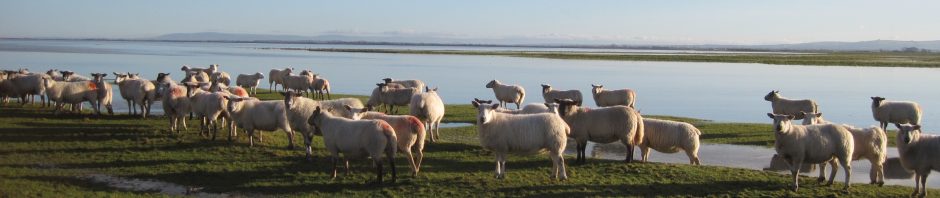
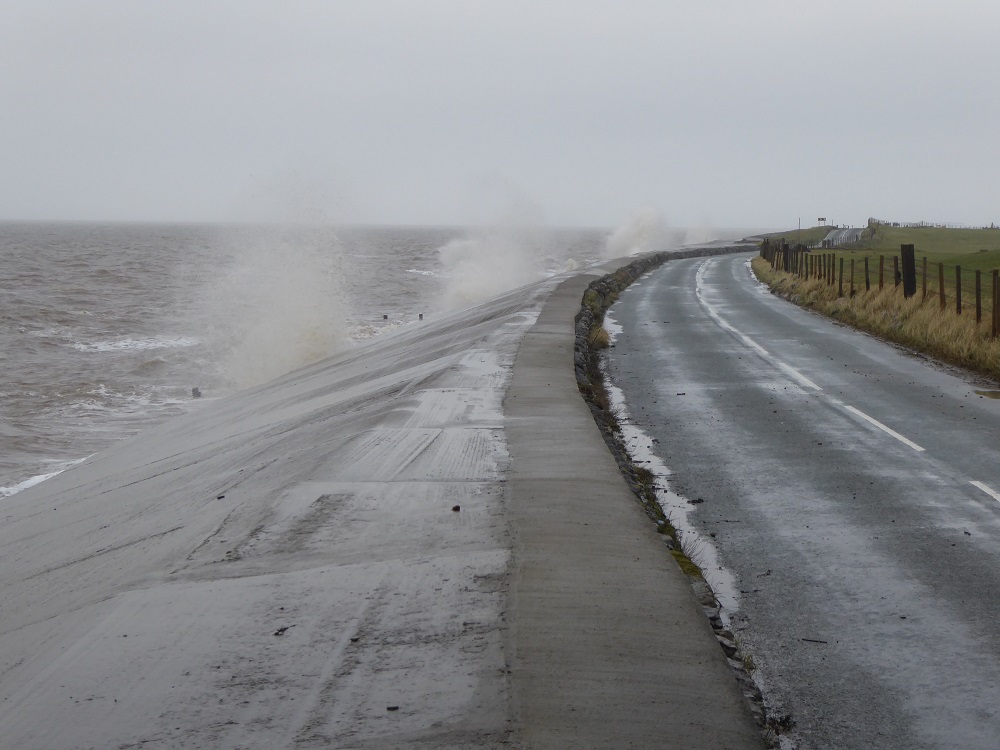
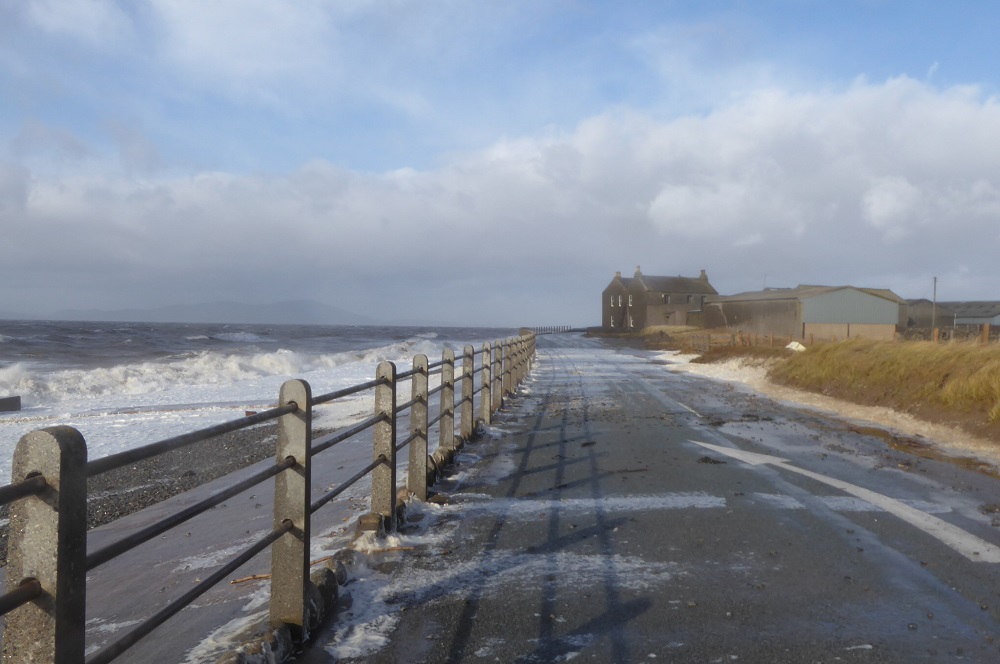
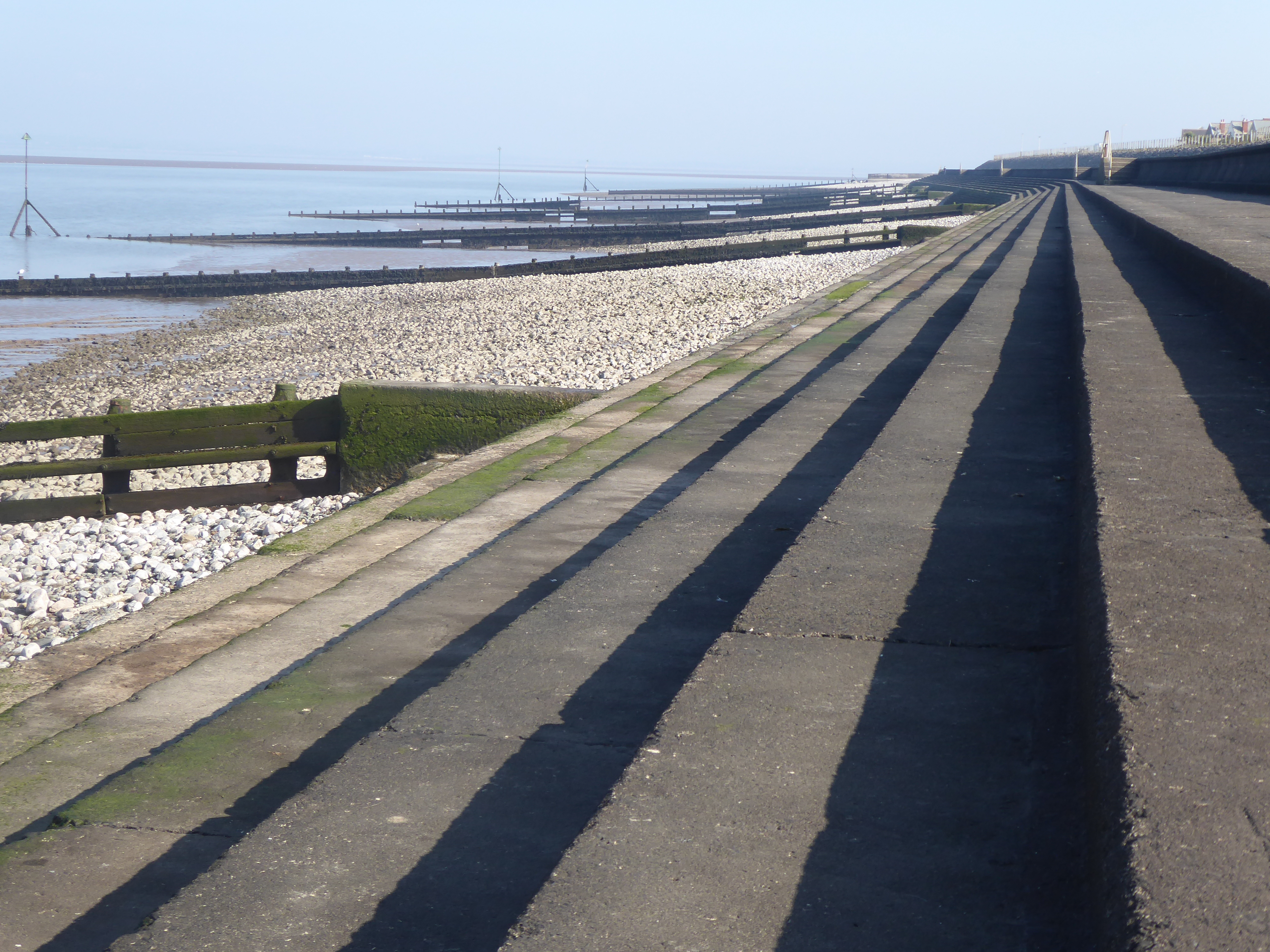

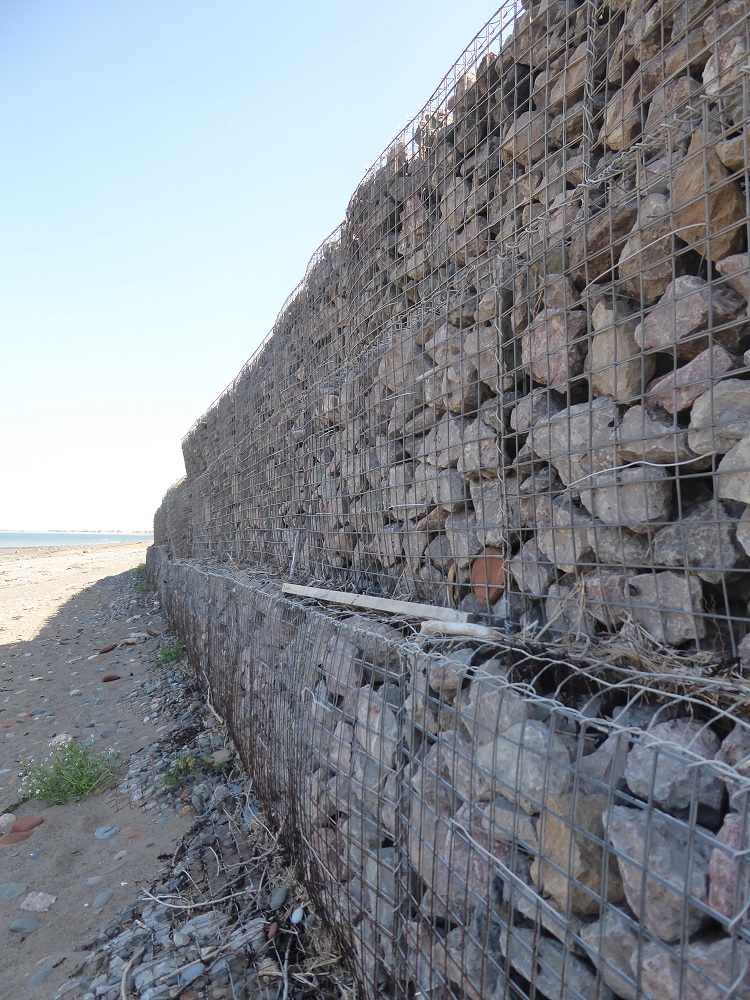
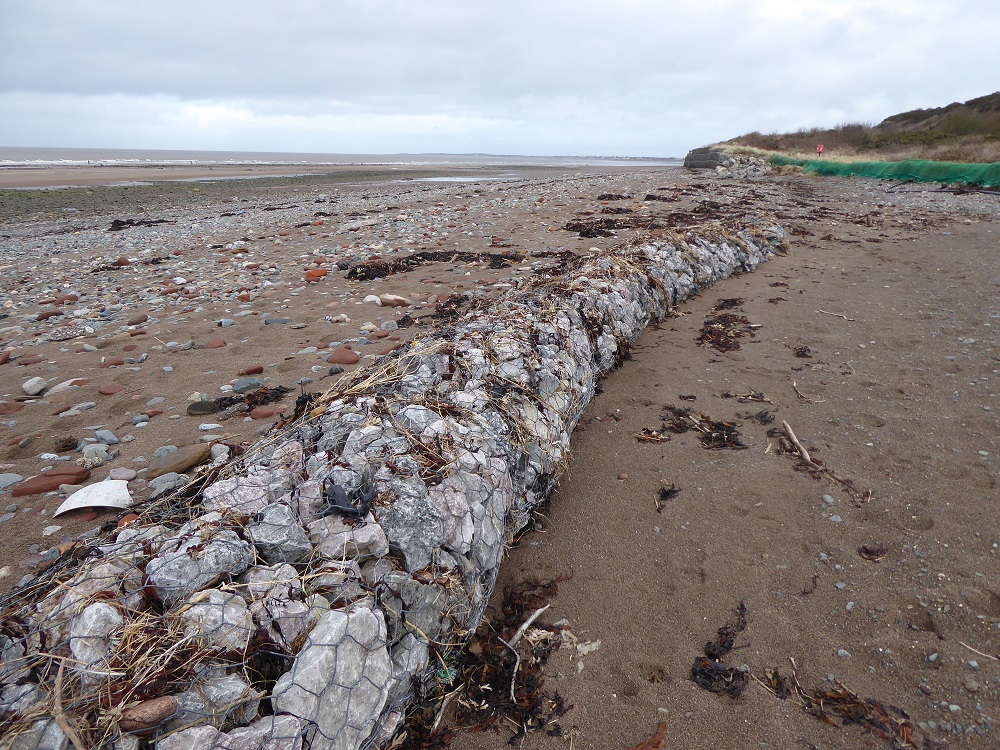
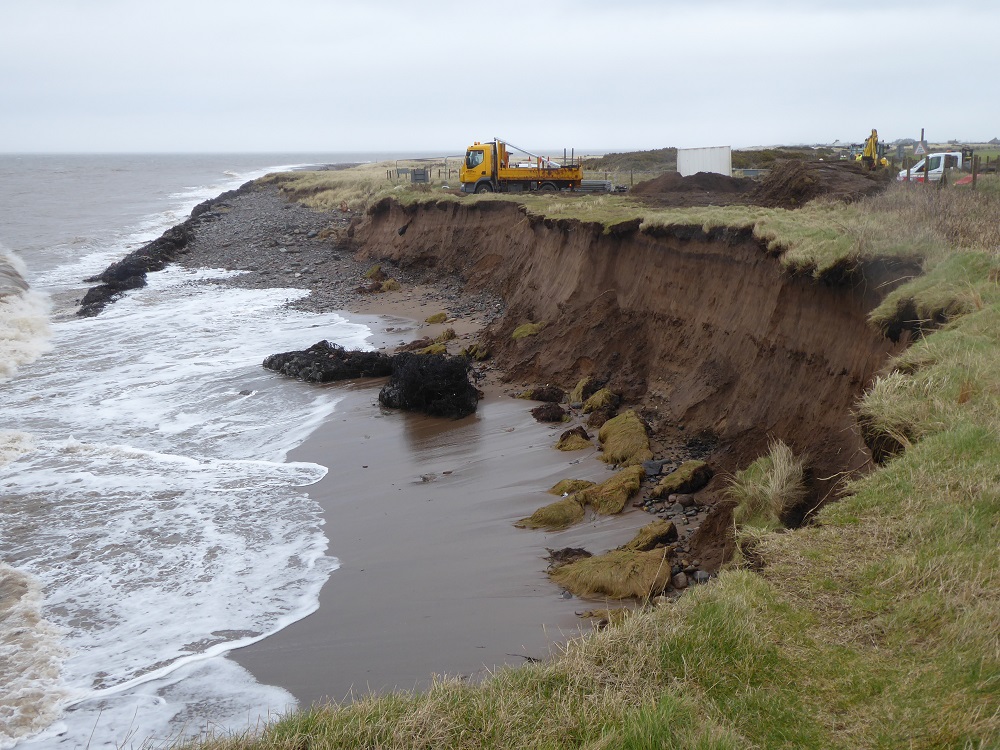
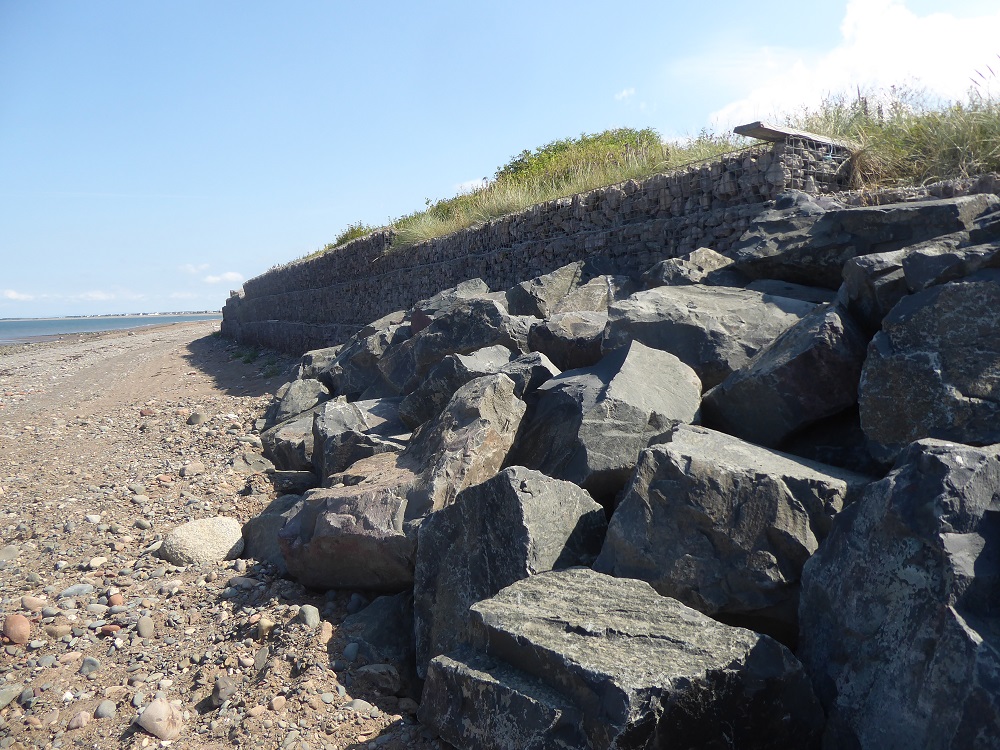
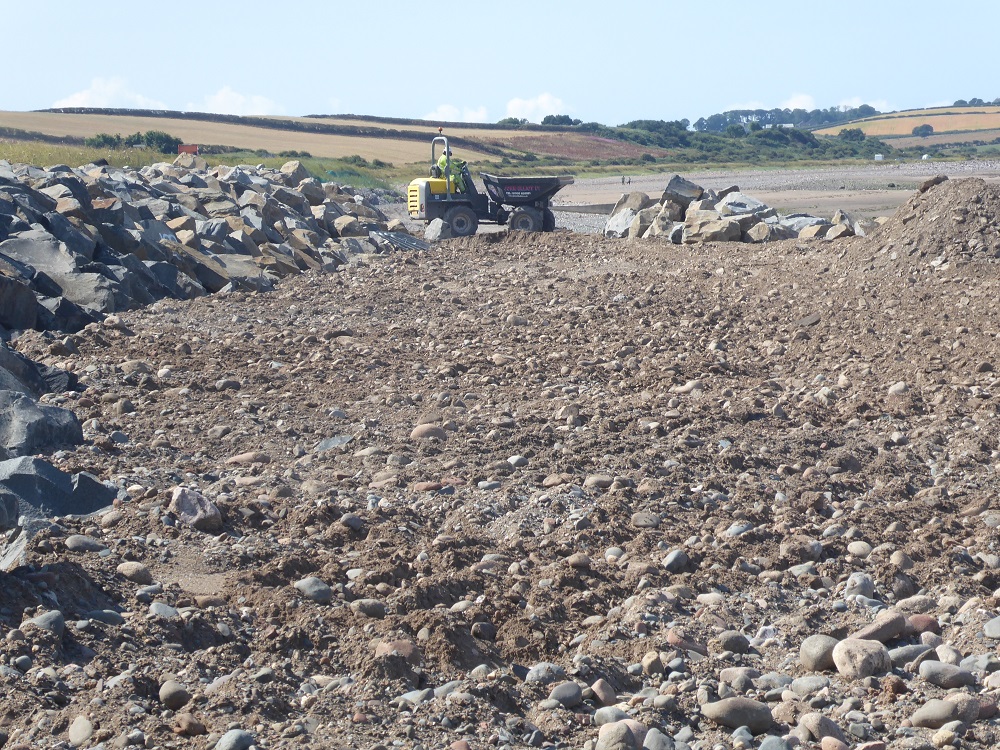
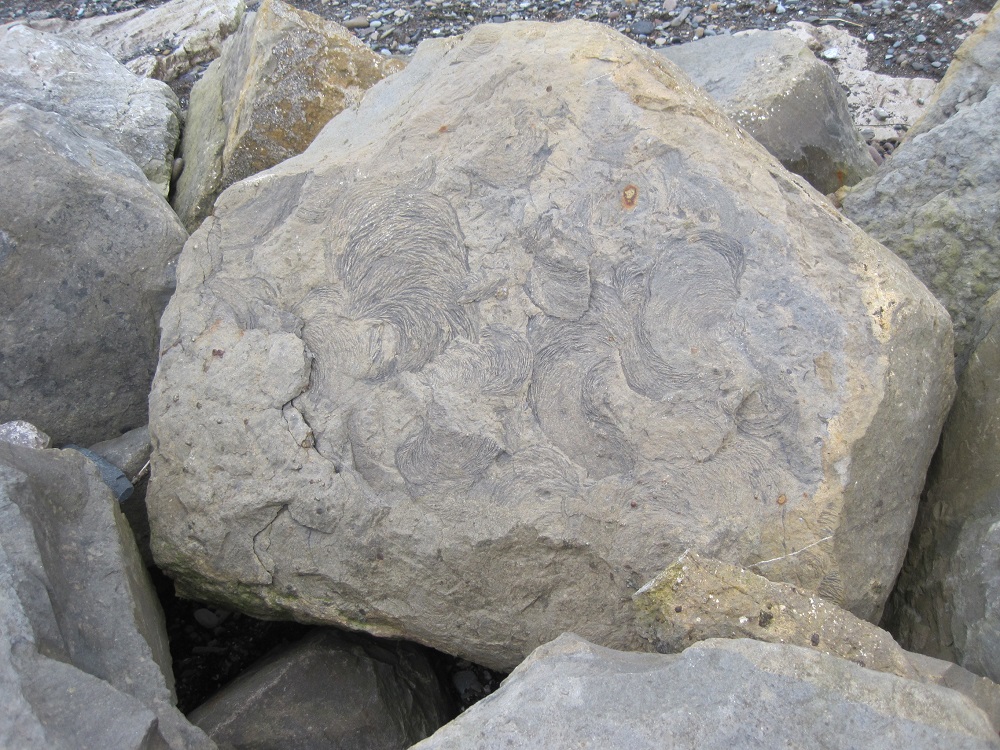
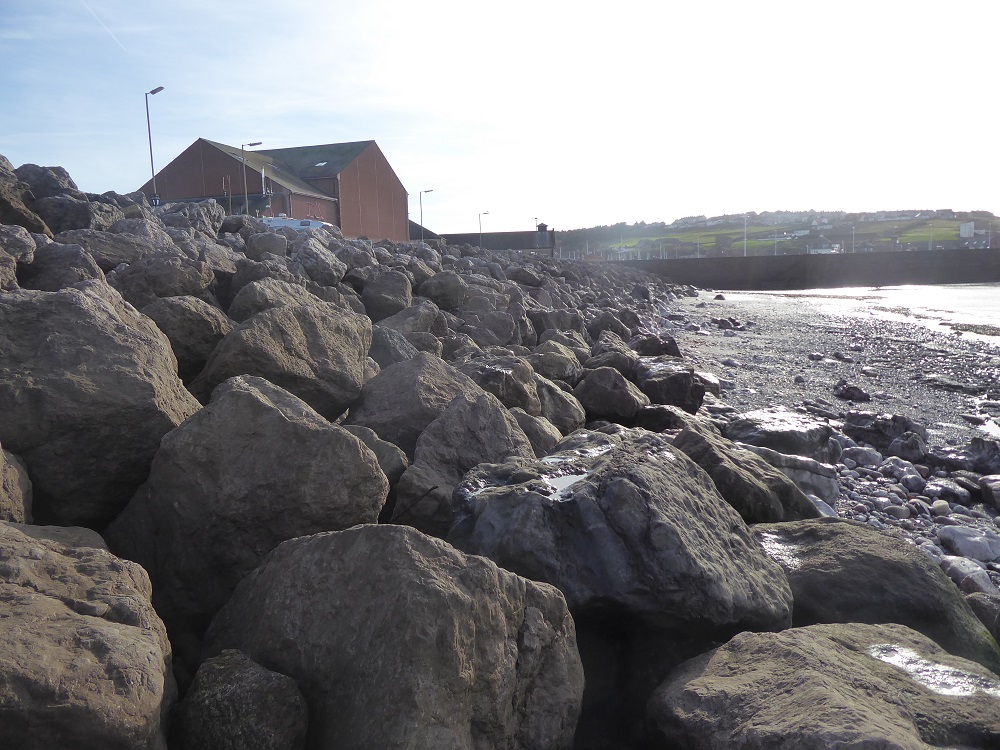

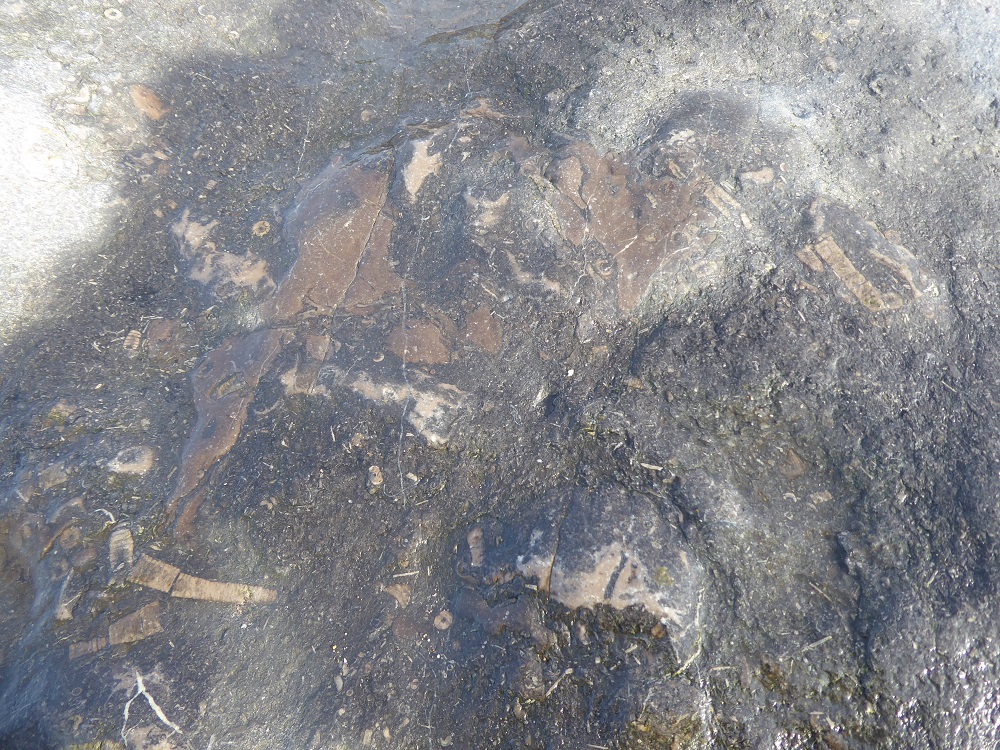
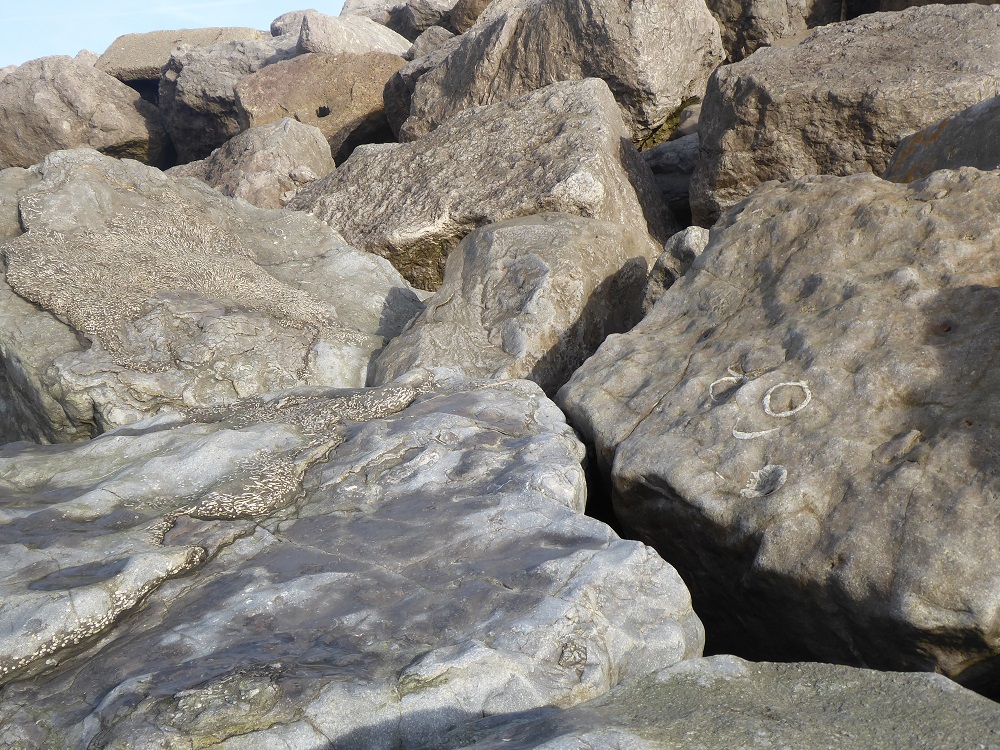
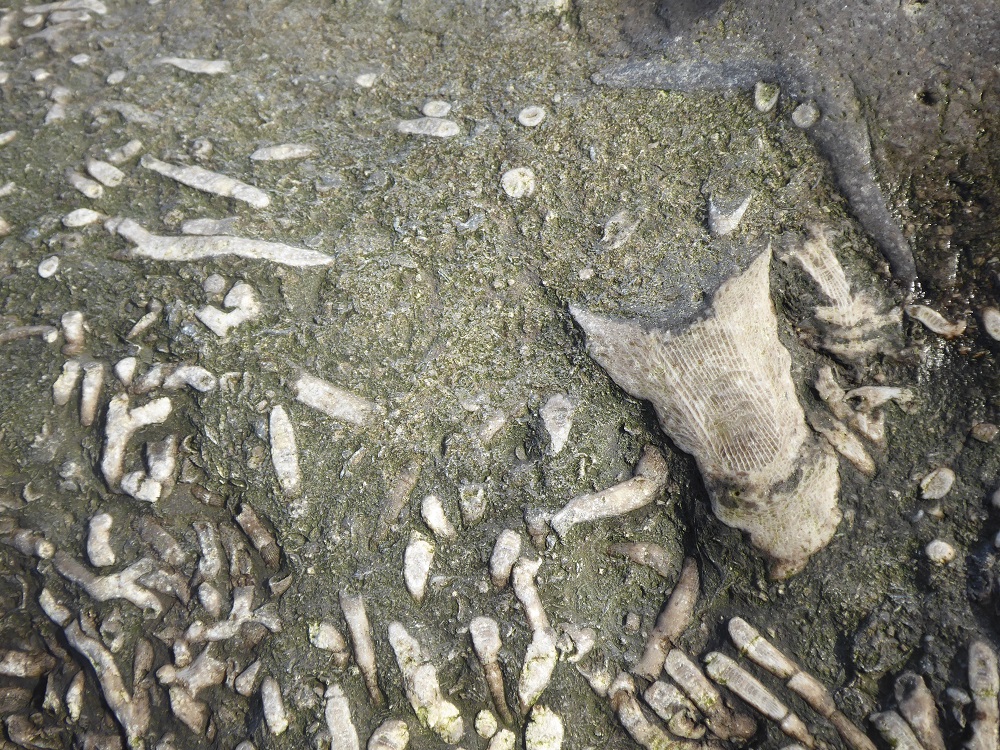

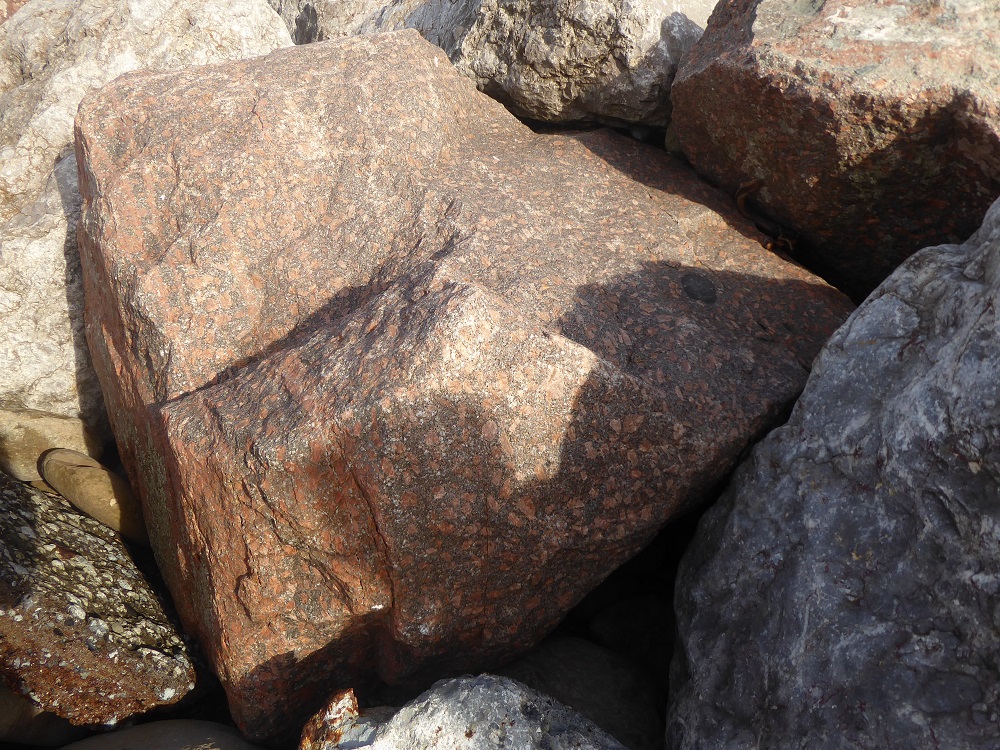


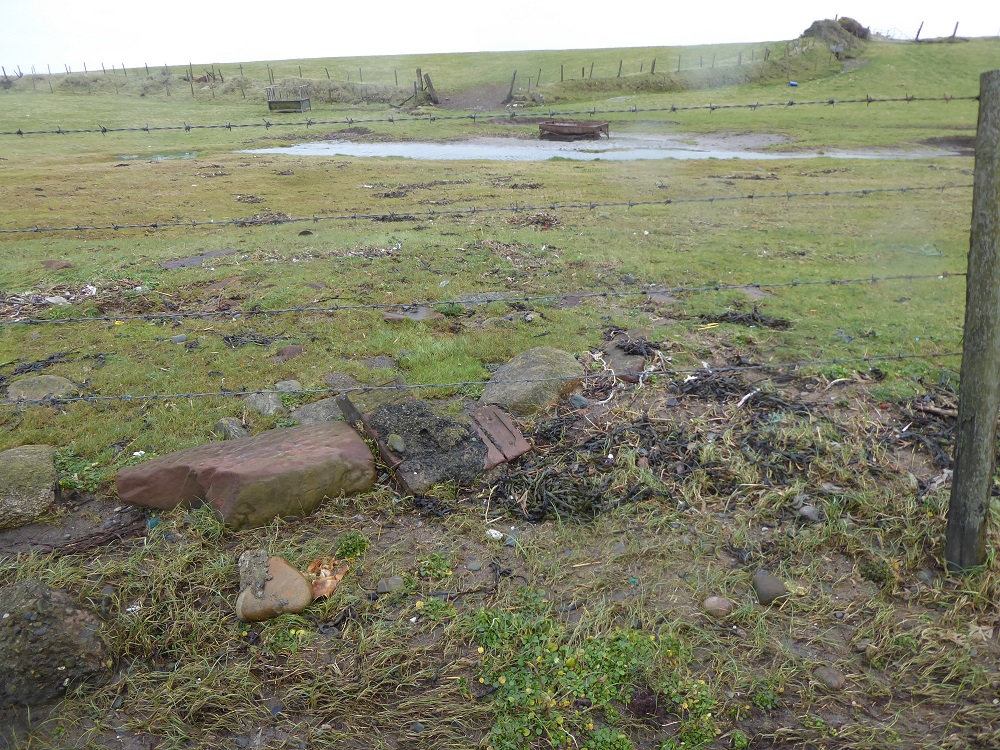
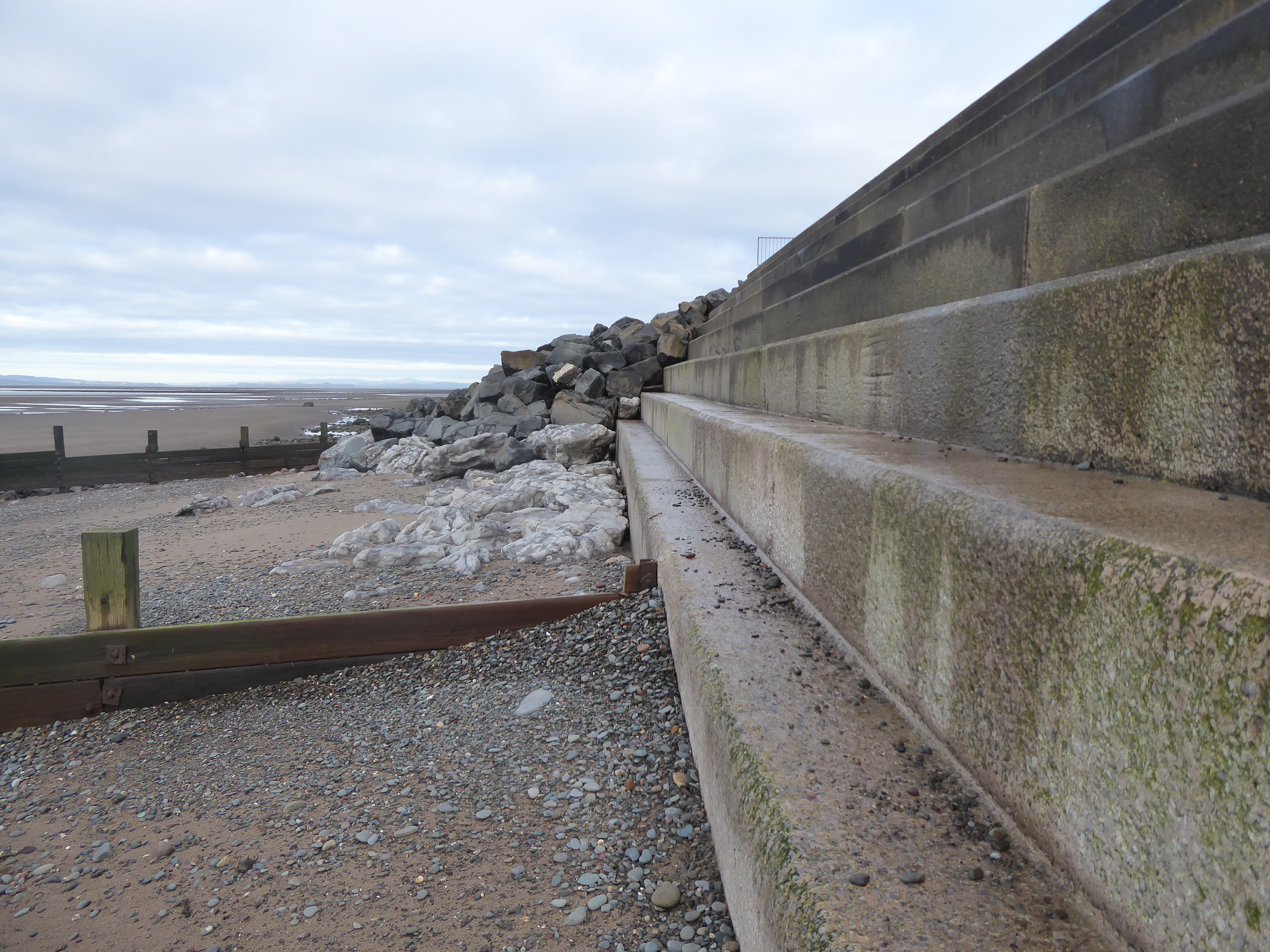


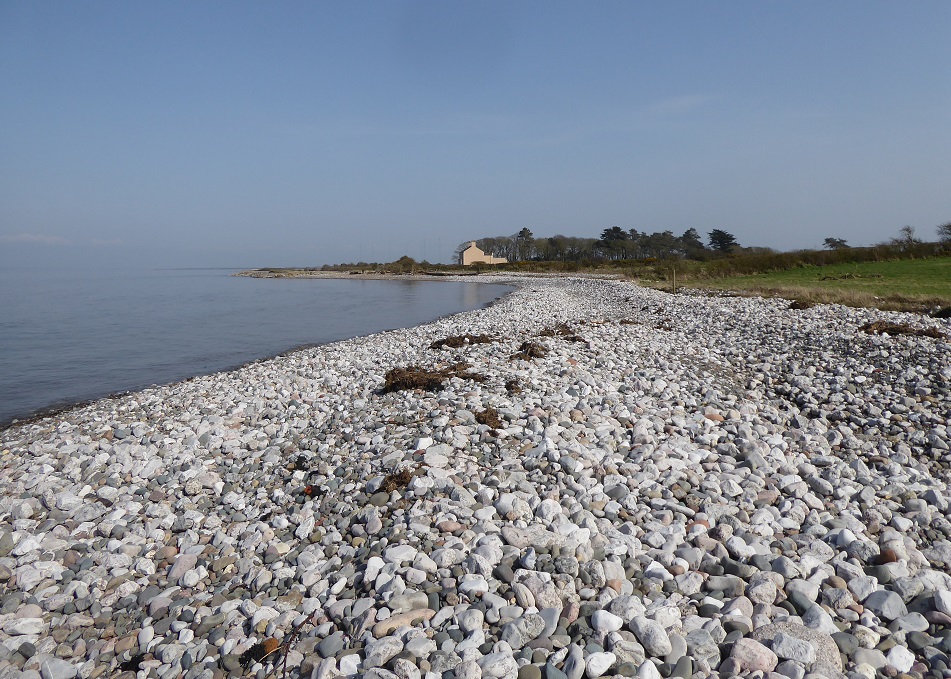


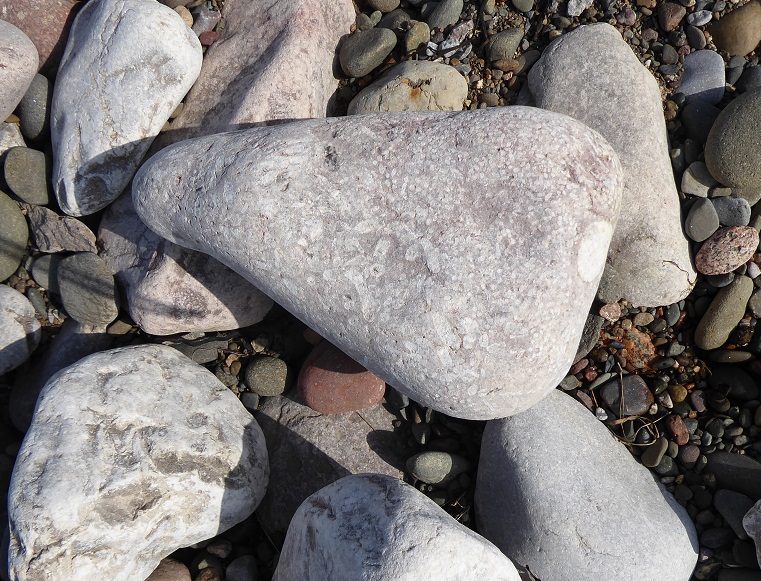
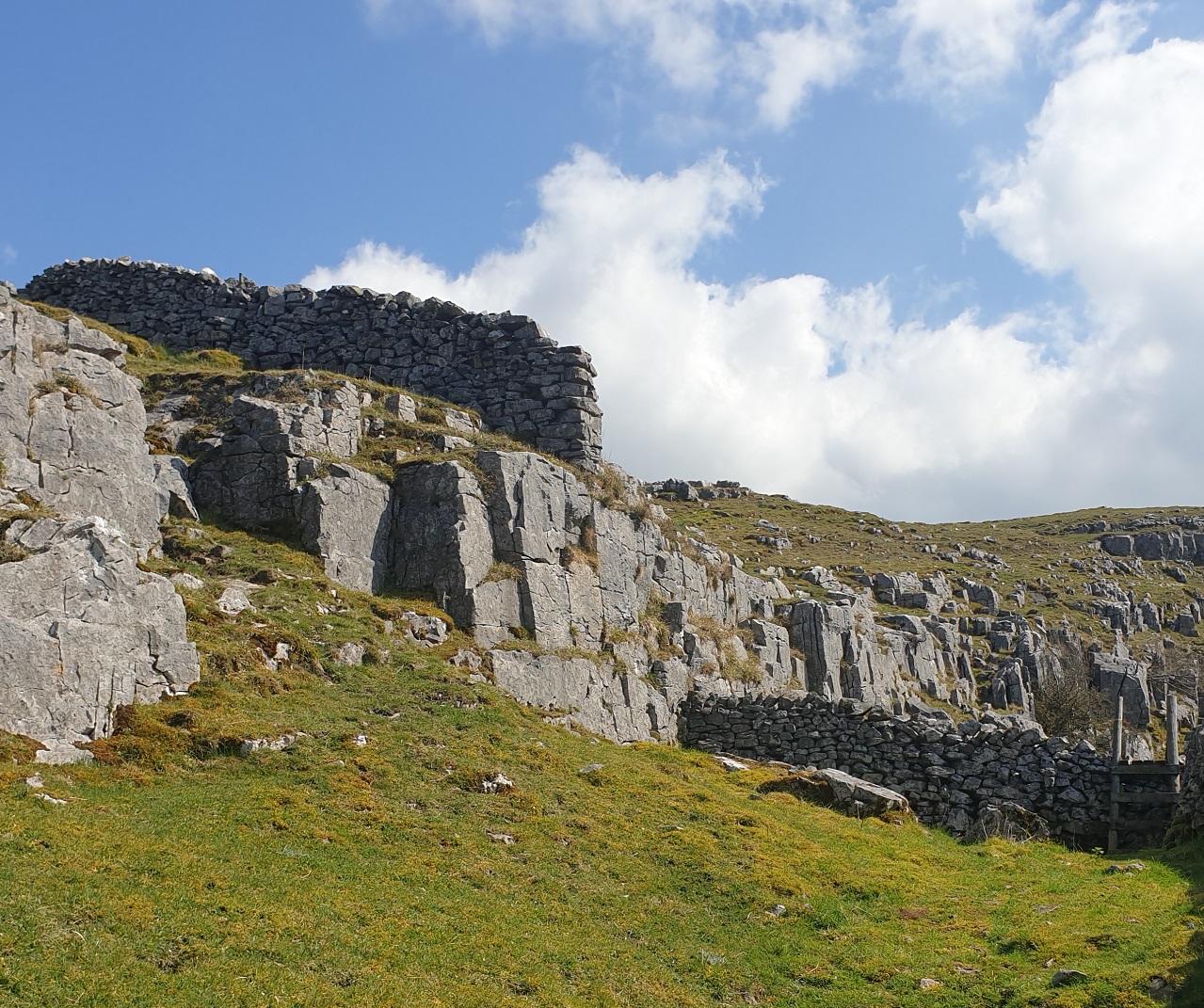


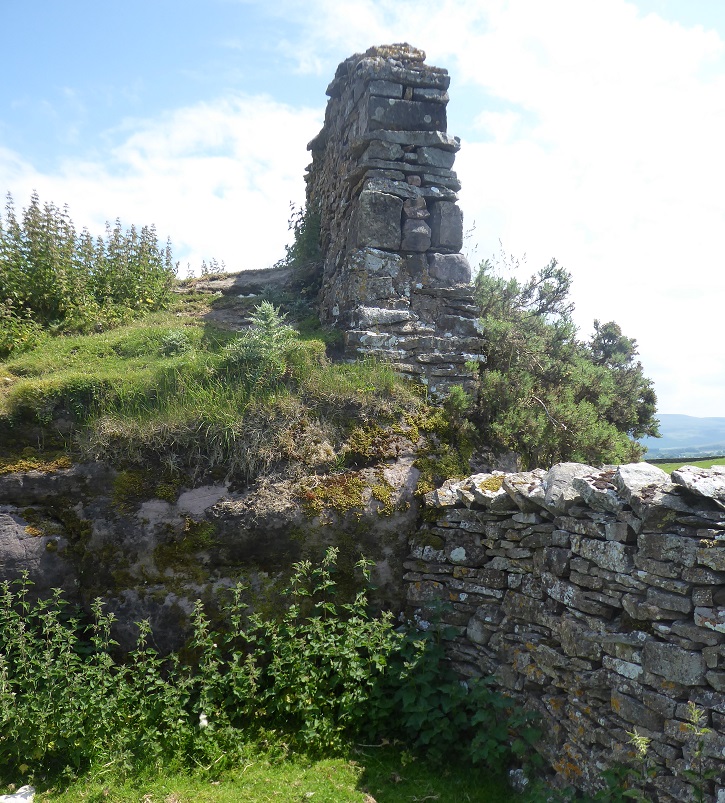


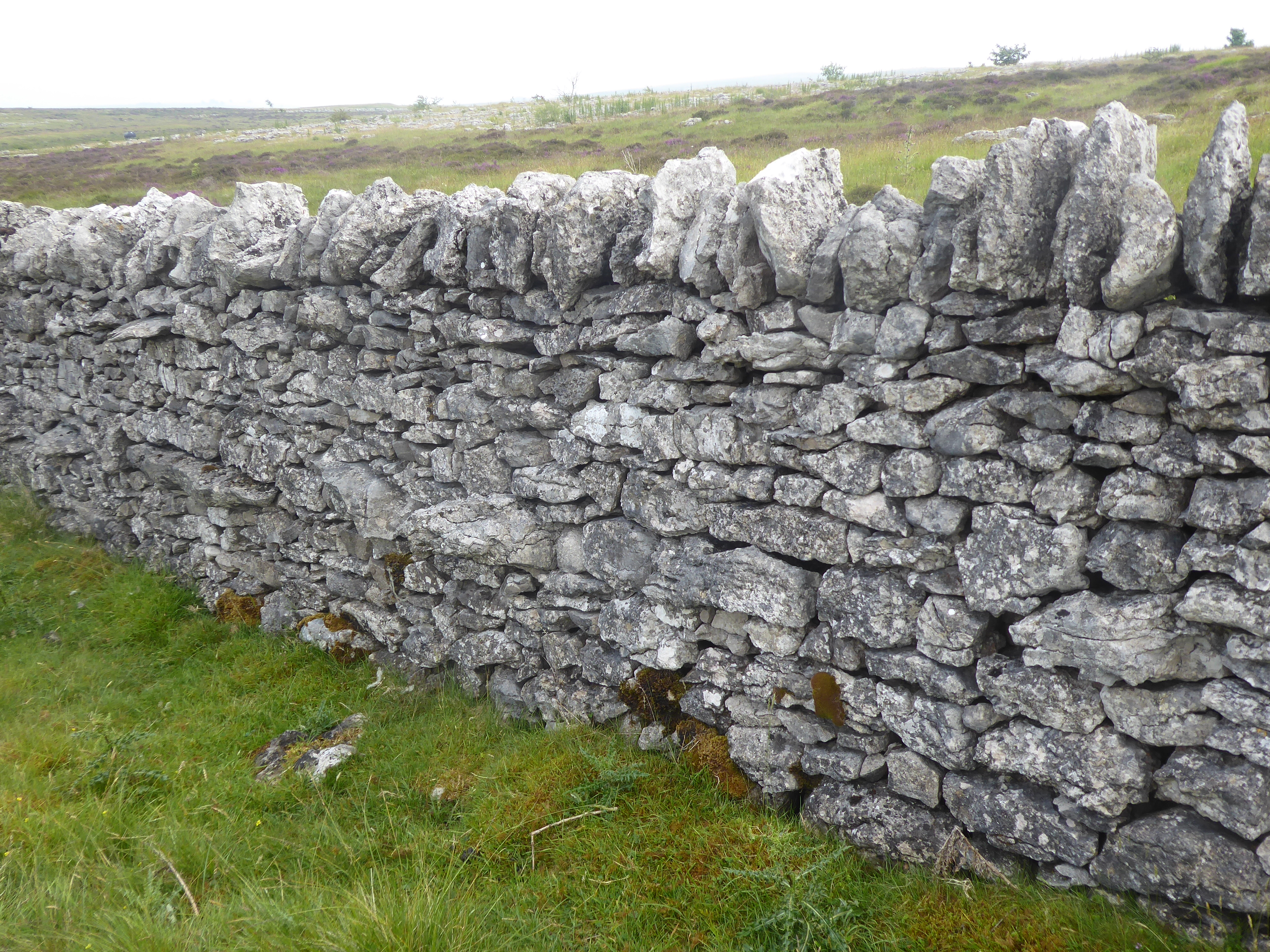


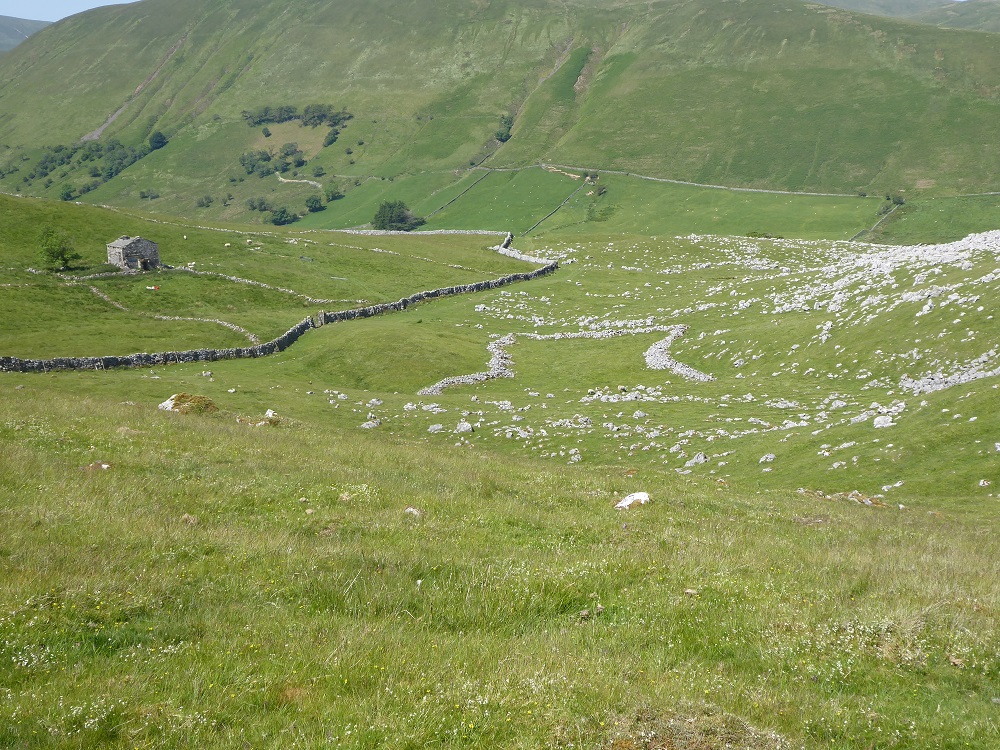
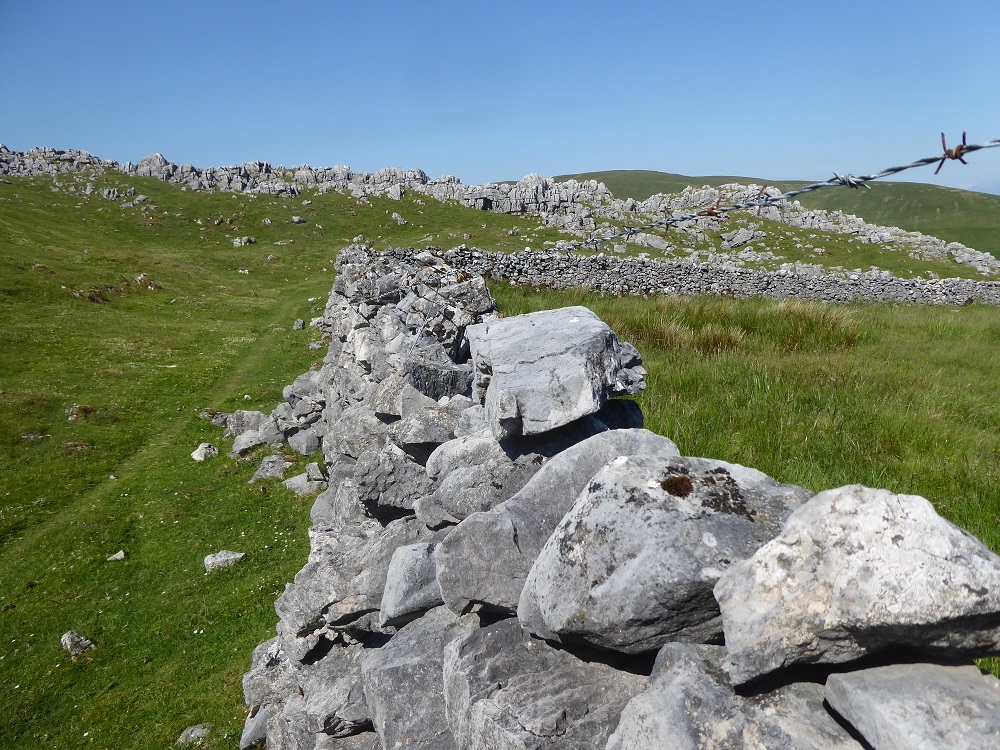
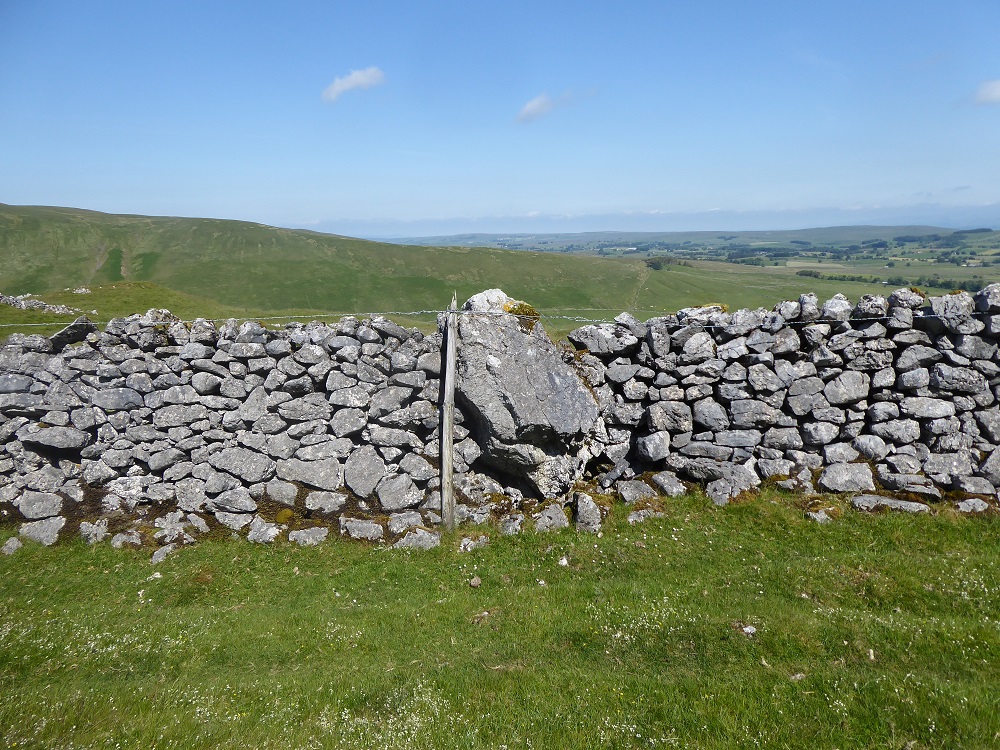
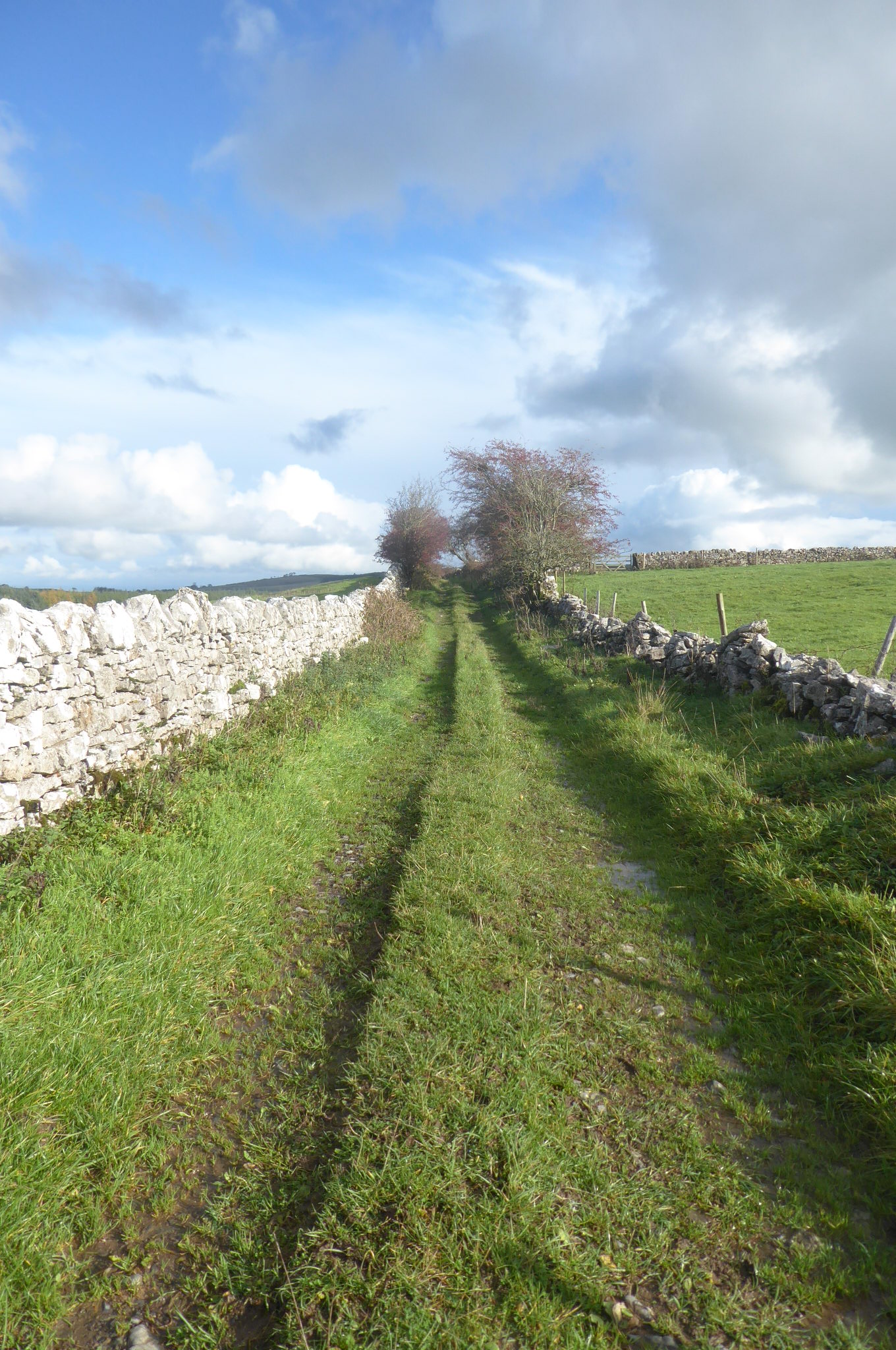


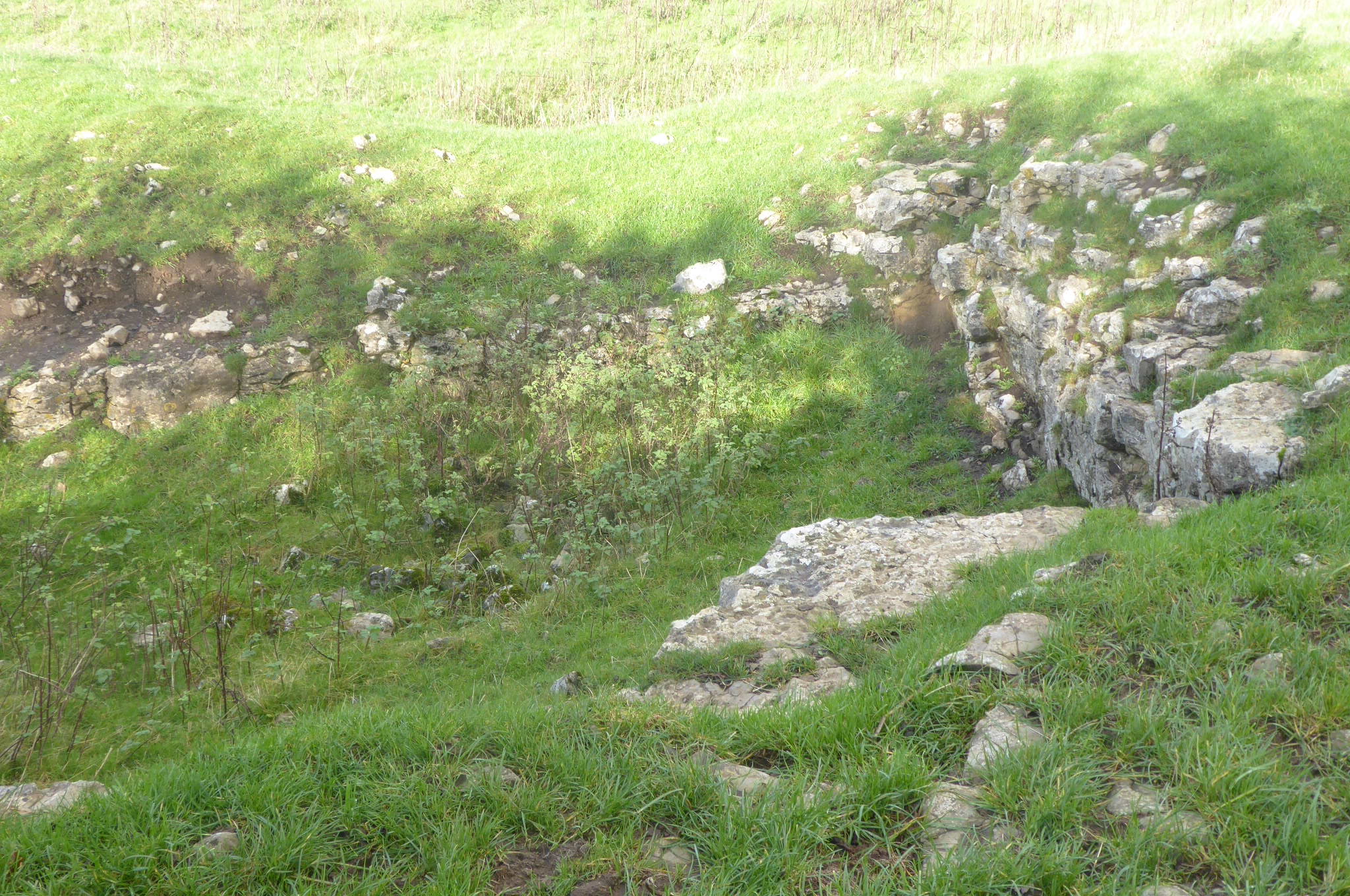

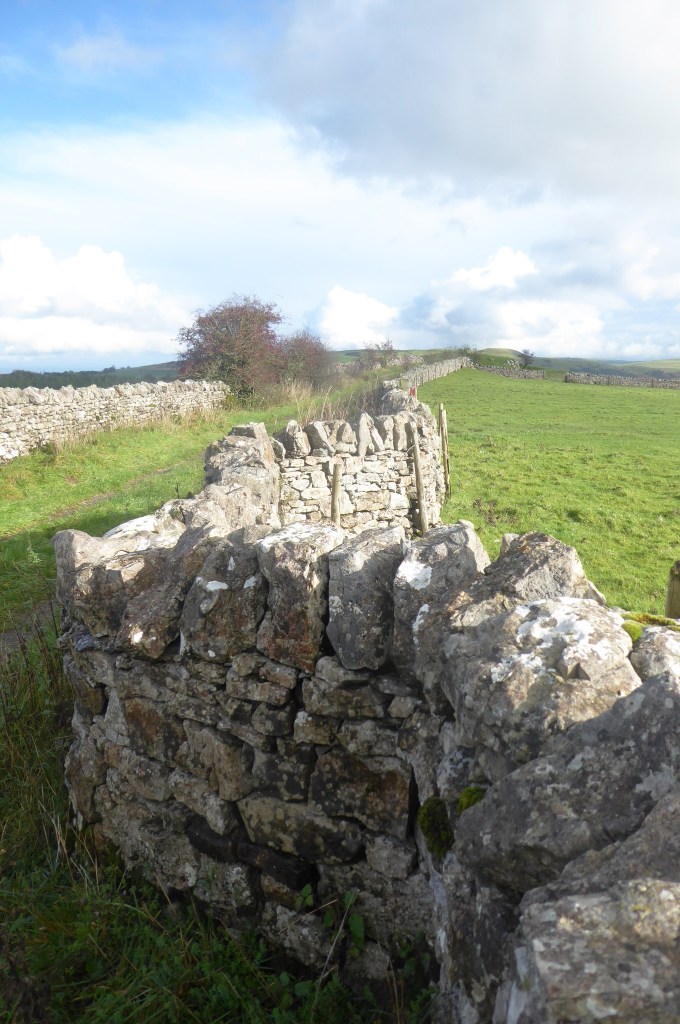

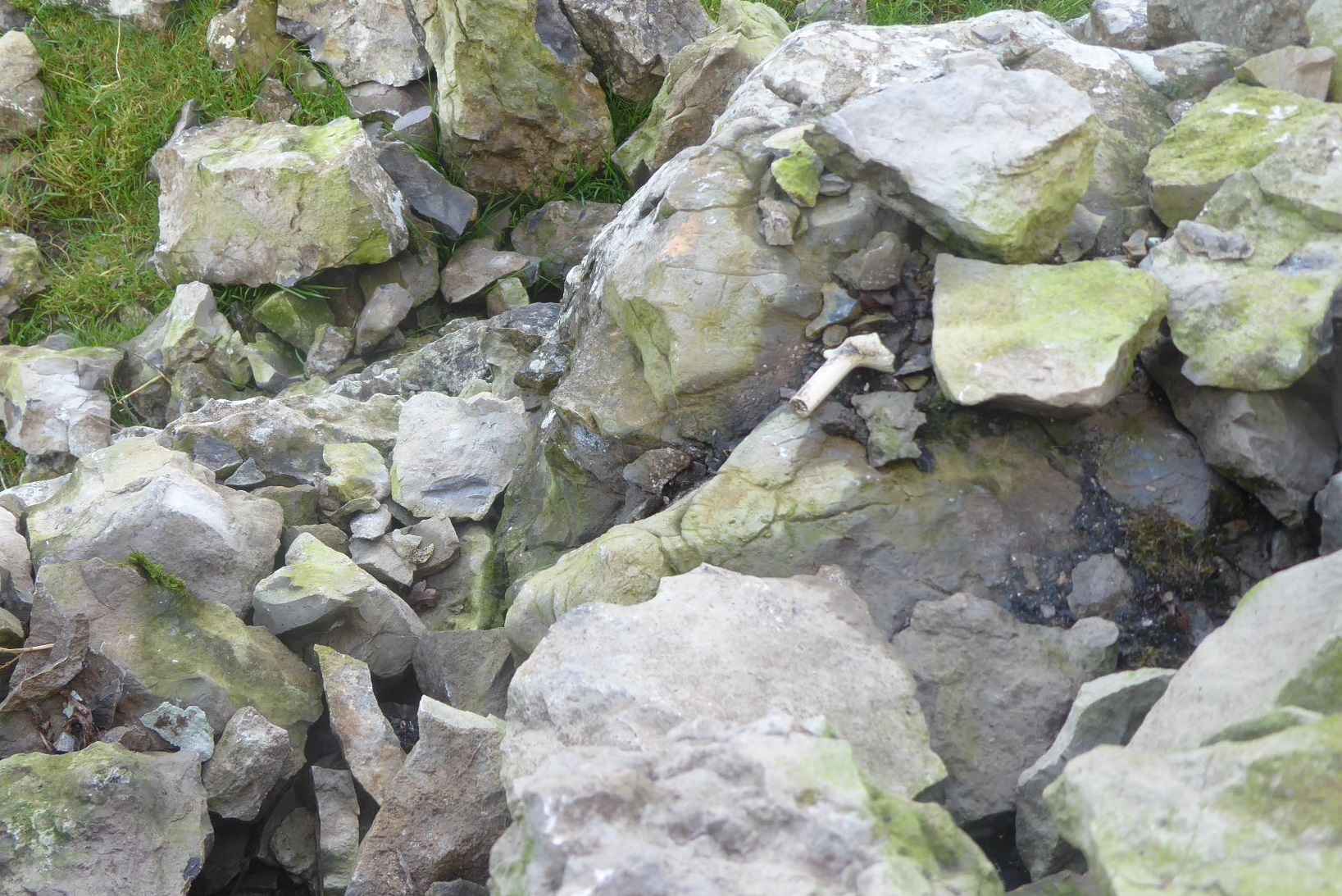
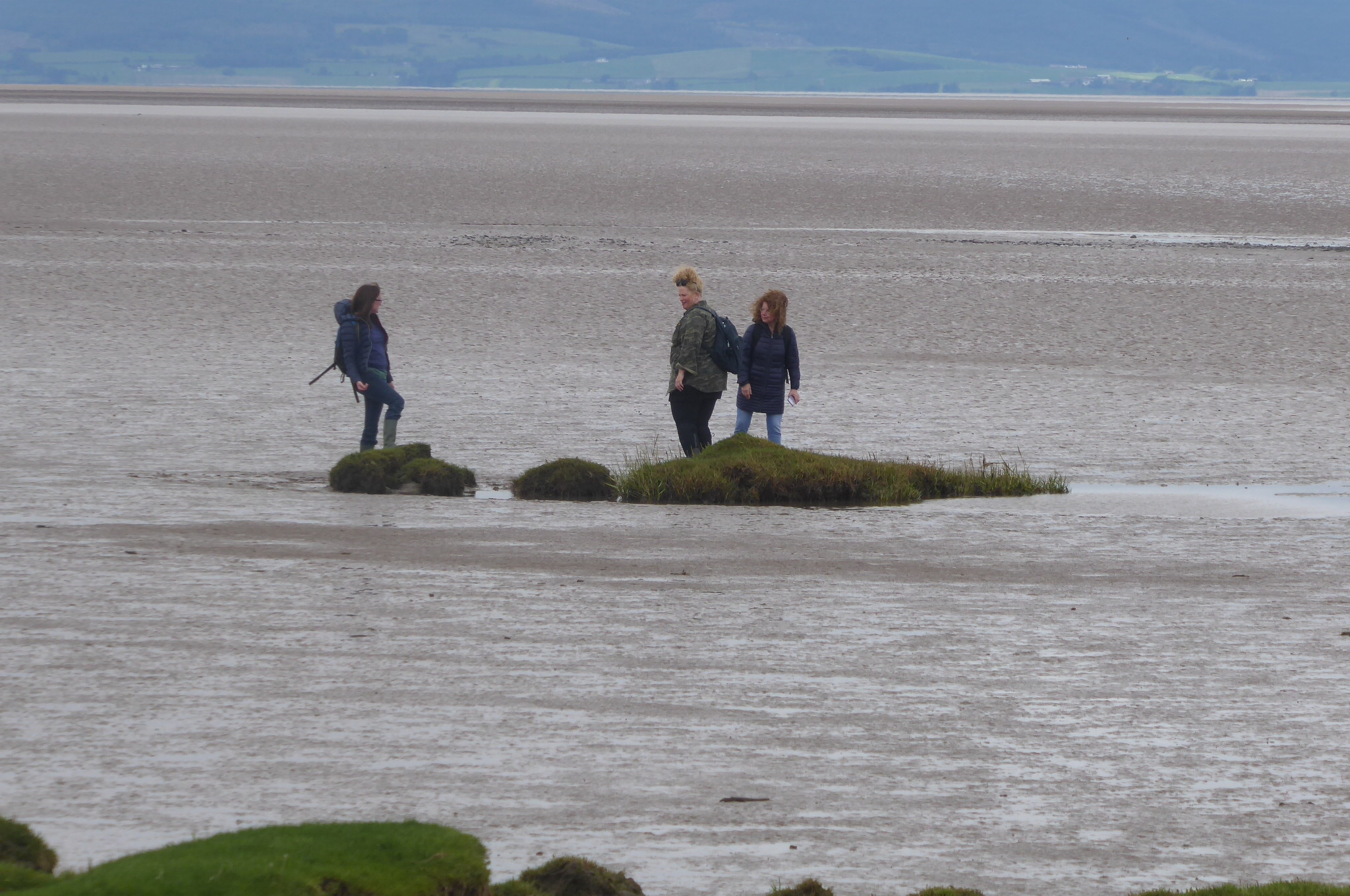
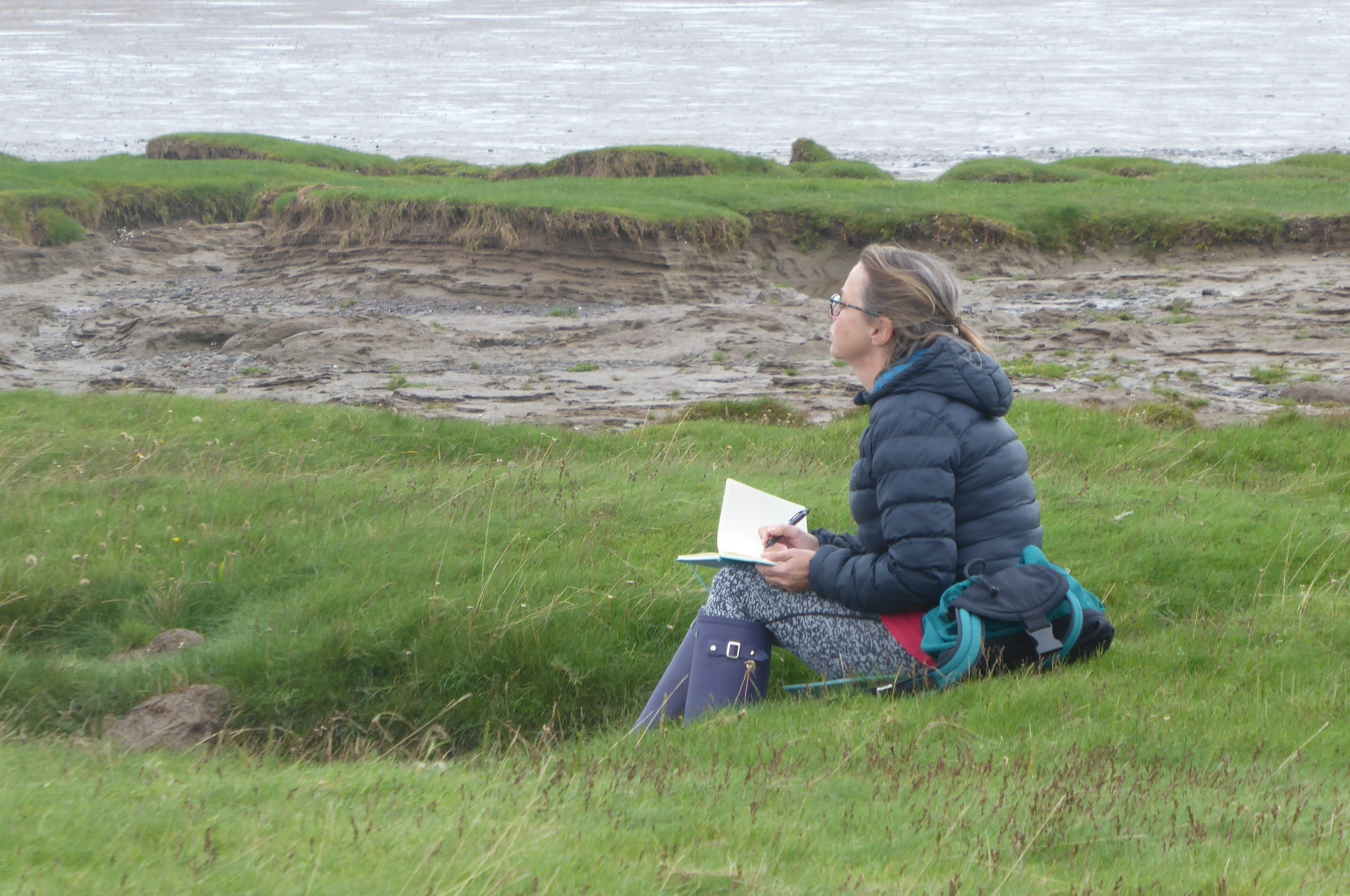
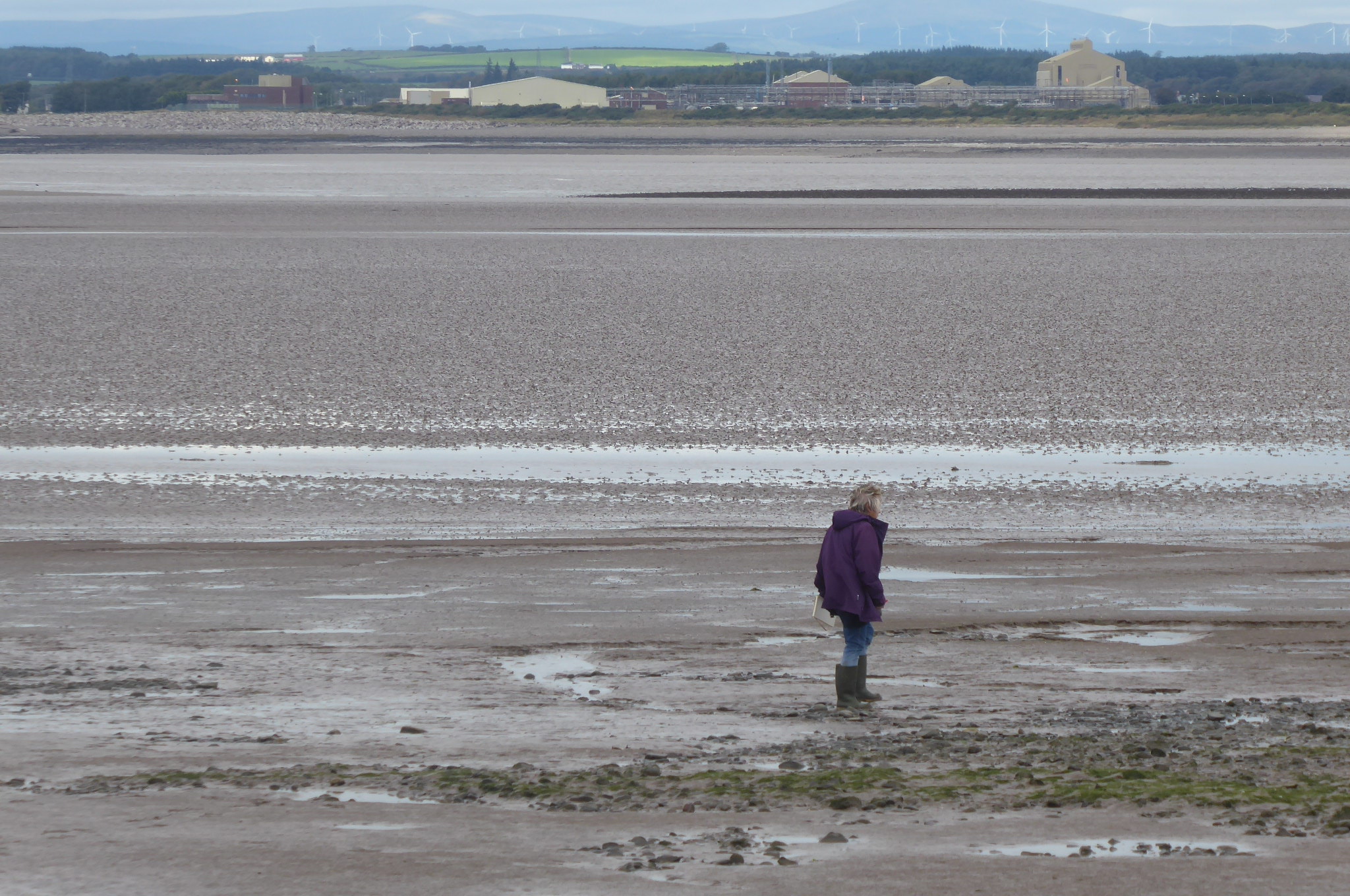
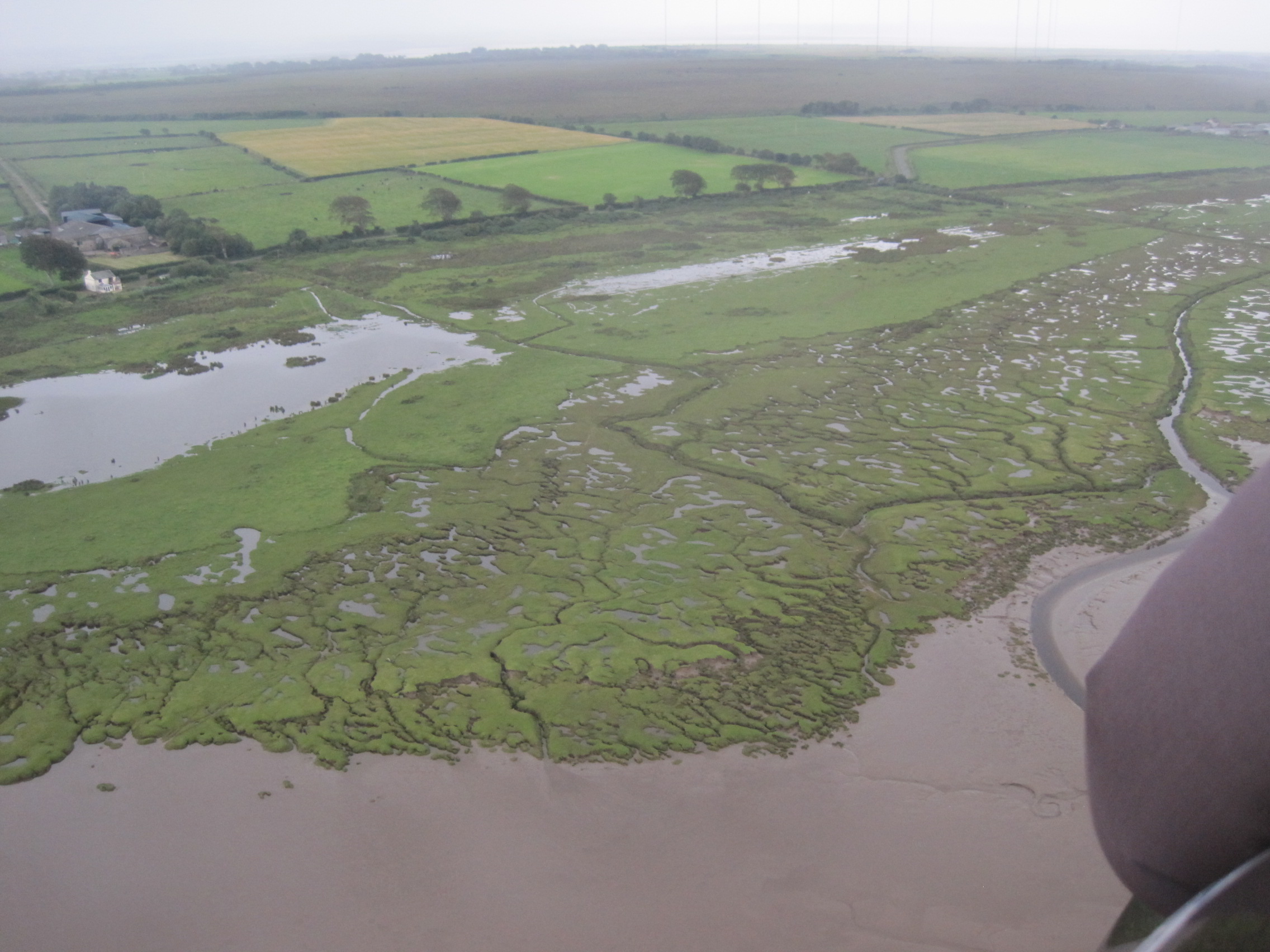
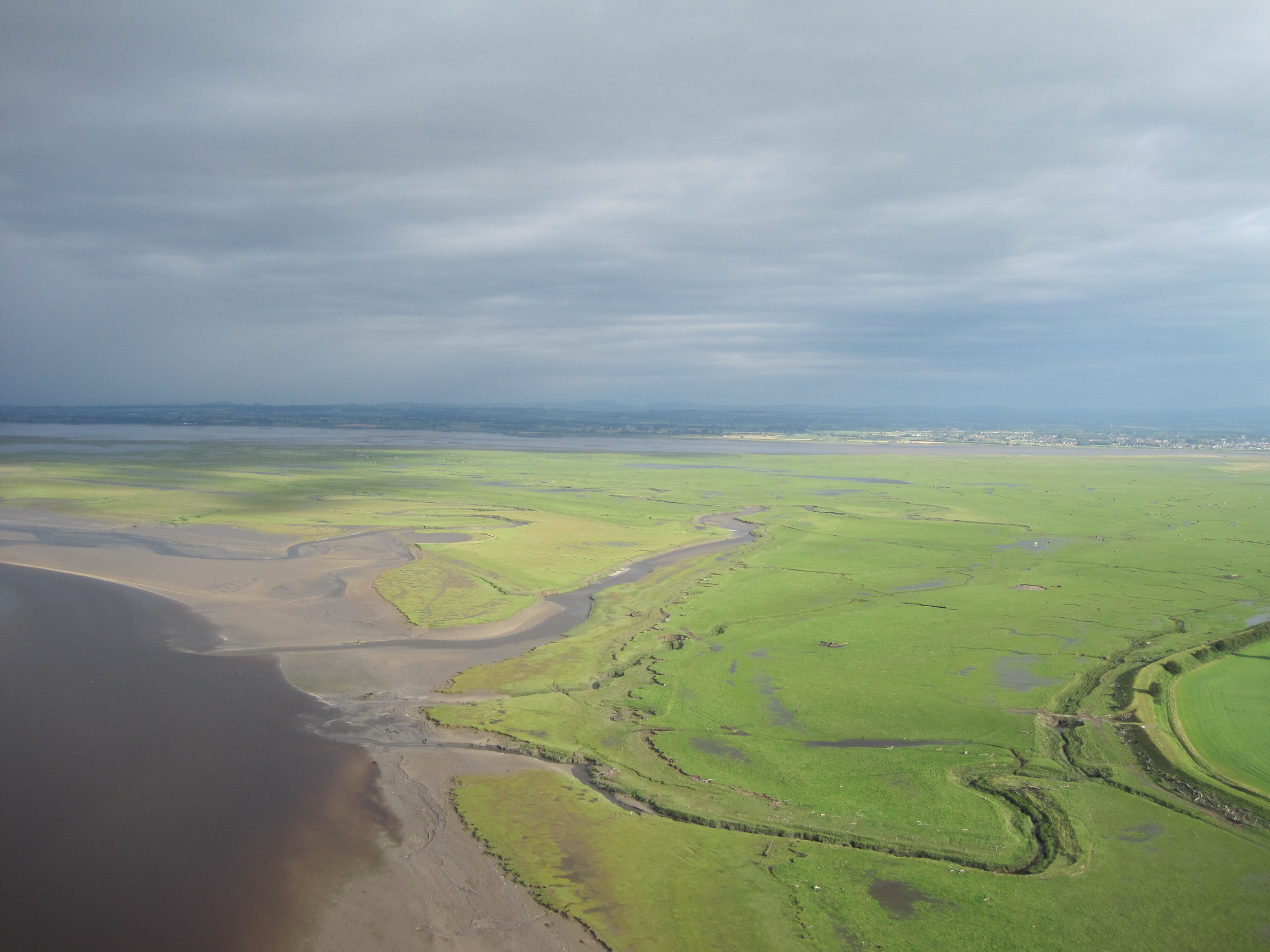
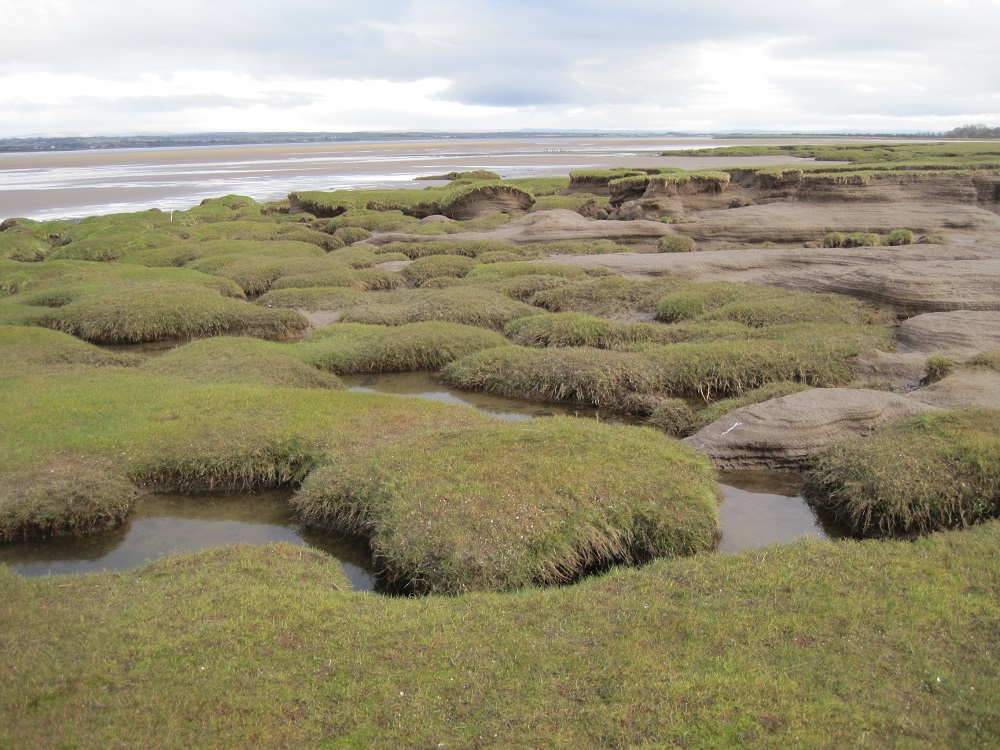
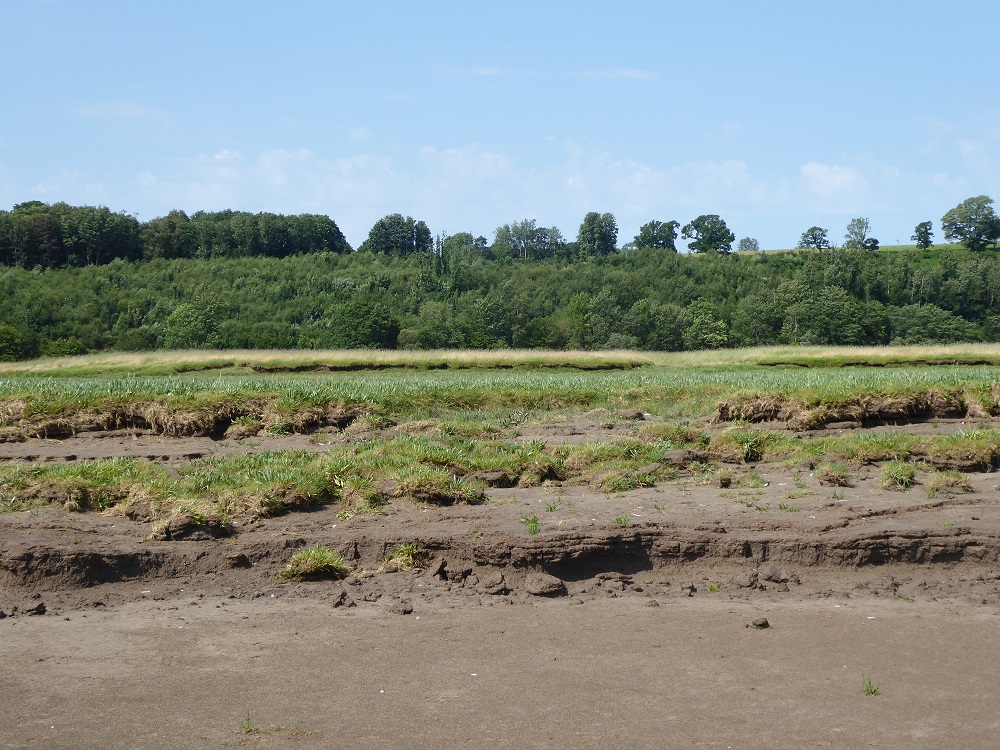
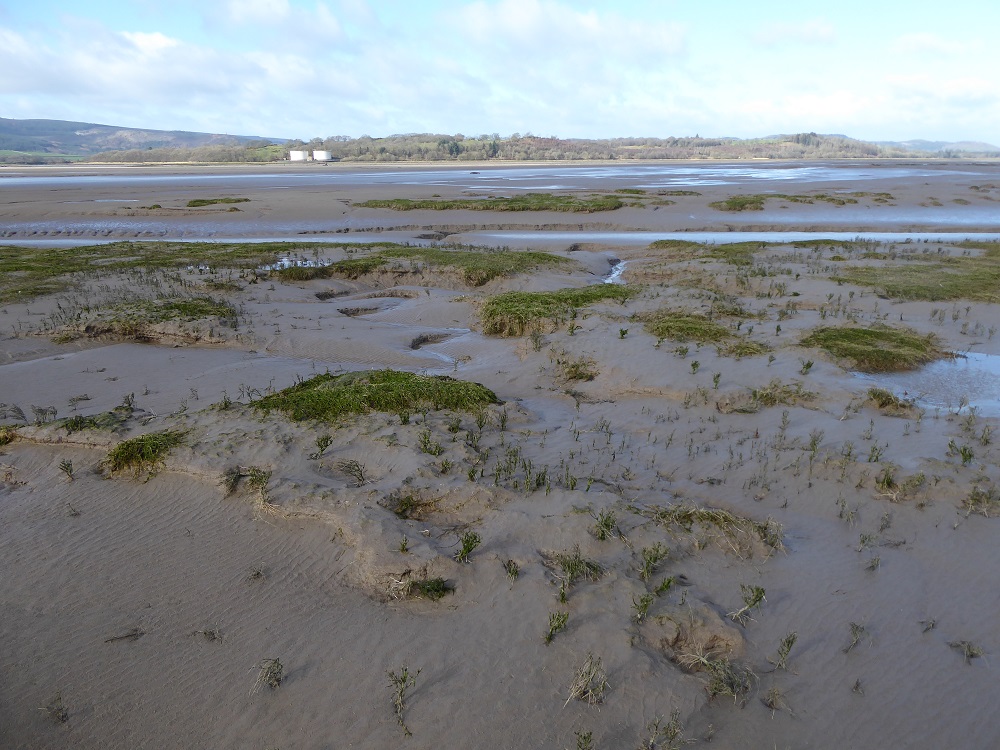
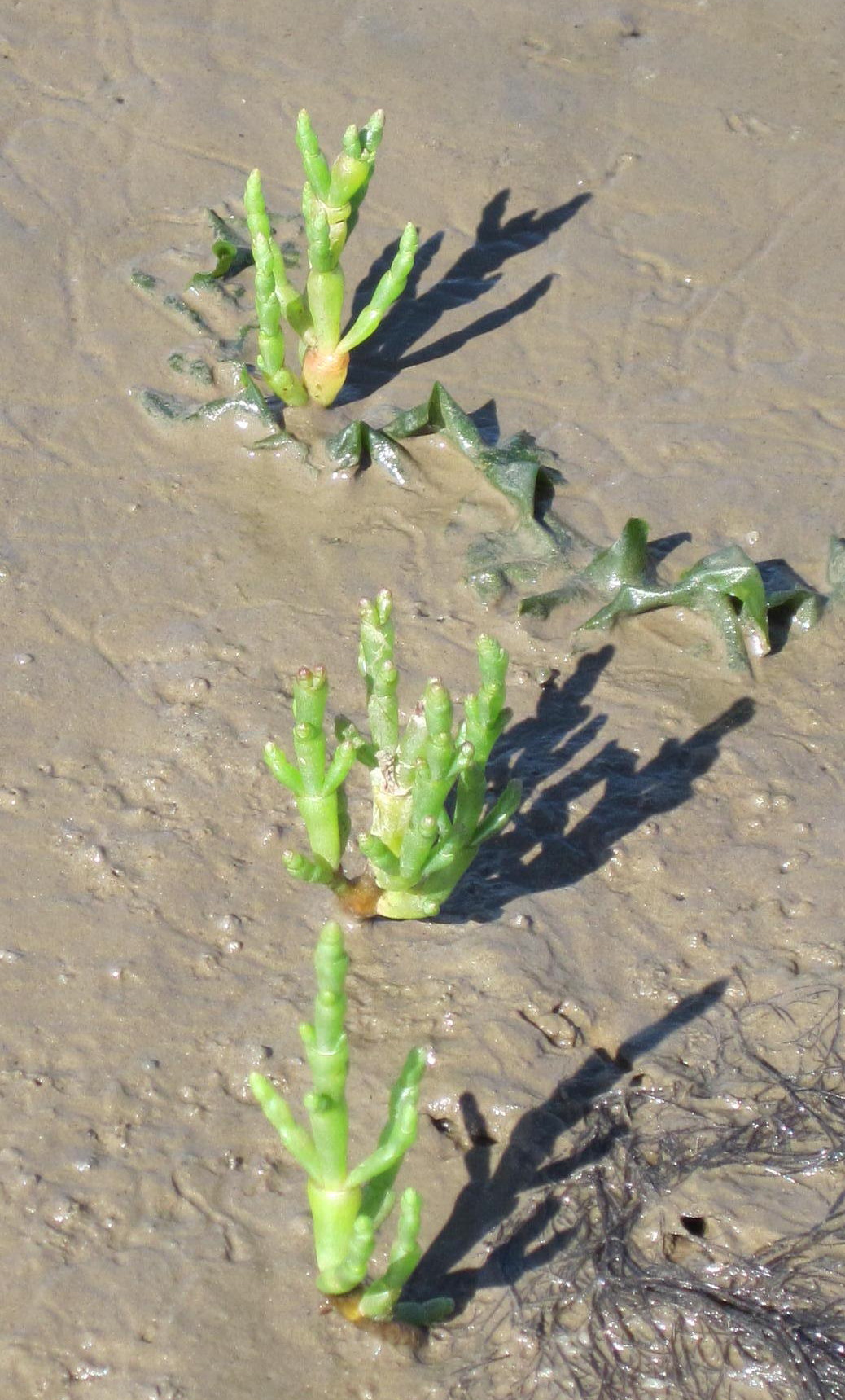
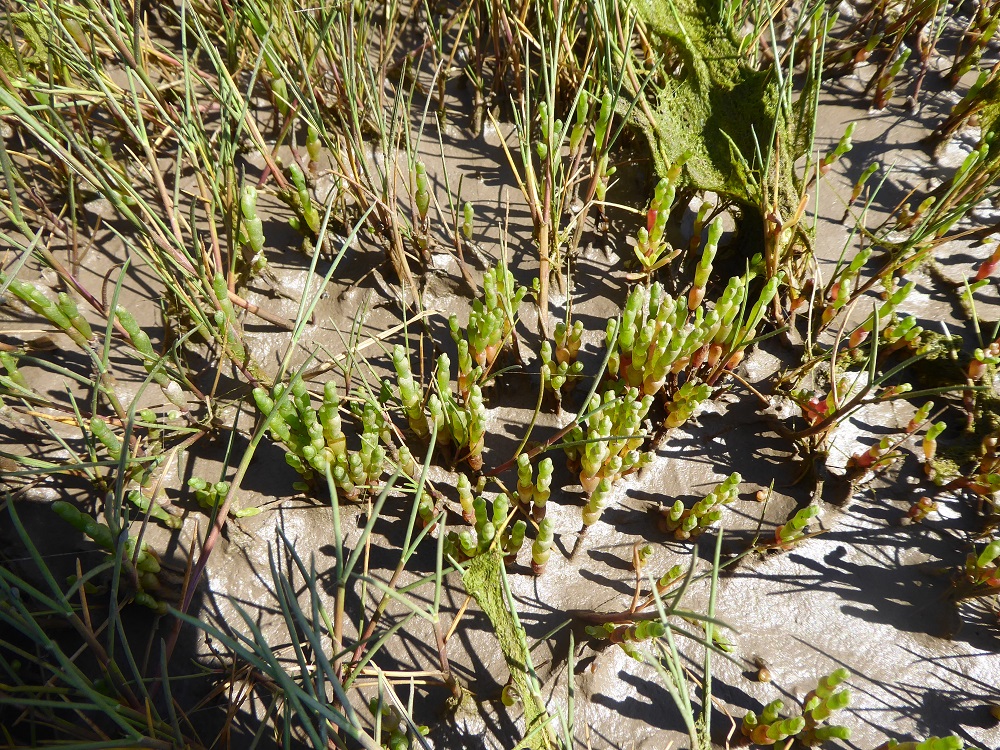
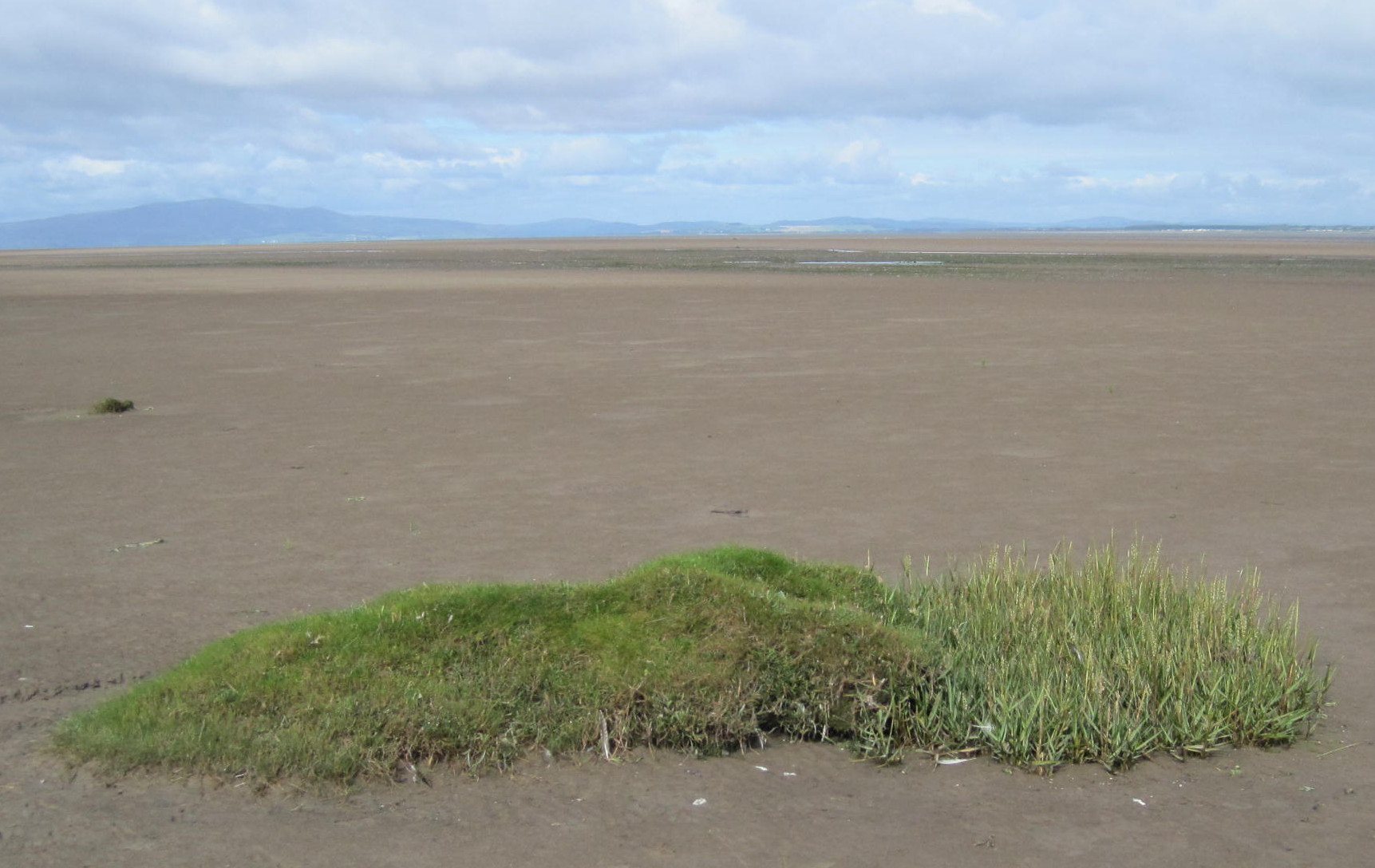
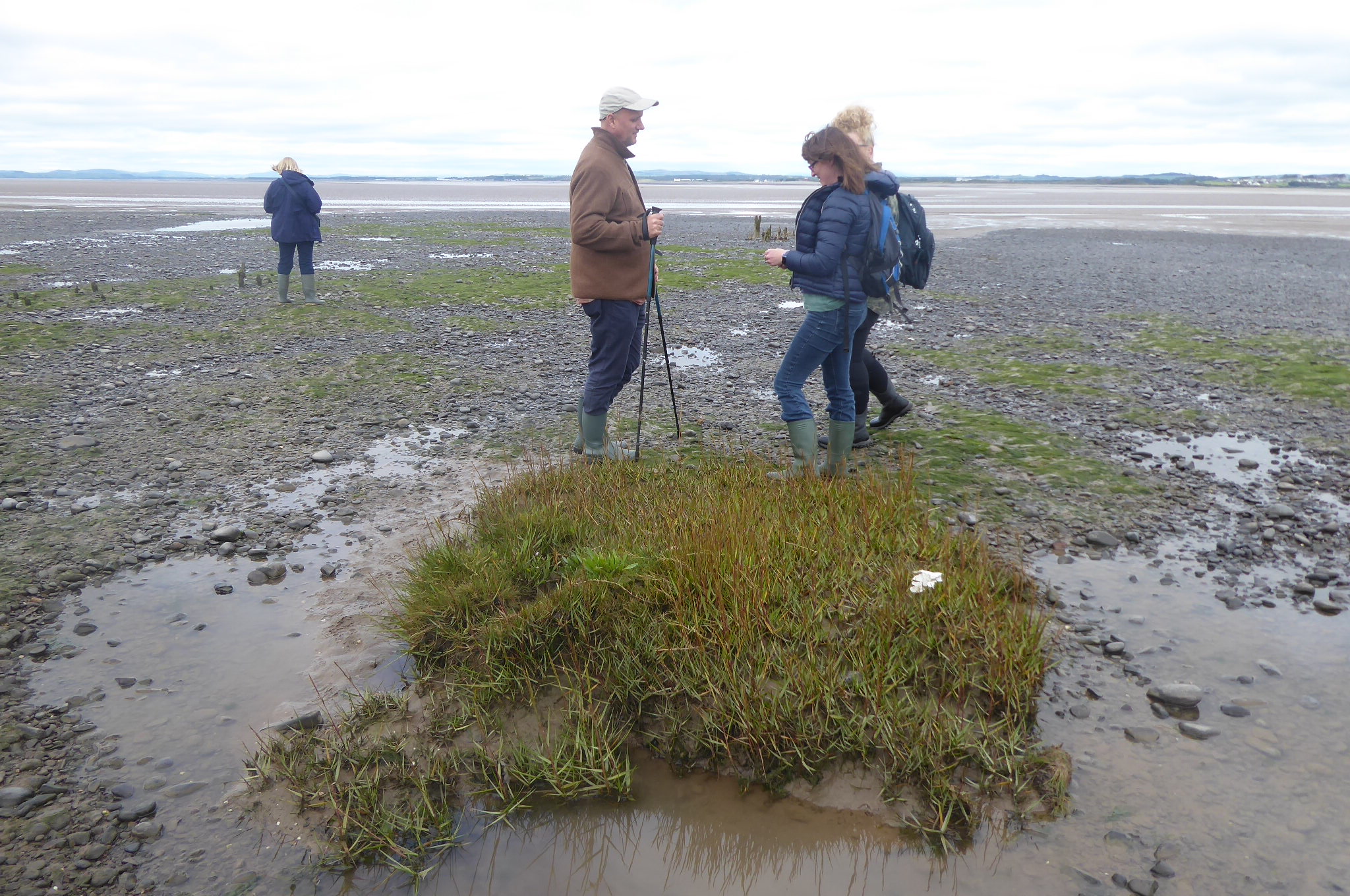
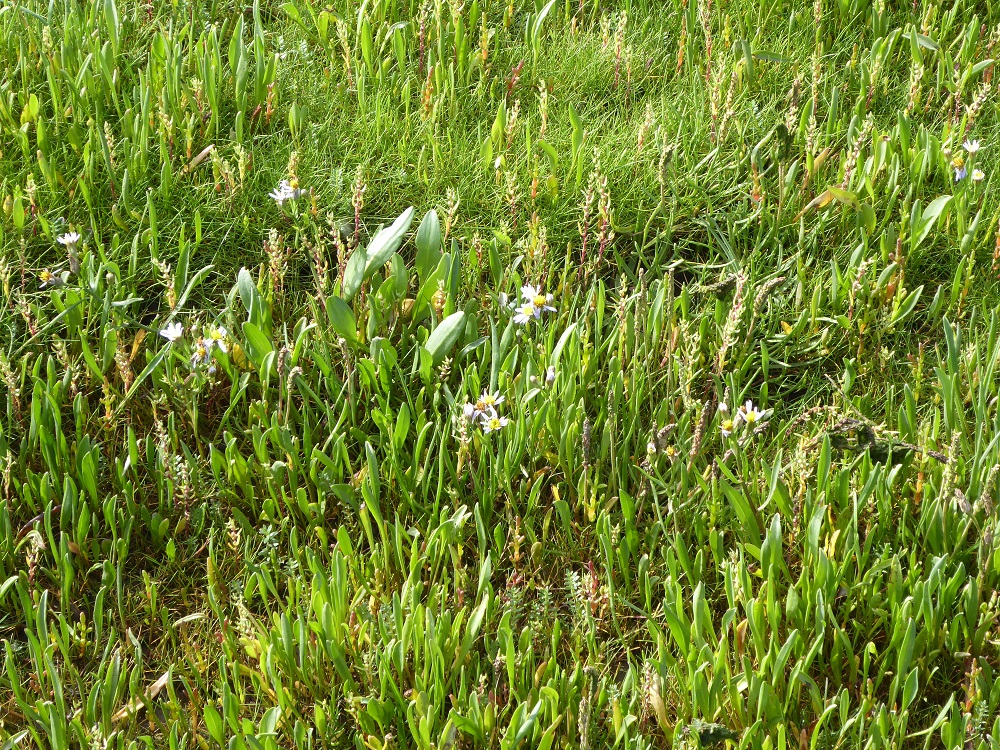
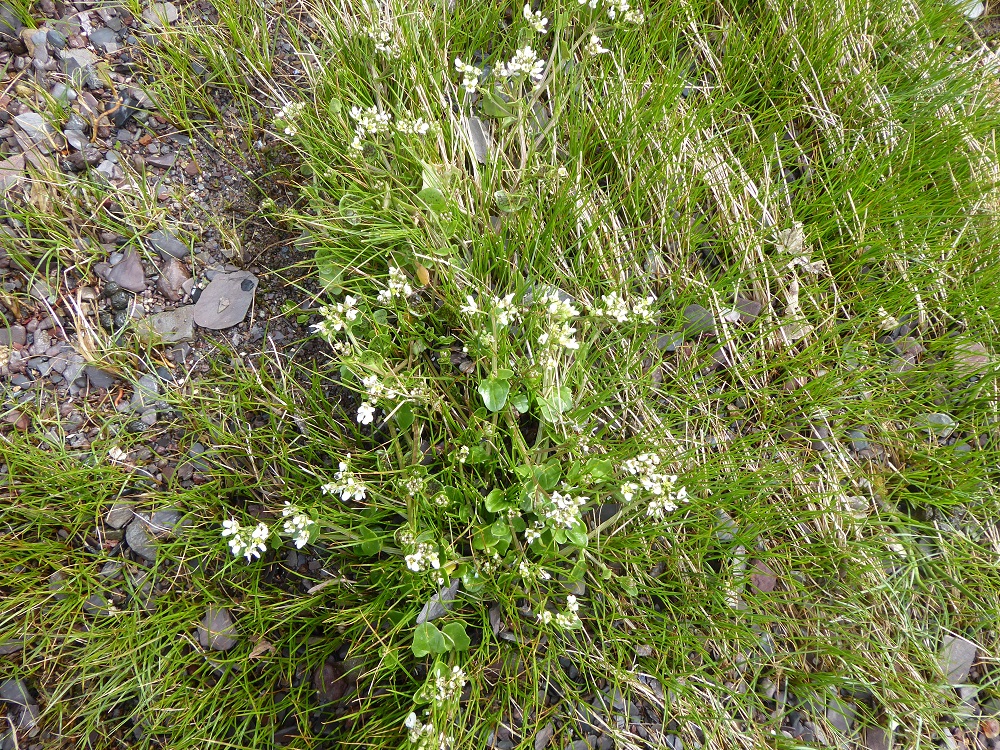
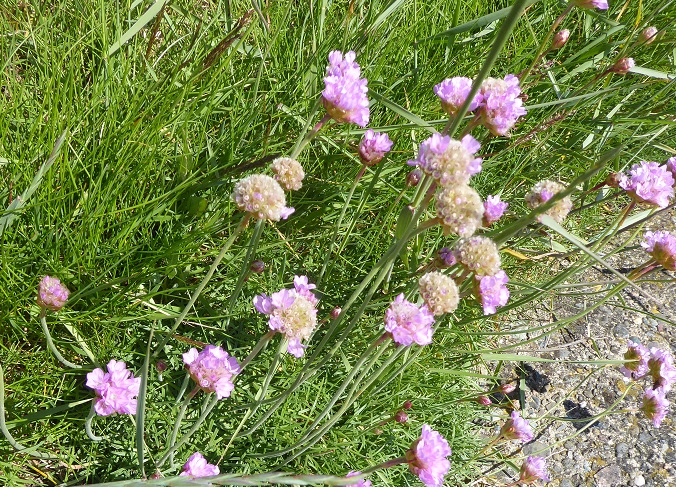
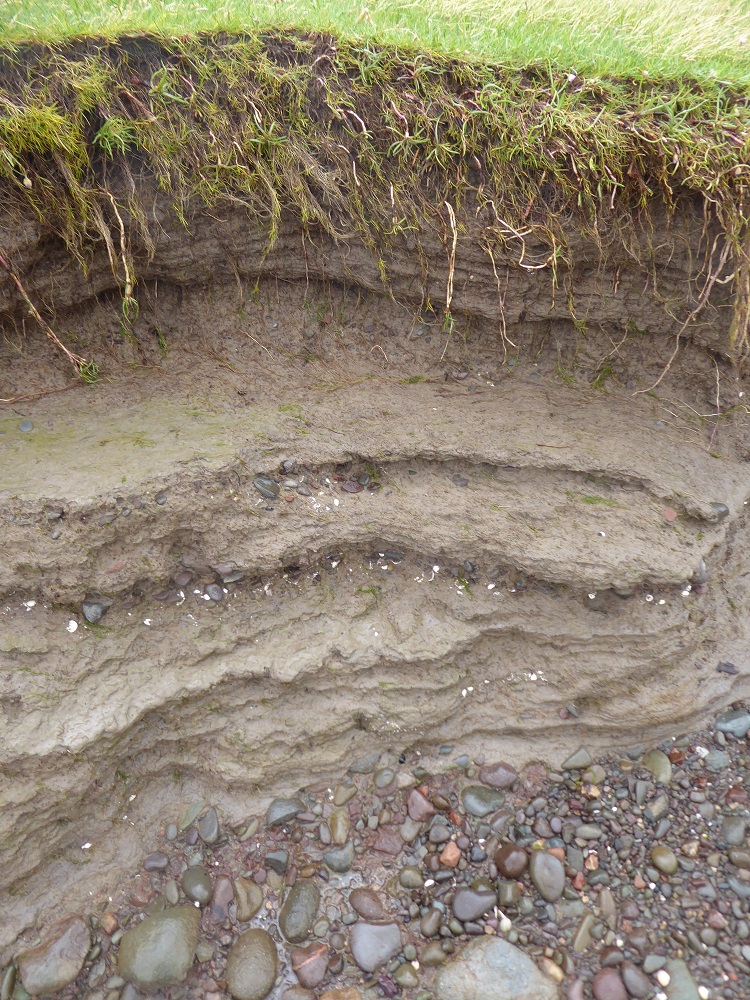
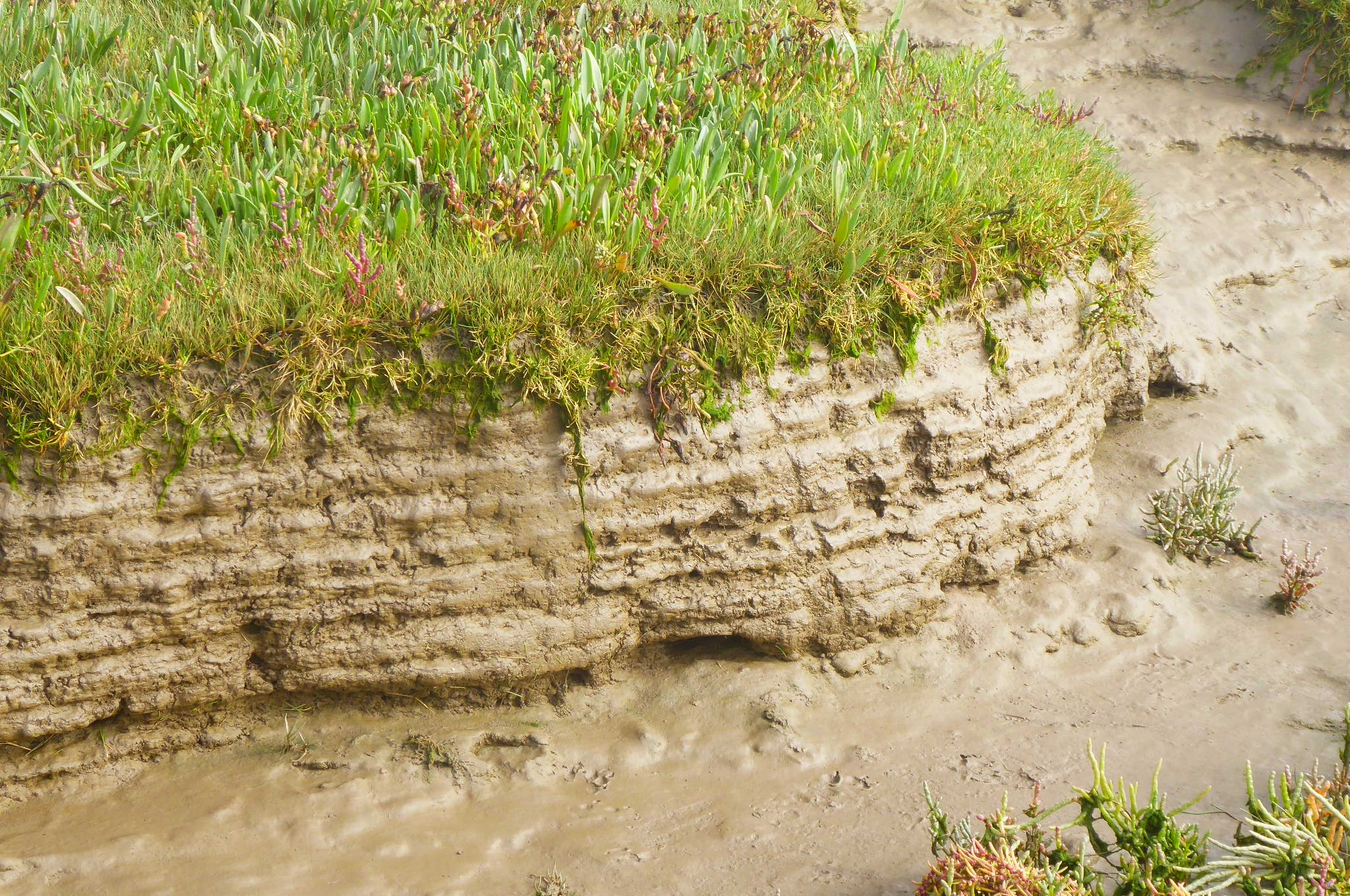
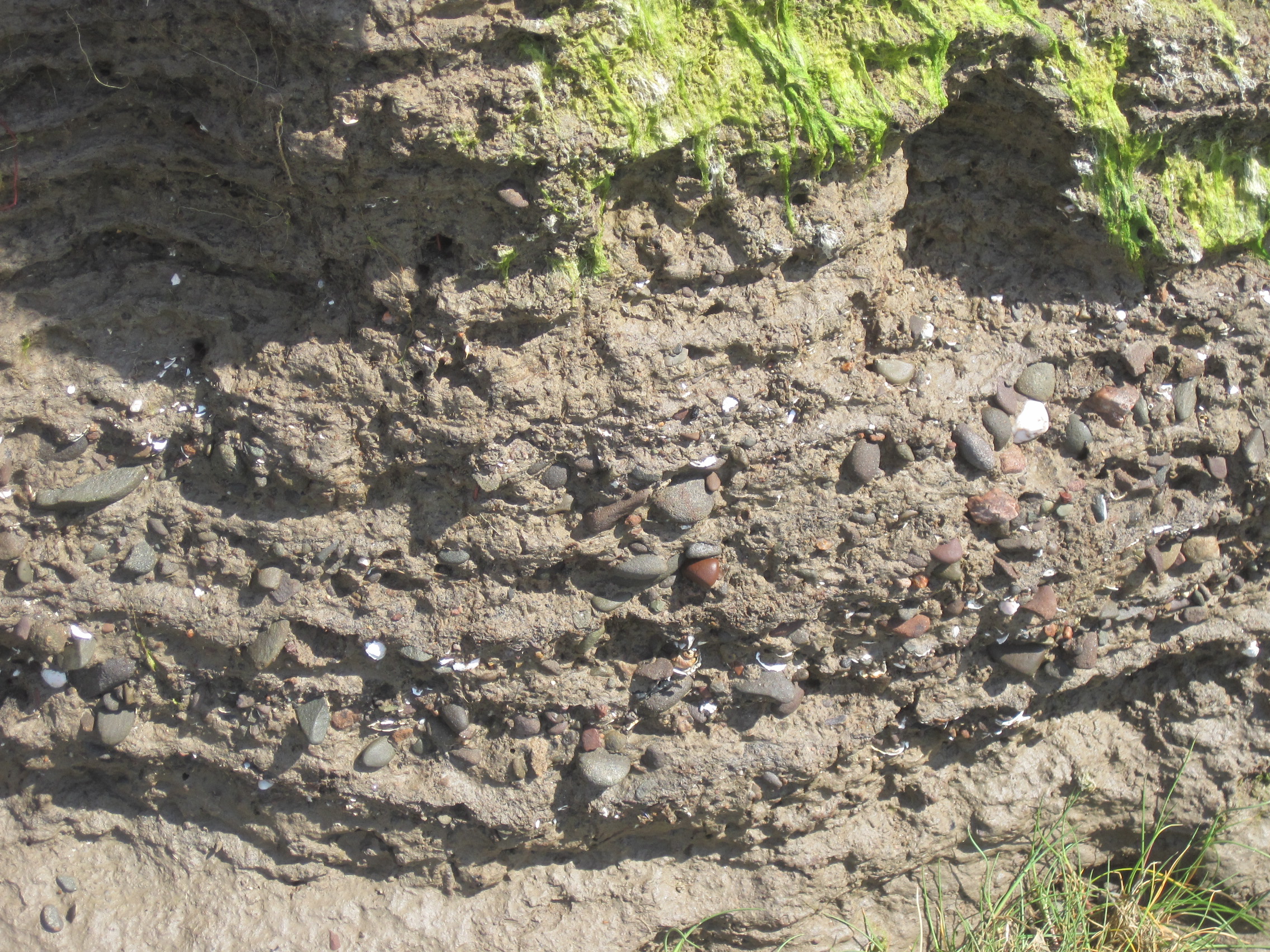
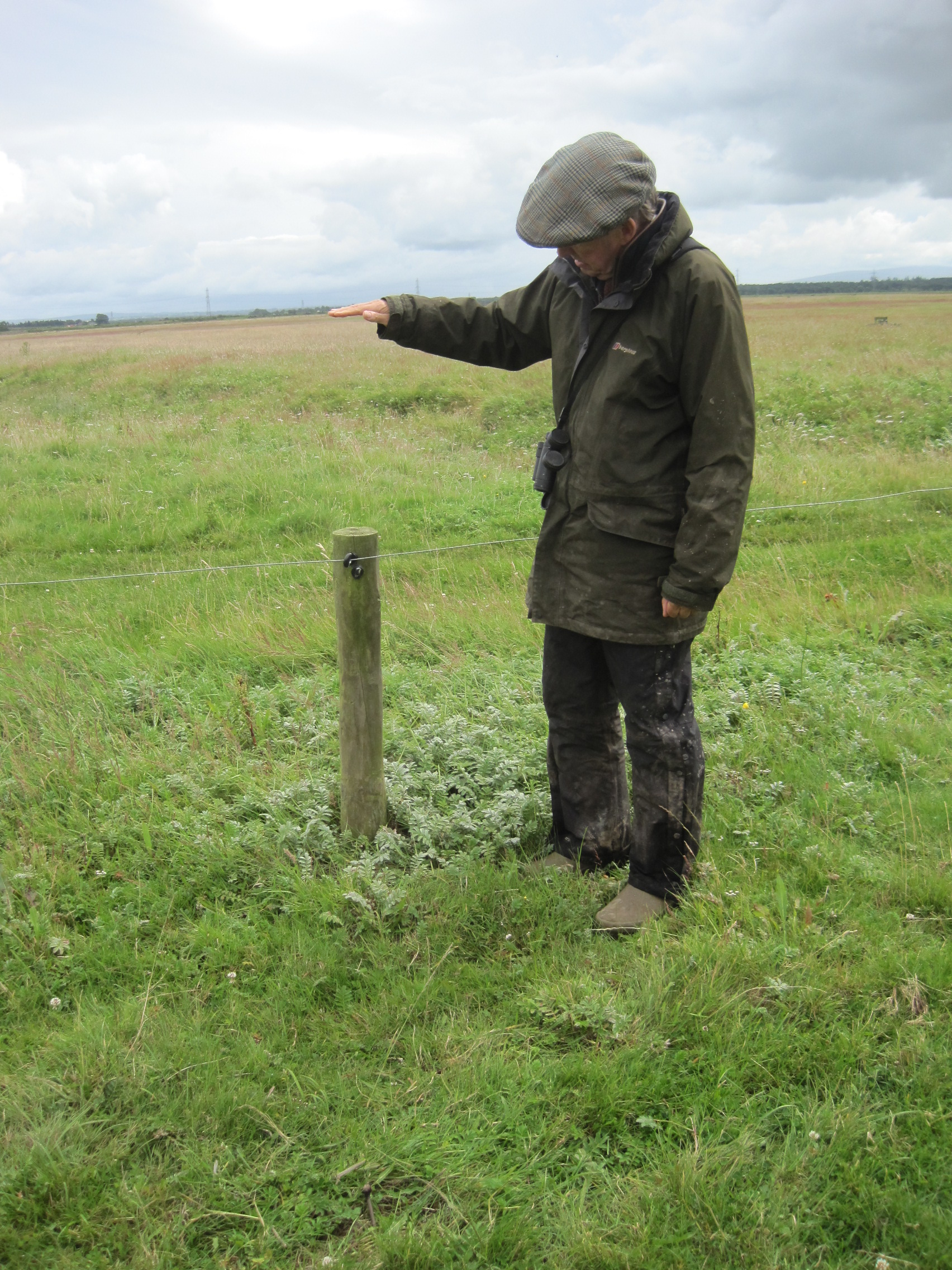
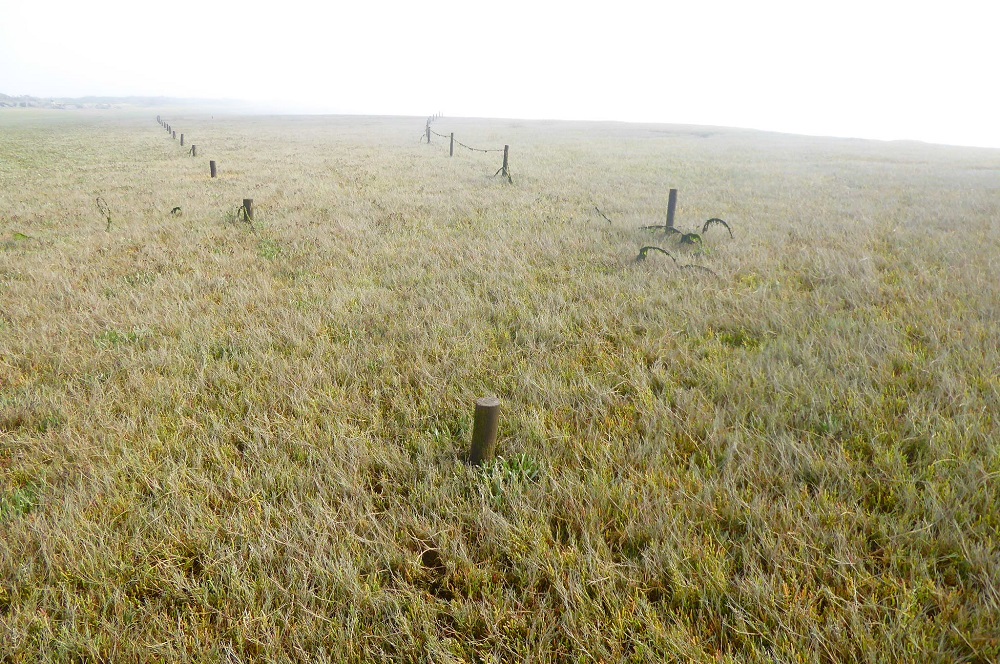
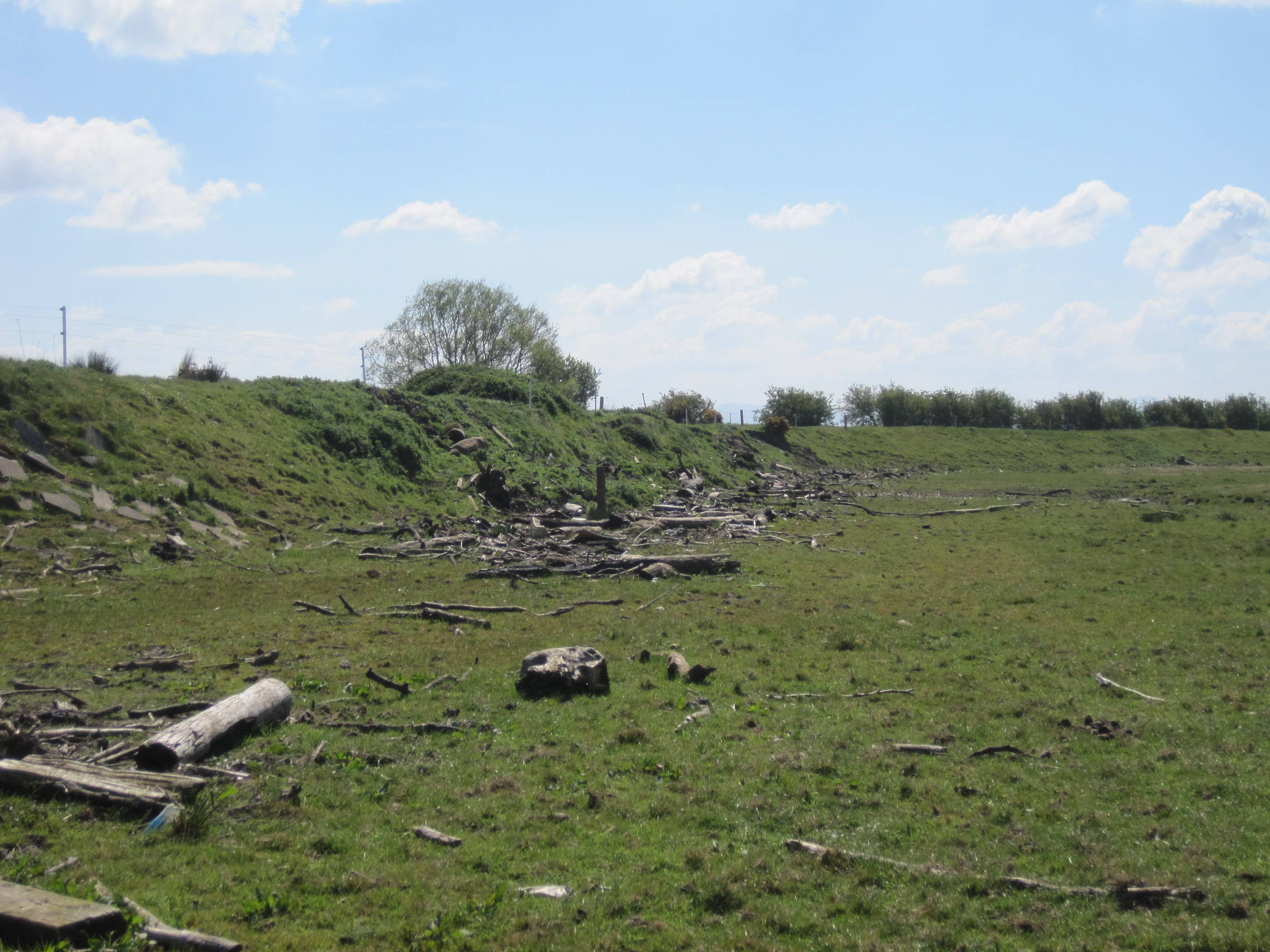
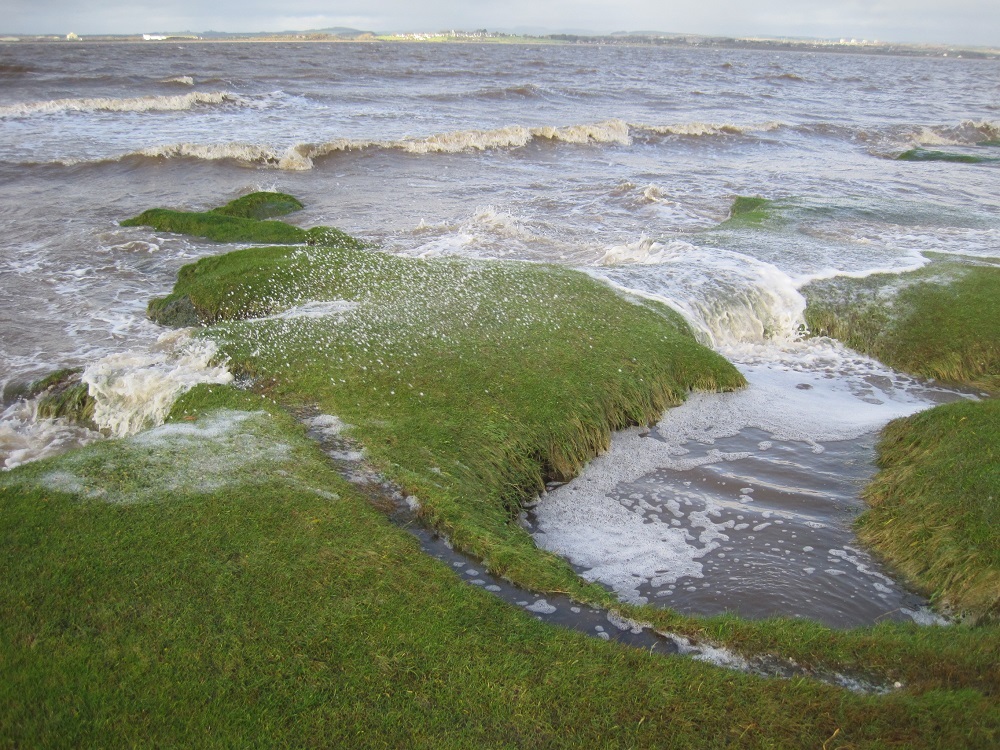

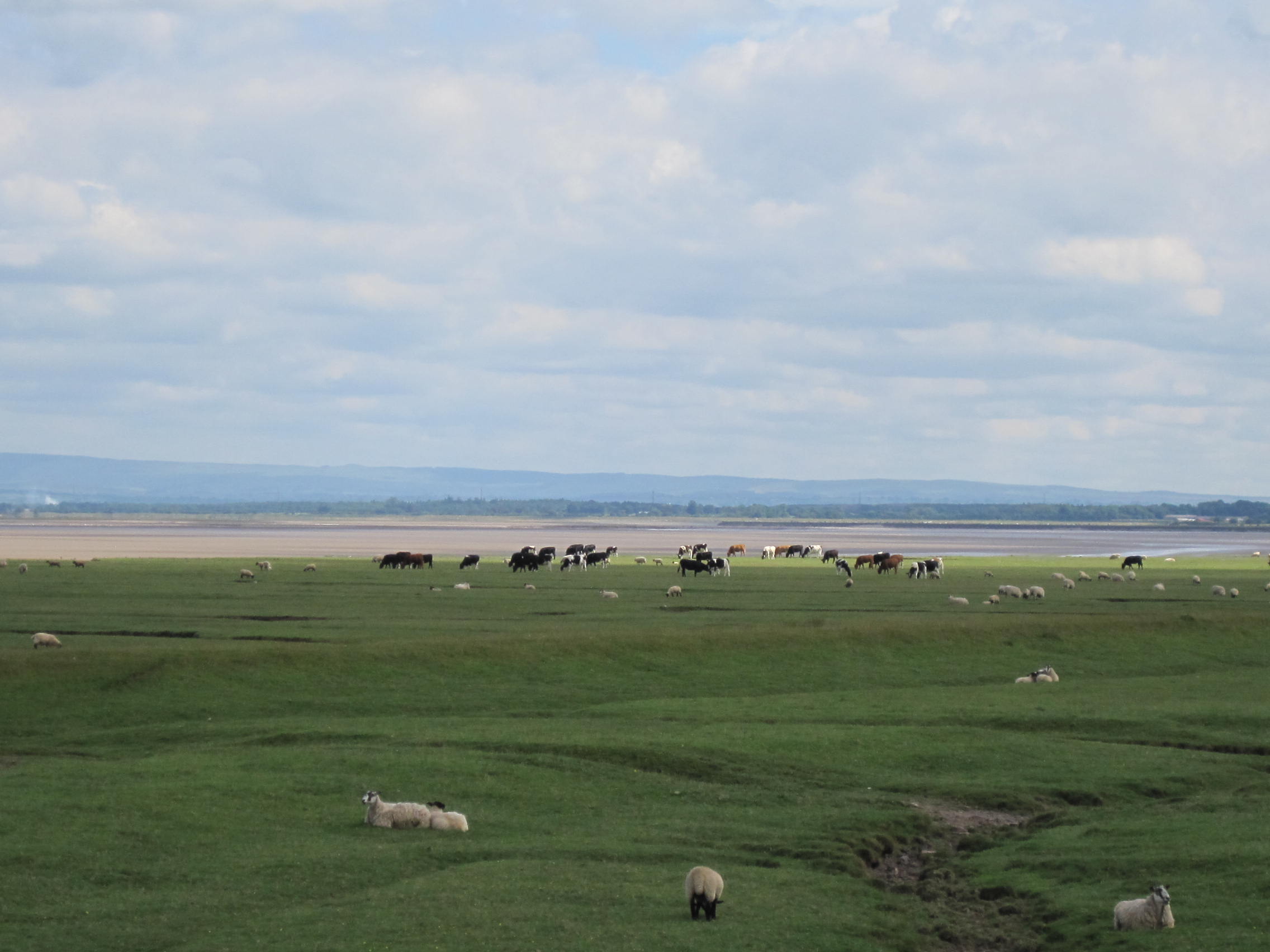
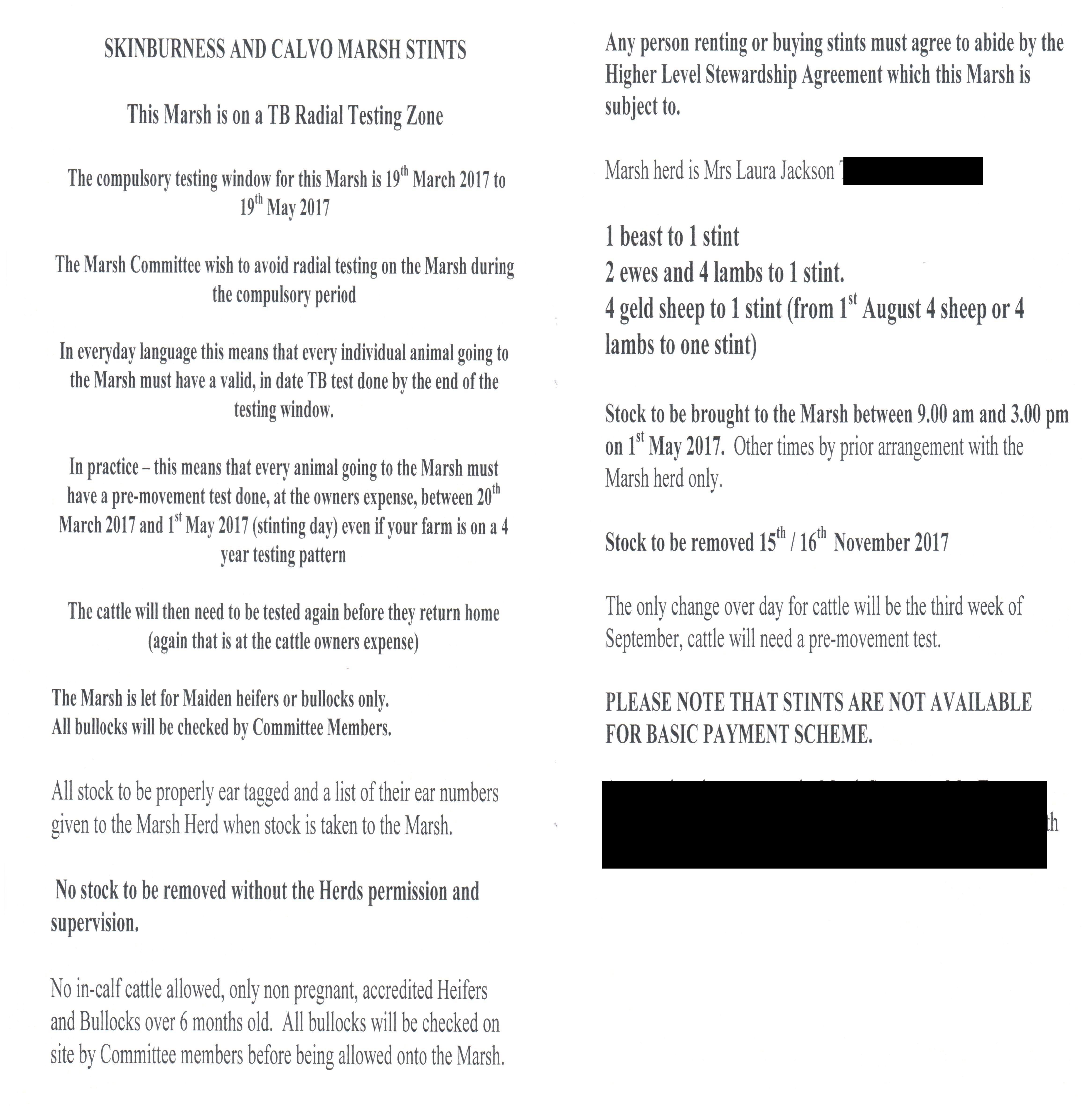
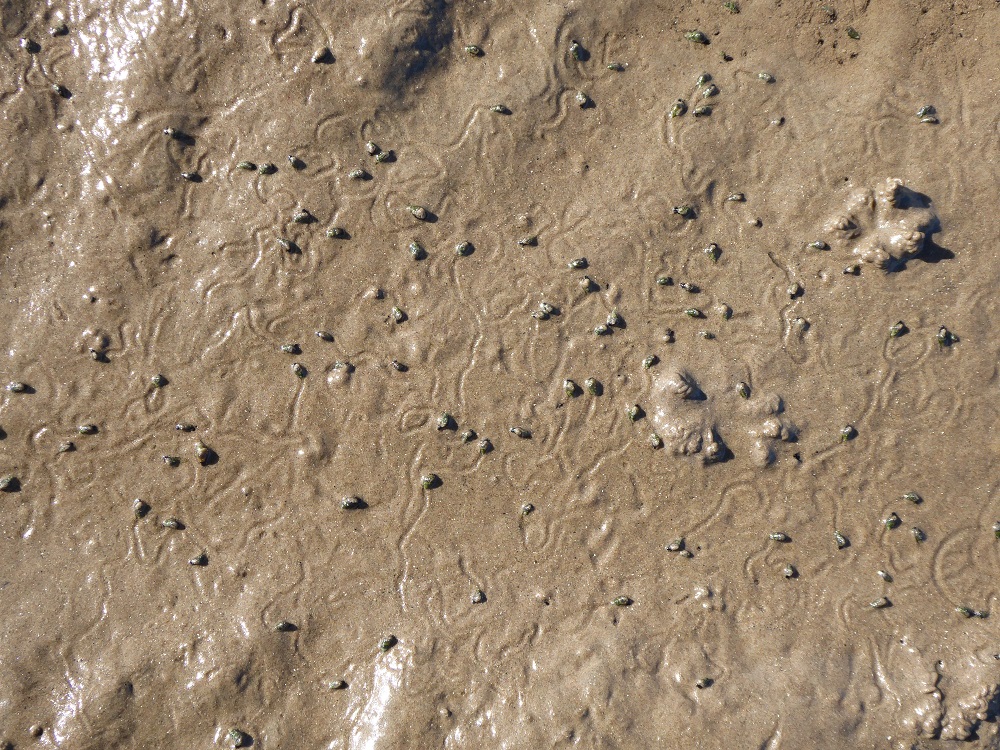

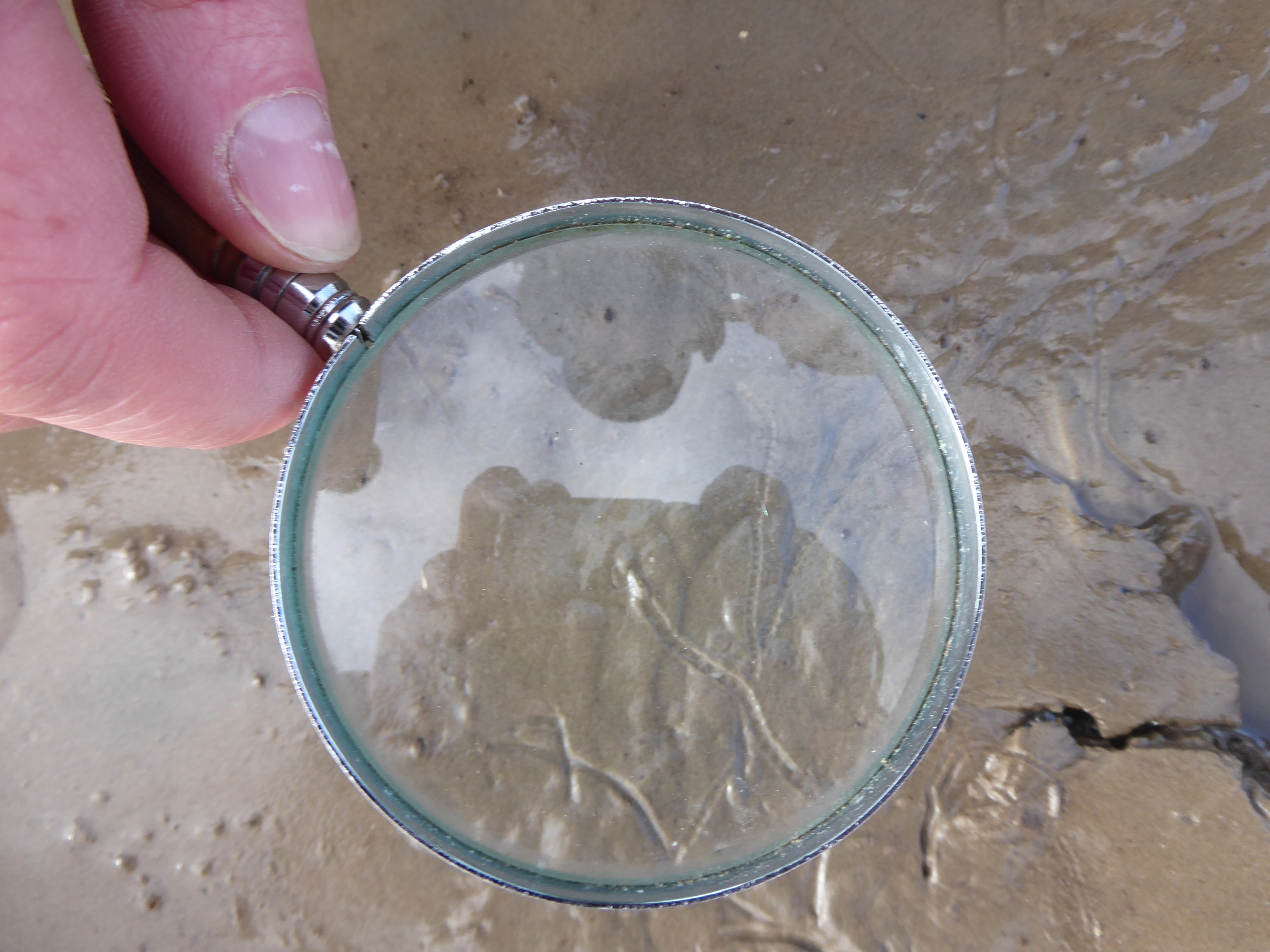


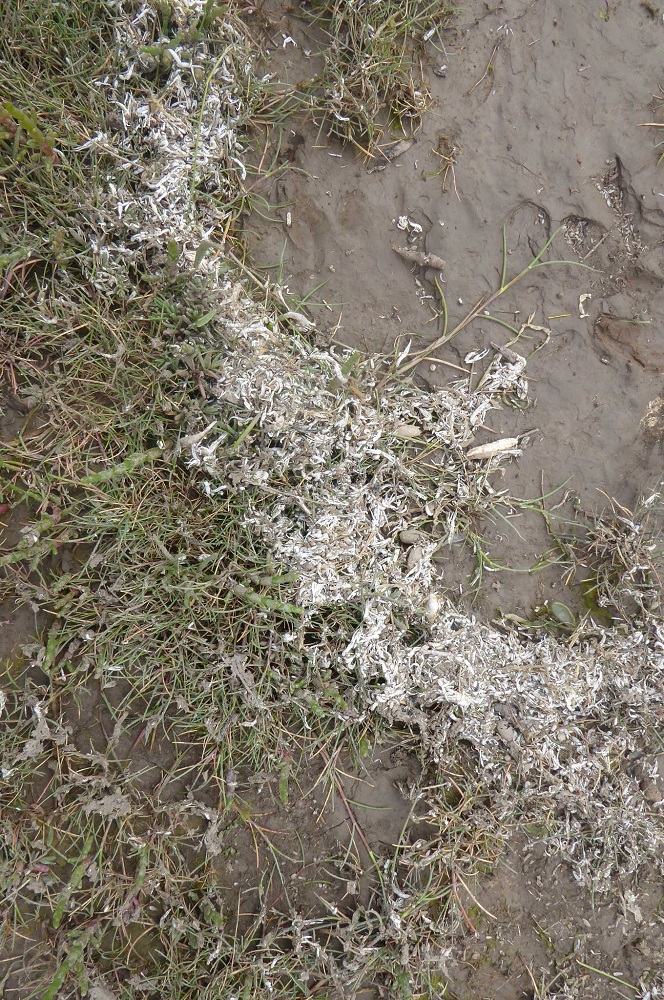

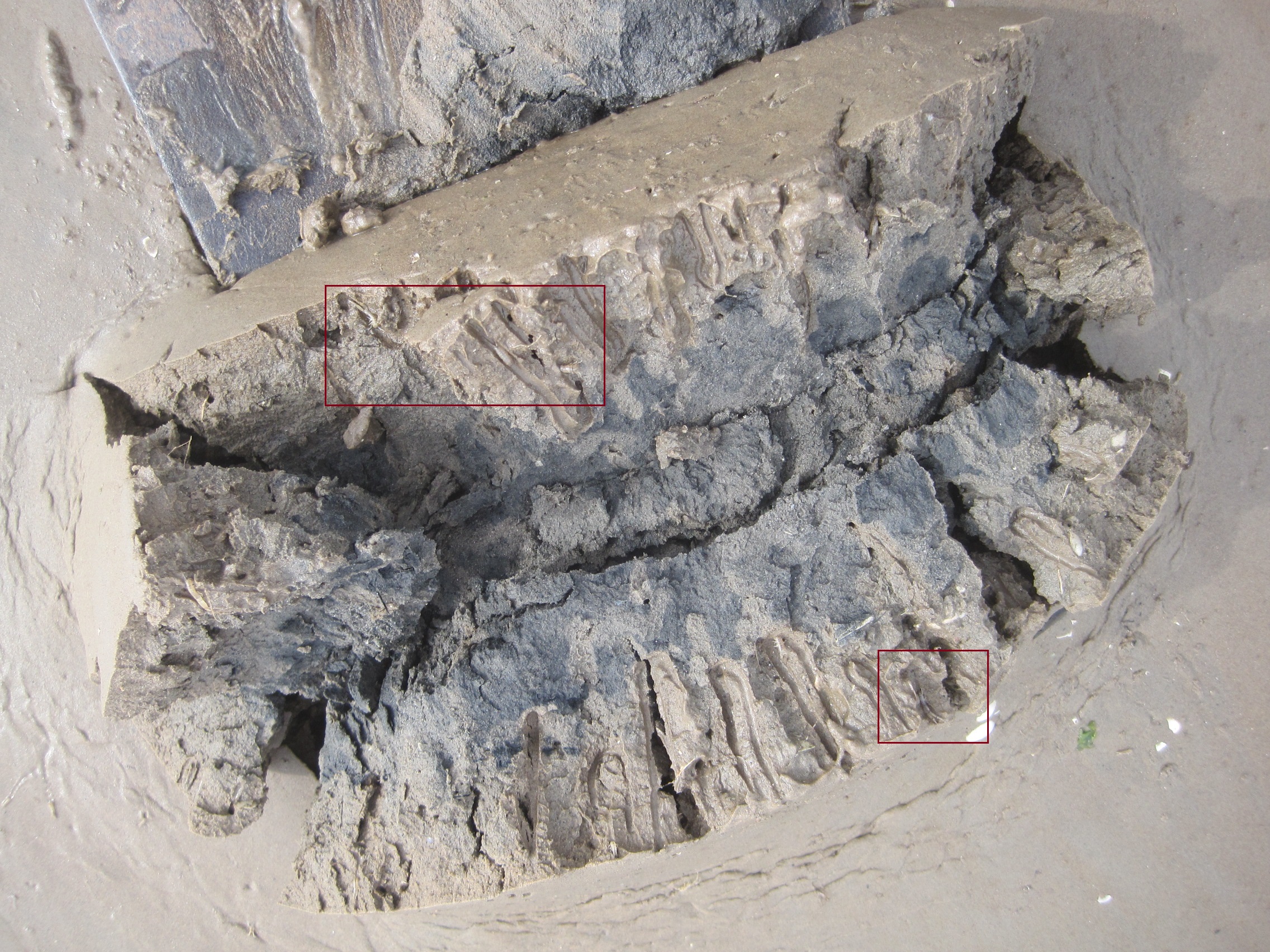


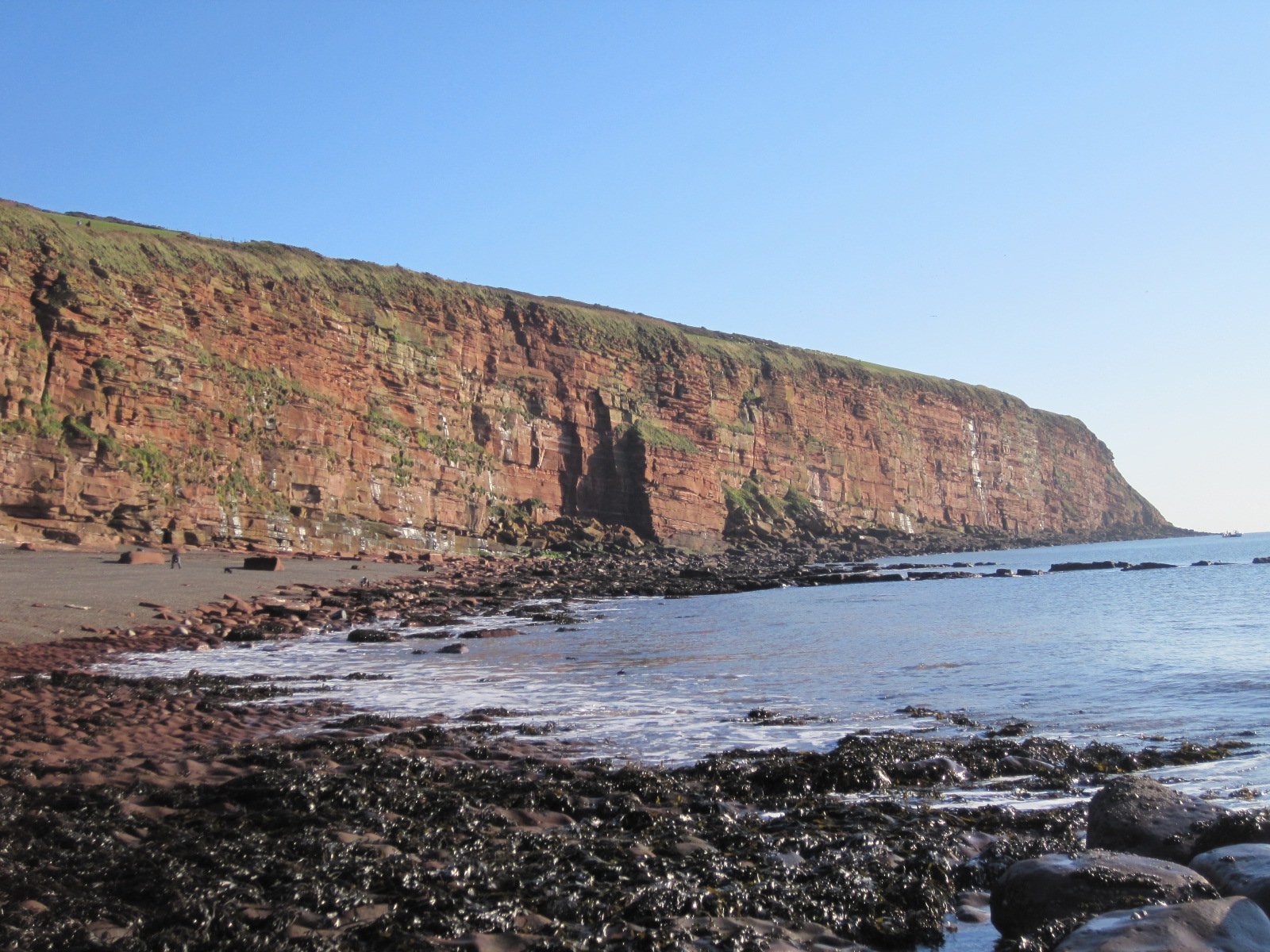
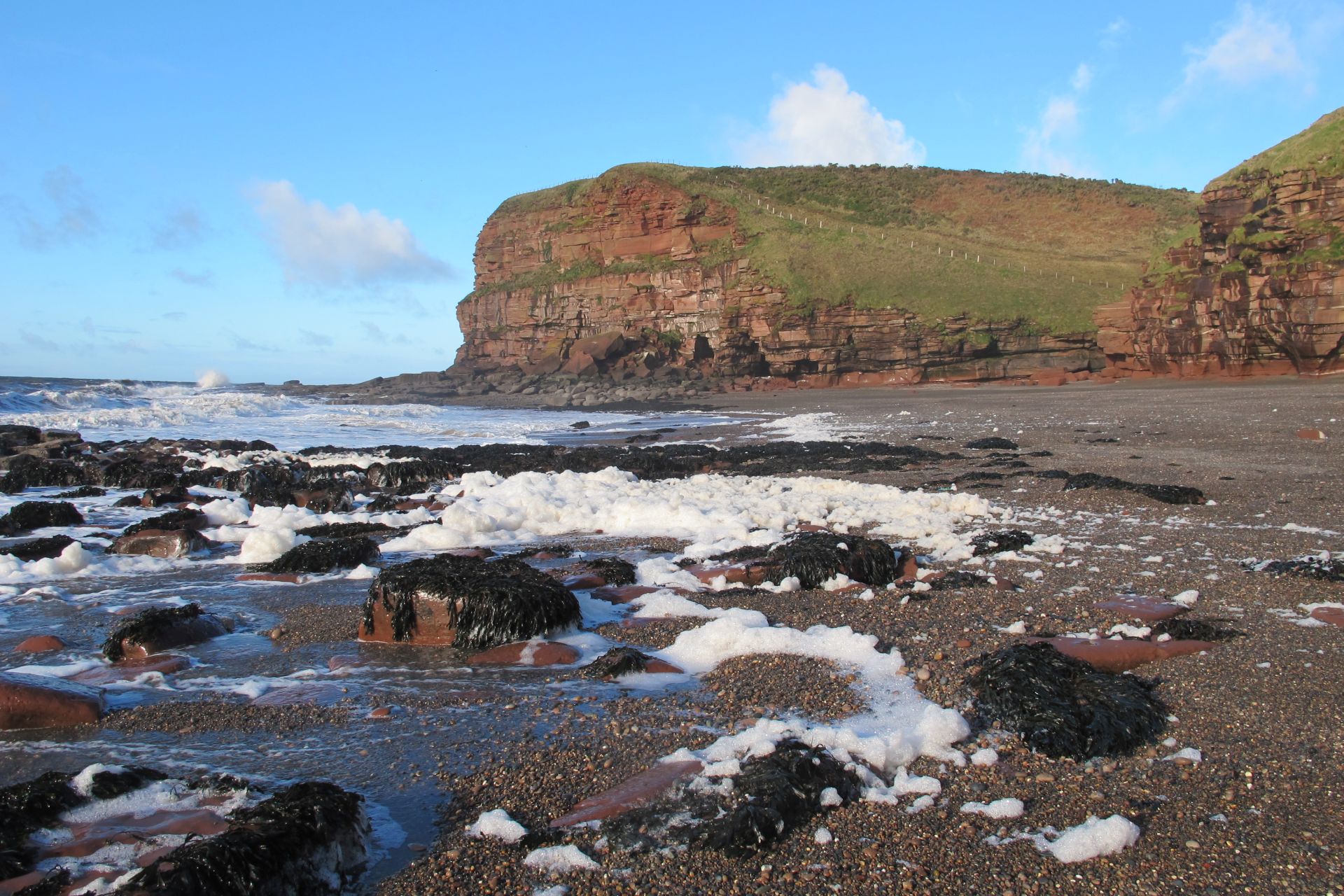

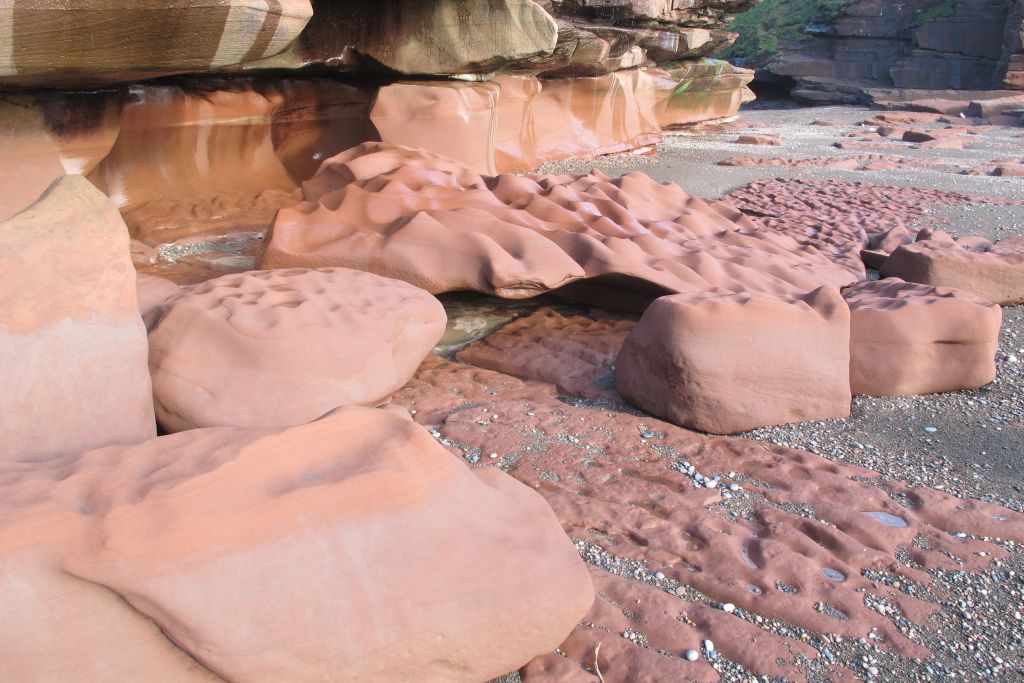


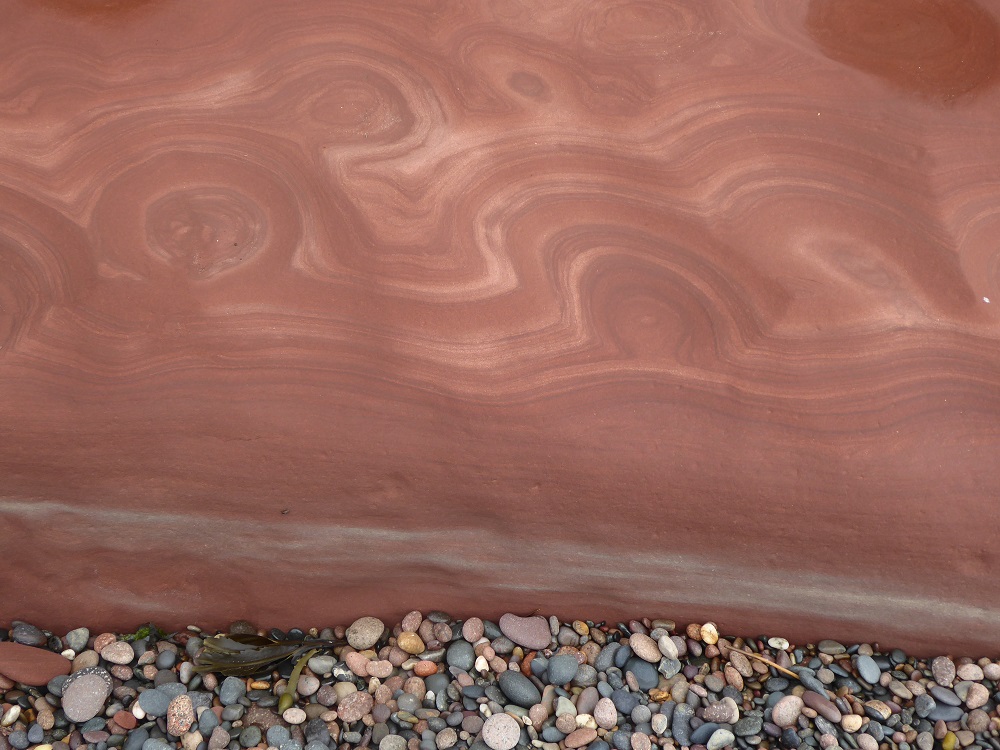

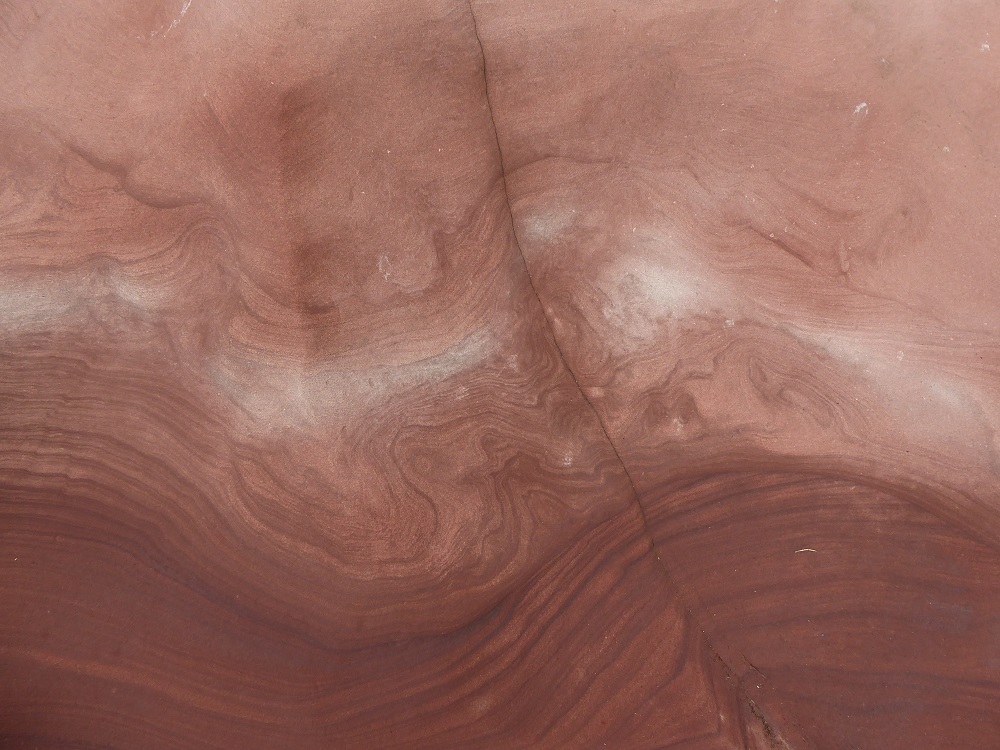
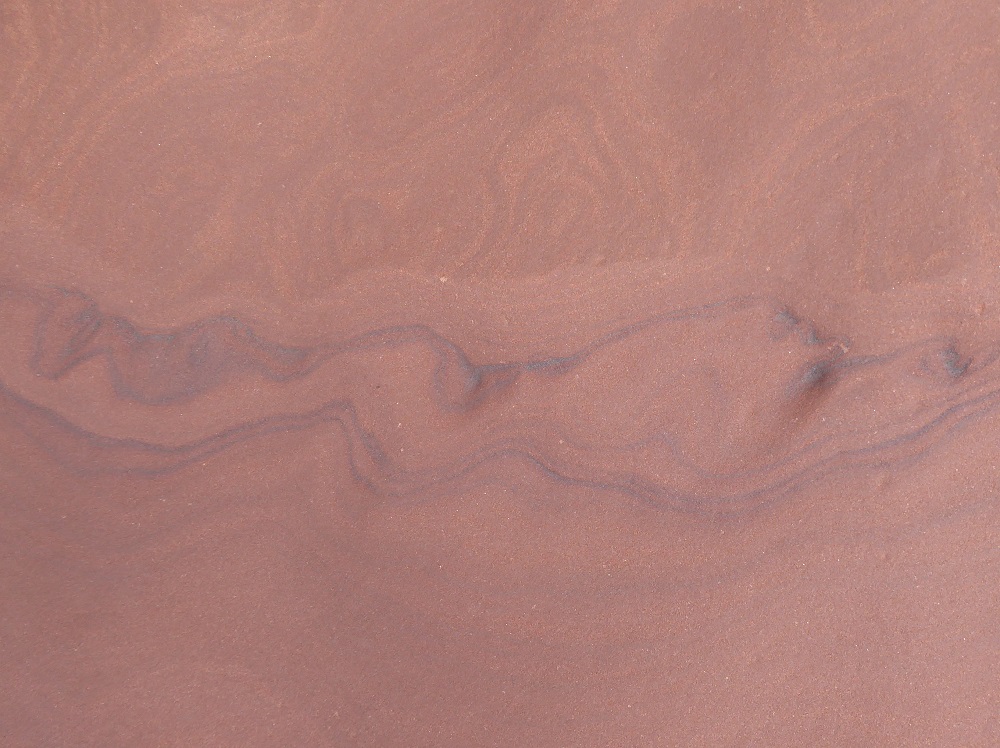
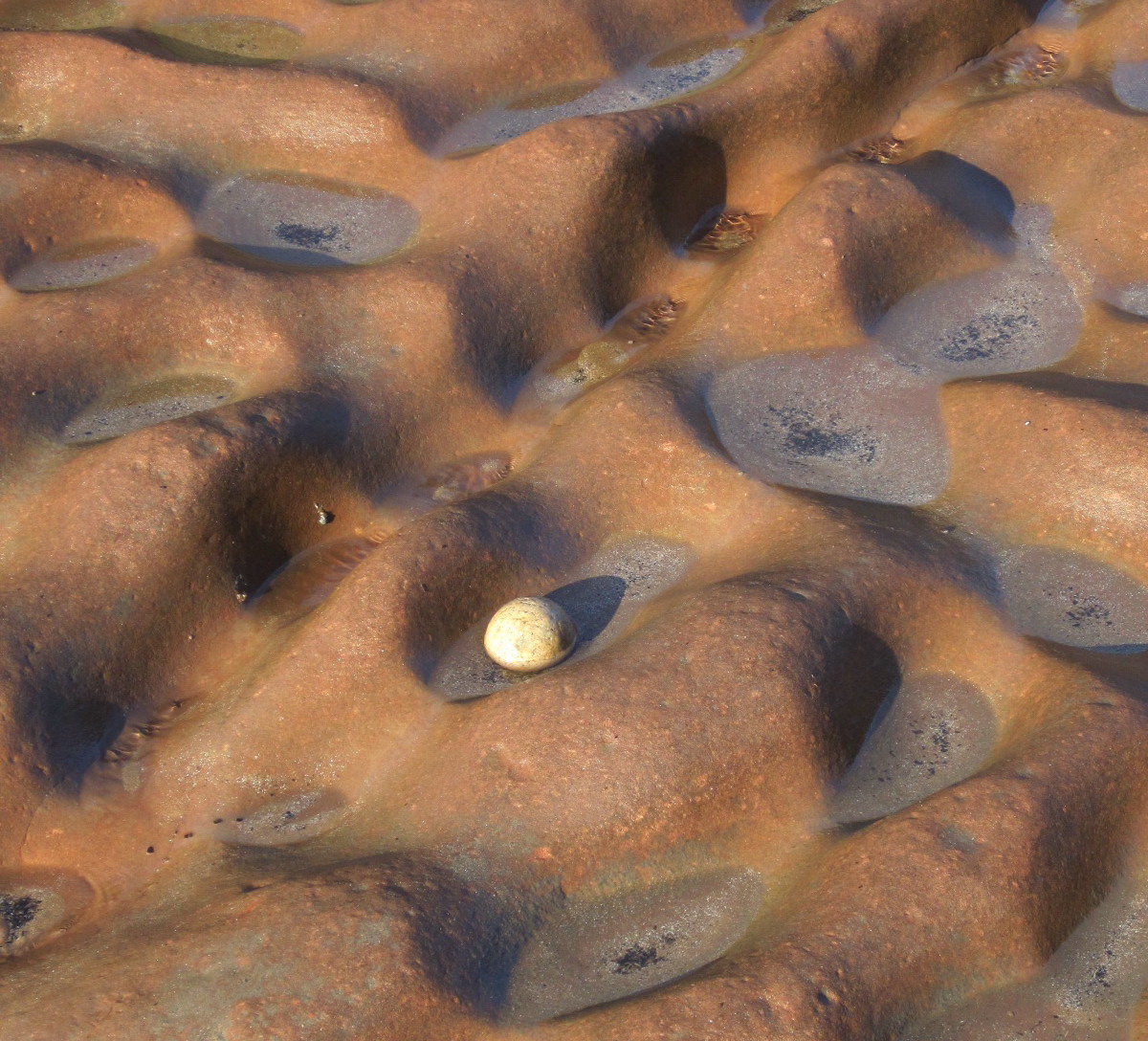


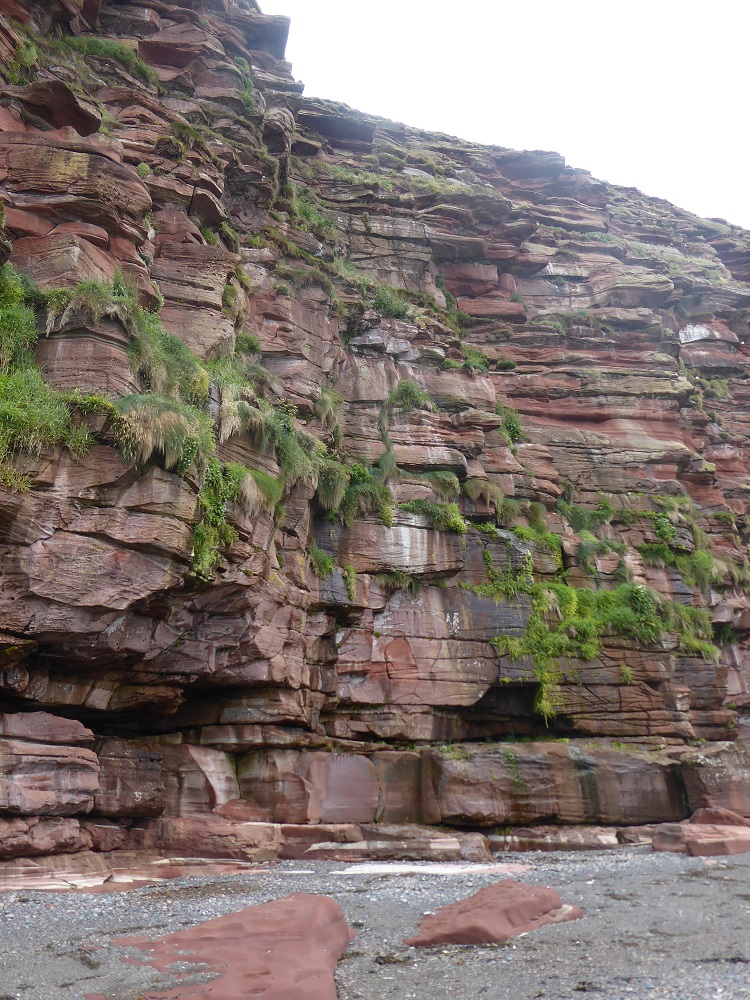
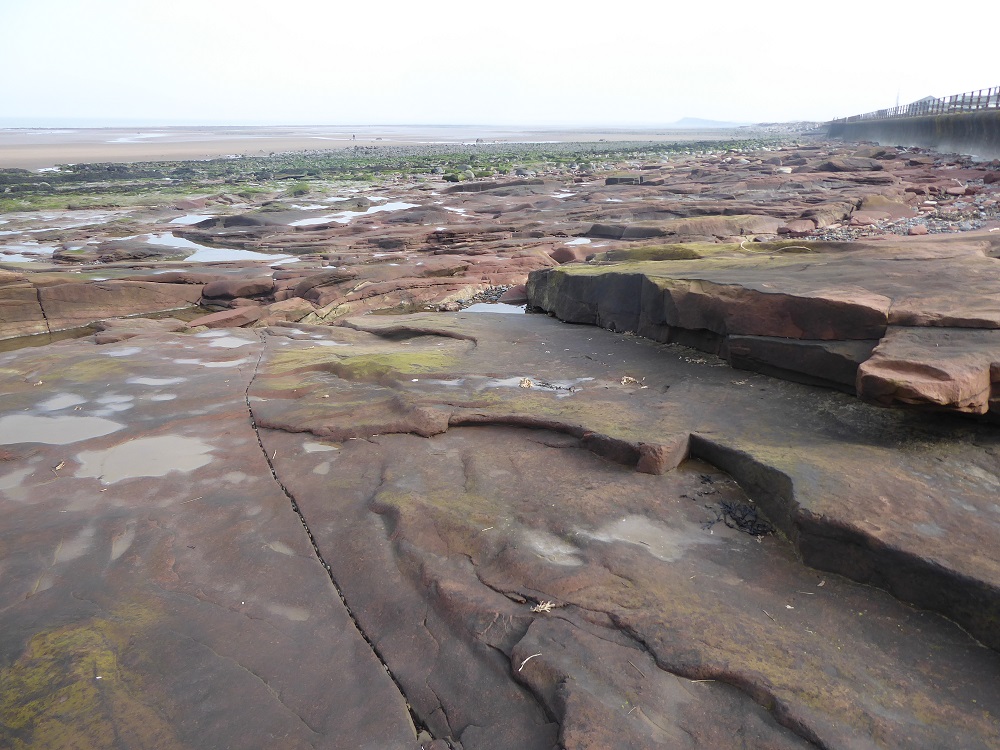

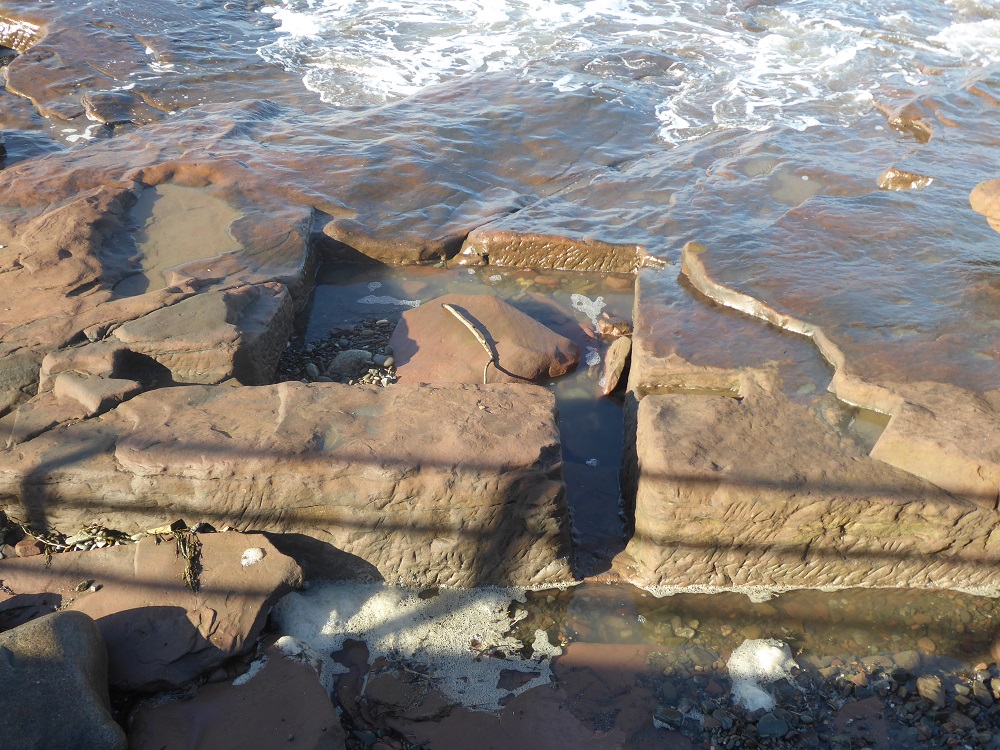


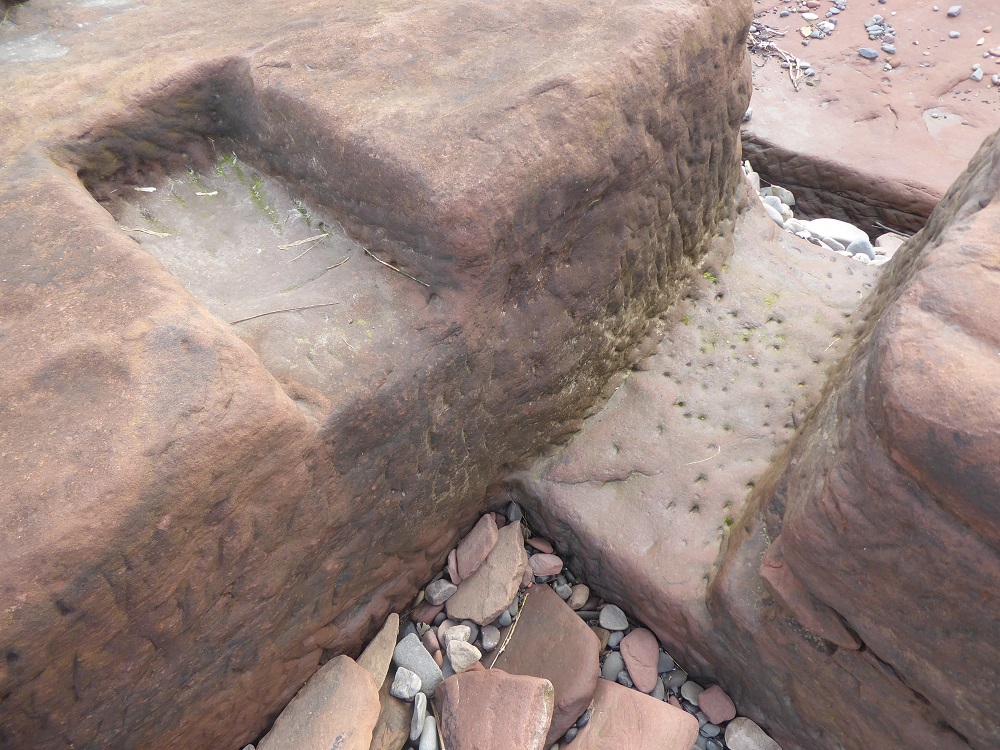


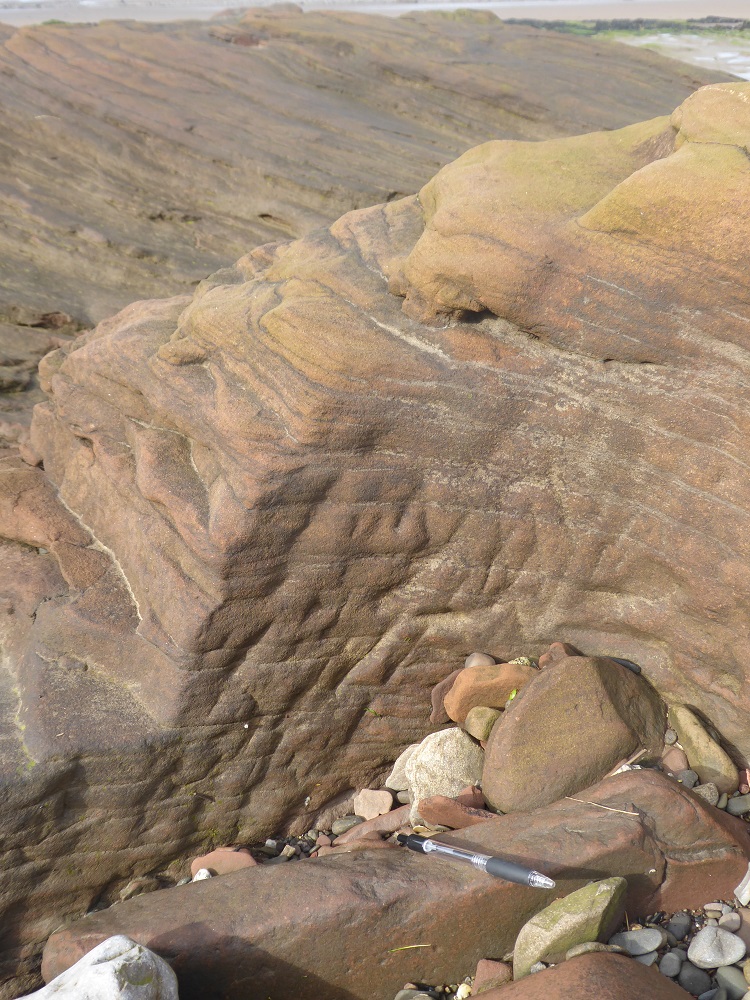
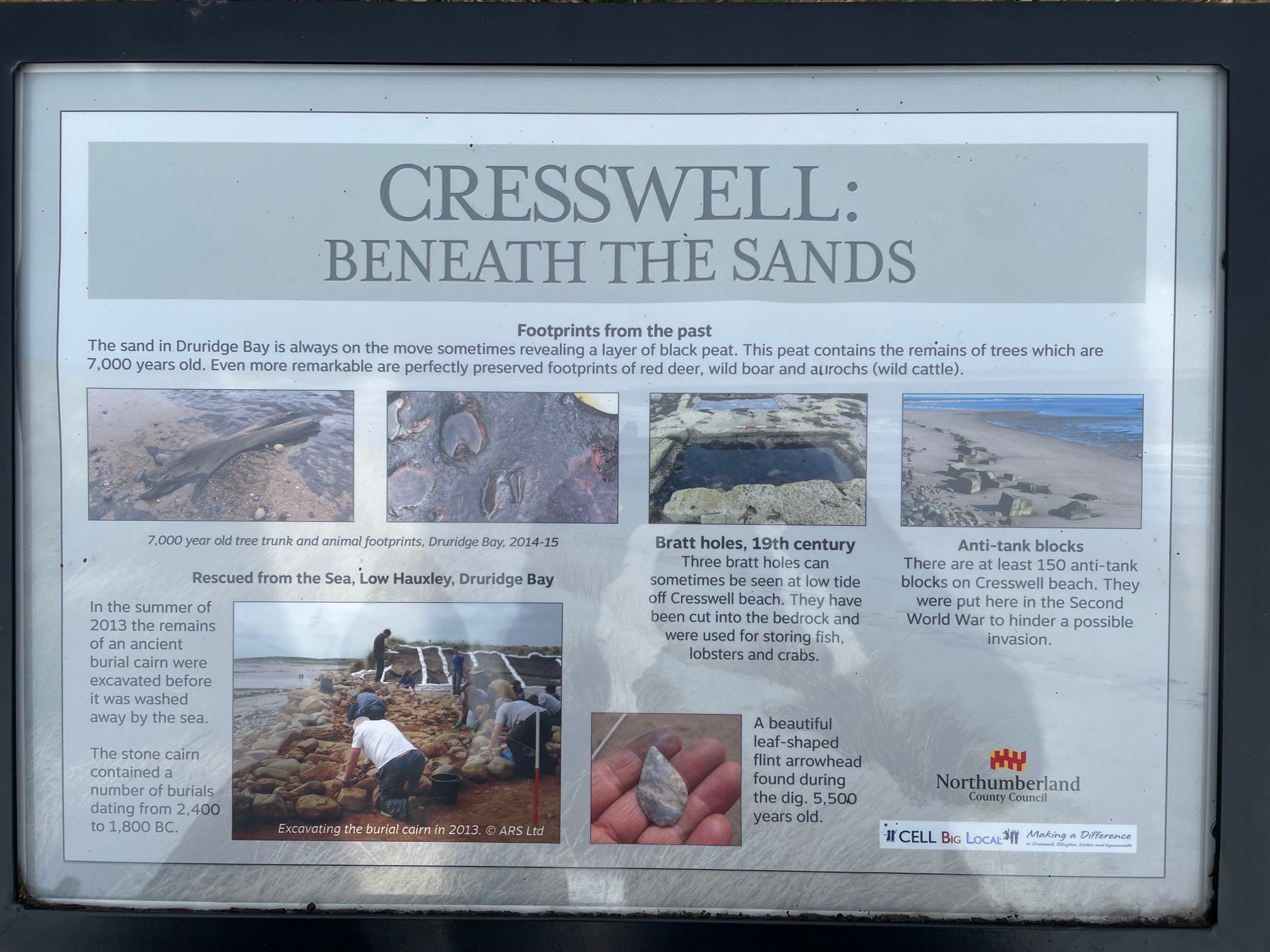
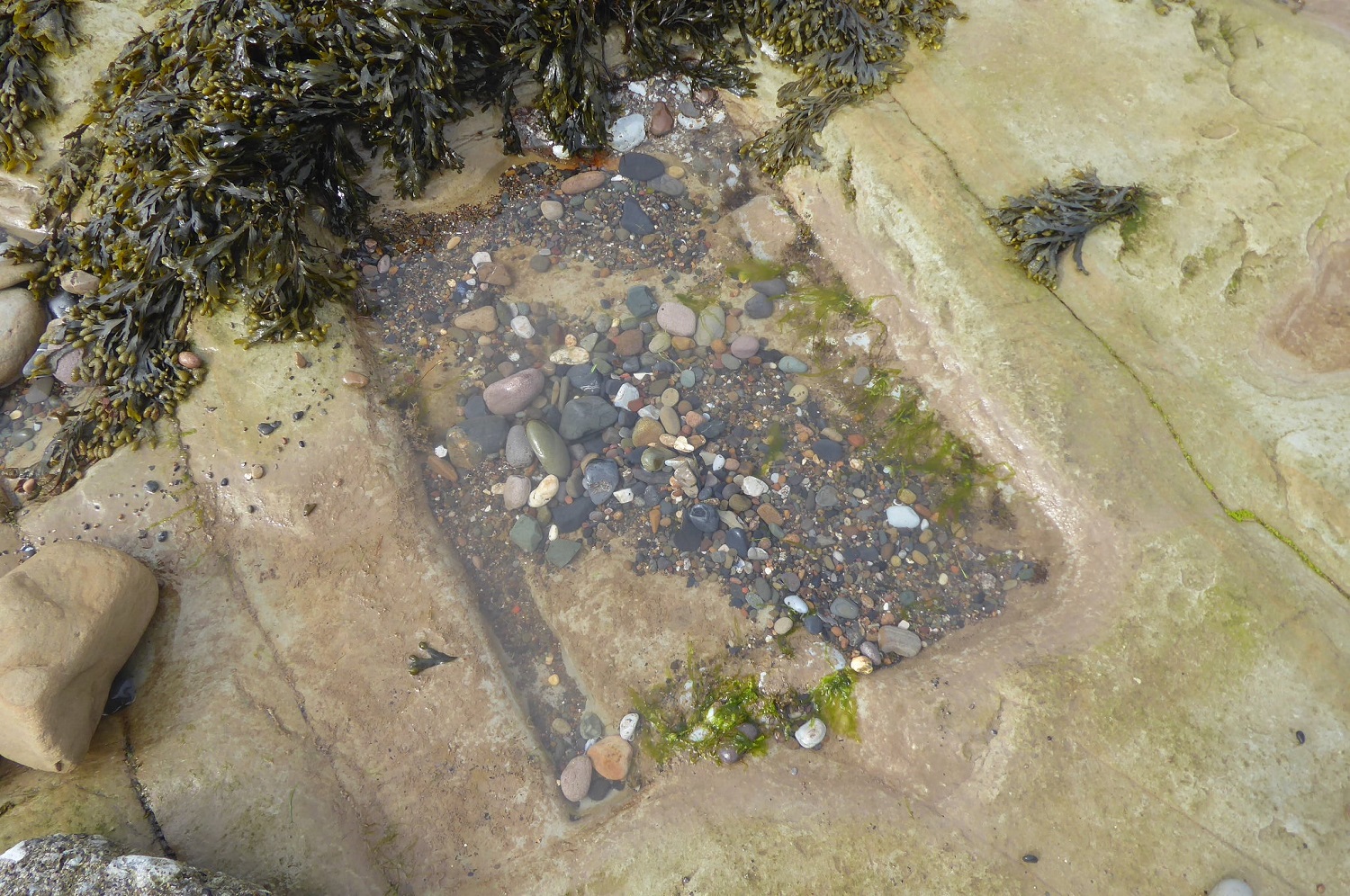





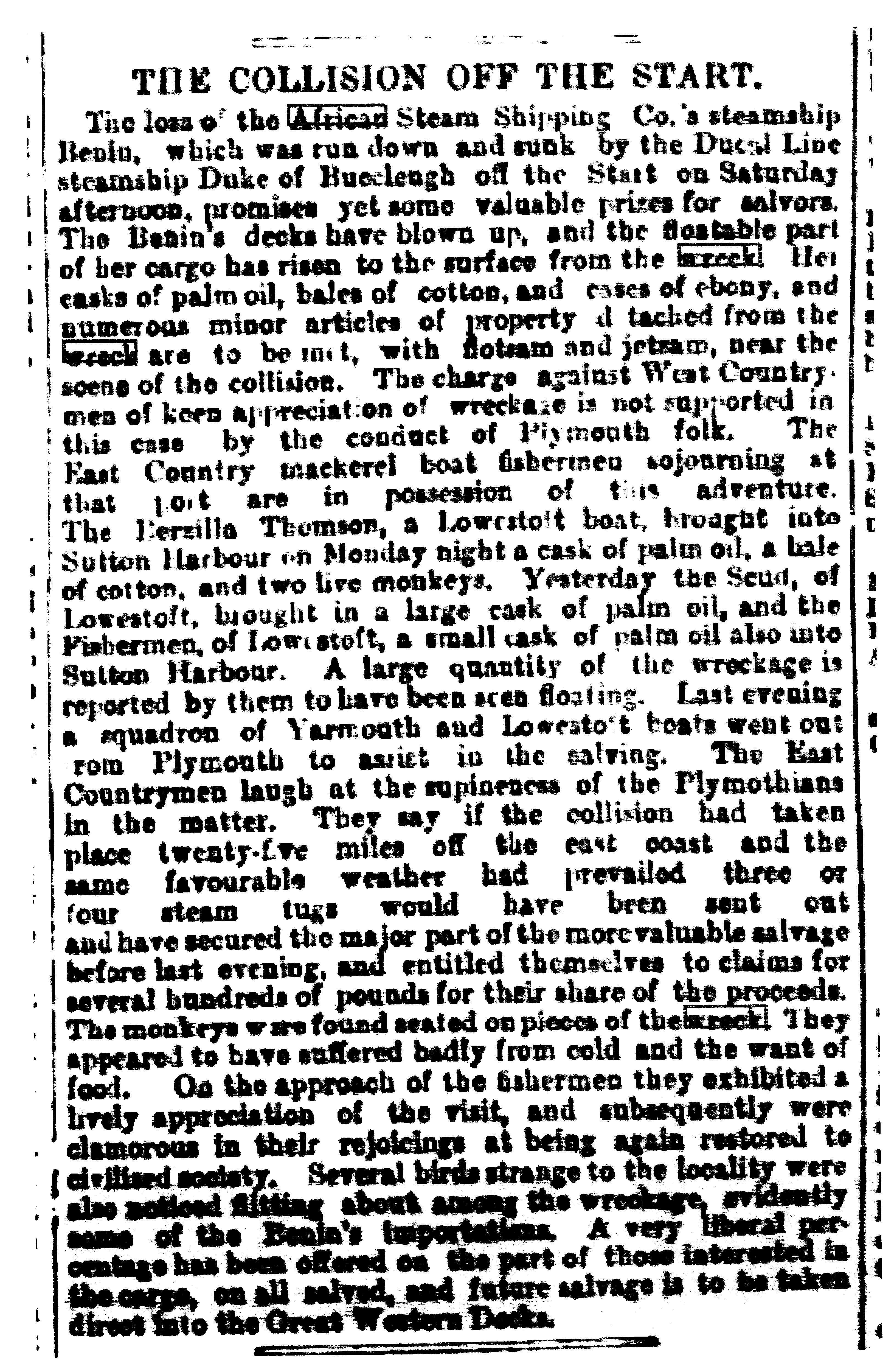


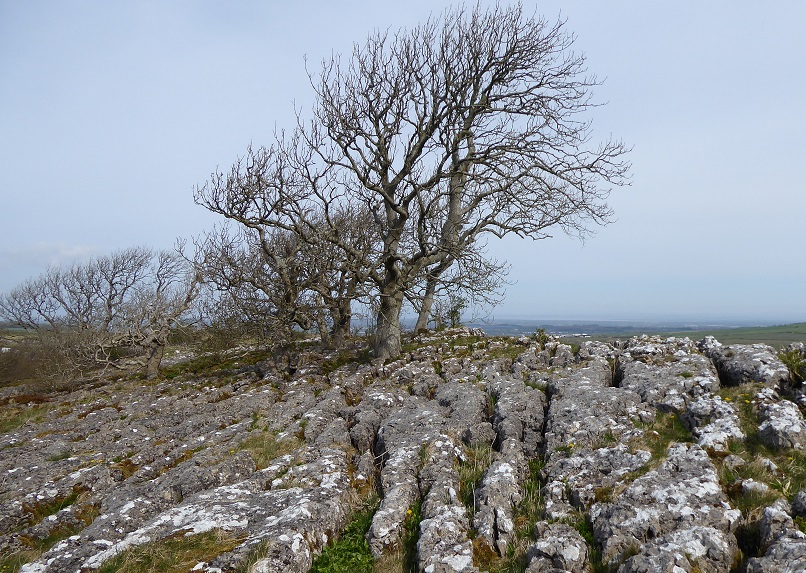

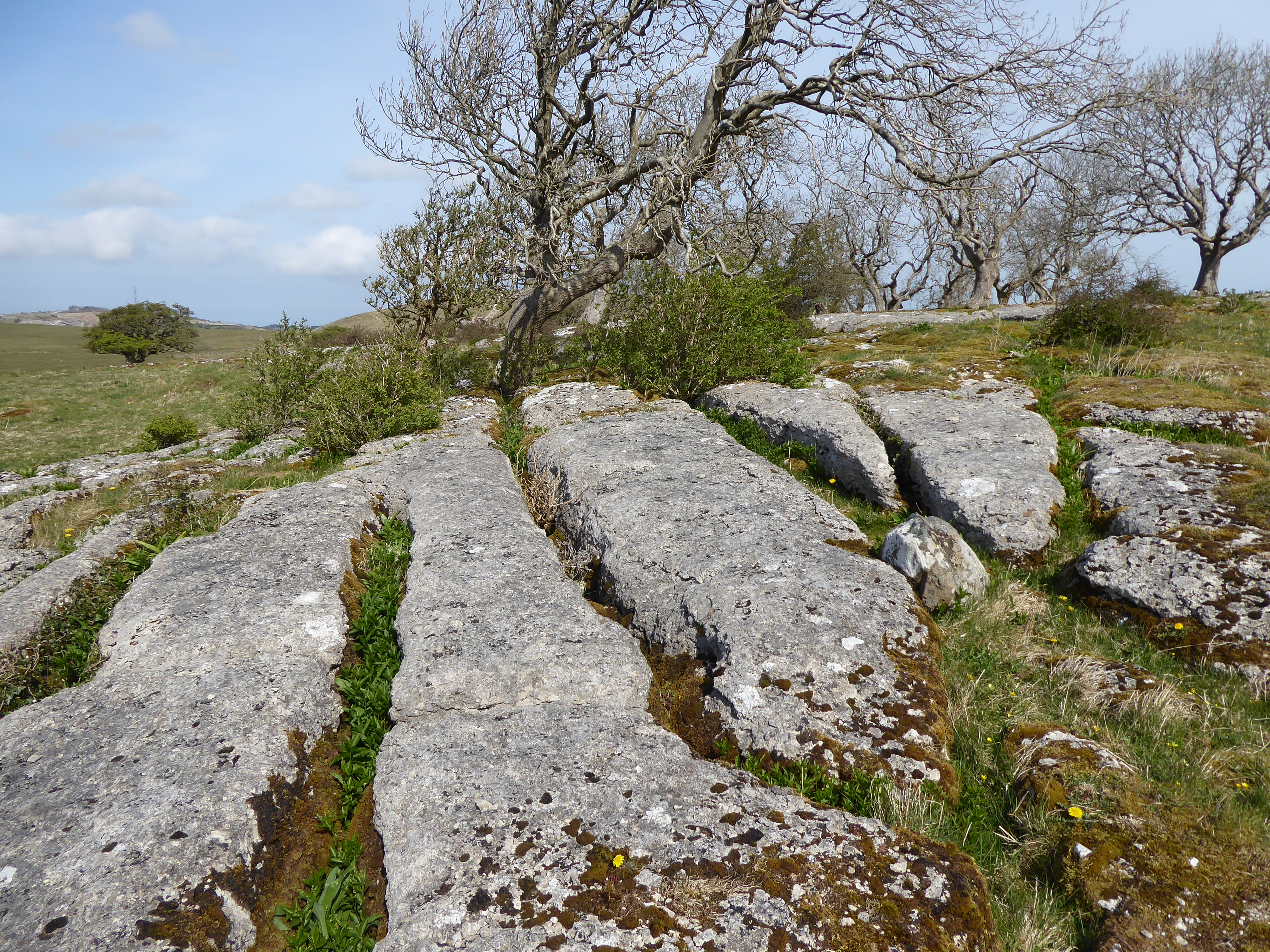

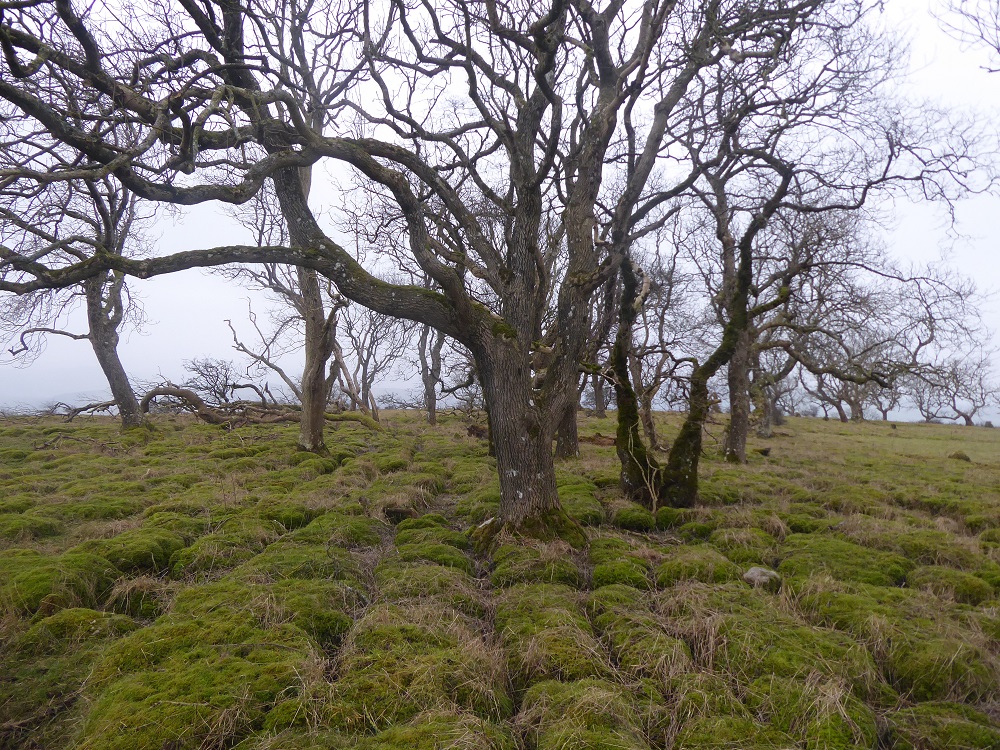


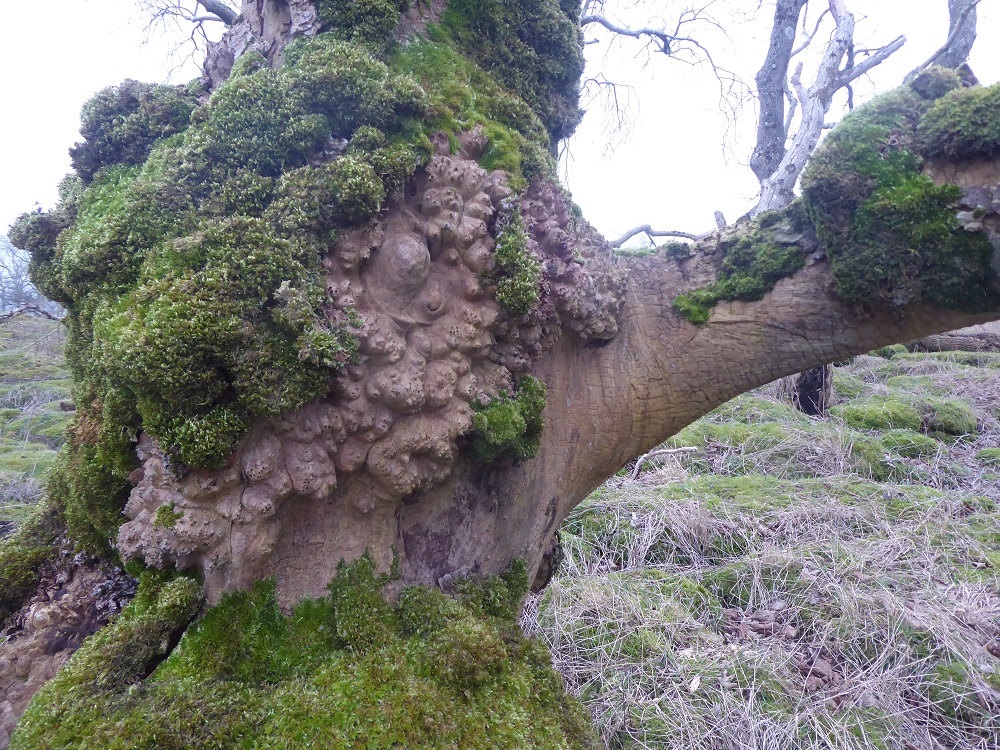
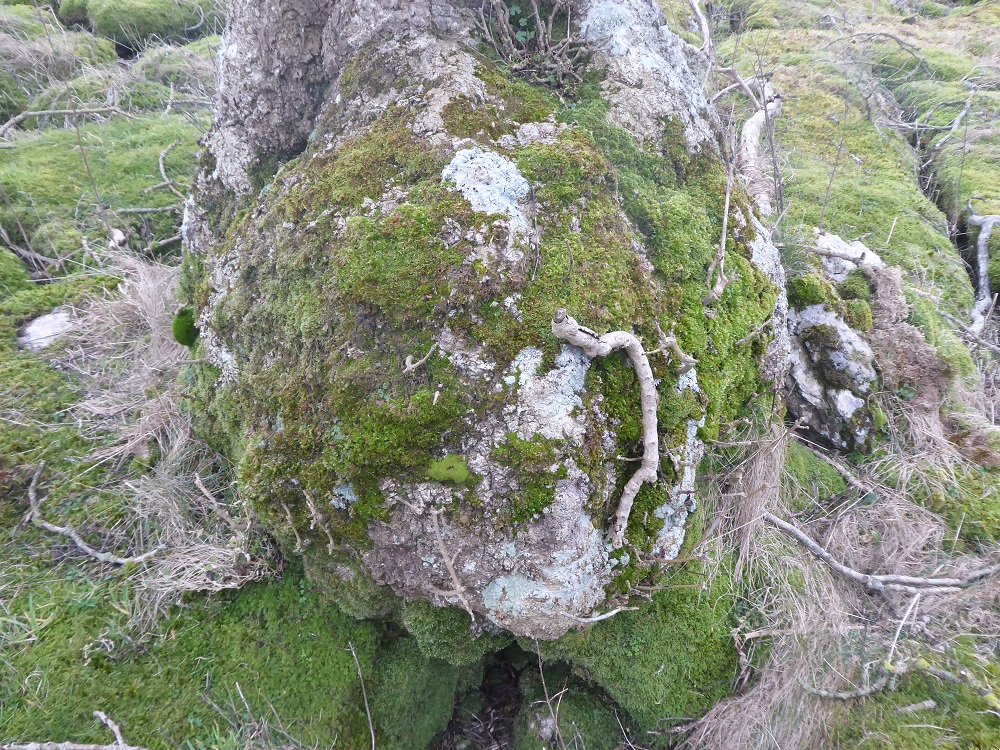

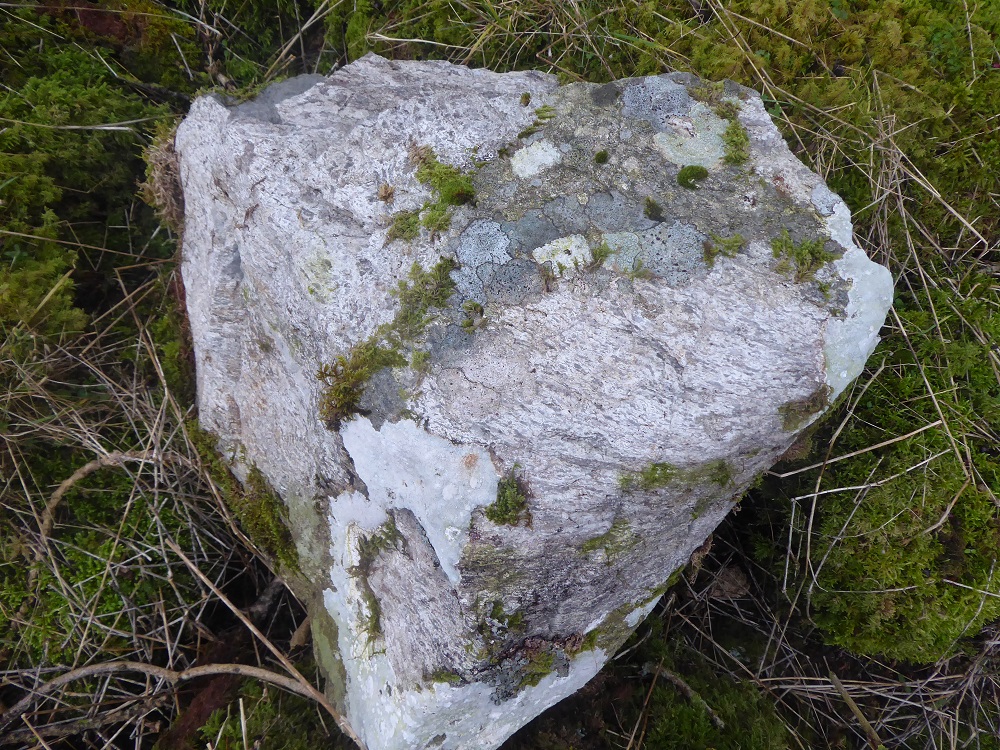

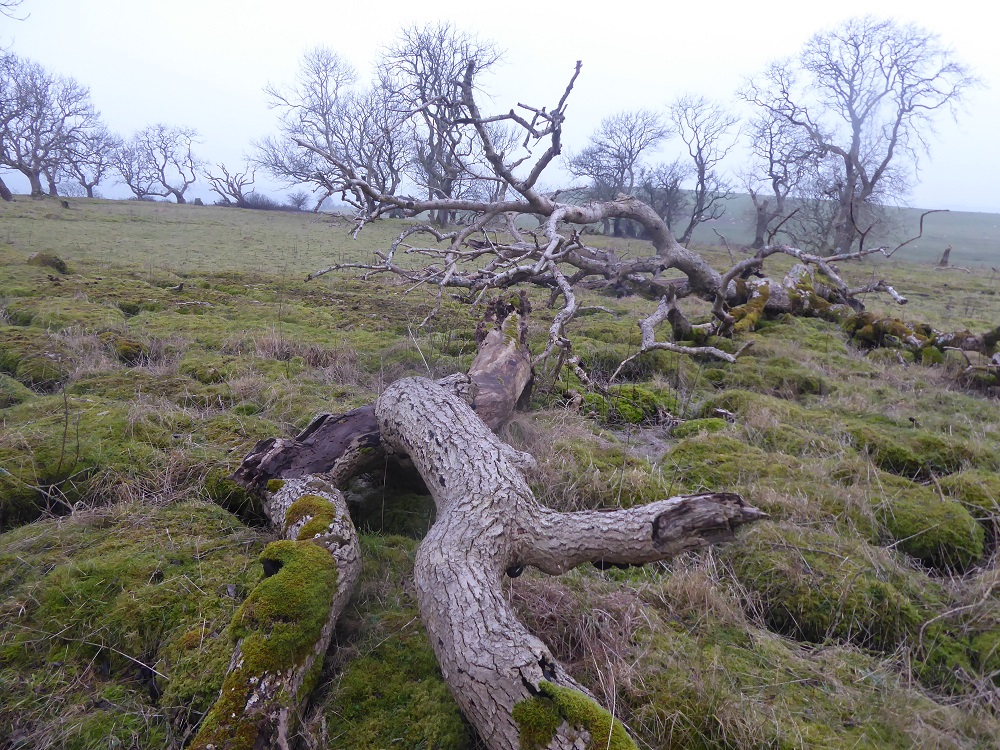
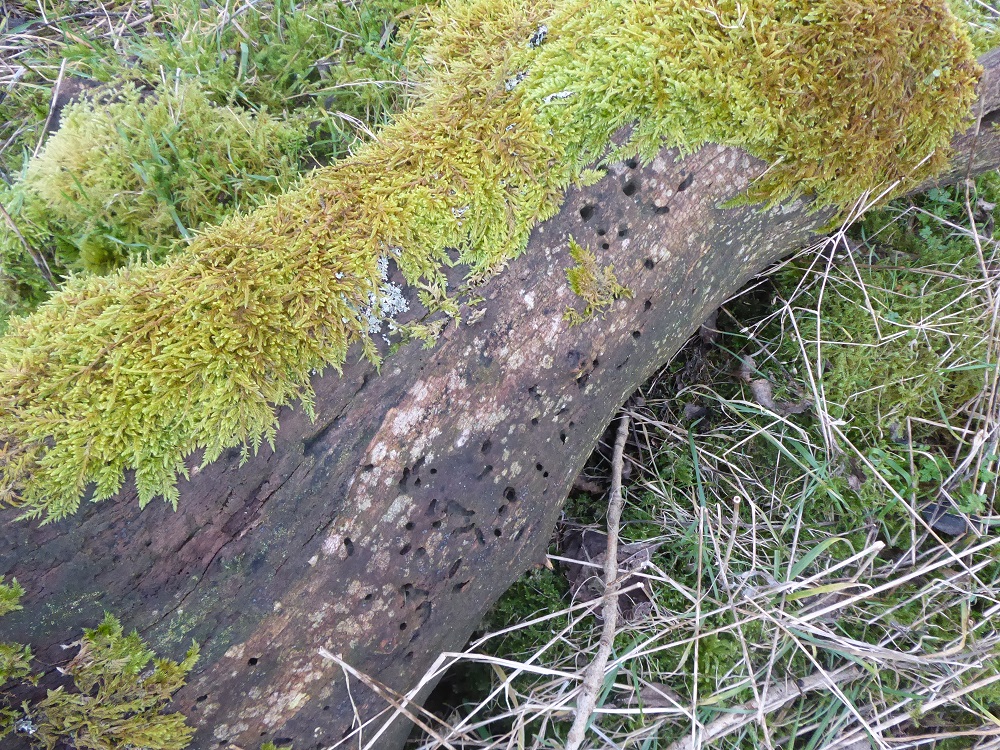


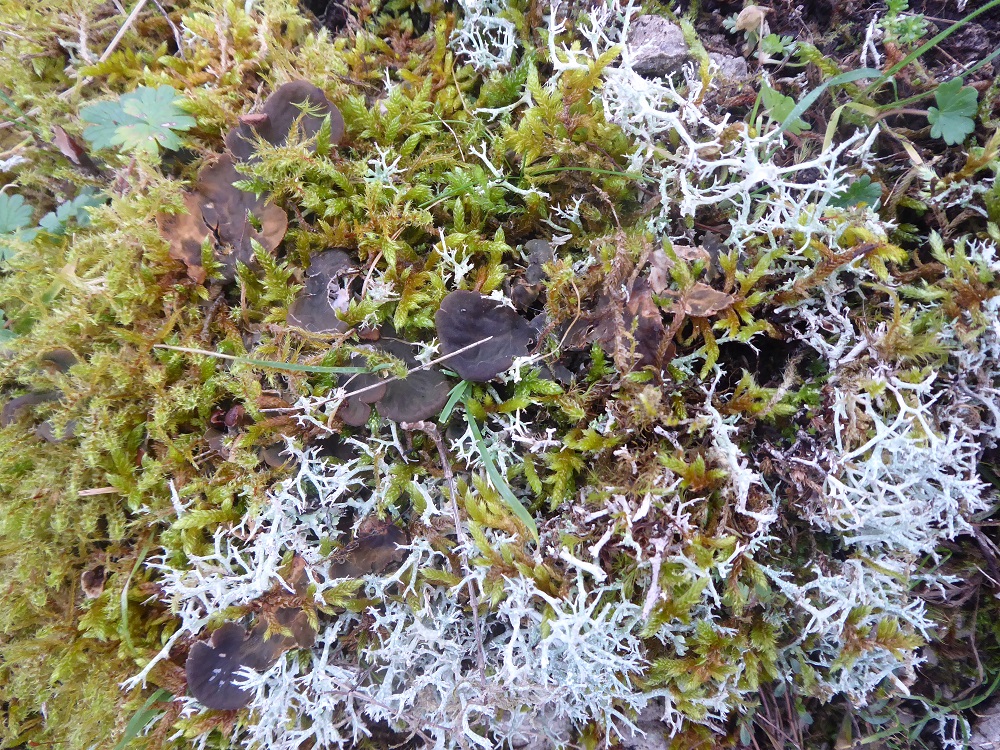
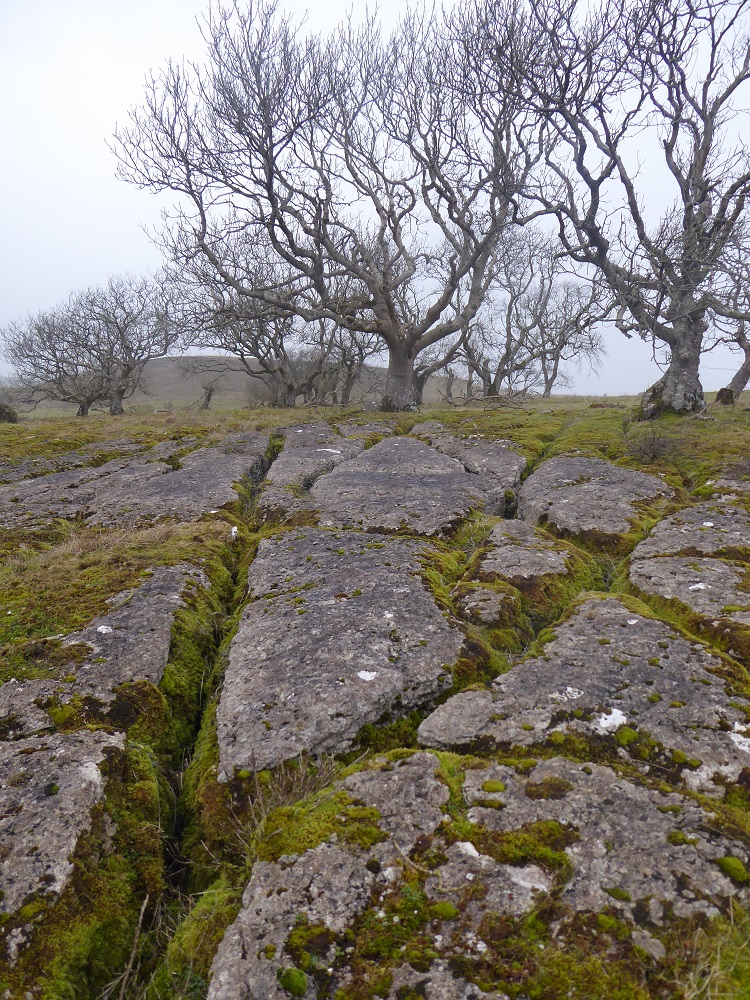
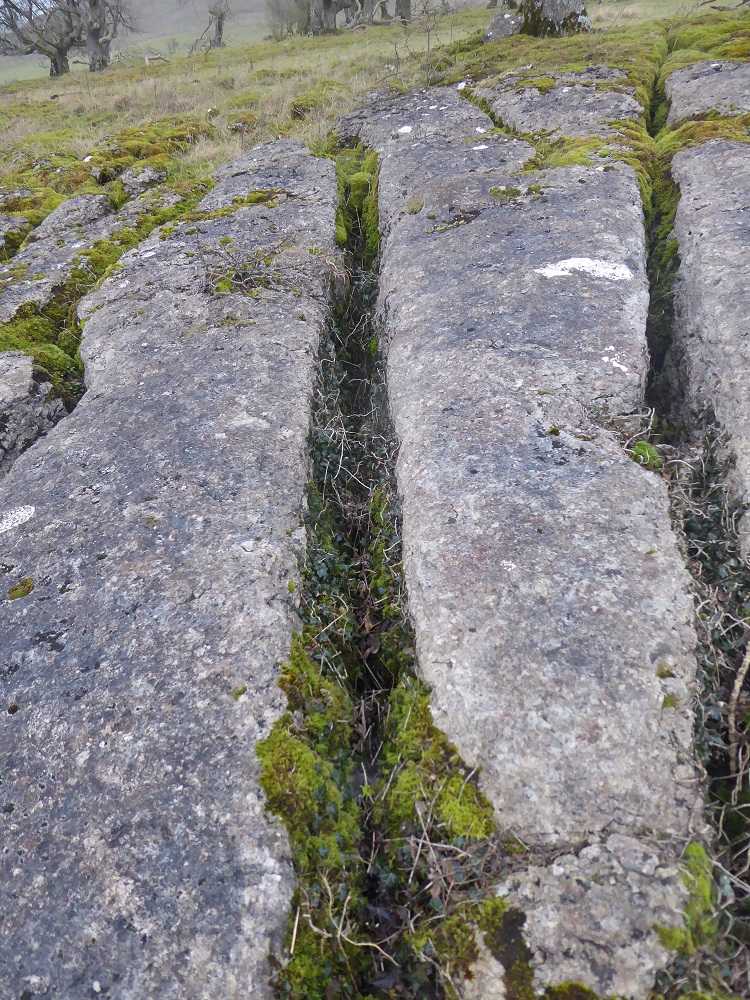
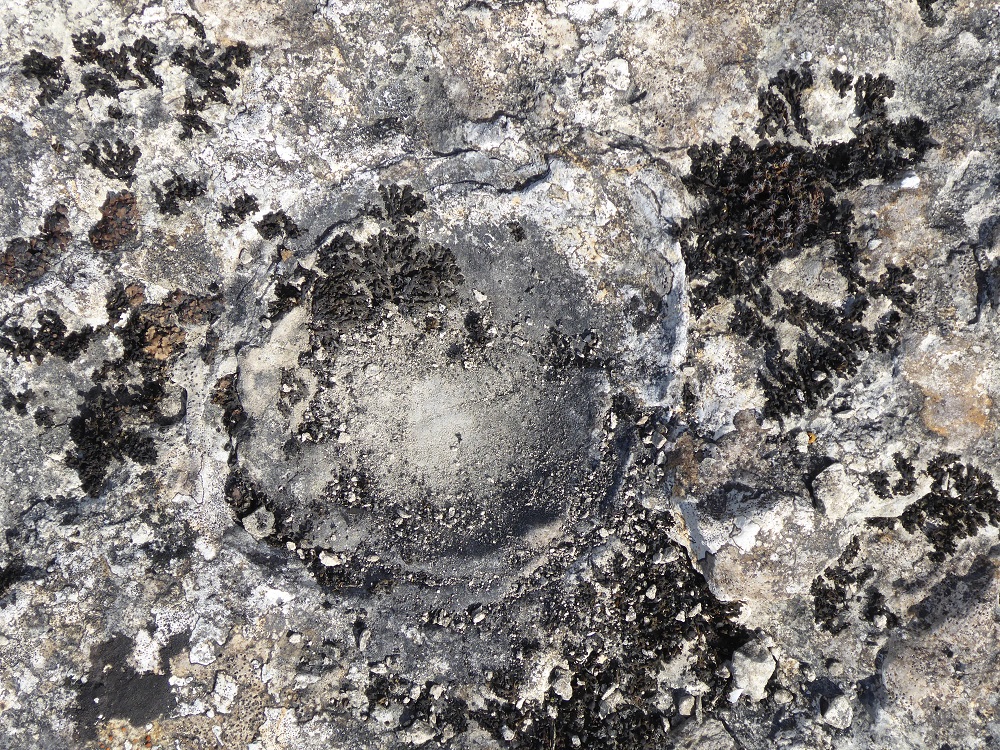

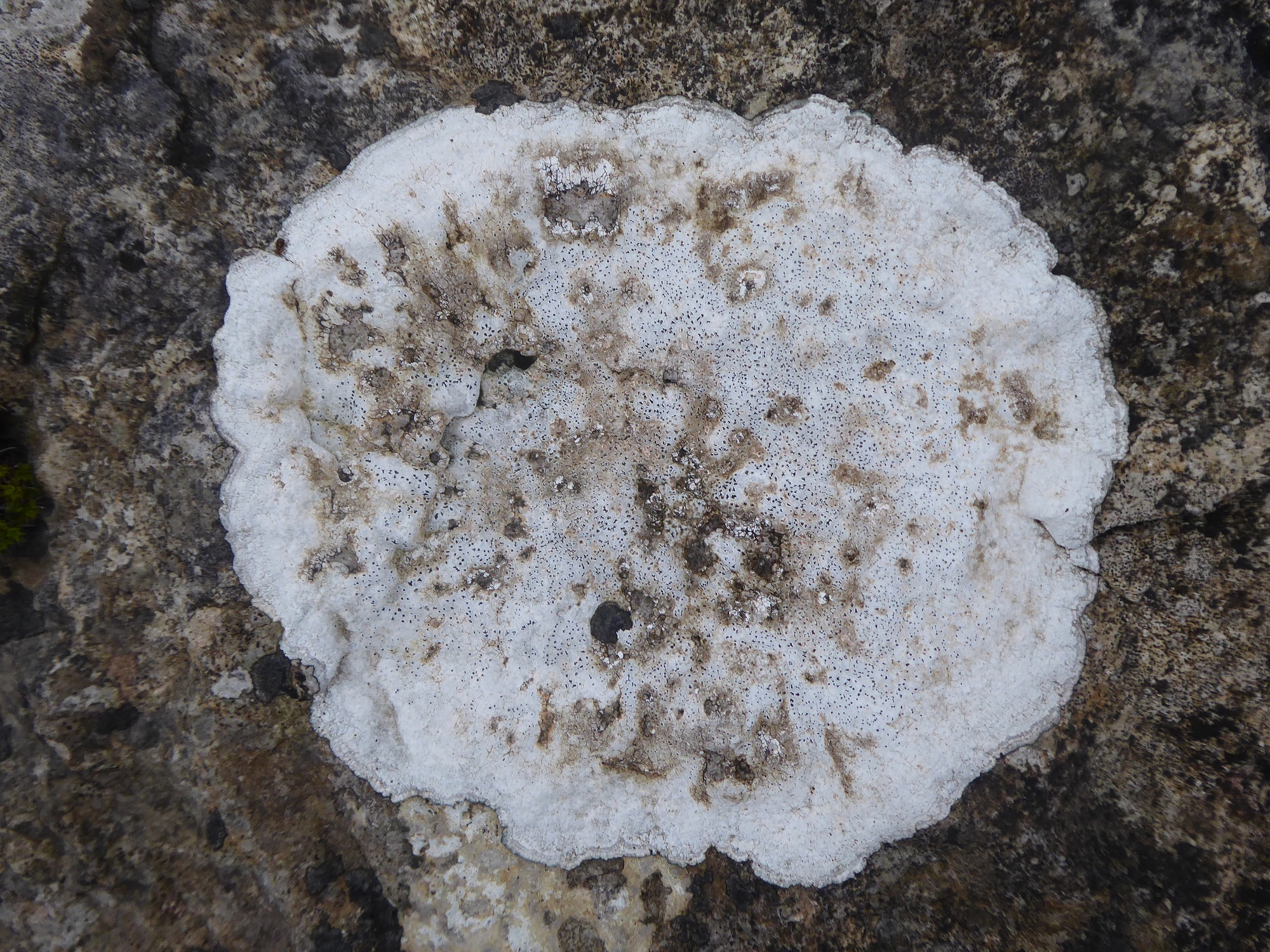
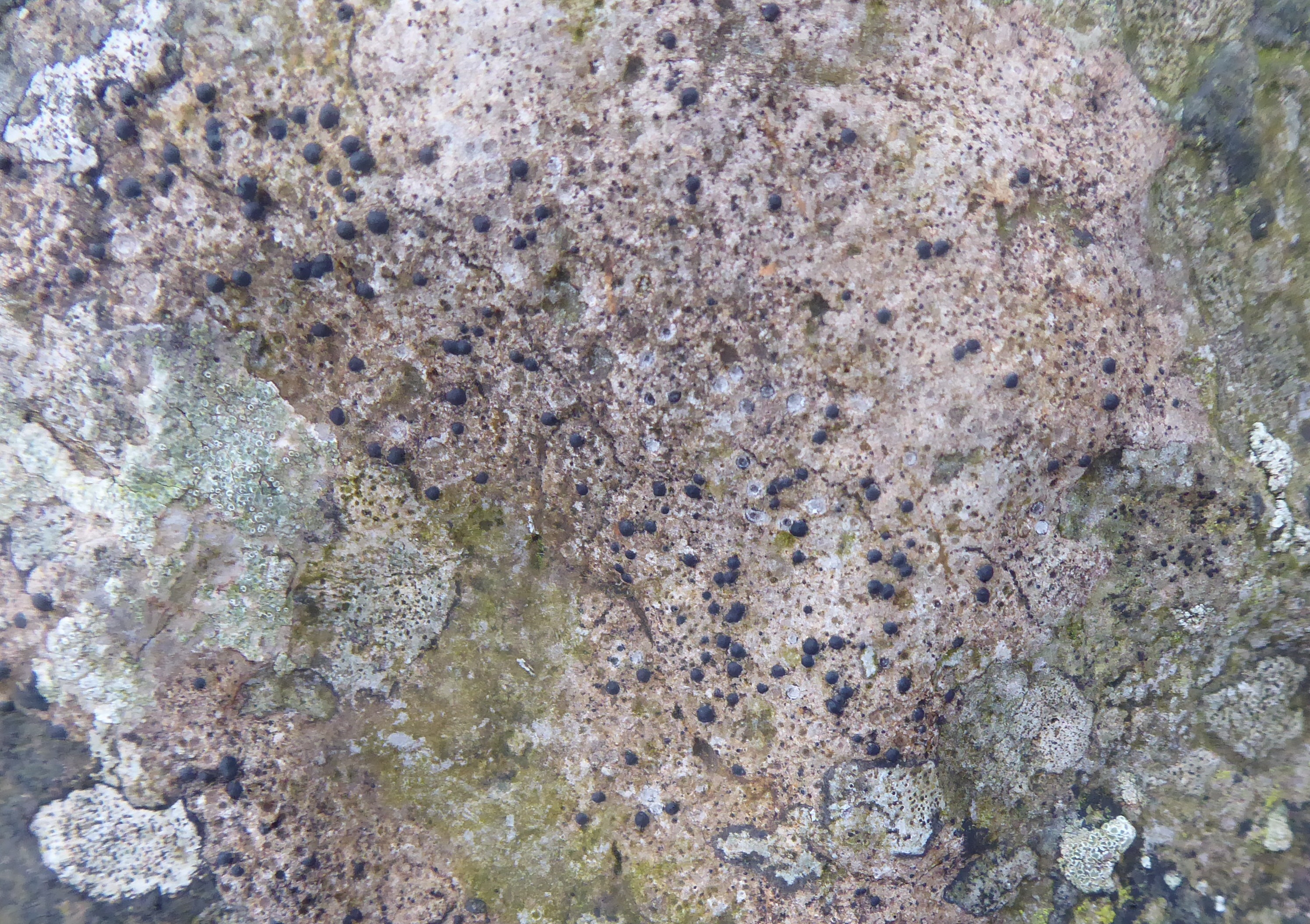

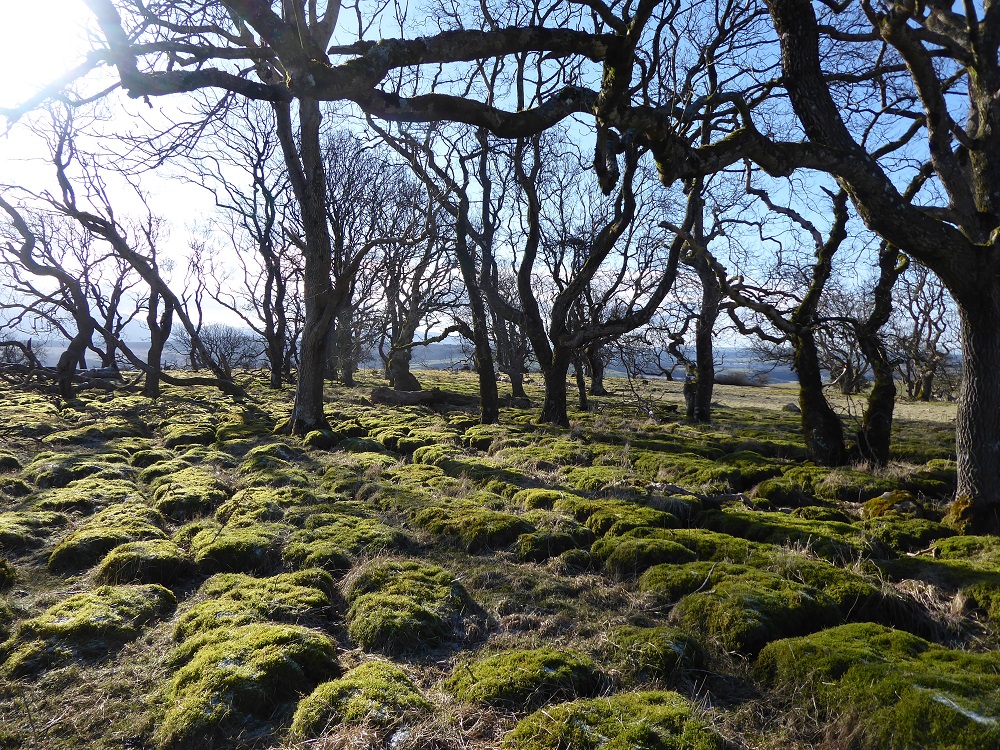
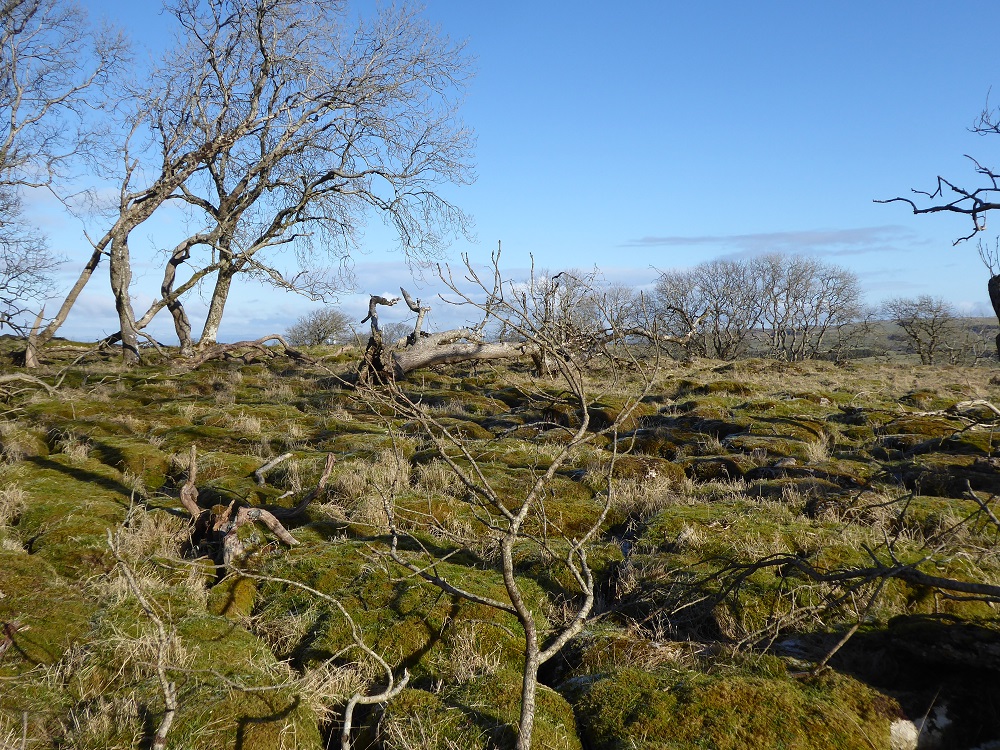
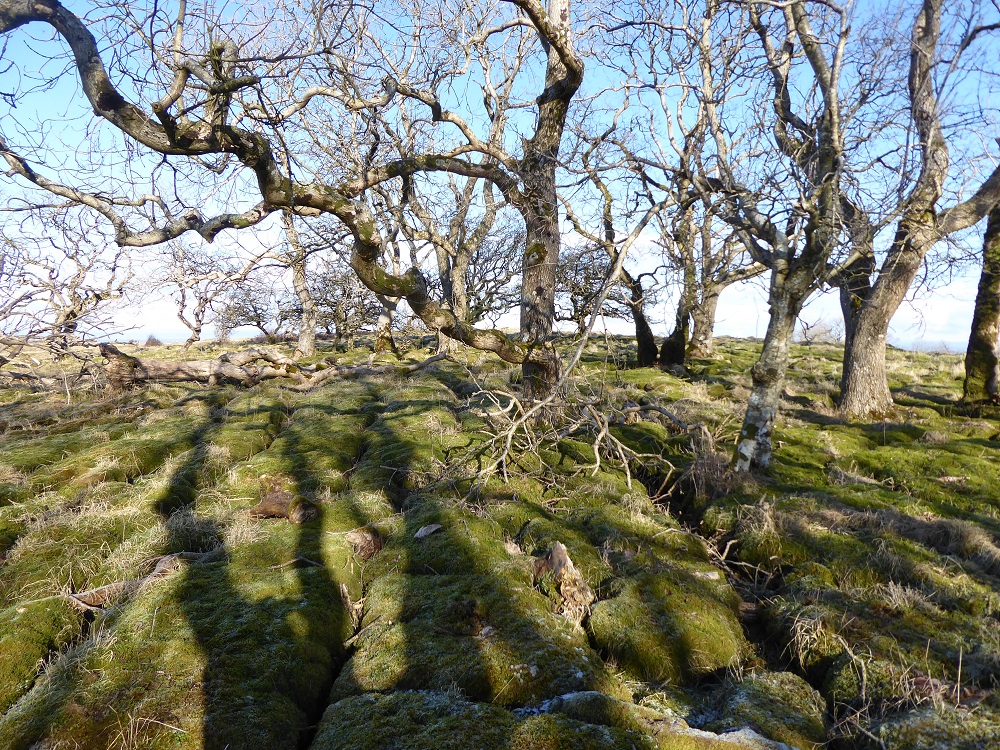

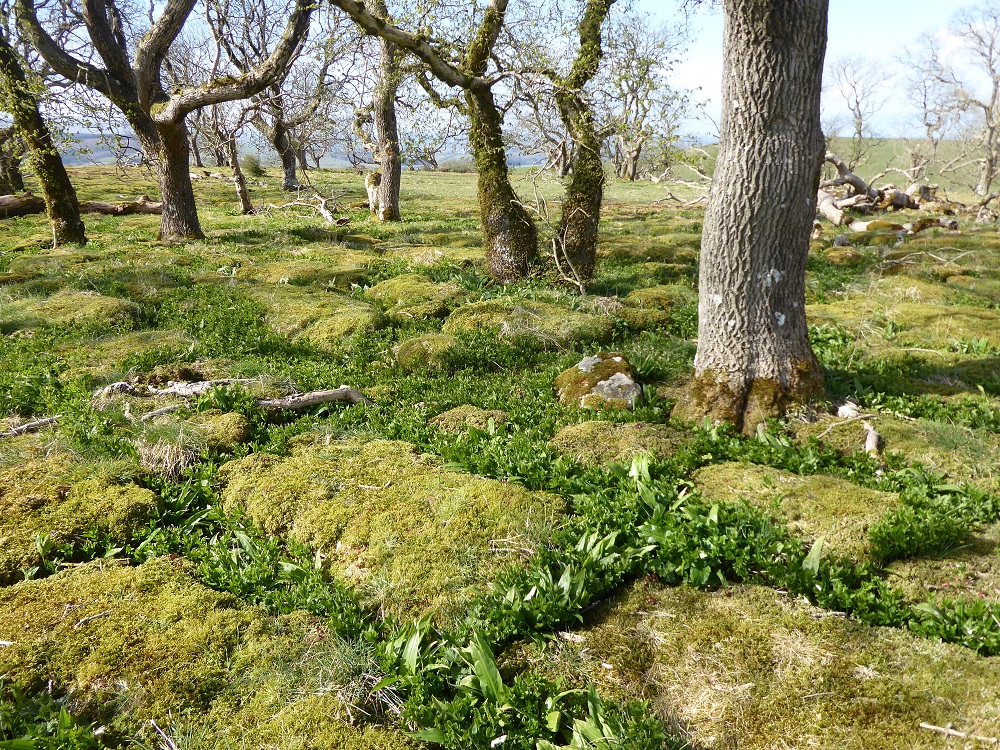
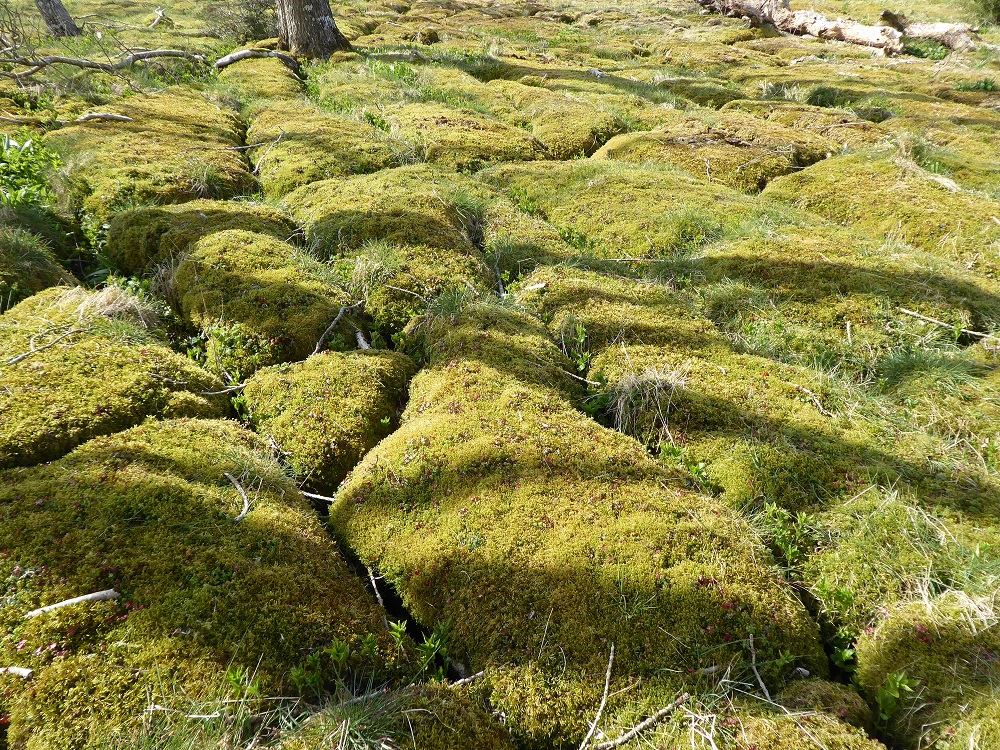

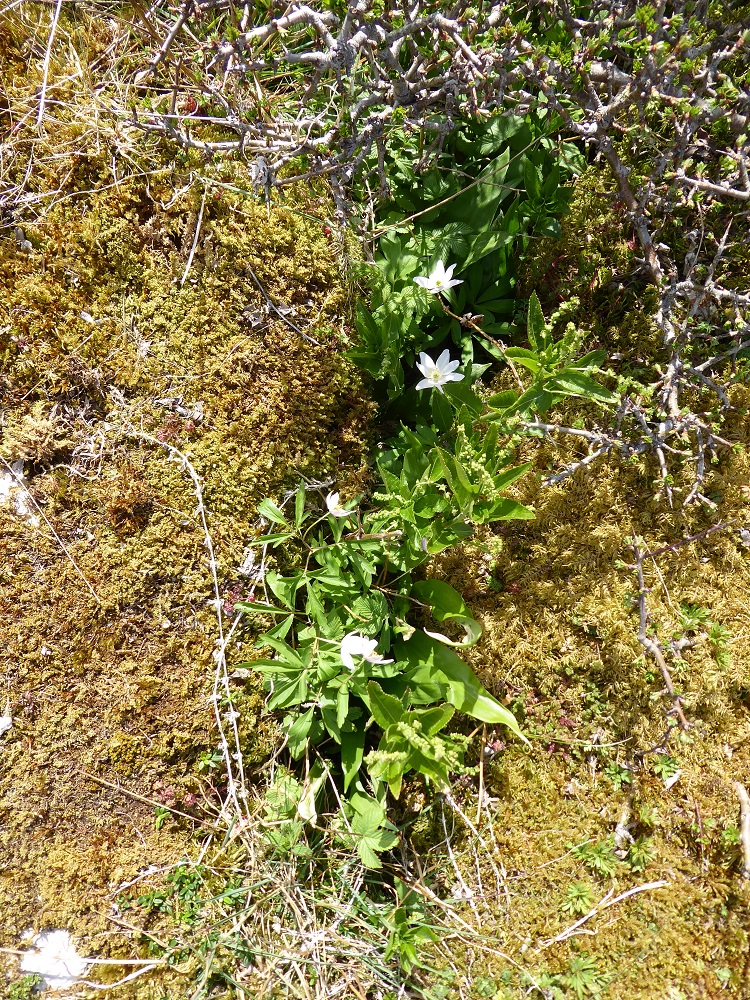
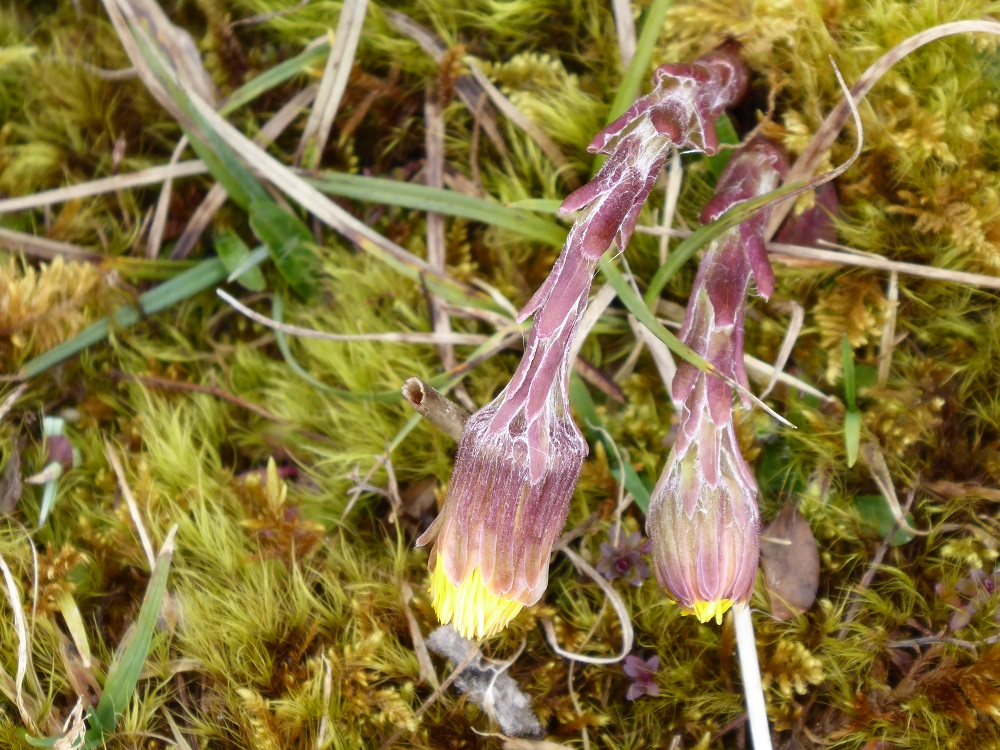

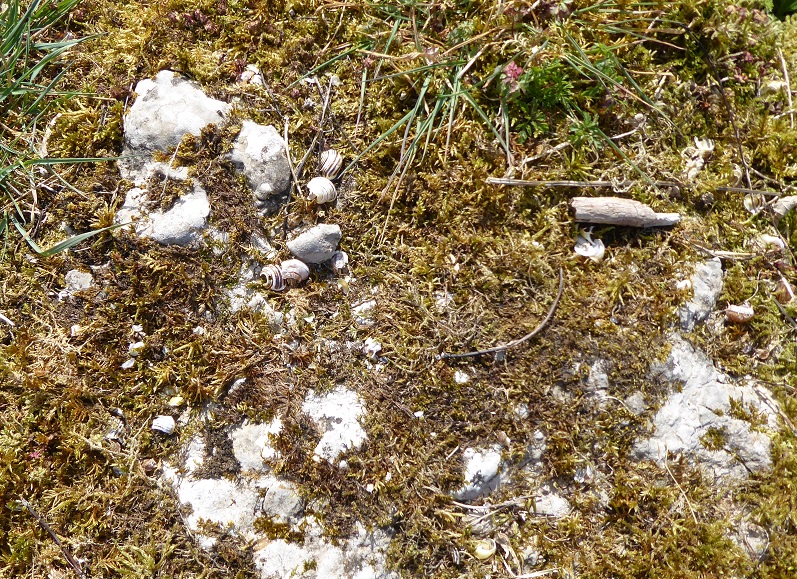

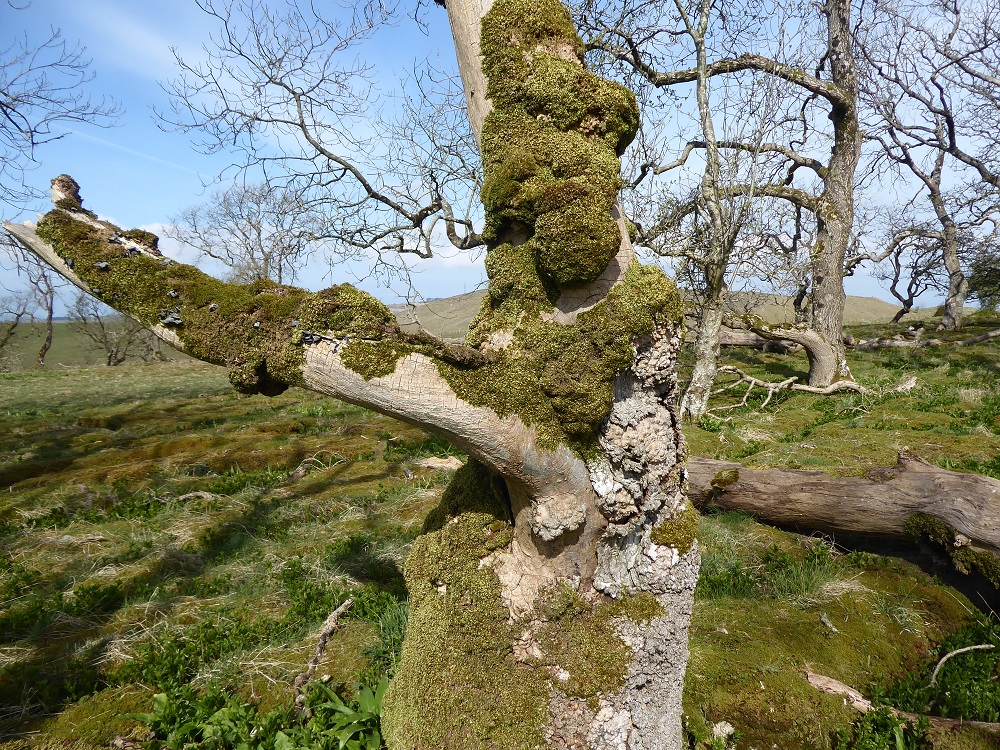
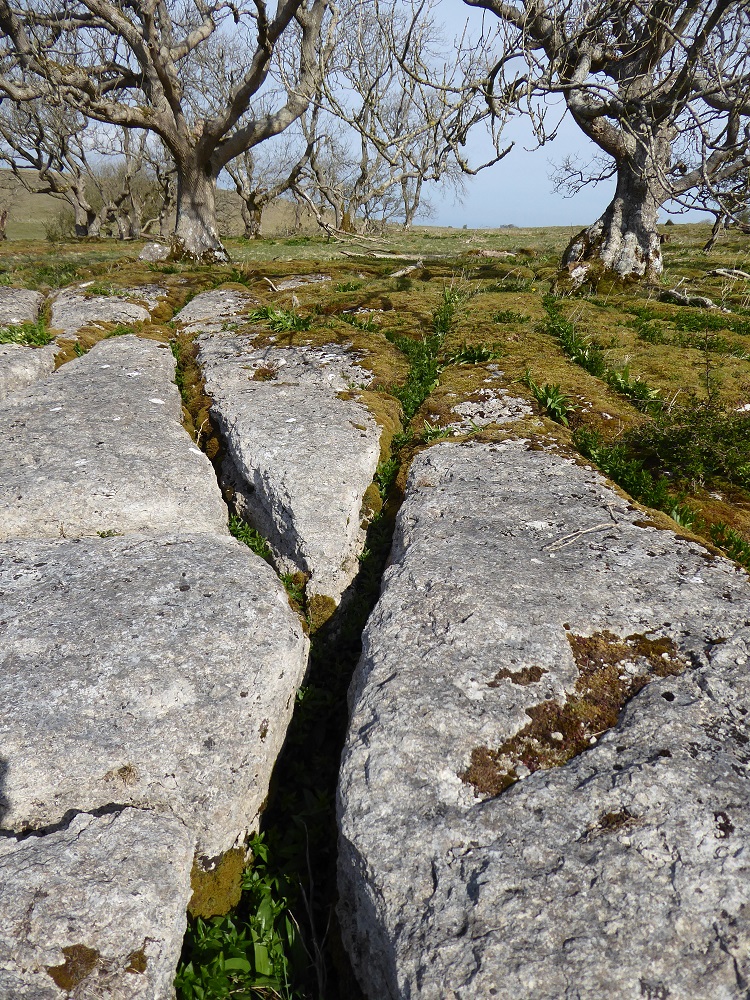
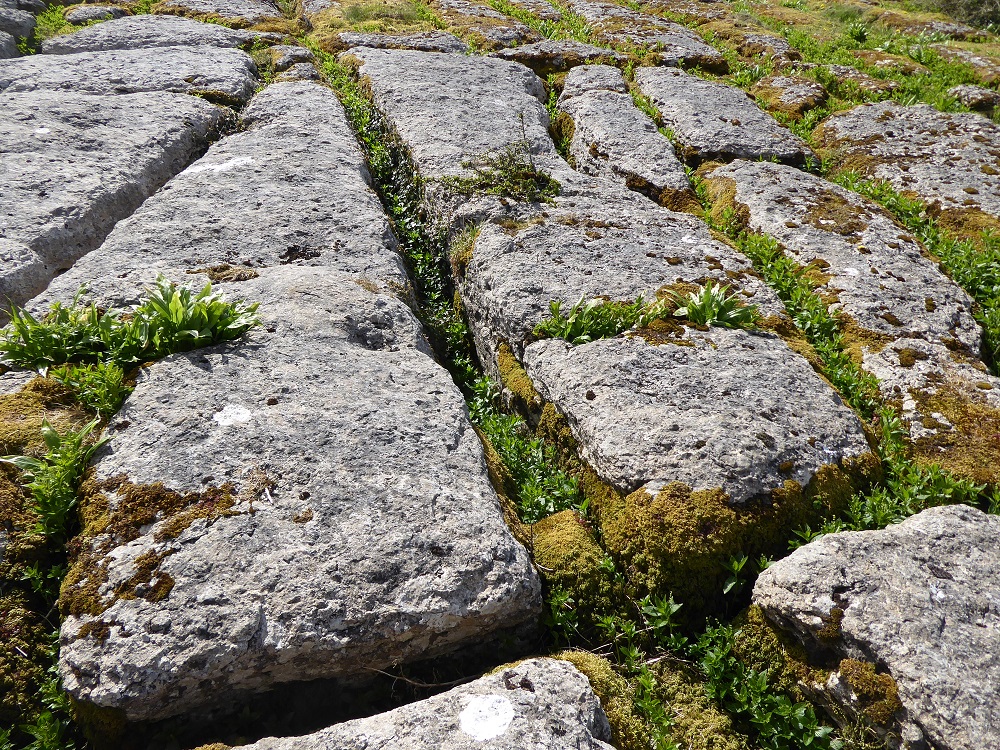
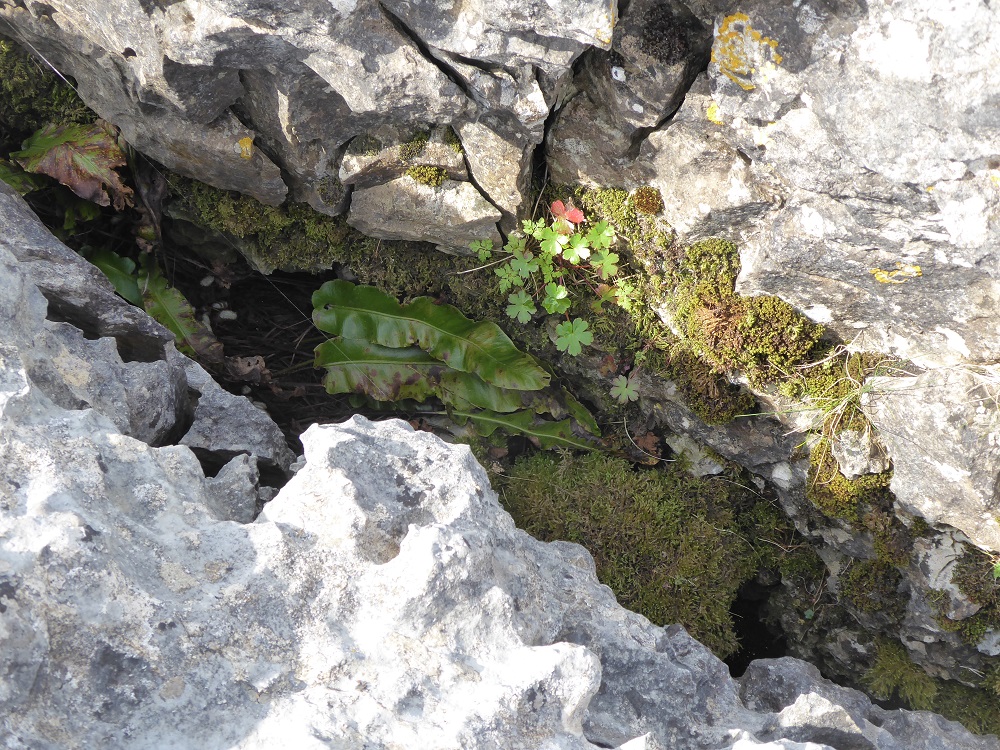
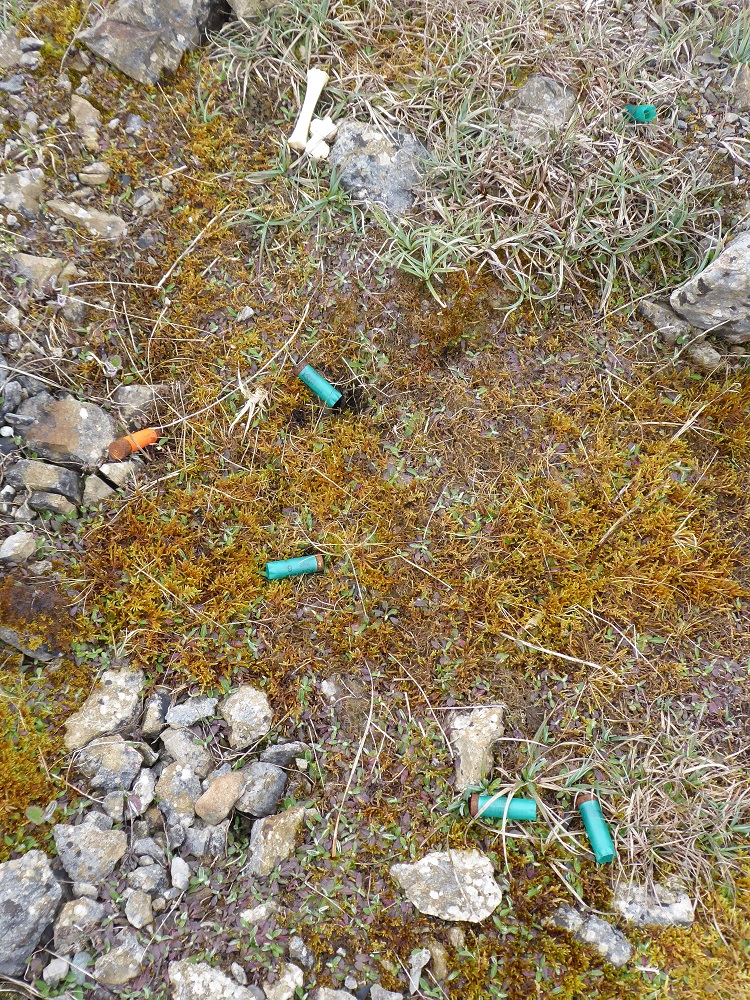
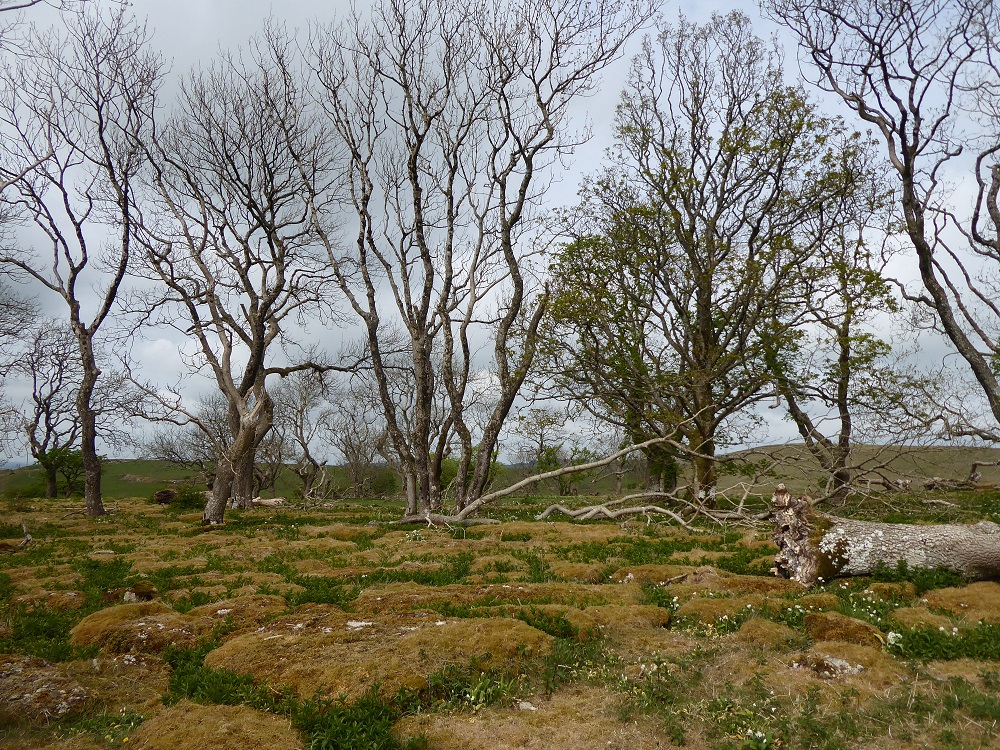
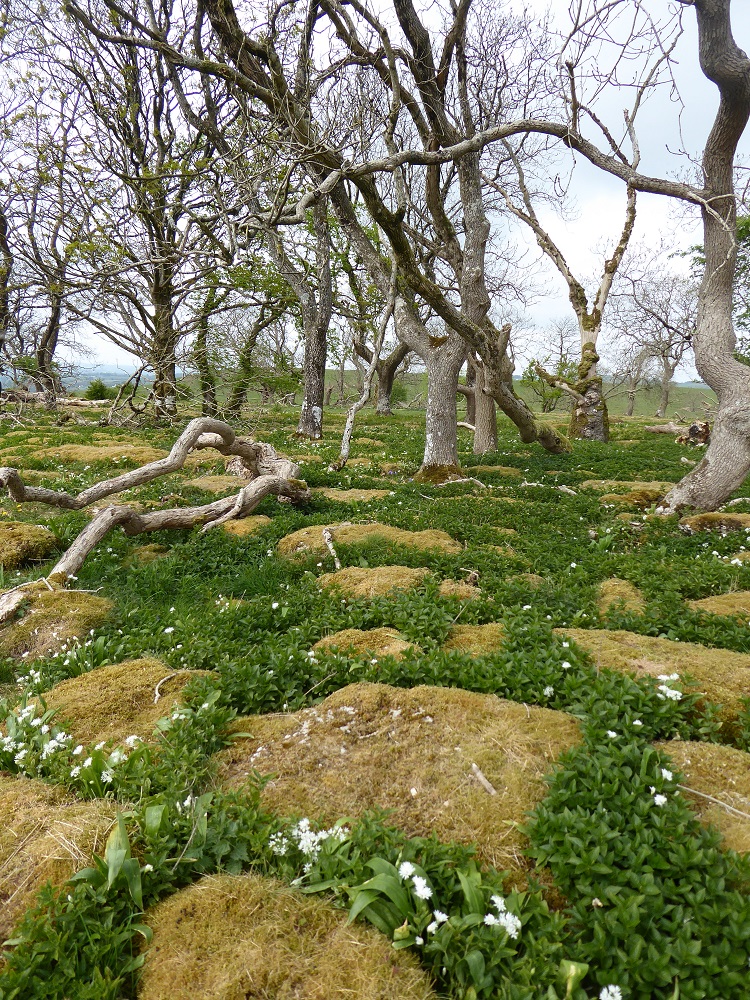
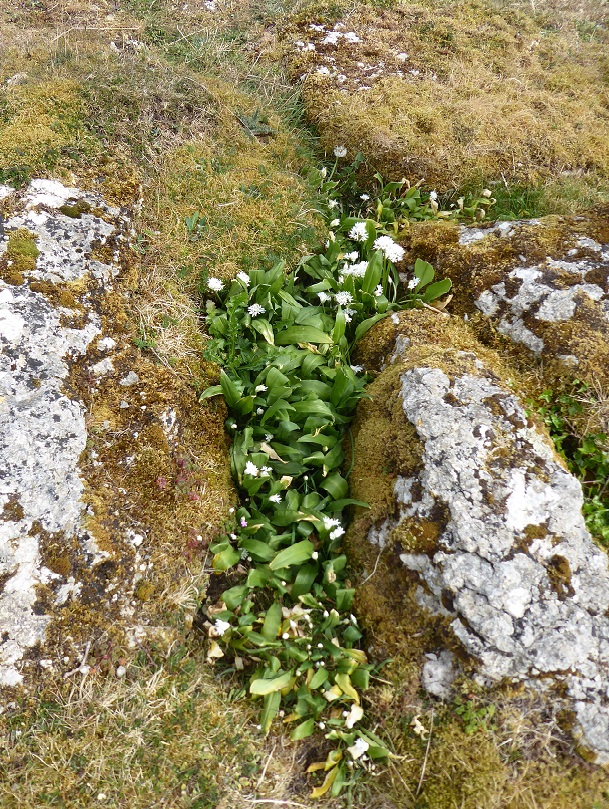
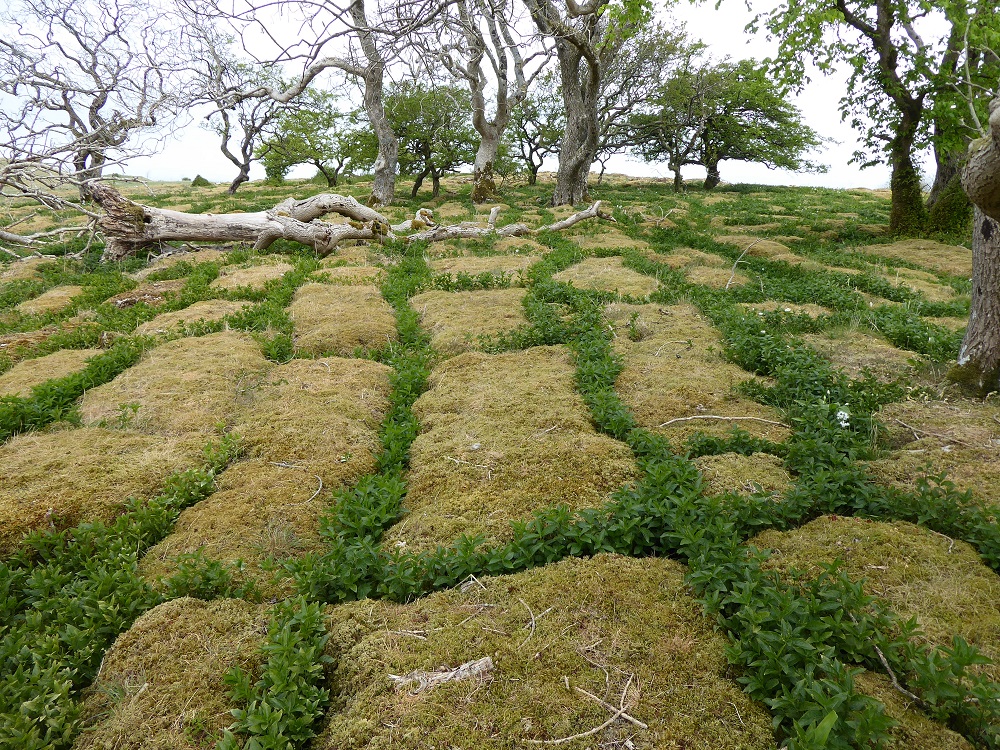
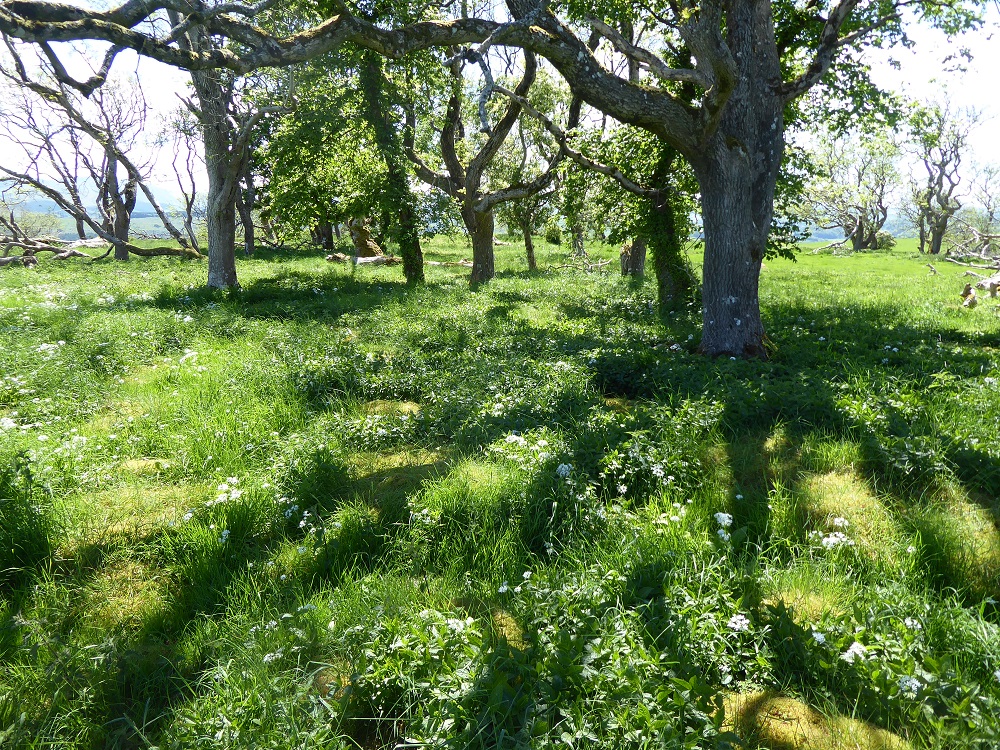
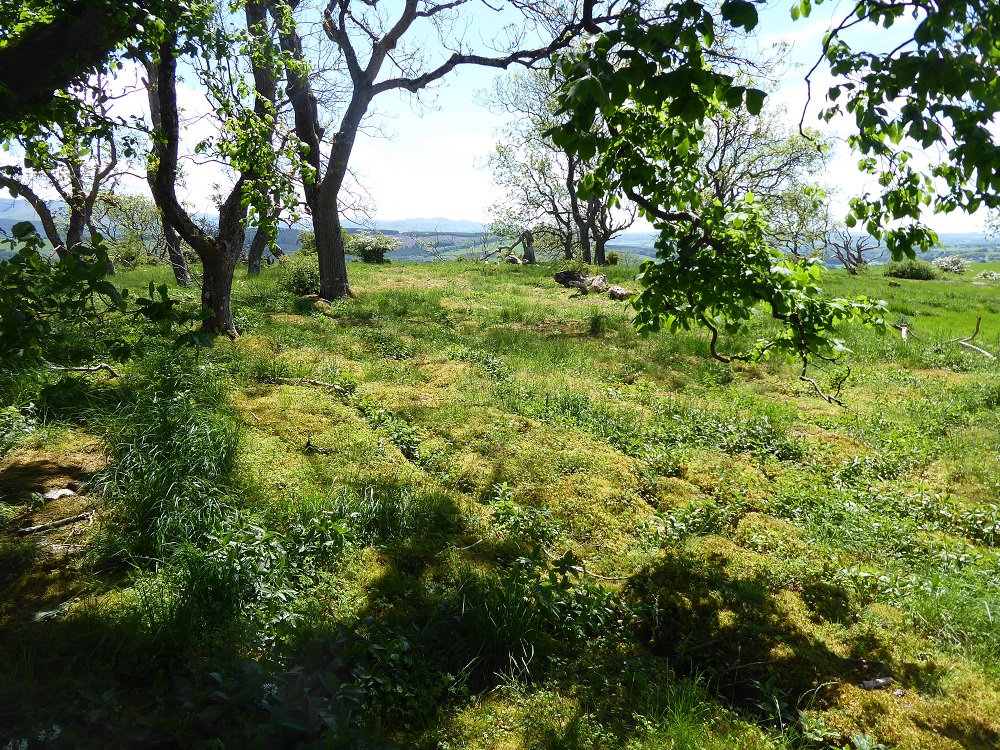
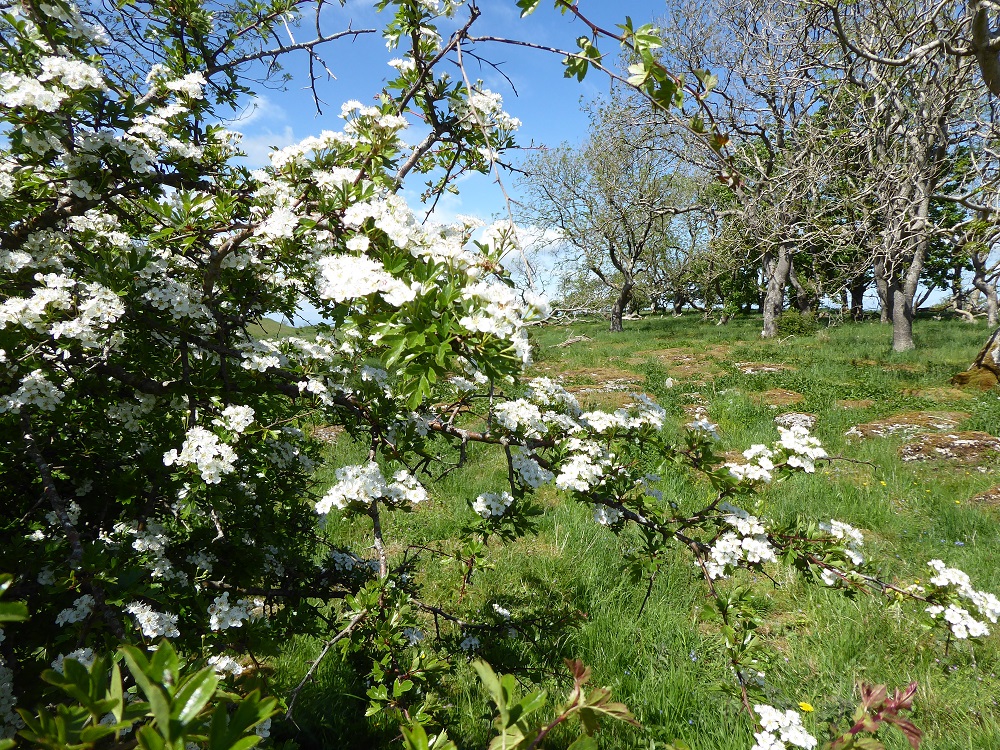
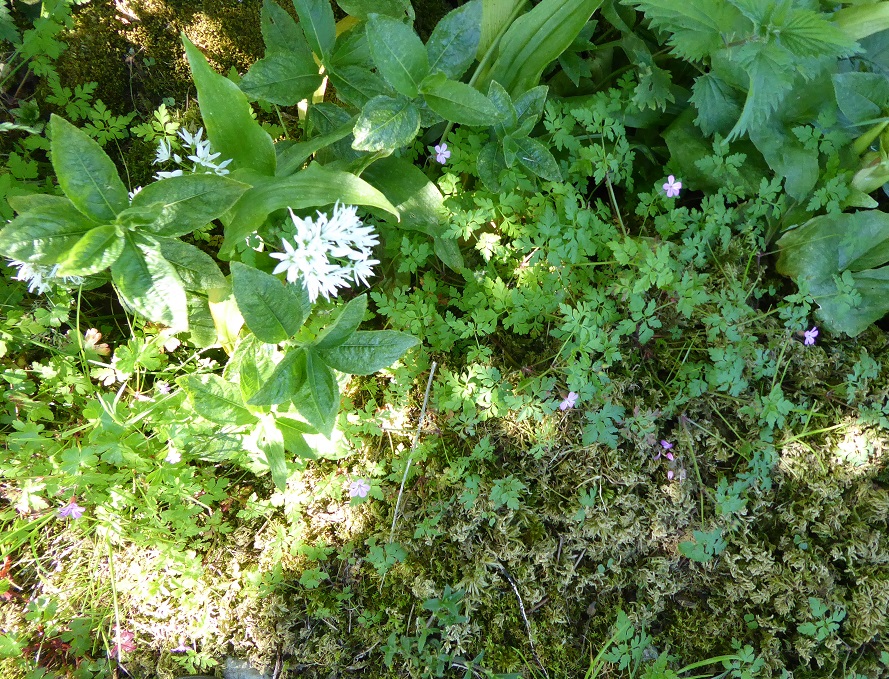
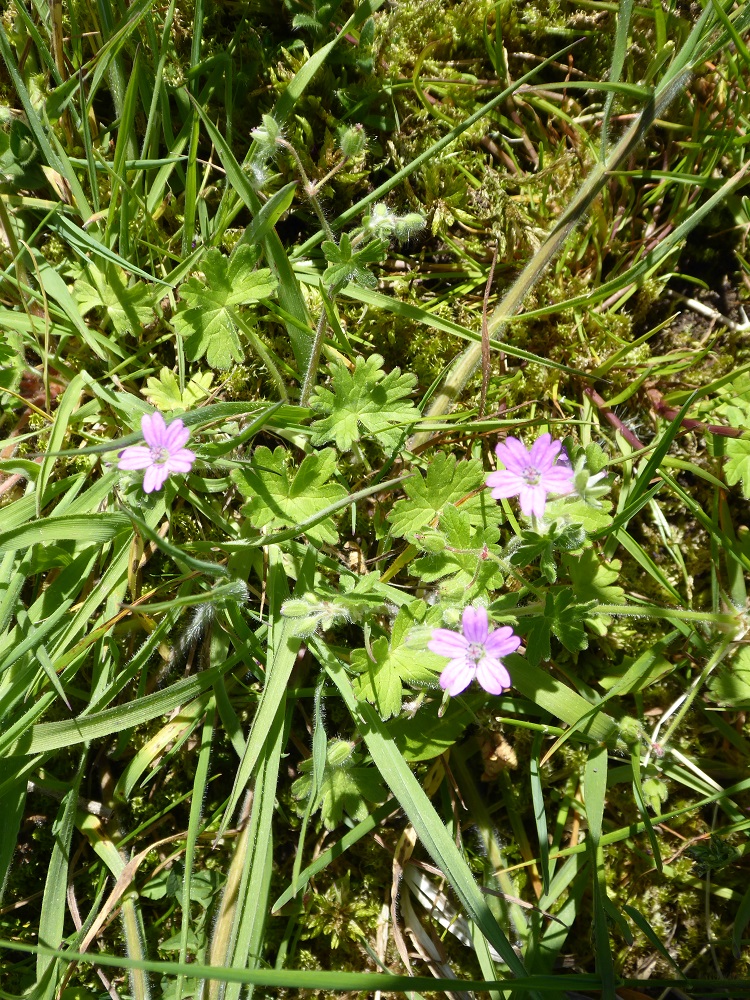
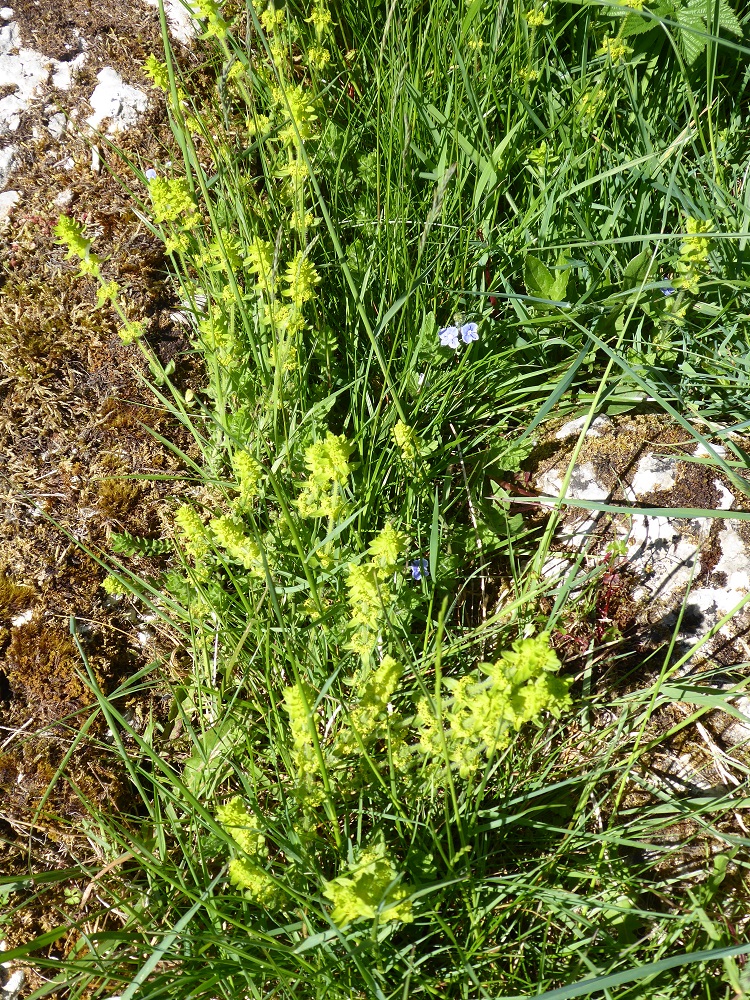
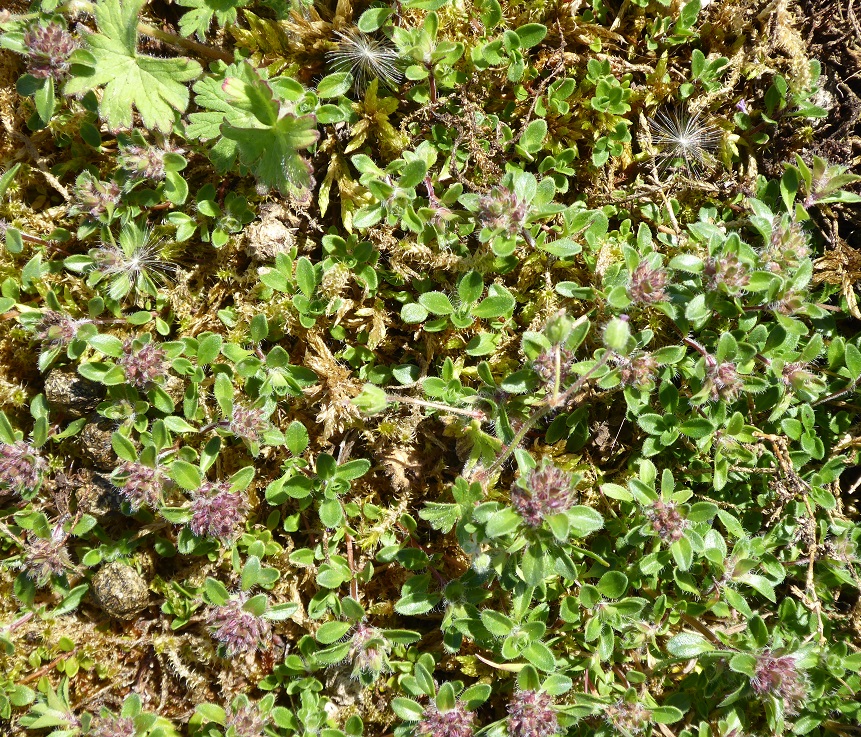
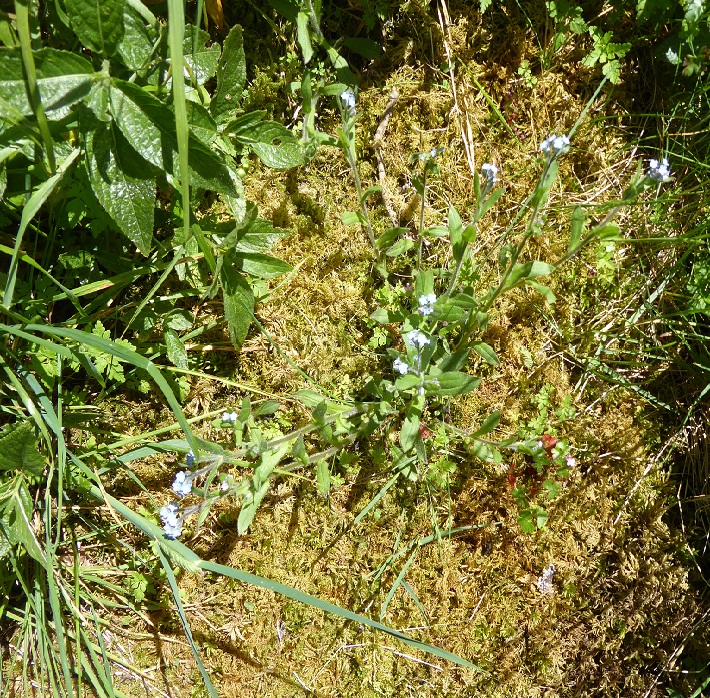
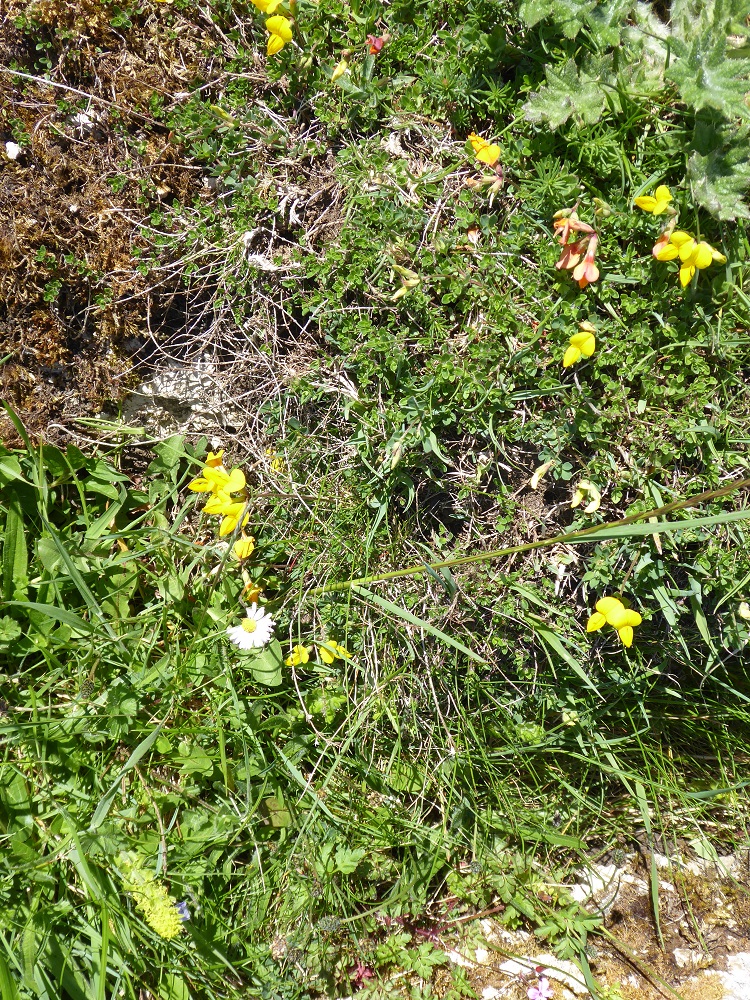


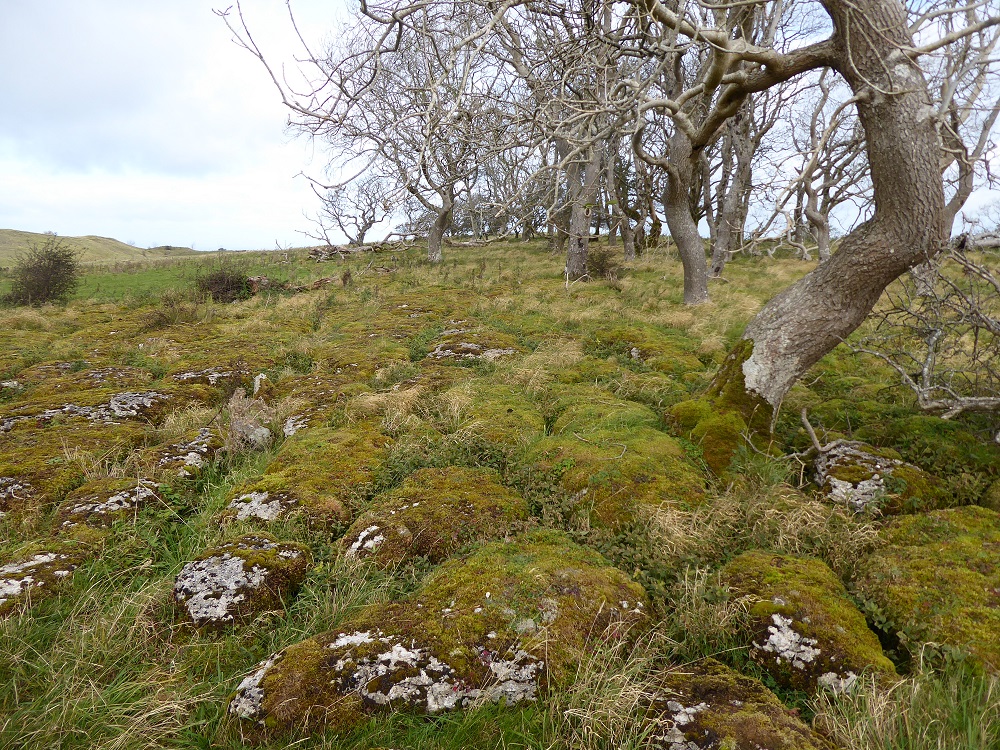
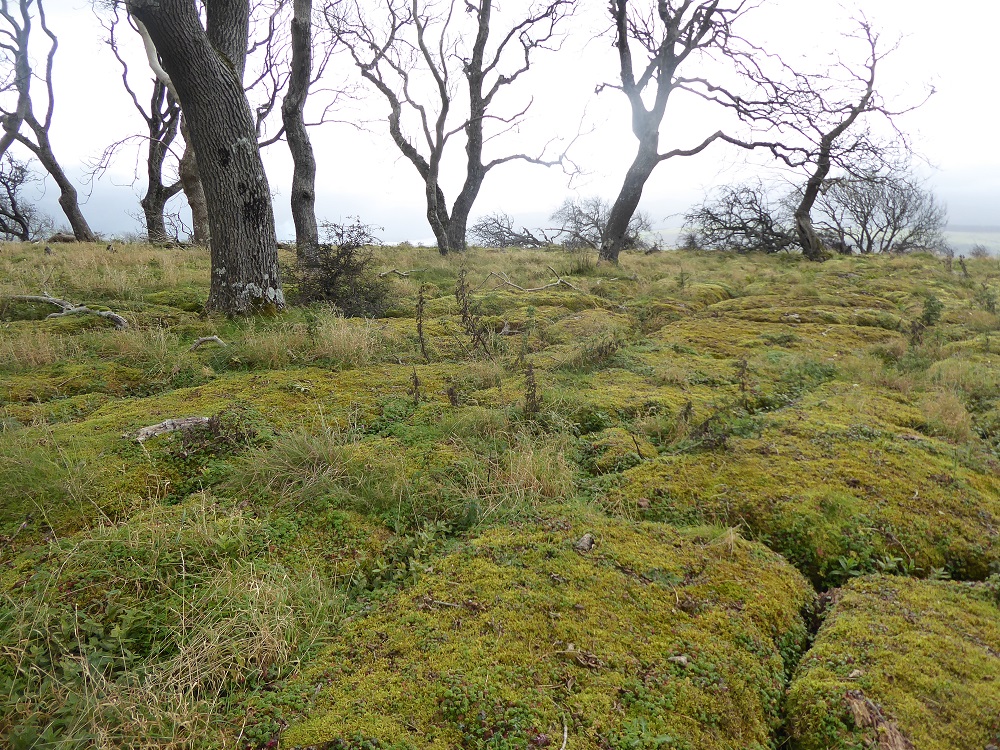
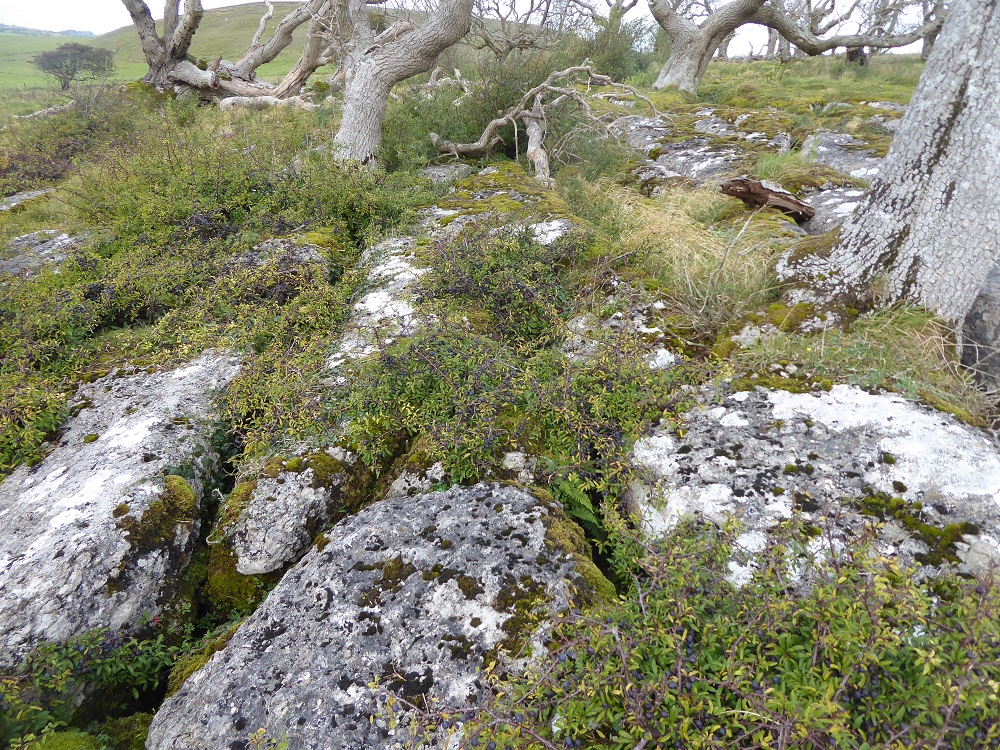
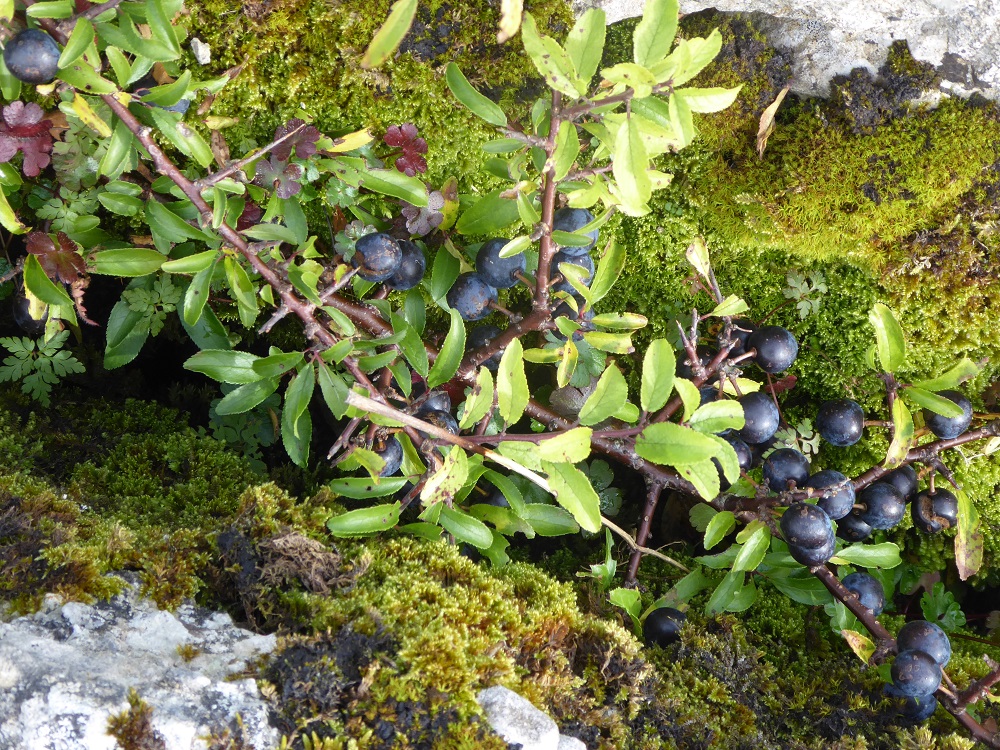

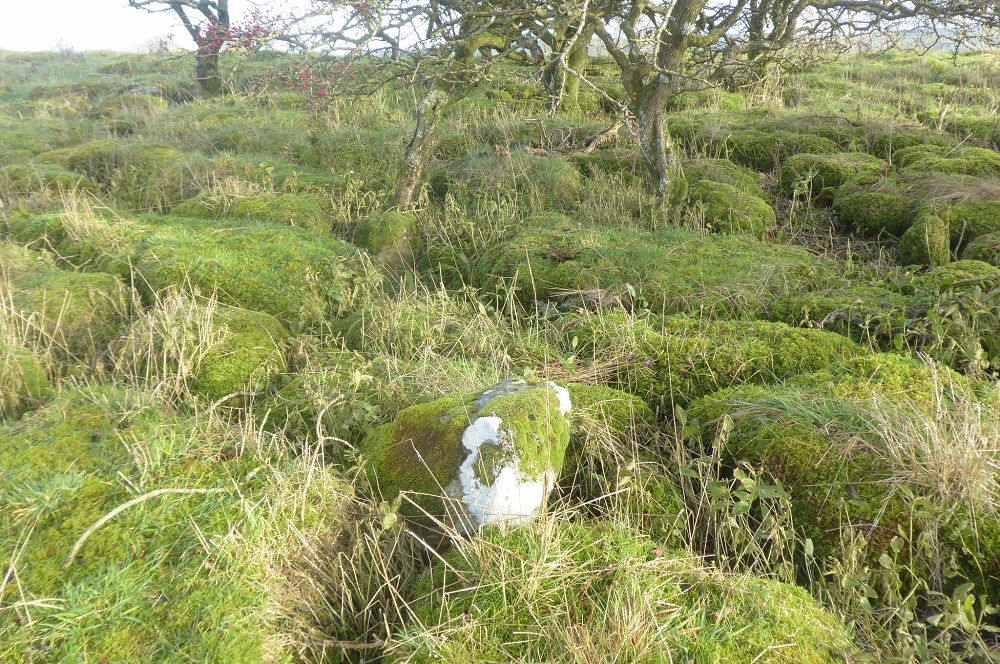


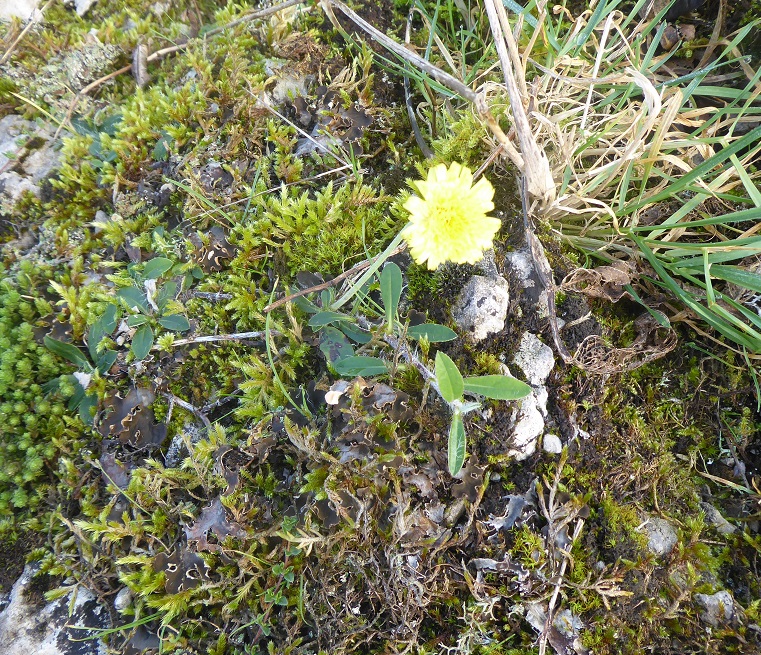
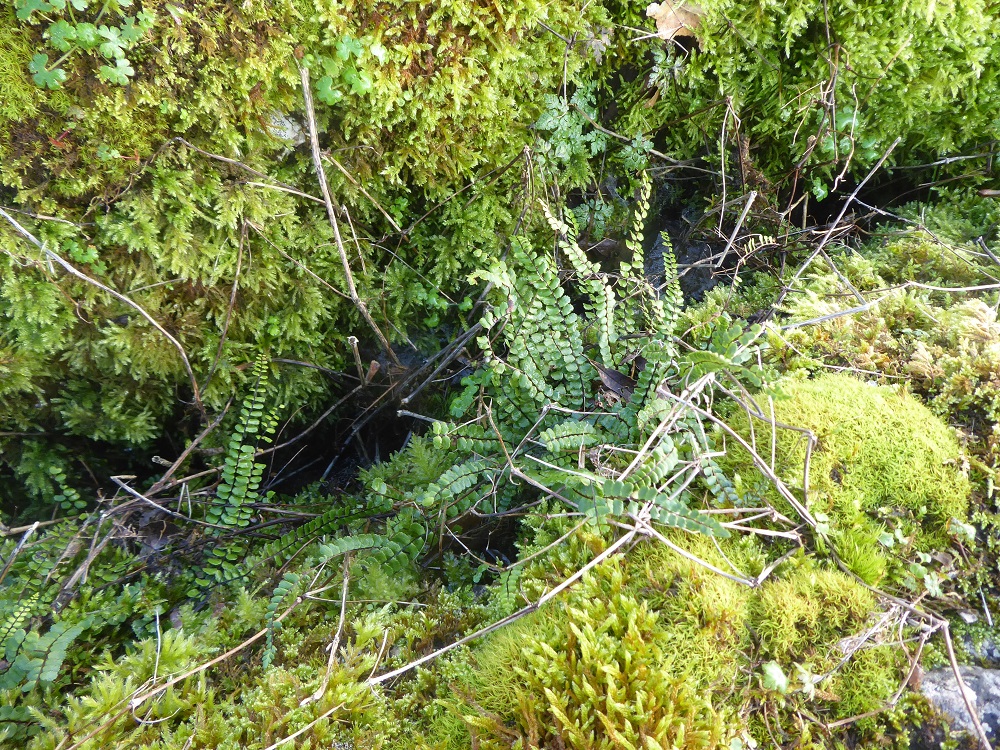
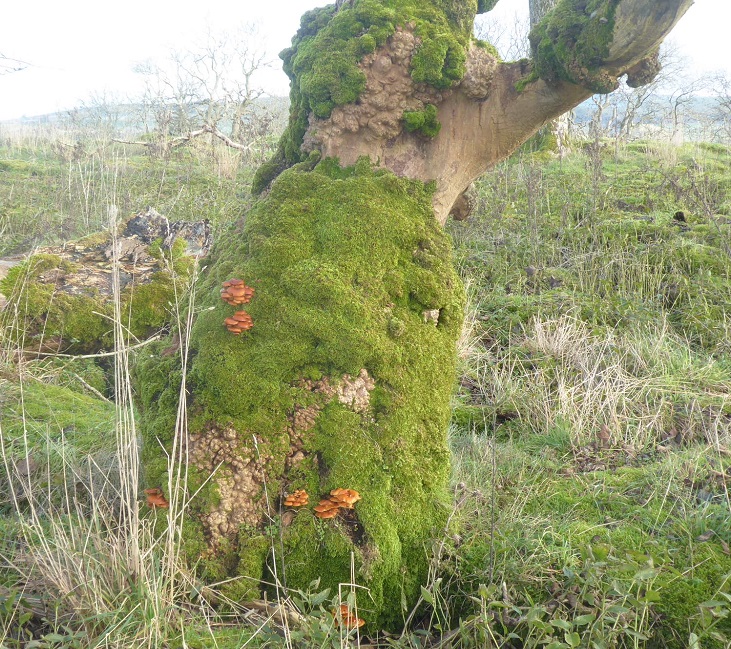

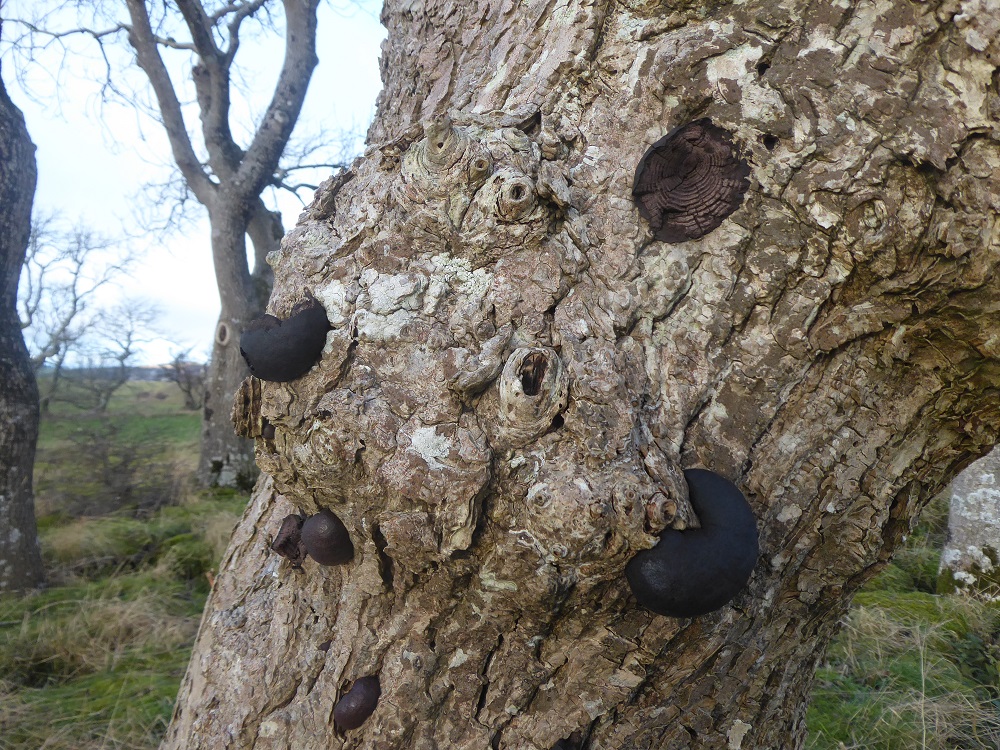
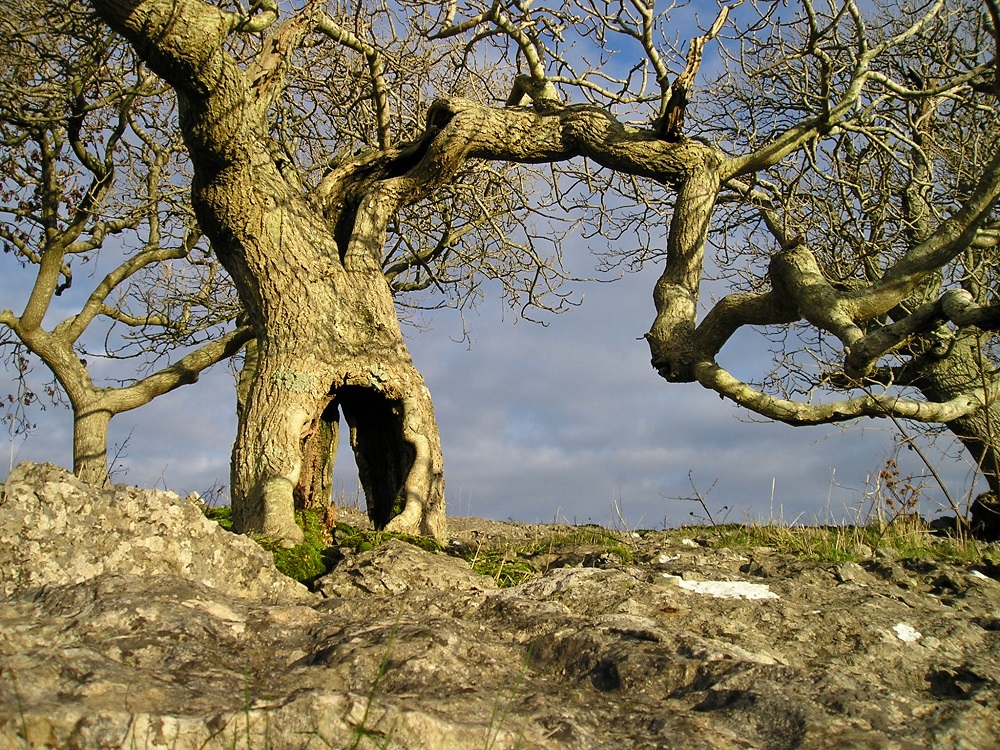
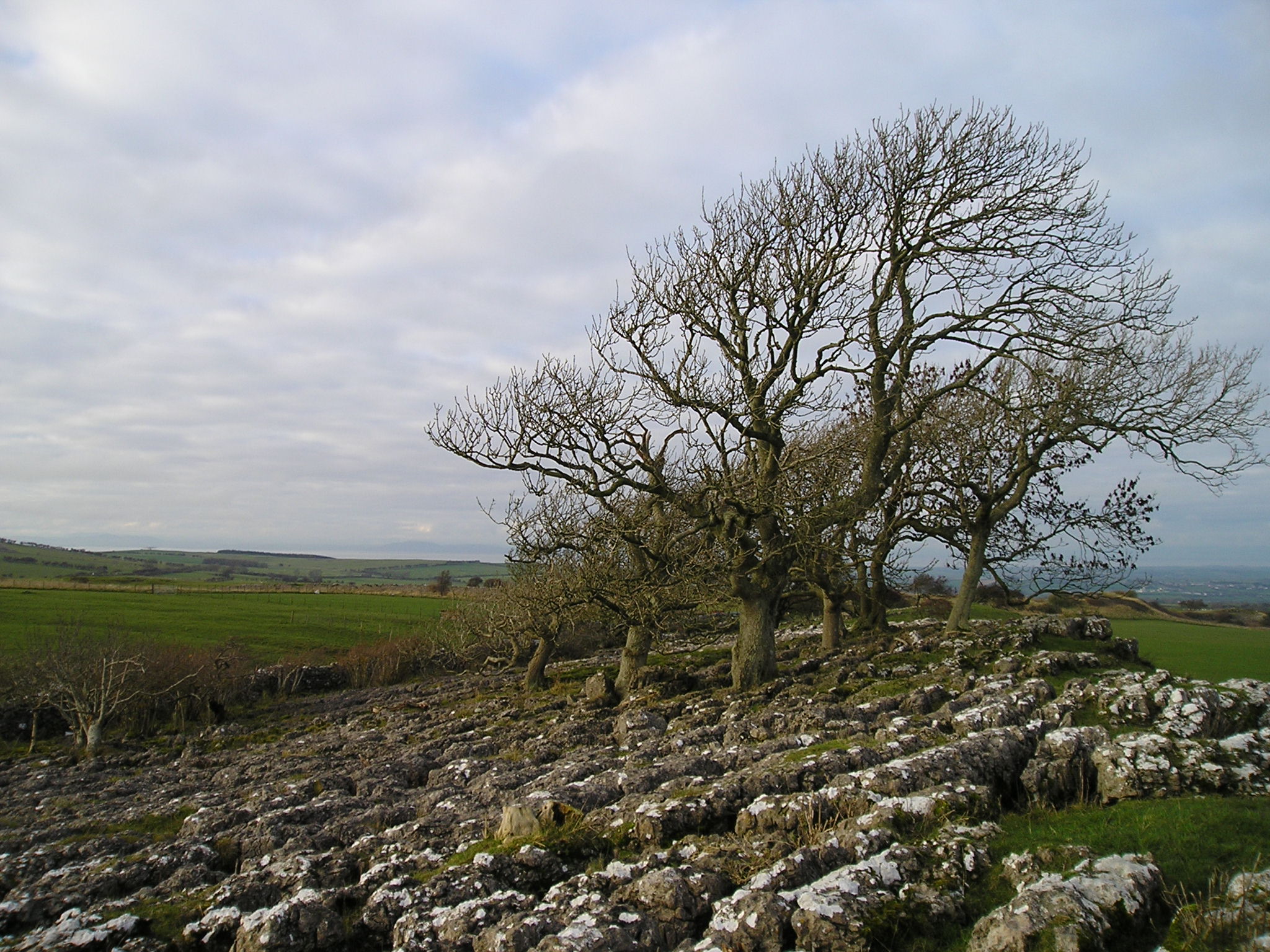
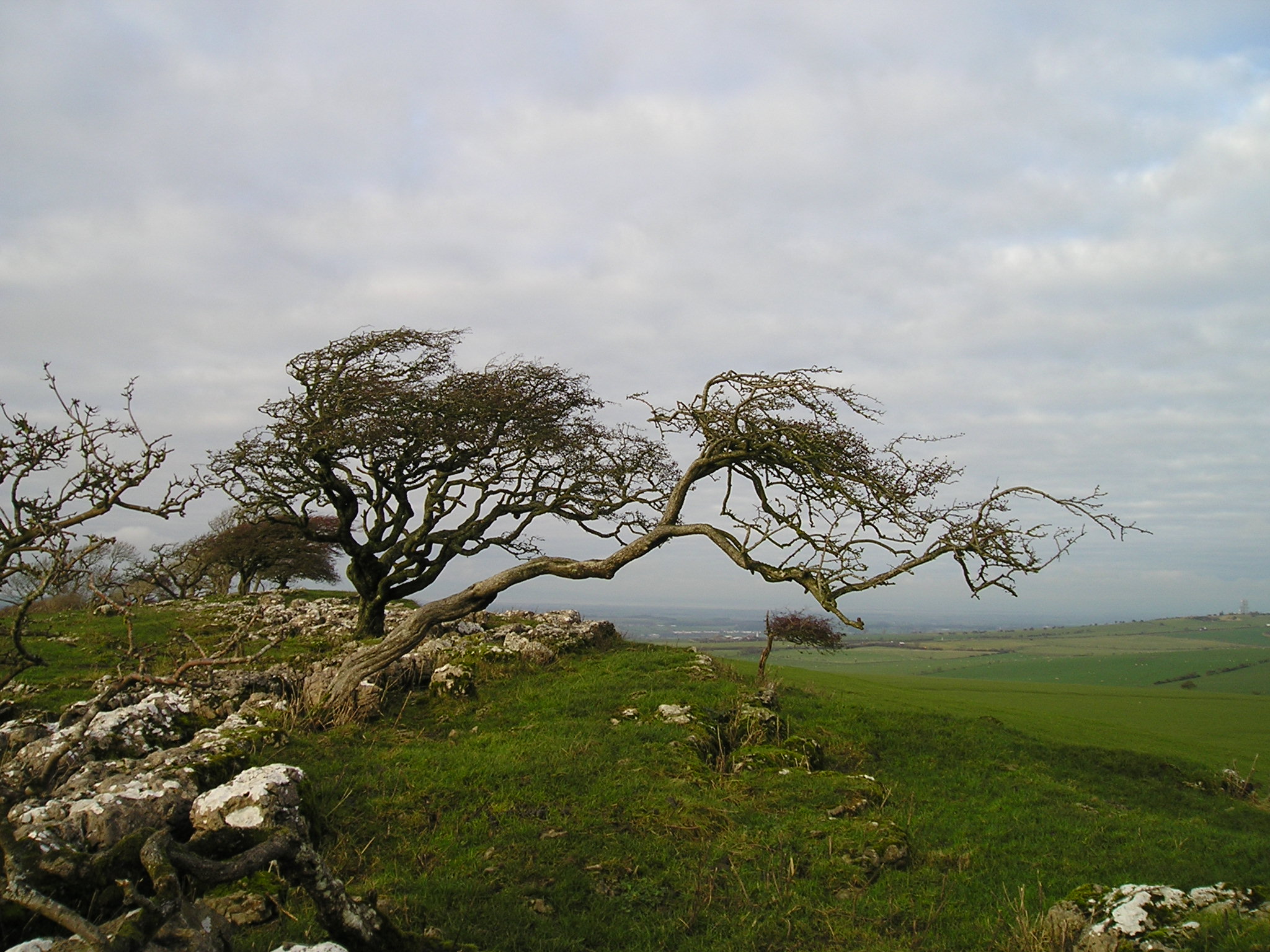
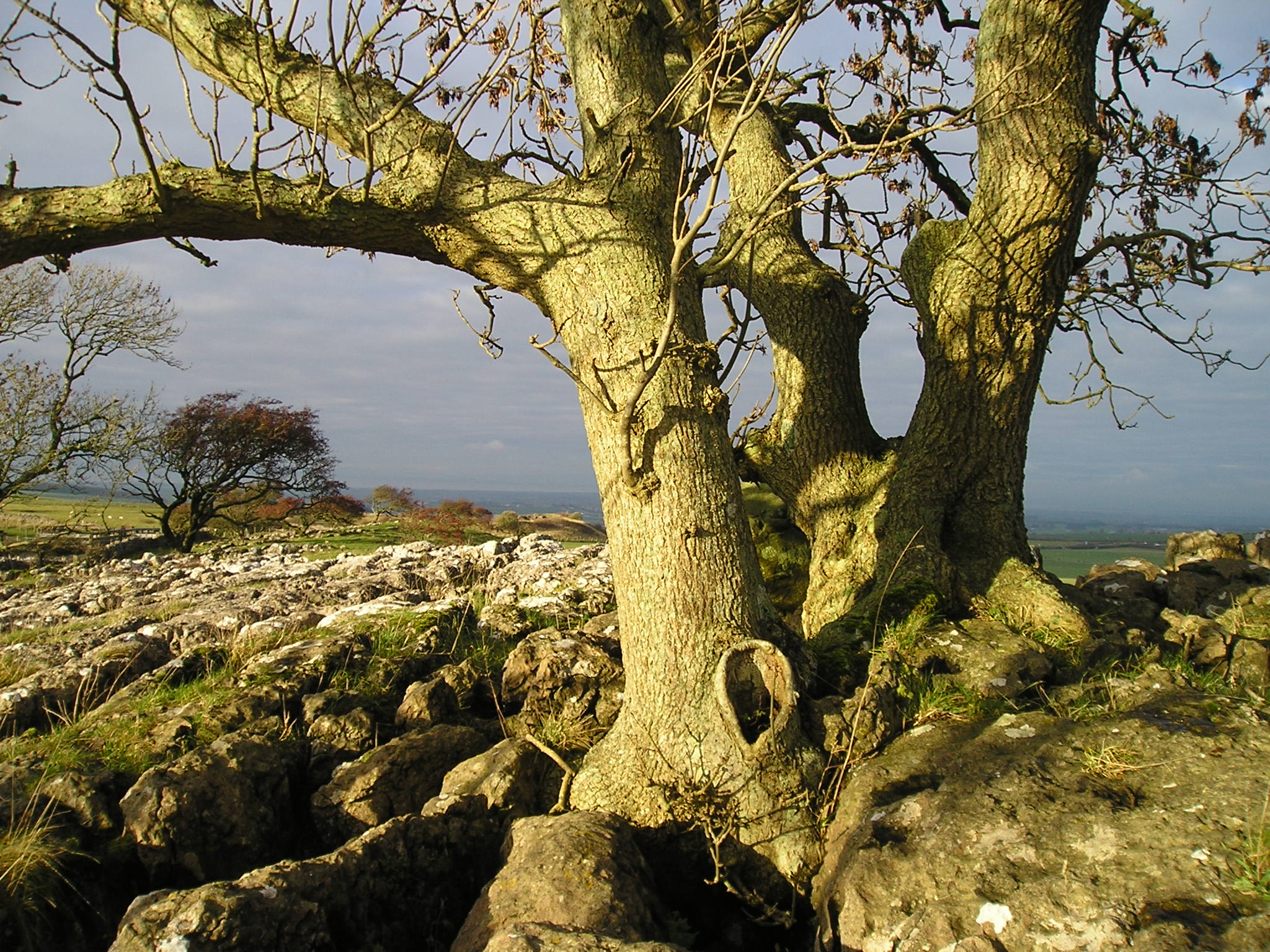


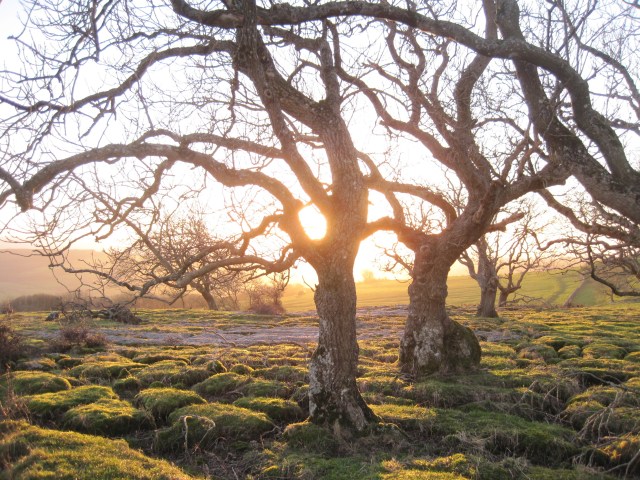
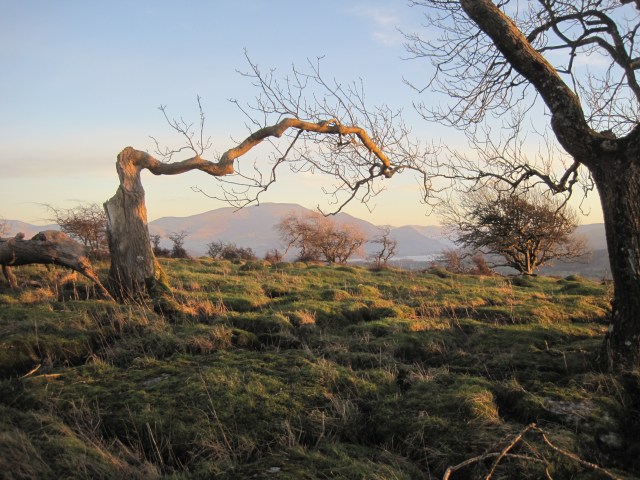
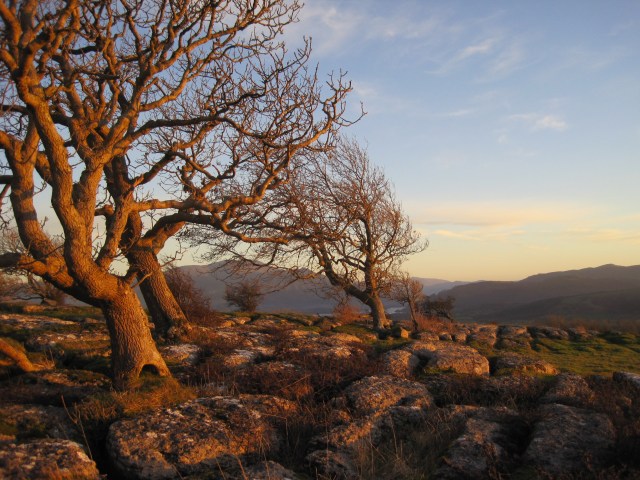
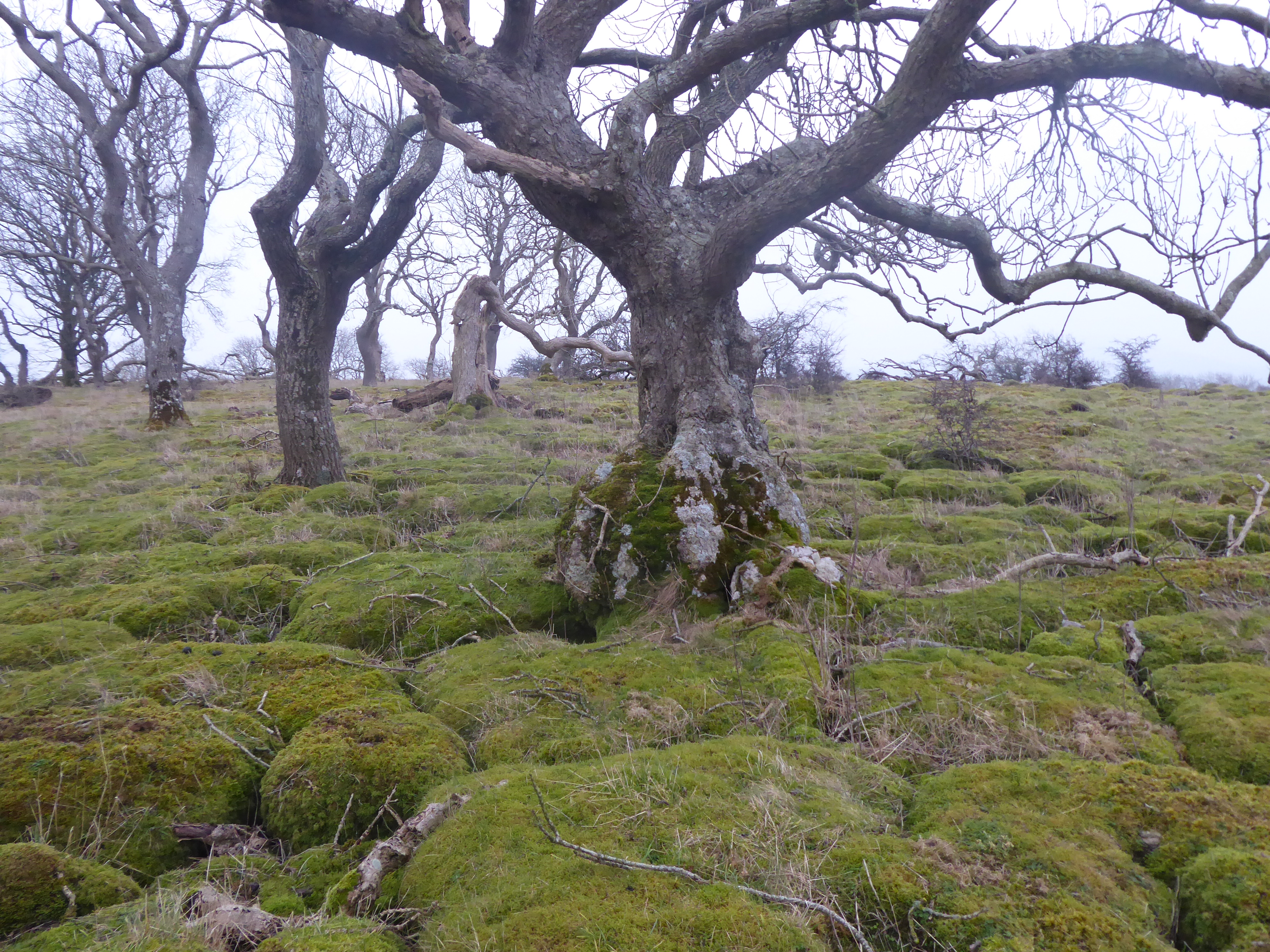
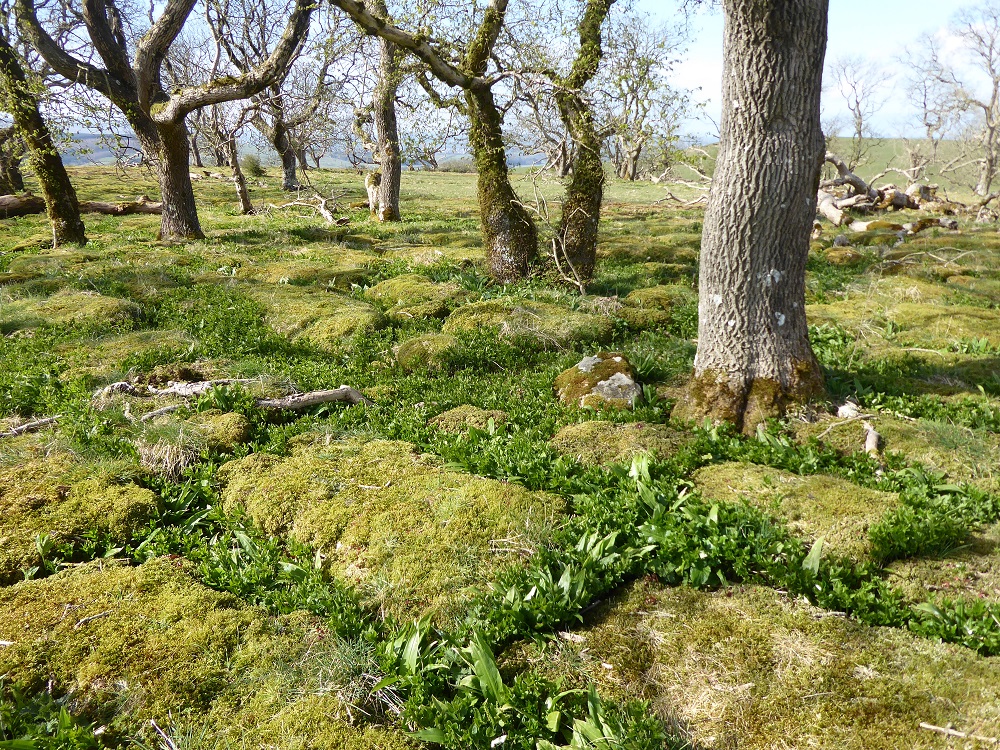

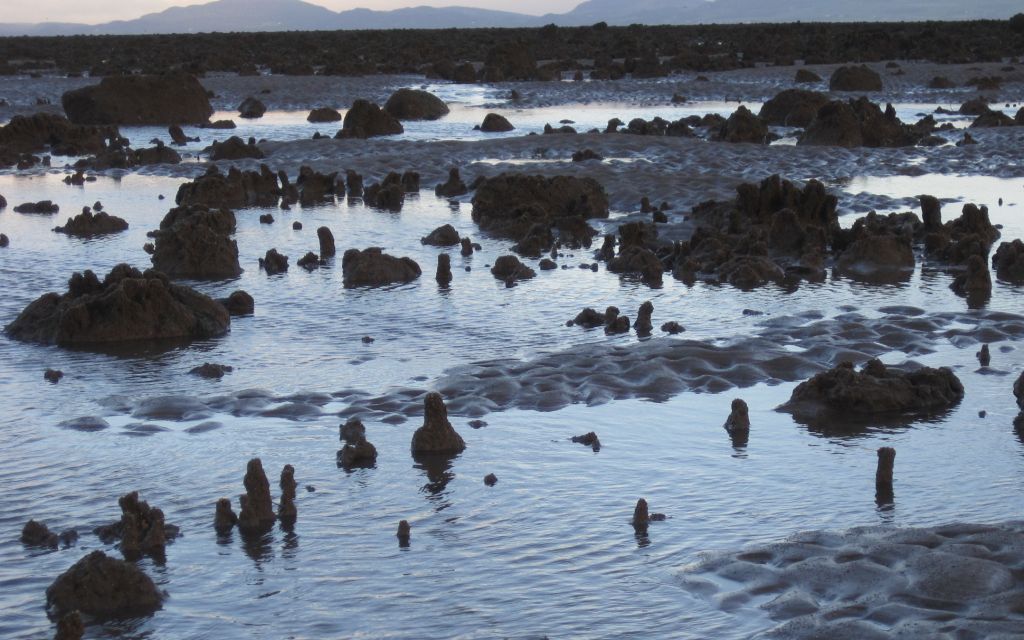
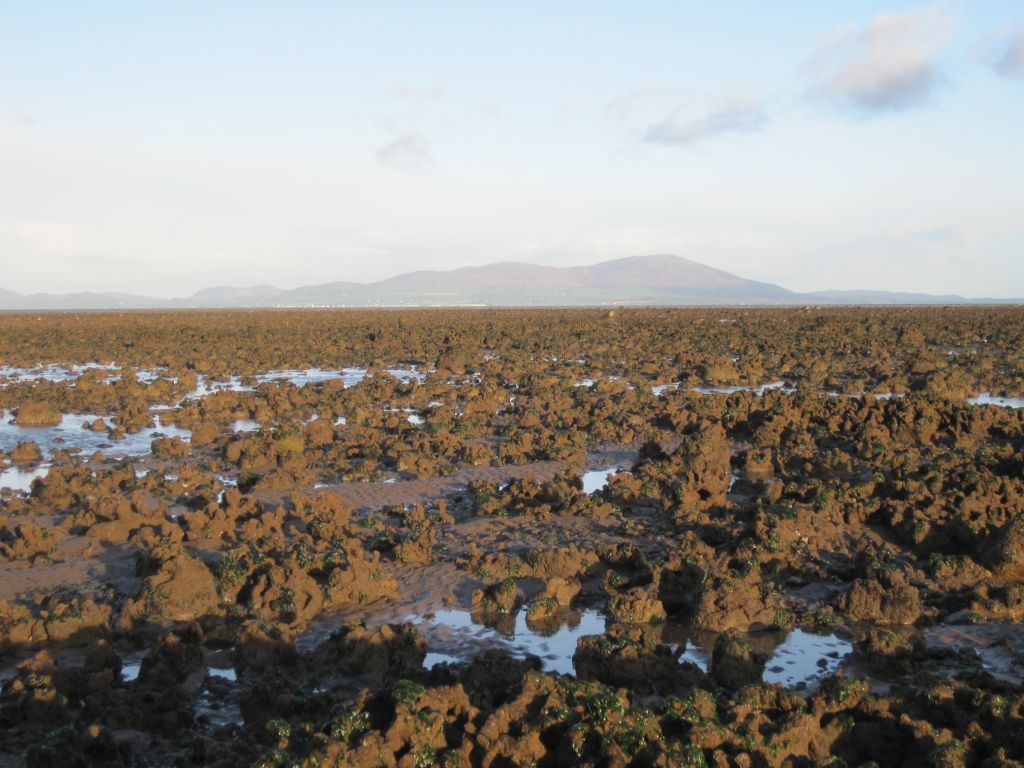
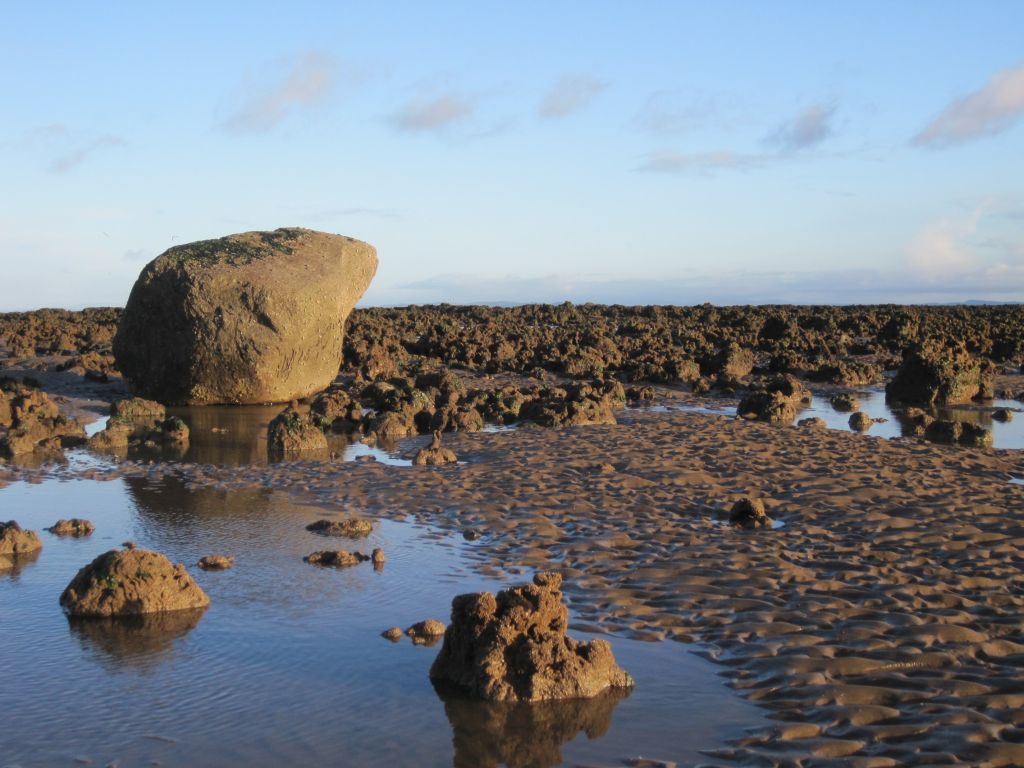
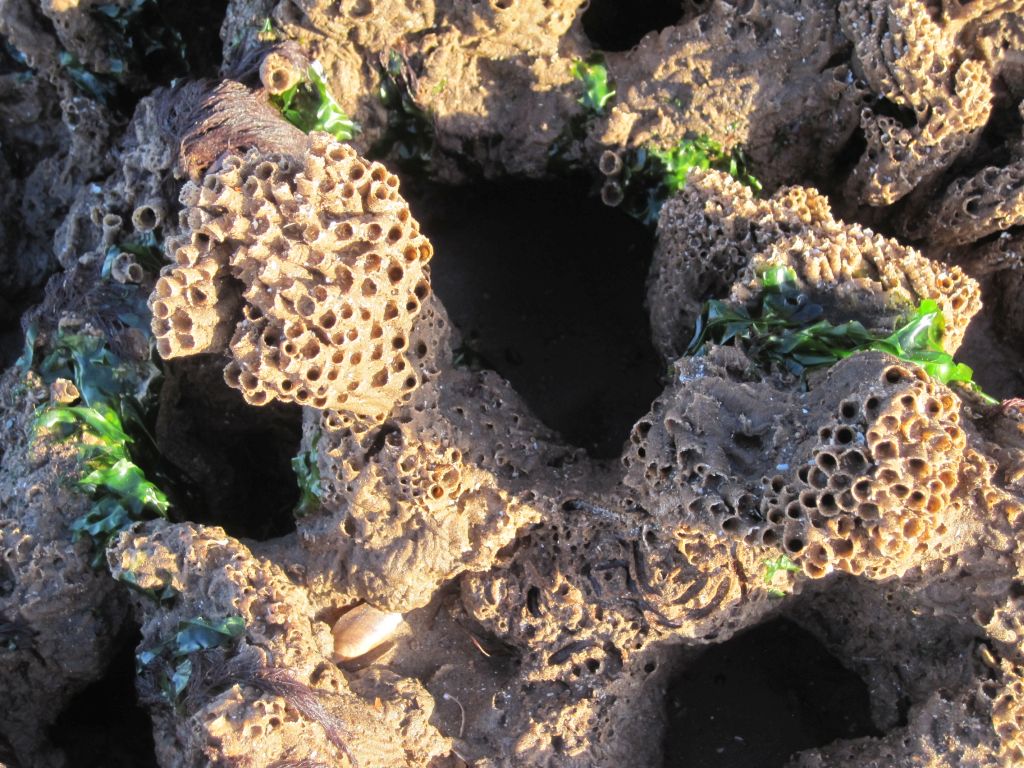
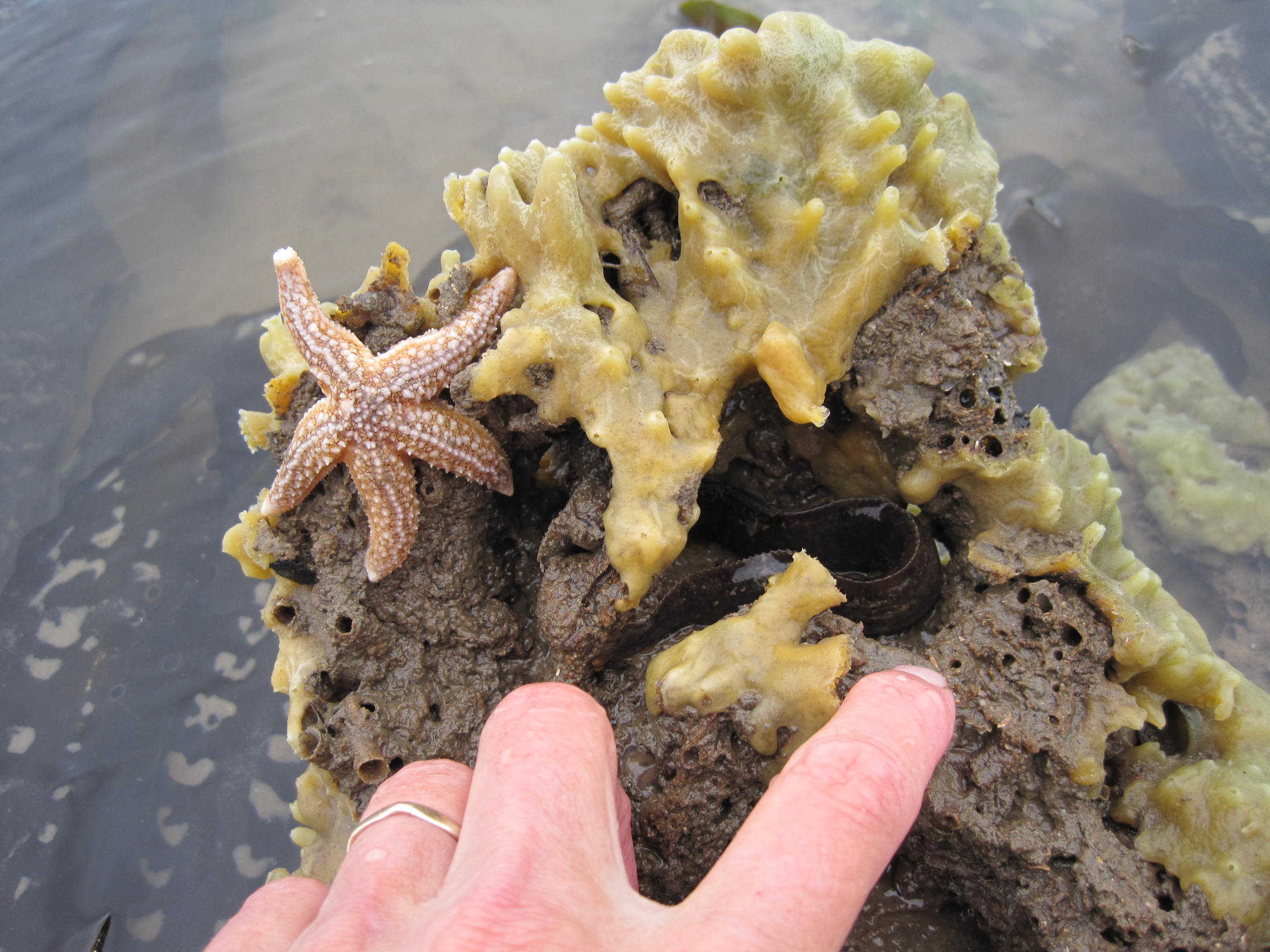

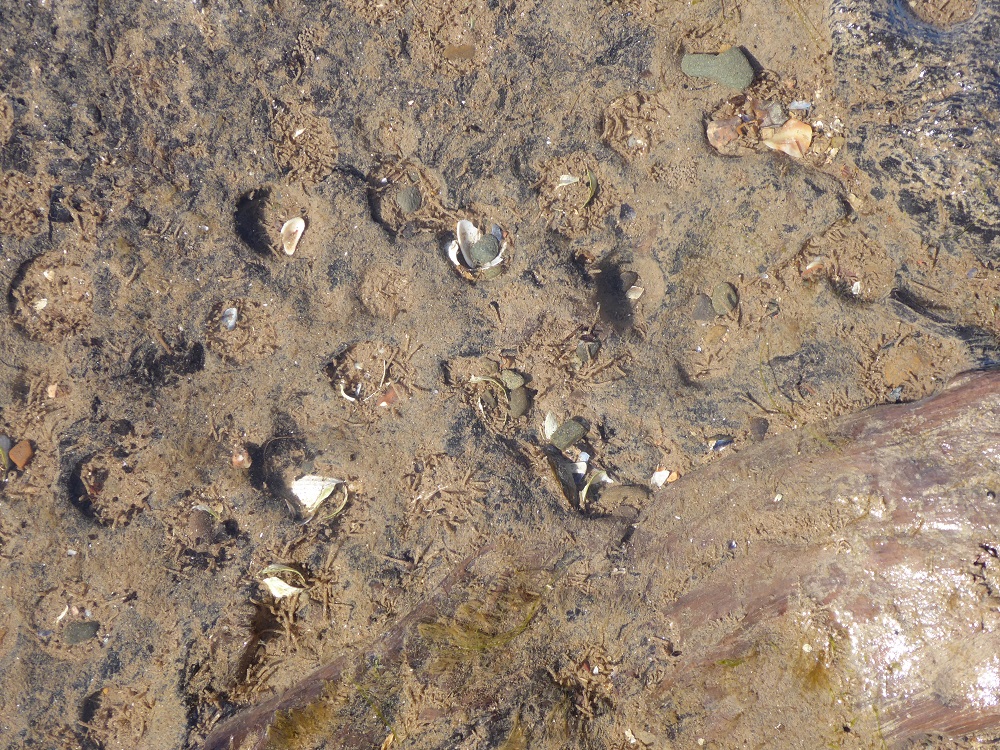
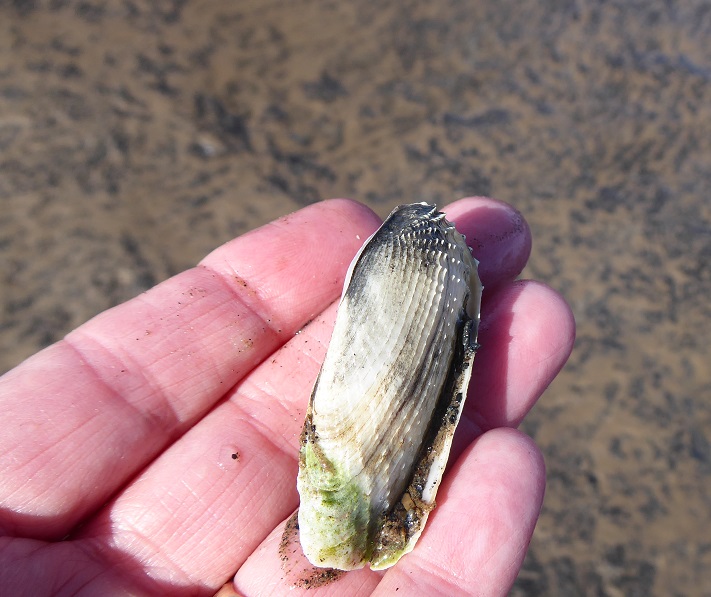
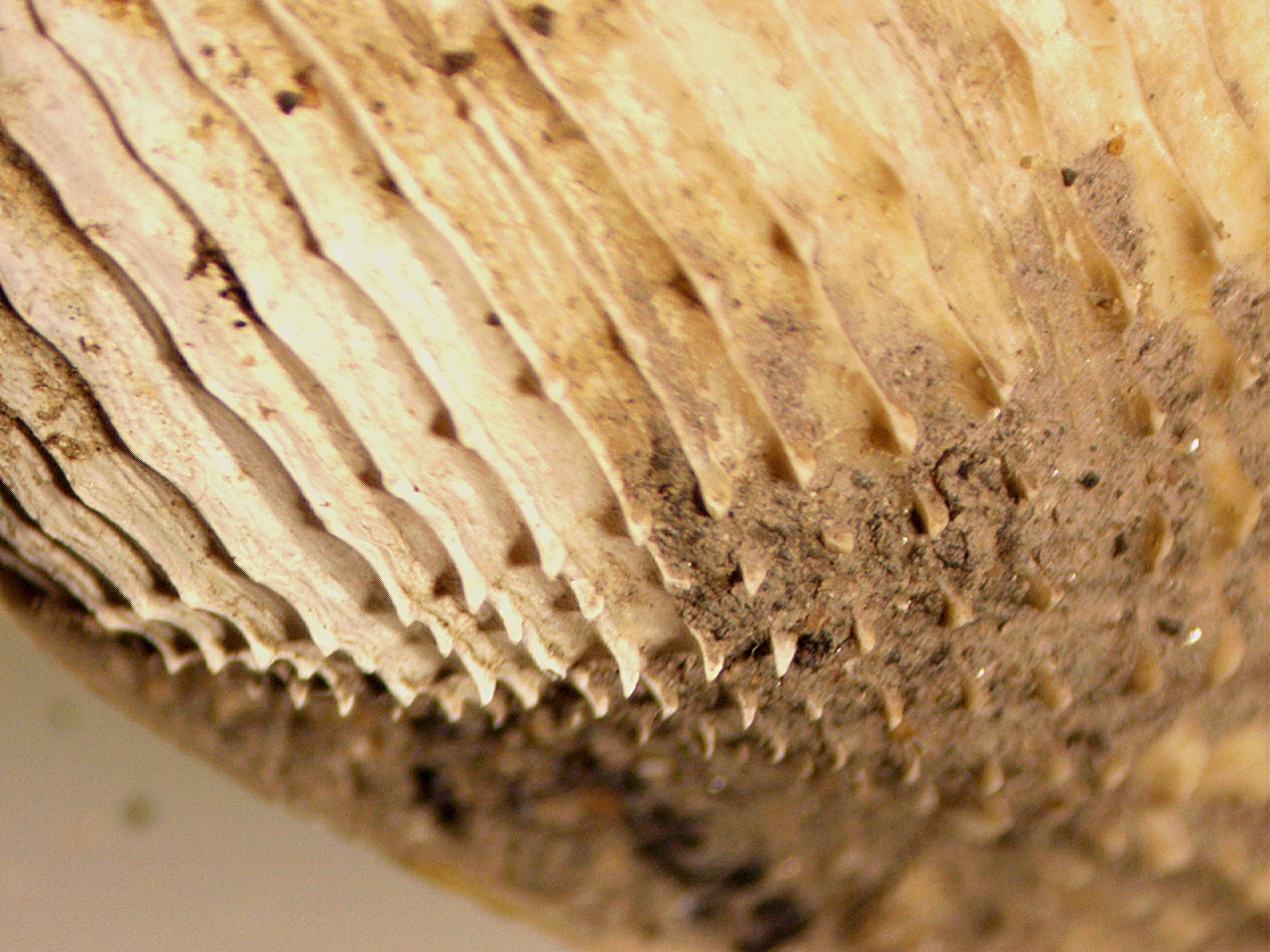
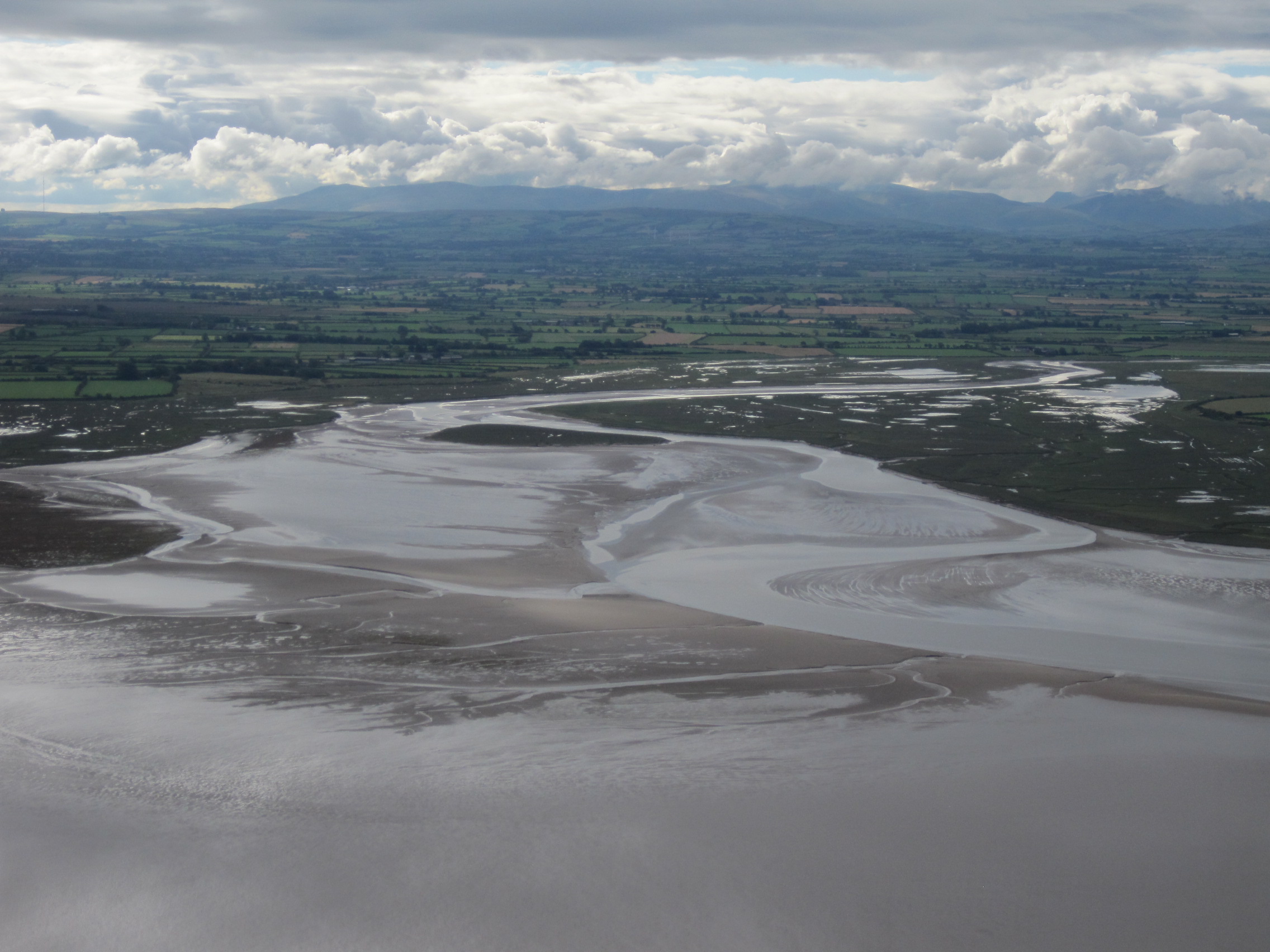


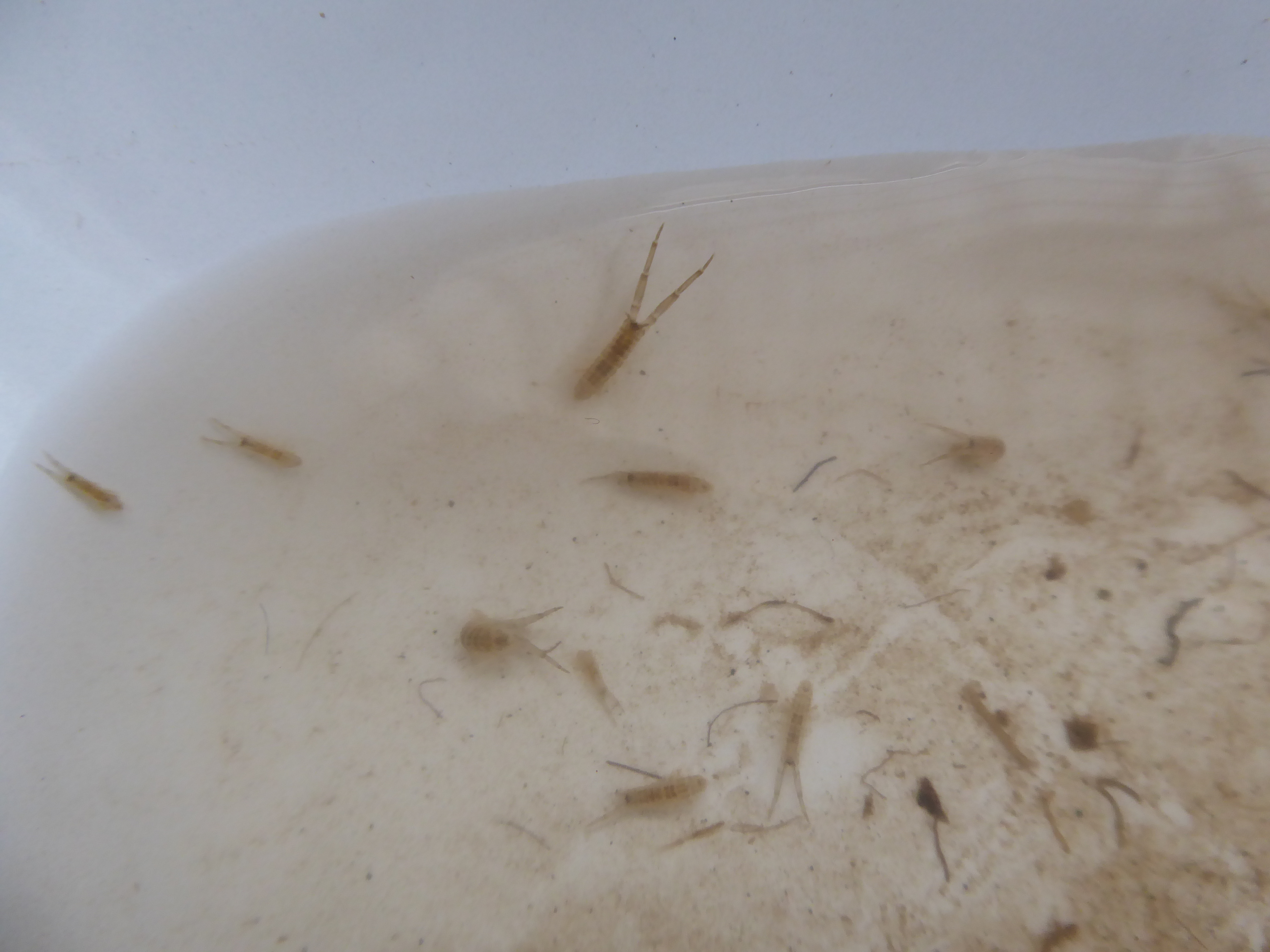
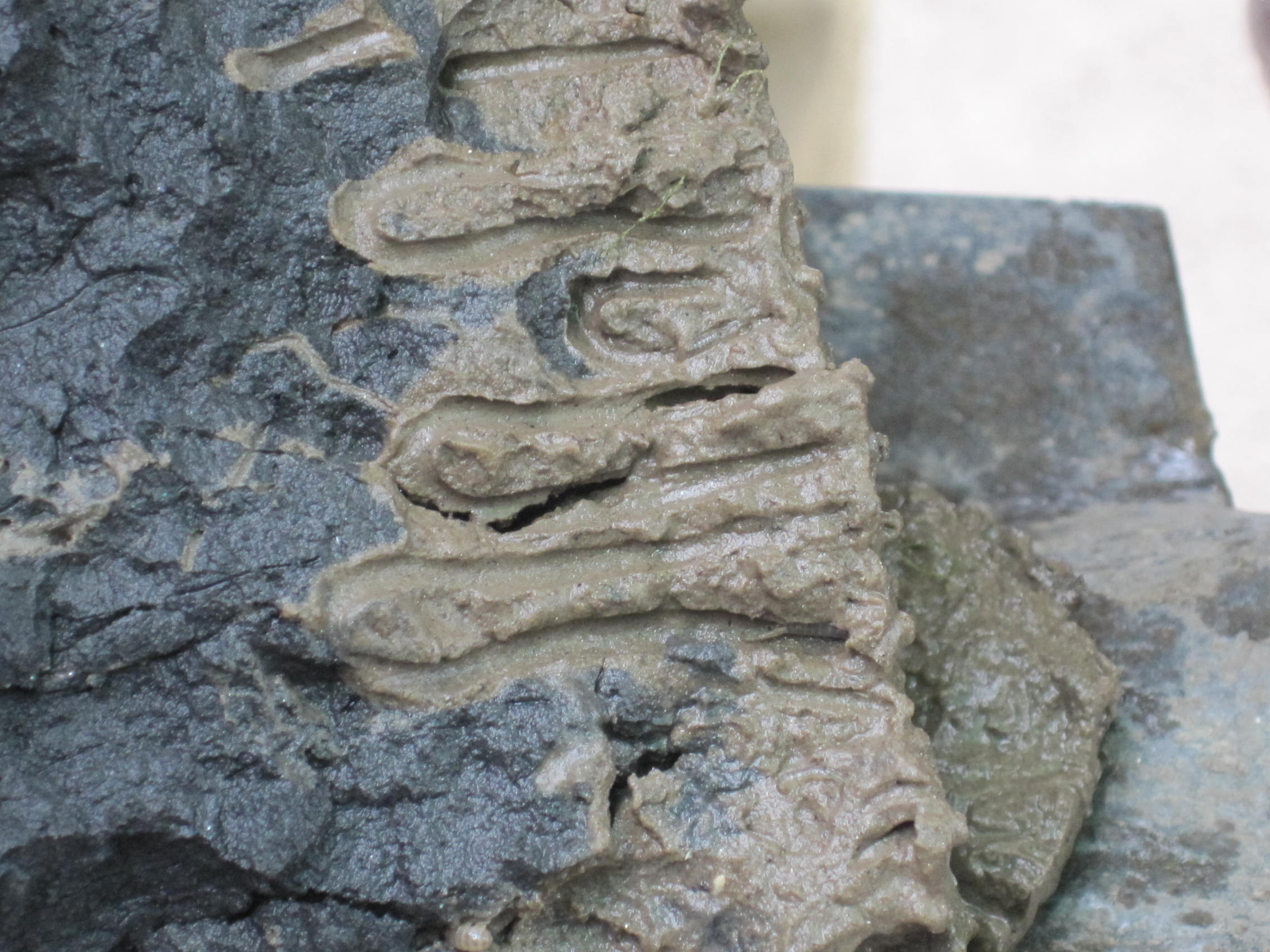

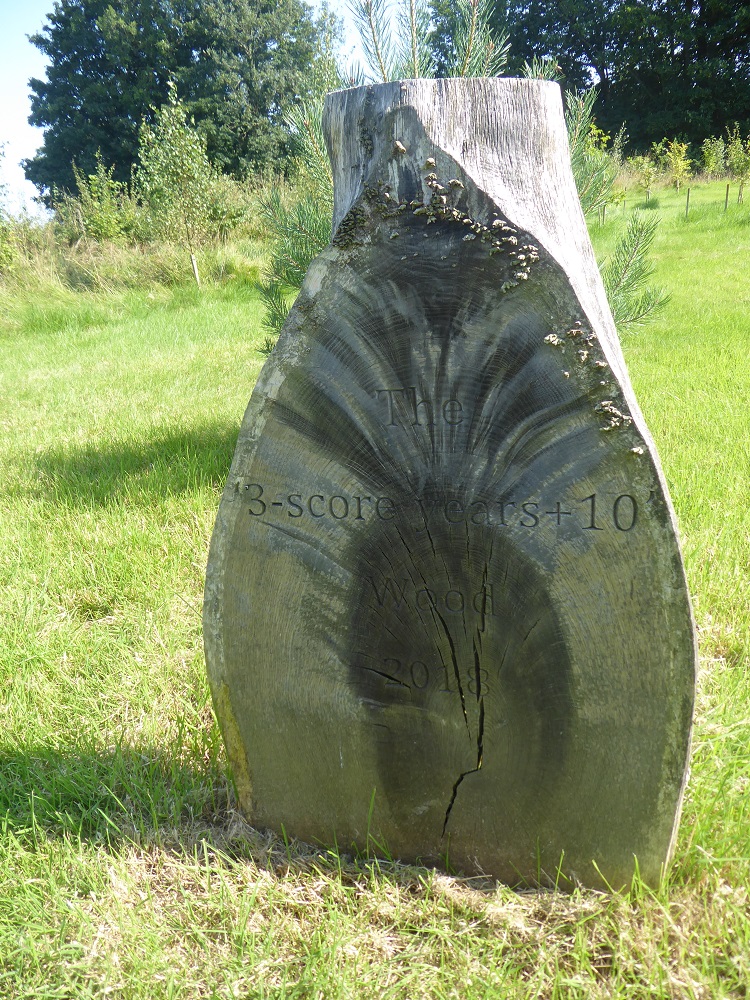
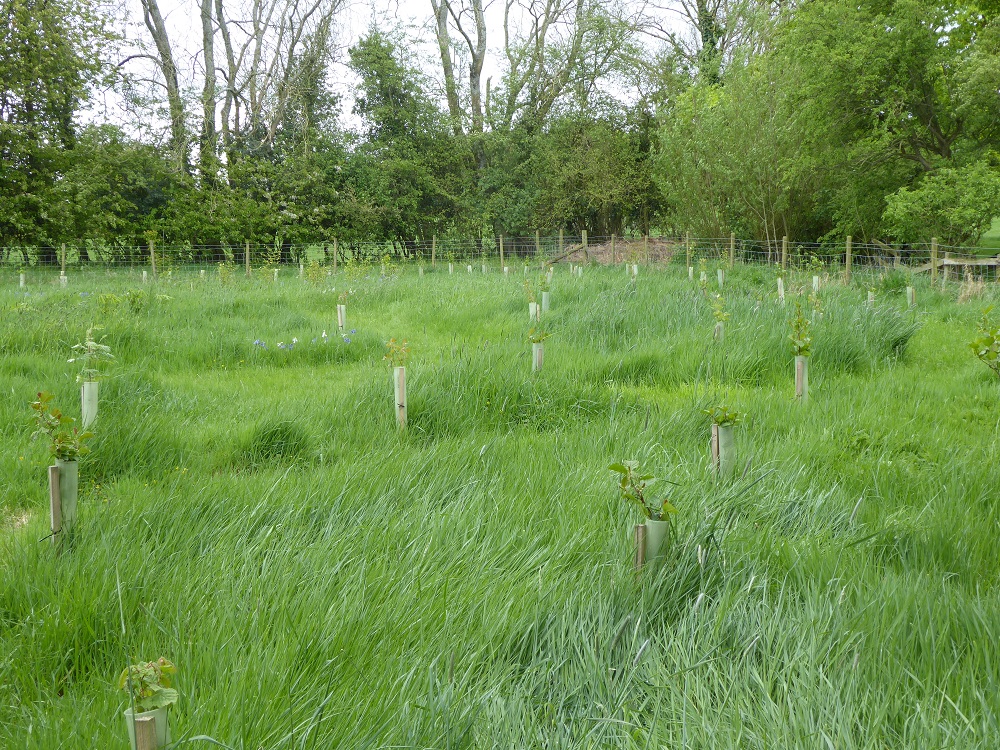
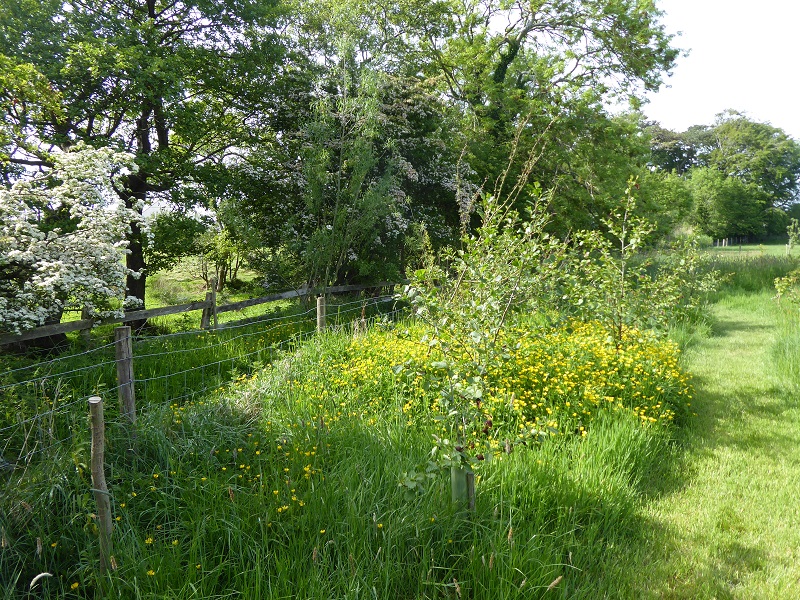
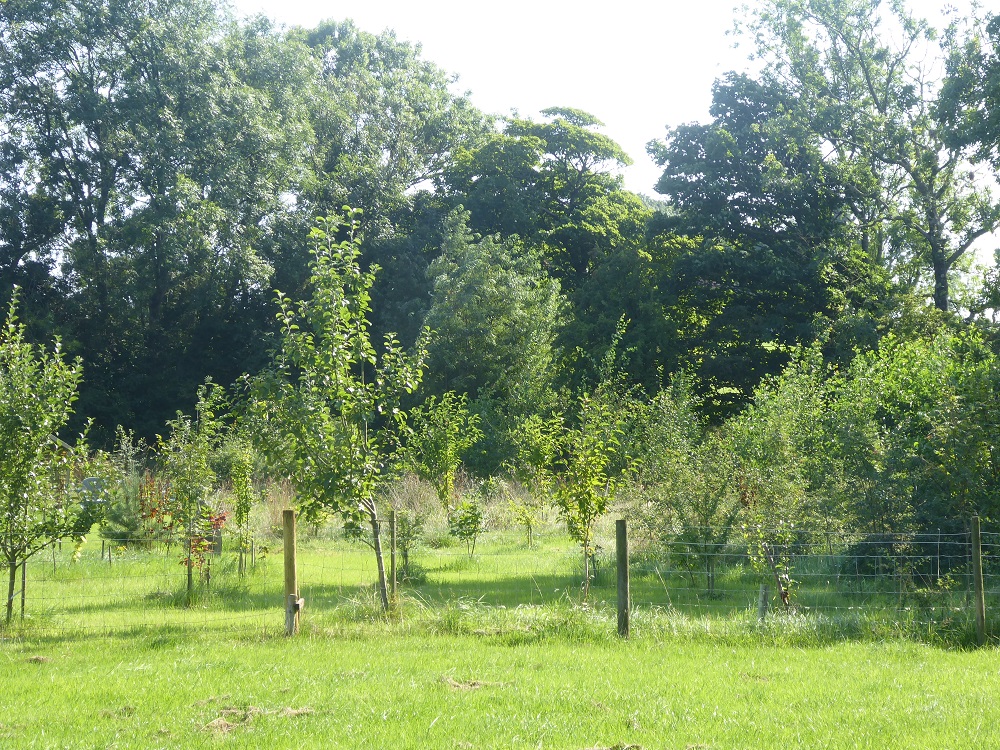
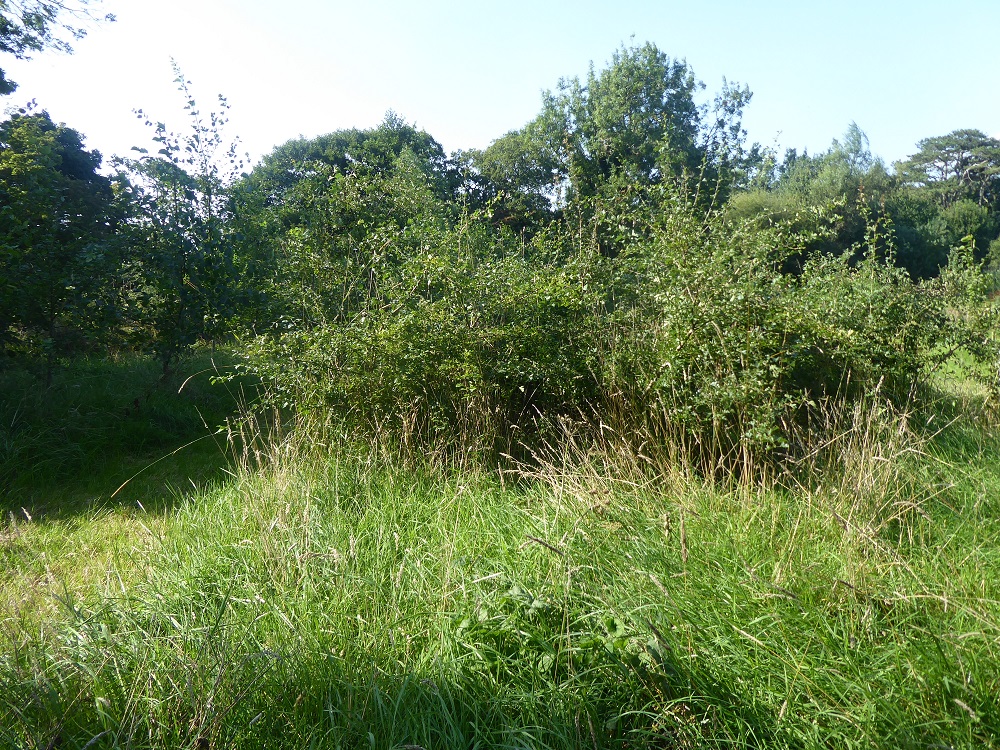
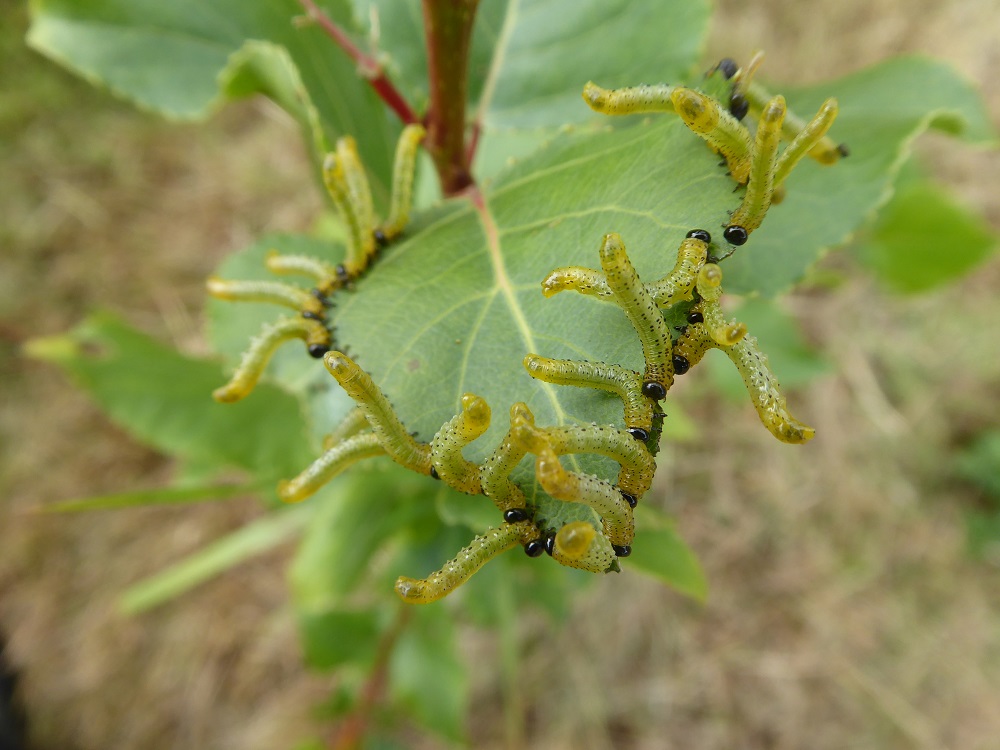
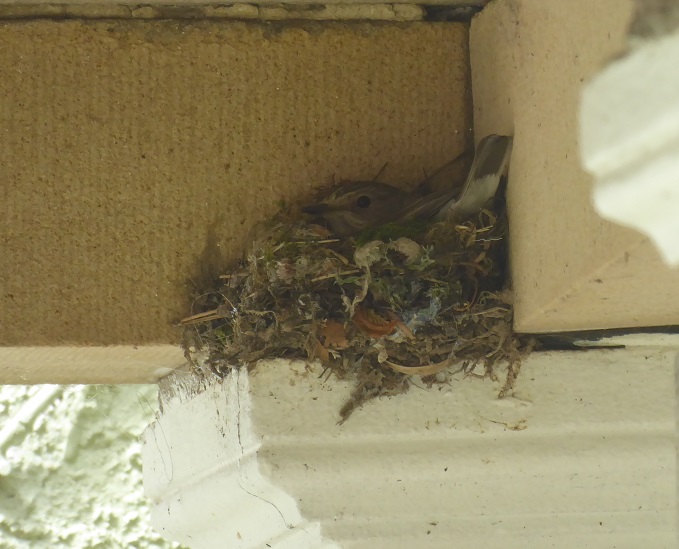
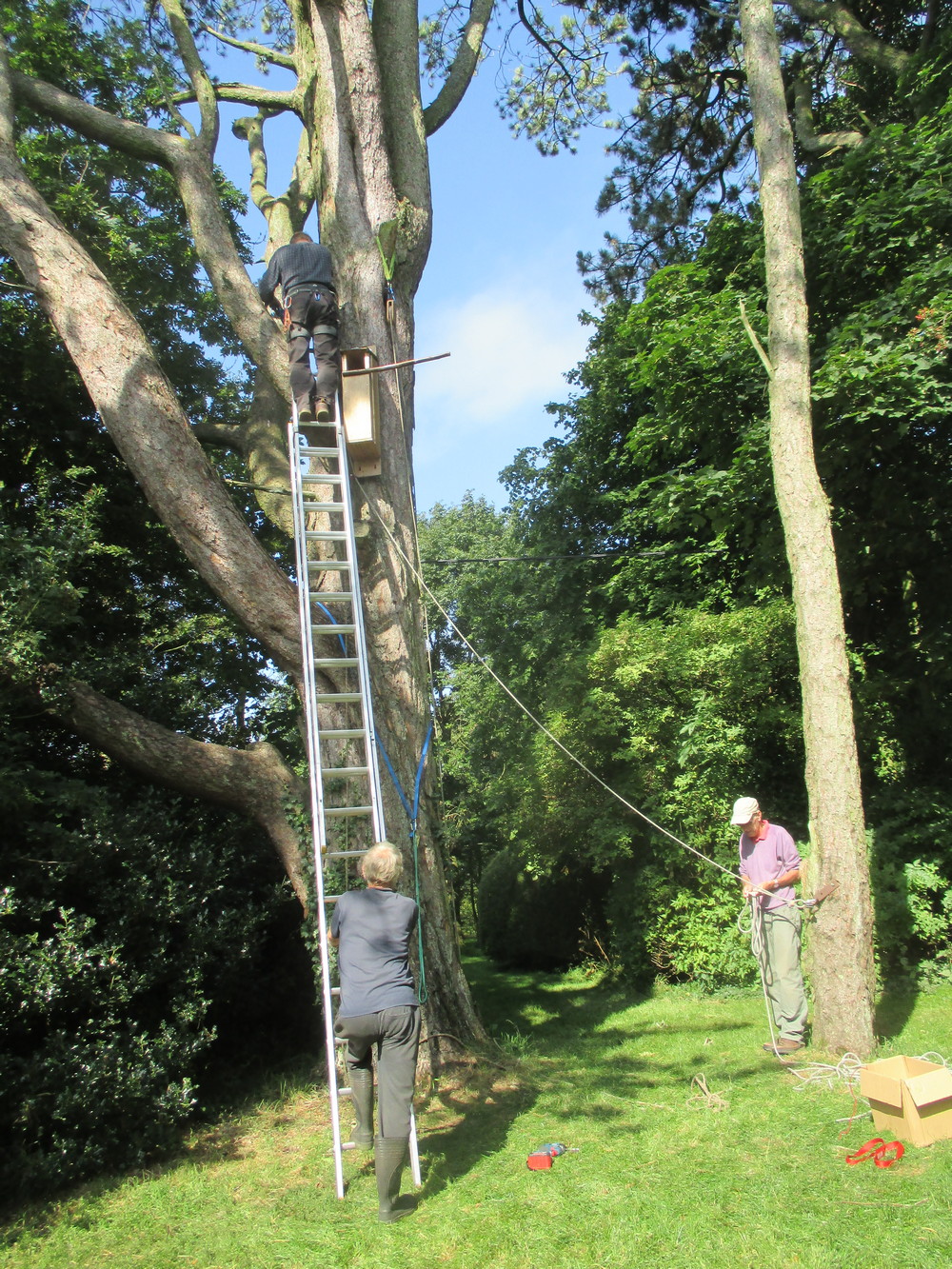
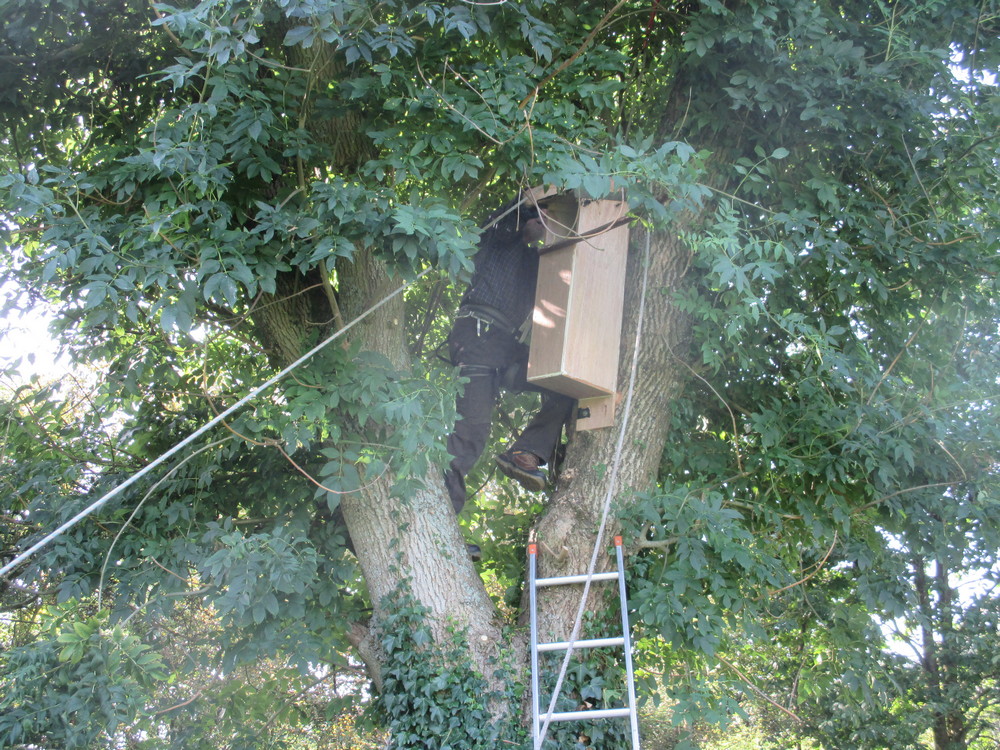
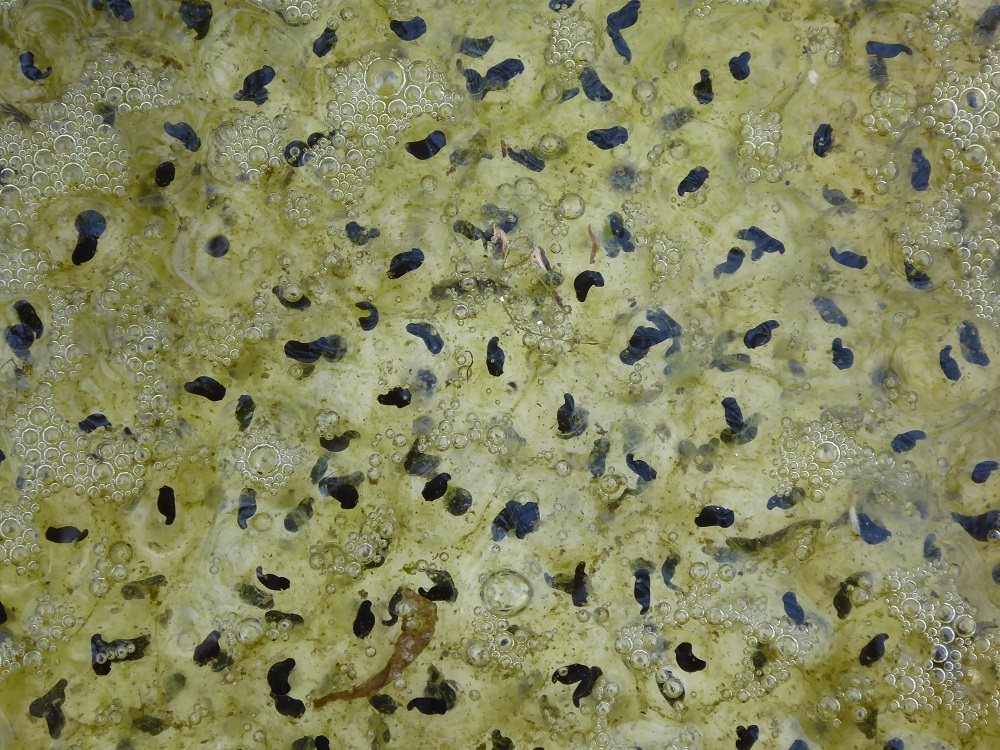
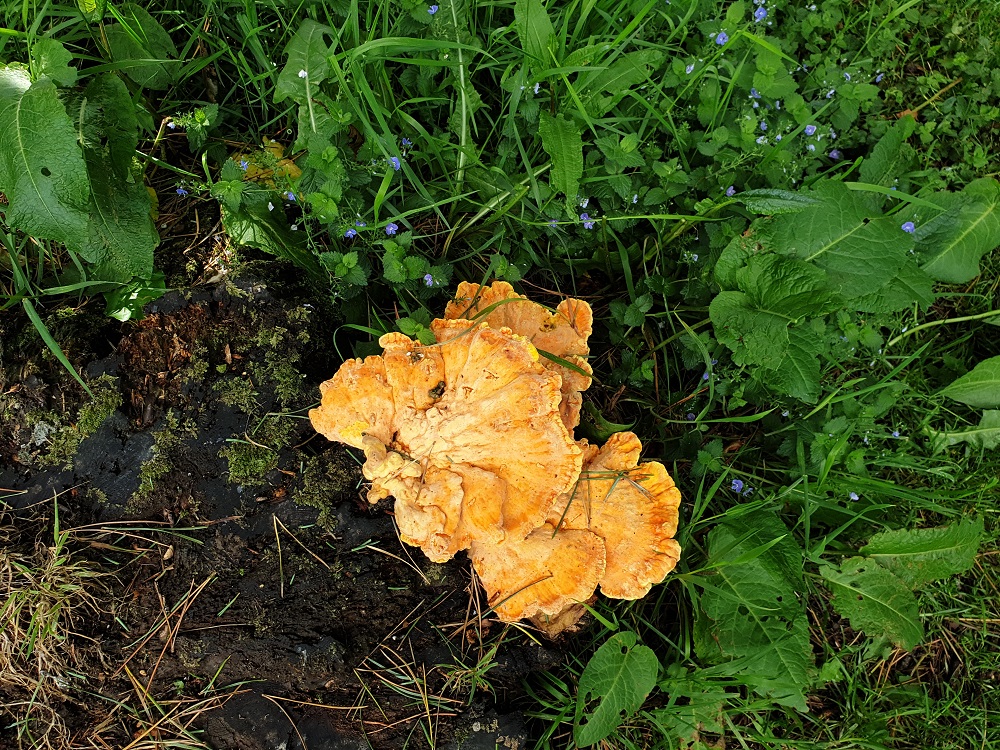
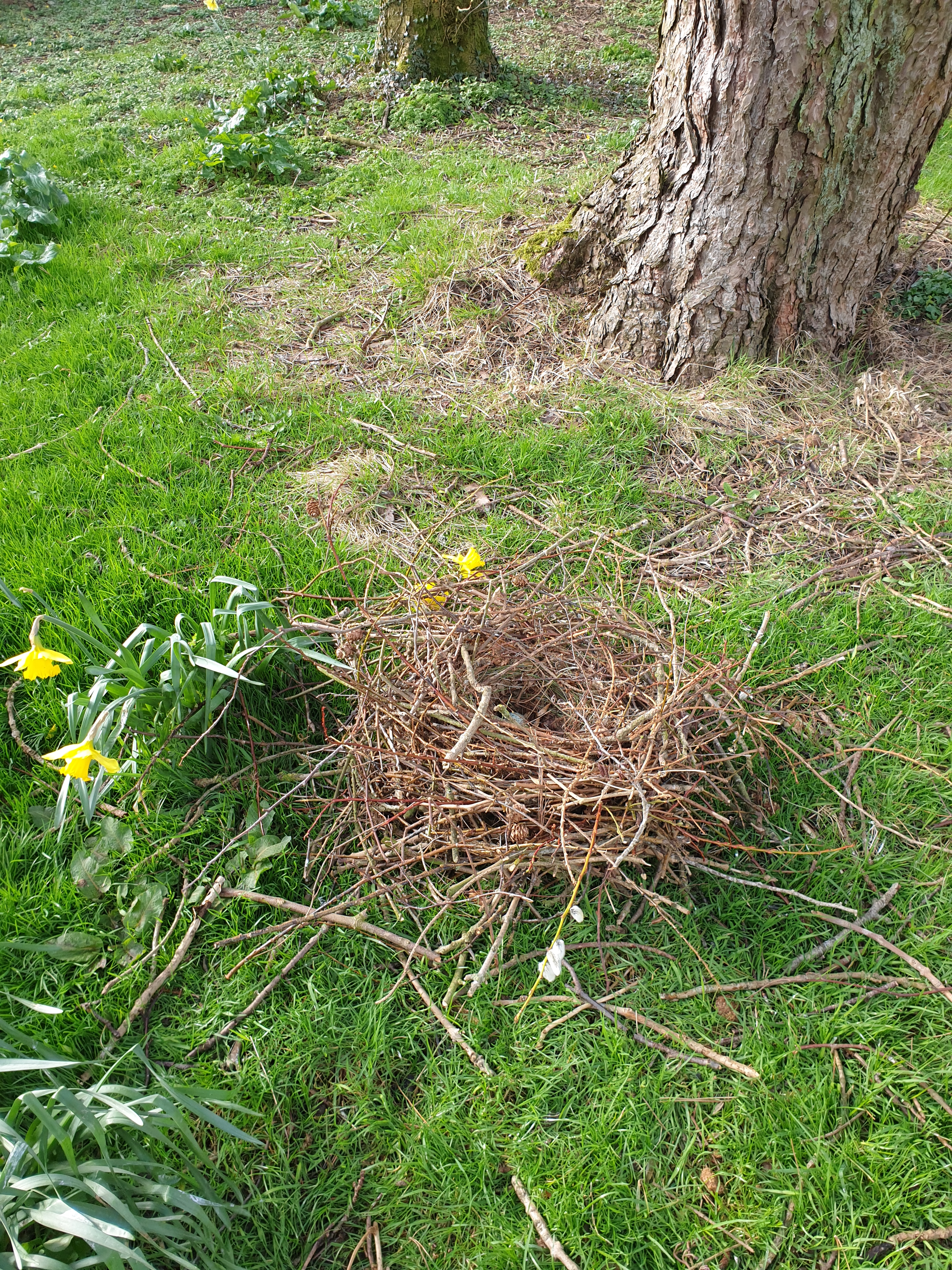
 Solway Shore-walker