In limestone country: Clints Crags

The village where I live is at the foot of a limestone plateau on the north-west edge of the Lake District. It is one of a line of low-lying villages where springs arise to feed becks that flow out onto the Solway Plain. When there is a lot of rain, our own beck rises quickly and the water from the tap in the yard – fed from a Victorian cistern that itself is filled by a spring – starts to run white and cloudy with sediment. Walk up the lane onto the hill behind the house and the drystone walls change subtly in colour and shape, from mossy pale-red sandstone to lichen-decorated limestone. In the fields that are grazed by cattle and sheep the limestone outcrops in surprising places and the pasture is pocked with grass-filled sink-holes, dolines.

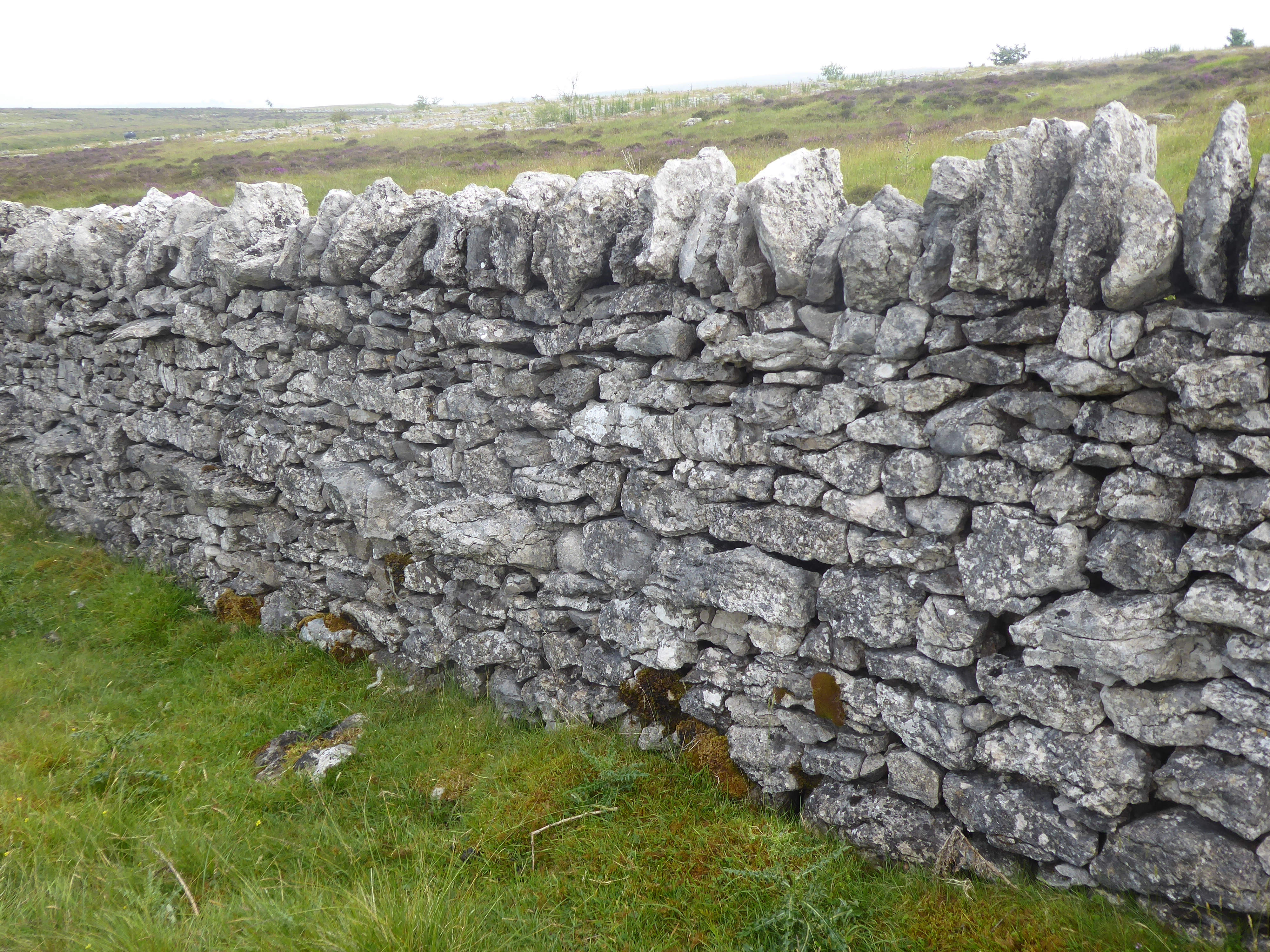
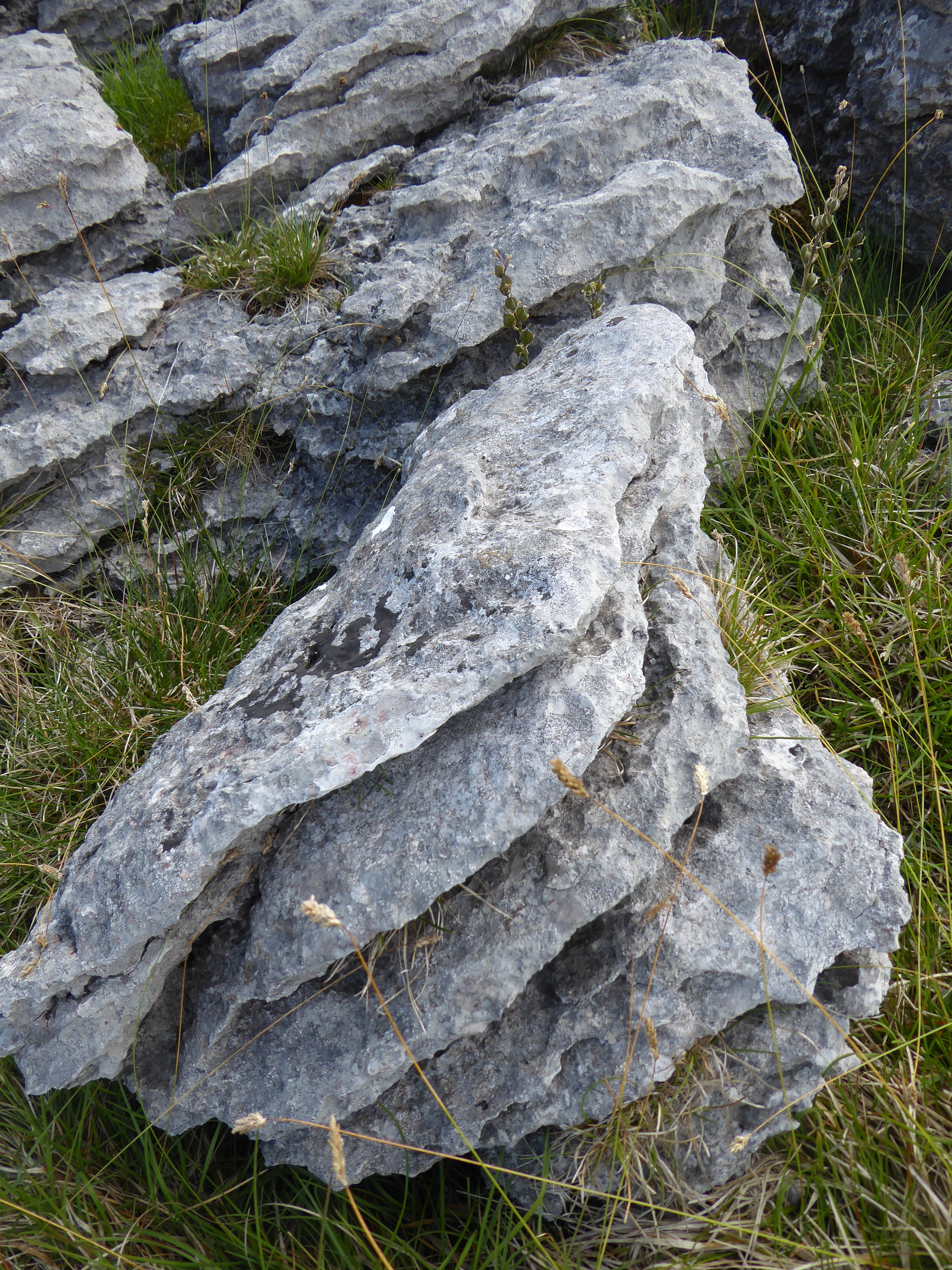
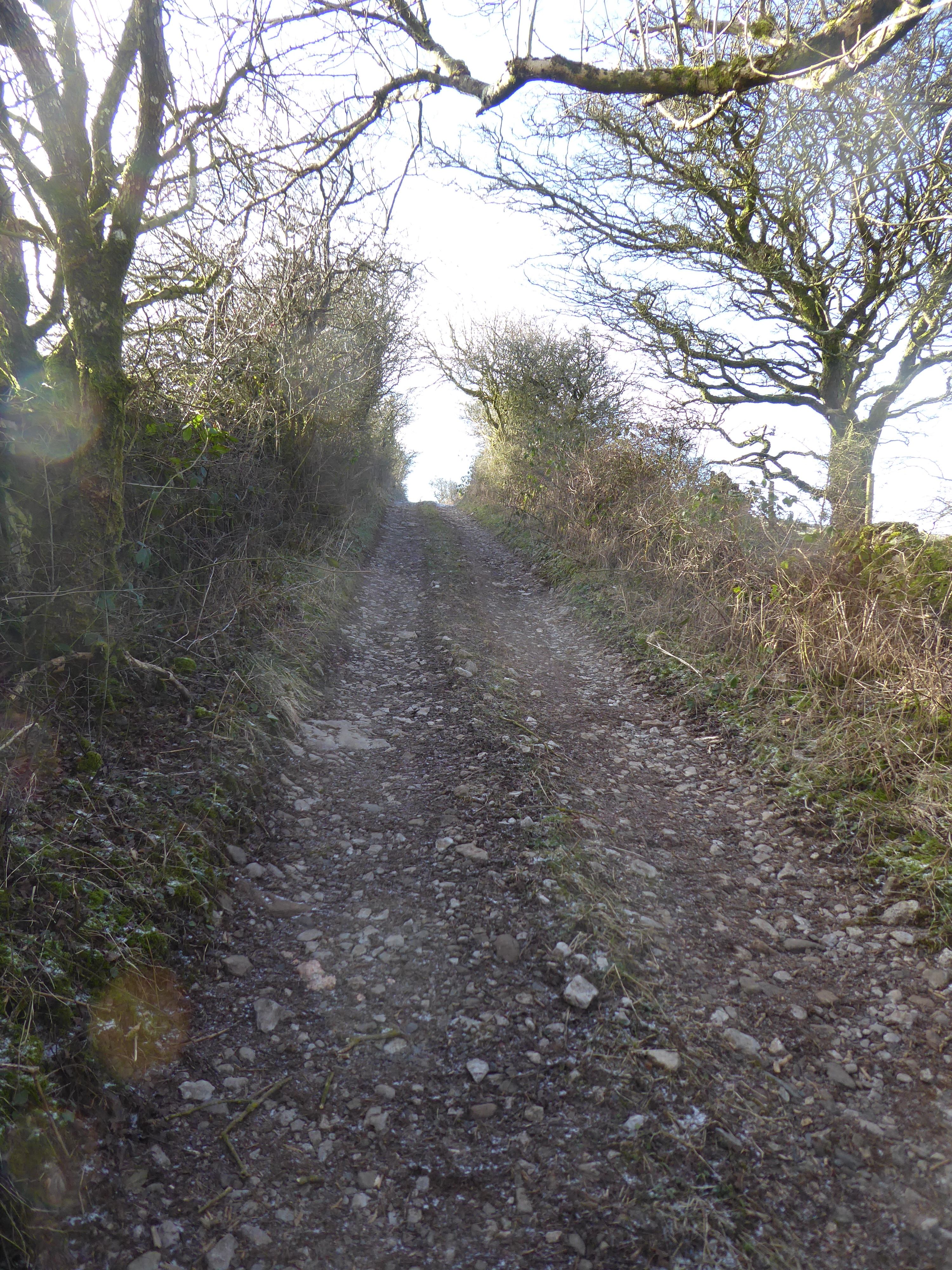
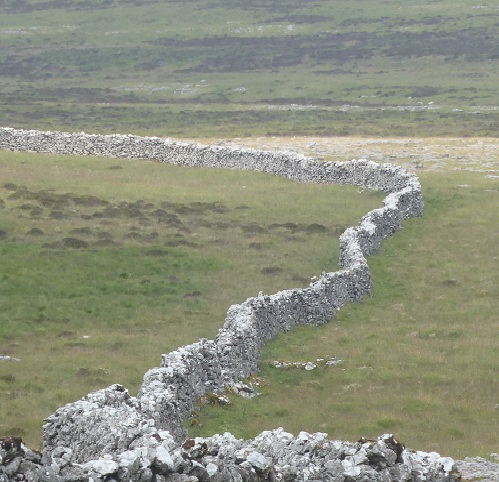
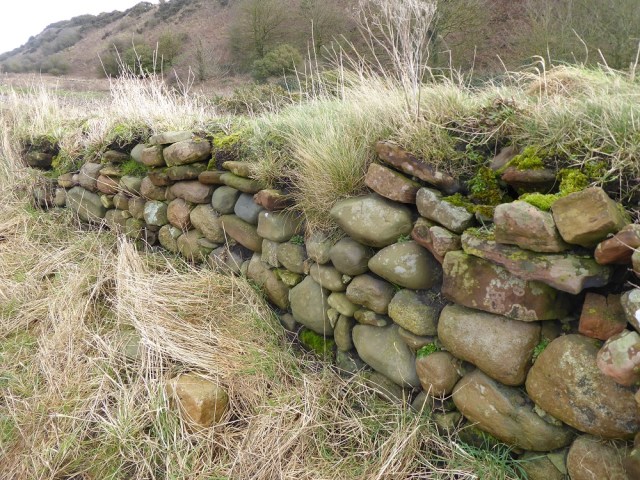
There are several ways to reach Clints Crags, my local limestone pavement, but the most interesting route in terms of seeing the typical scenery of karst or ‘limestone country’ is up a narrow, walled-in track, where the stones underfoot are smoothed white and slippery by the passage of farmers’ pick-ups and herded sheep. At first the walling looks haphazard, the stones flat but craggy-edged and their surfaces rough and pitted, dappled with mosses and patches of white lichen that teasingly mimic the outlines of fossil brachiopods. Nearer the Crags, rounder, blockier stones have been incorporated and the row of angled stones atop the wall is neater and intact.

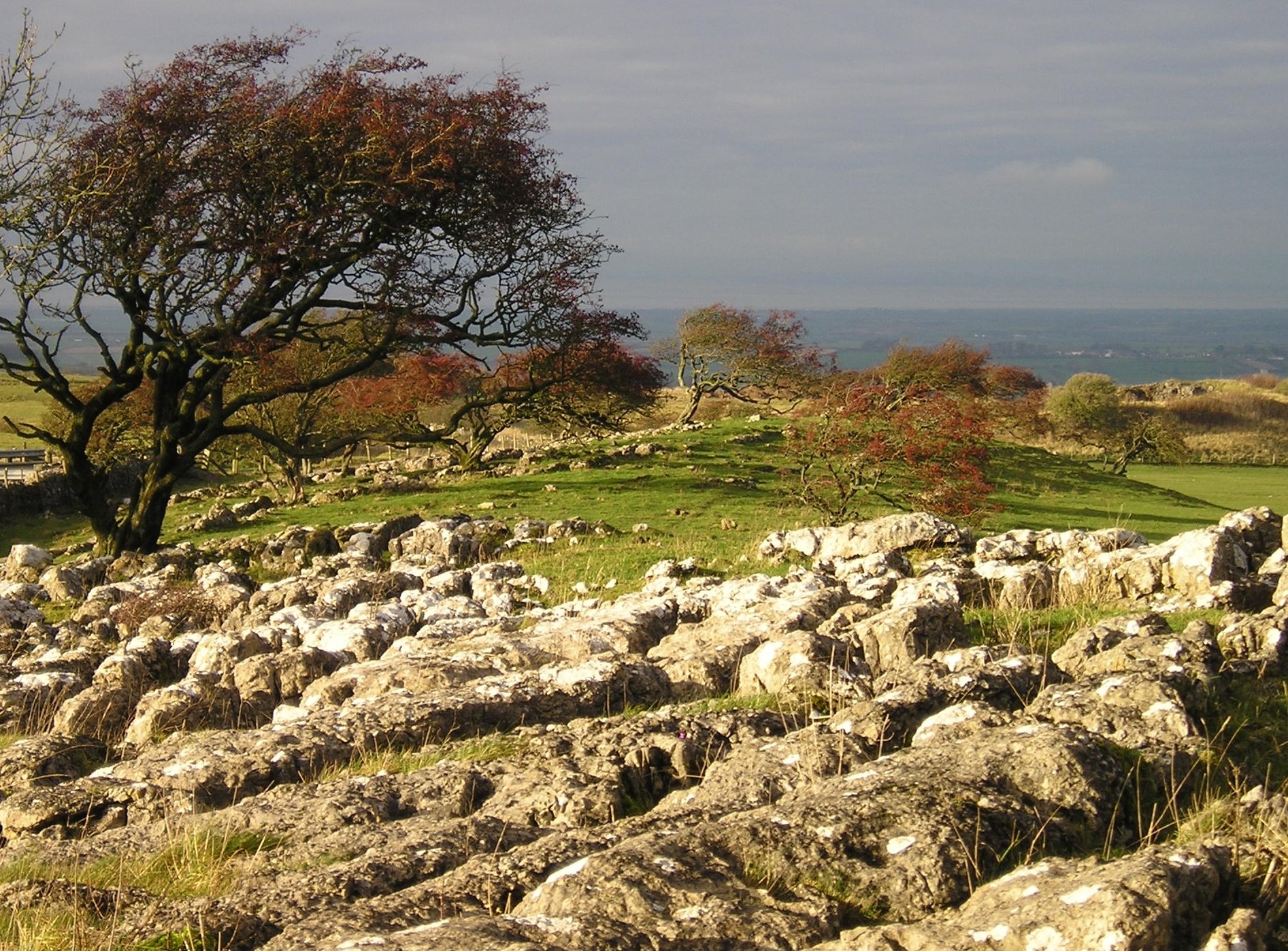
It is January, and the frost hangs on in the shade and in the sink-holes. The outlines of the few trees are skeletal – tangled, scrubby hawthorns contrasting with the straight trunks and limbs of ash. The track deteriorates to rushy bog that crackles with sheets of ice which are too thin to support my weight, and I climb over a rusty metal gate to enter the fields that rise gently to a line of stunted trees that are silhouetted on the skyline. The grass is close-cropped and sere, with little substance for the sheep to graze, even though their colourful backsides show they have been tupped and are in lamb. Lines of drystone walls, perforated with tumbled stones, mark boundaries that no longer serve as barriers; the sheep roam at will, unbothered by my presence. I head uphill towards the flat skyline, clambering over stones fallen from a wall that is a couple of metres high. Large cow-pats are crusty and decaying, picked over by crows and invertebrates: the cattle are still indoors.

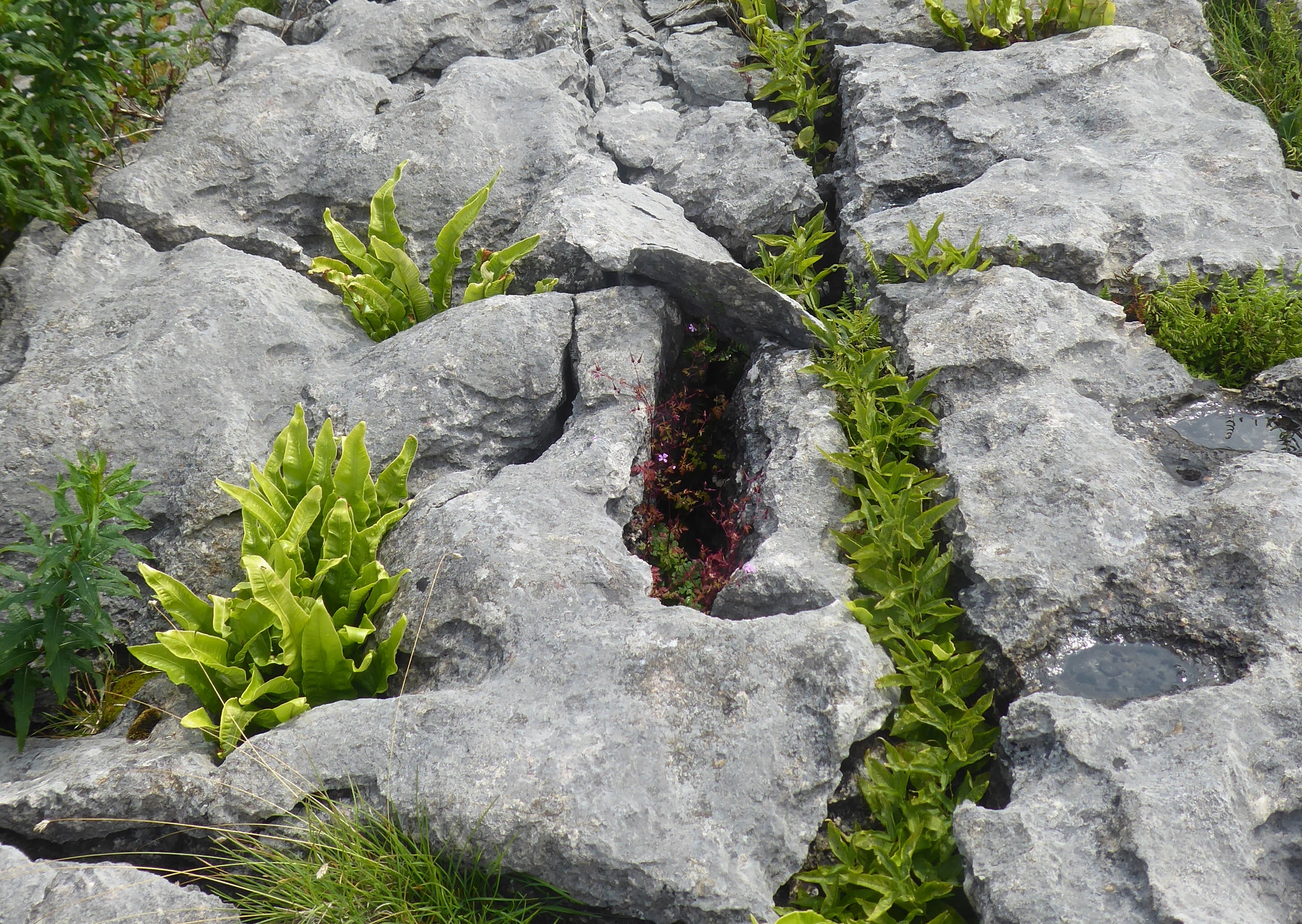
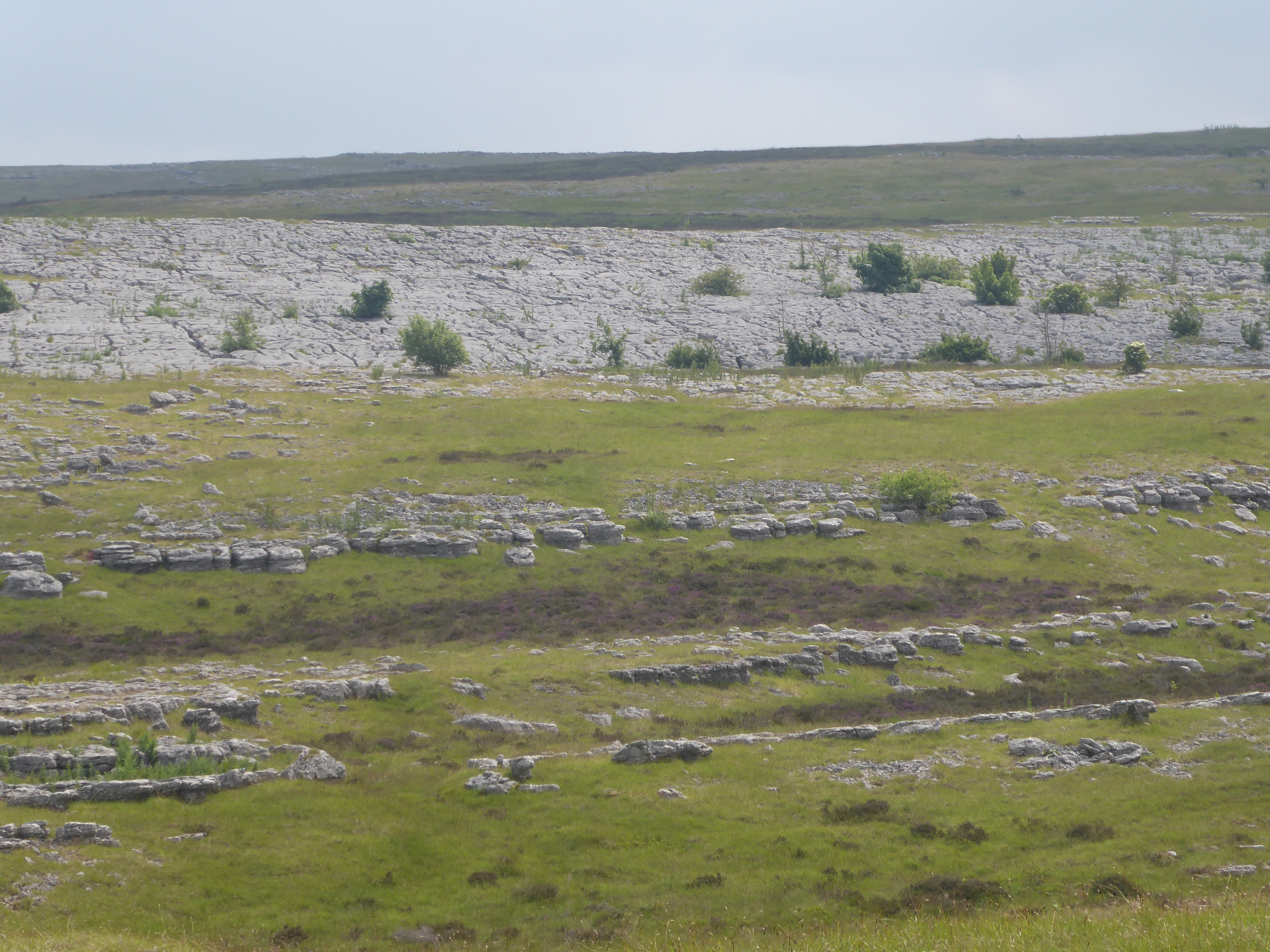
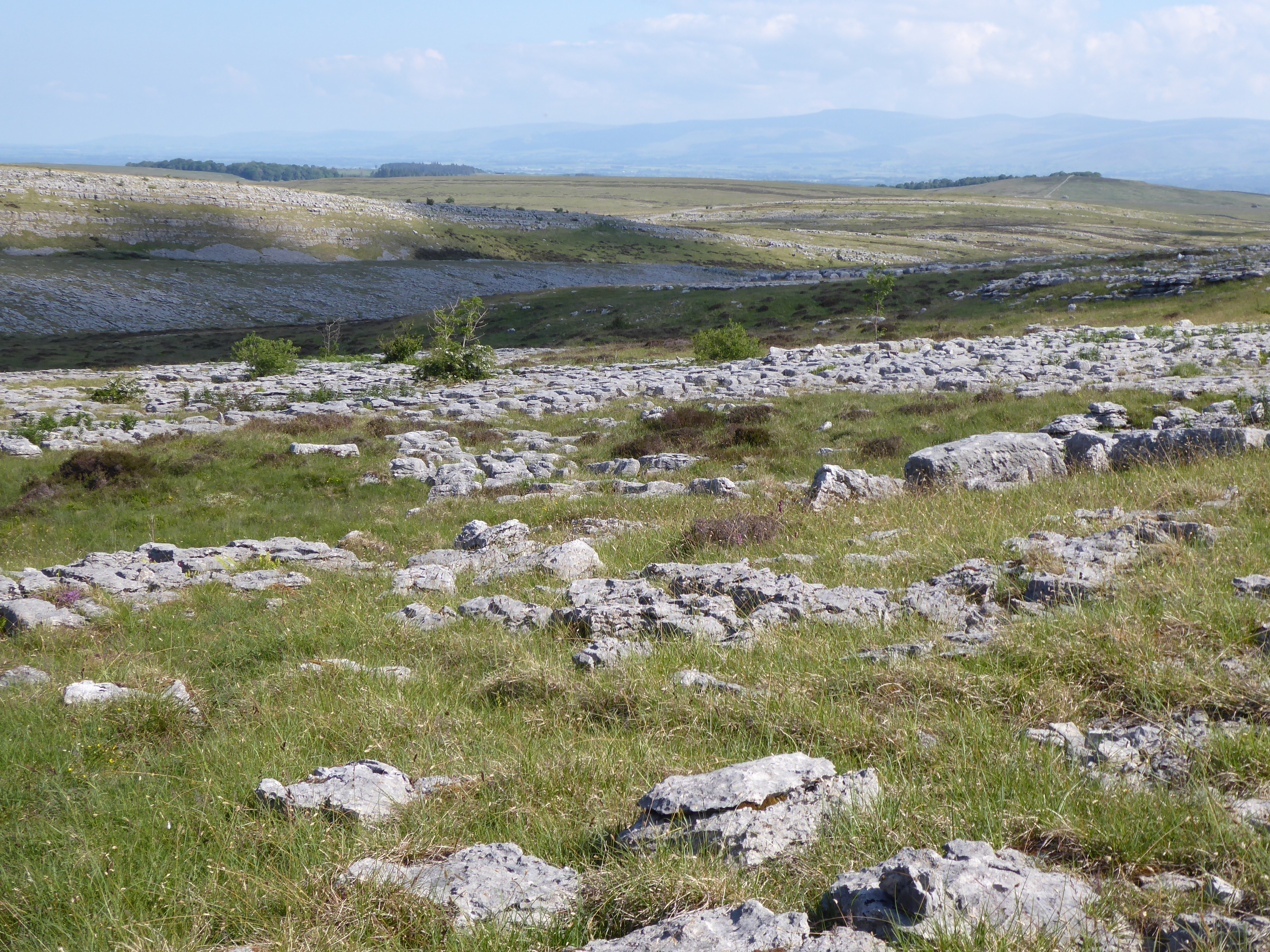
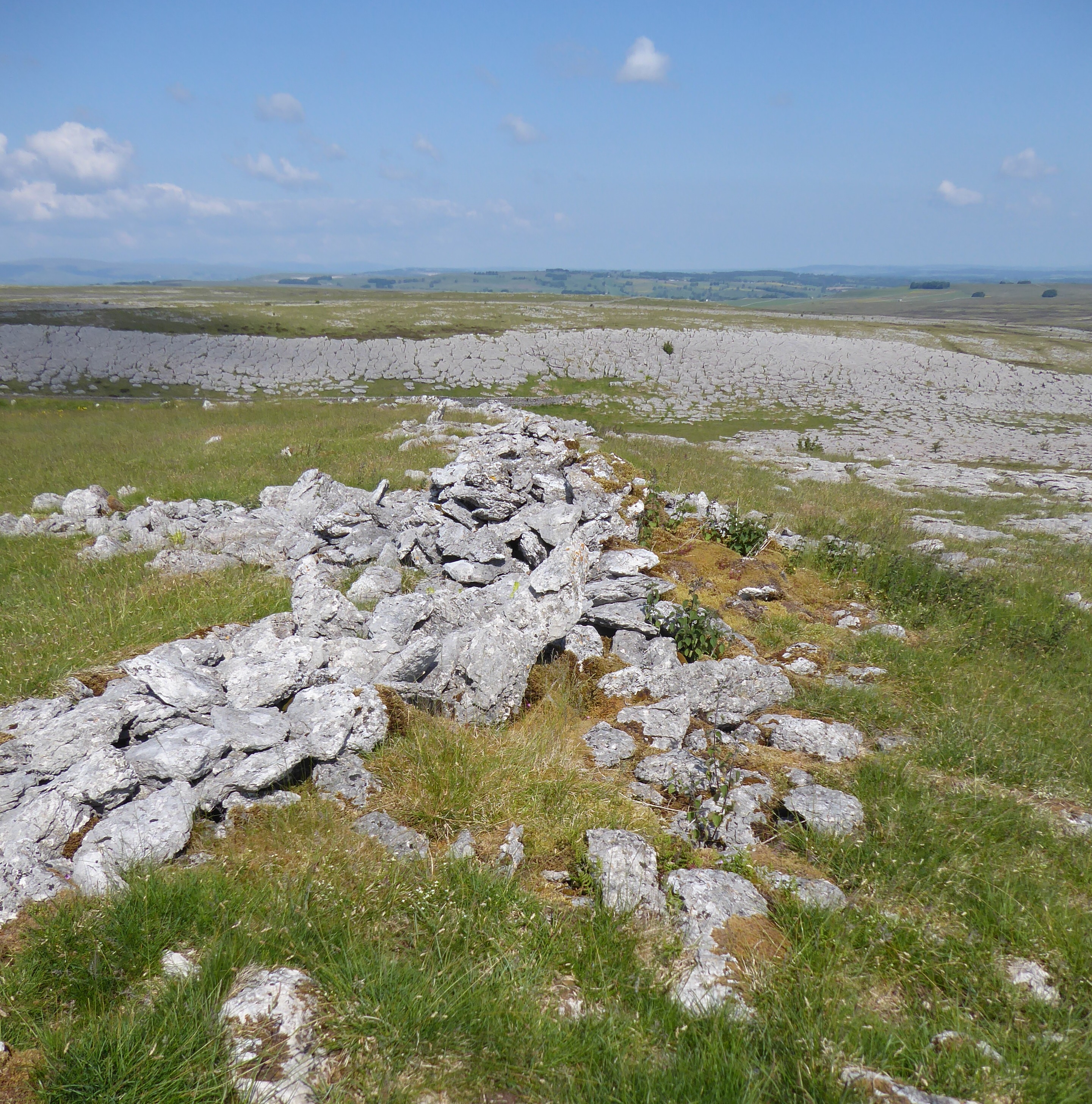
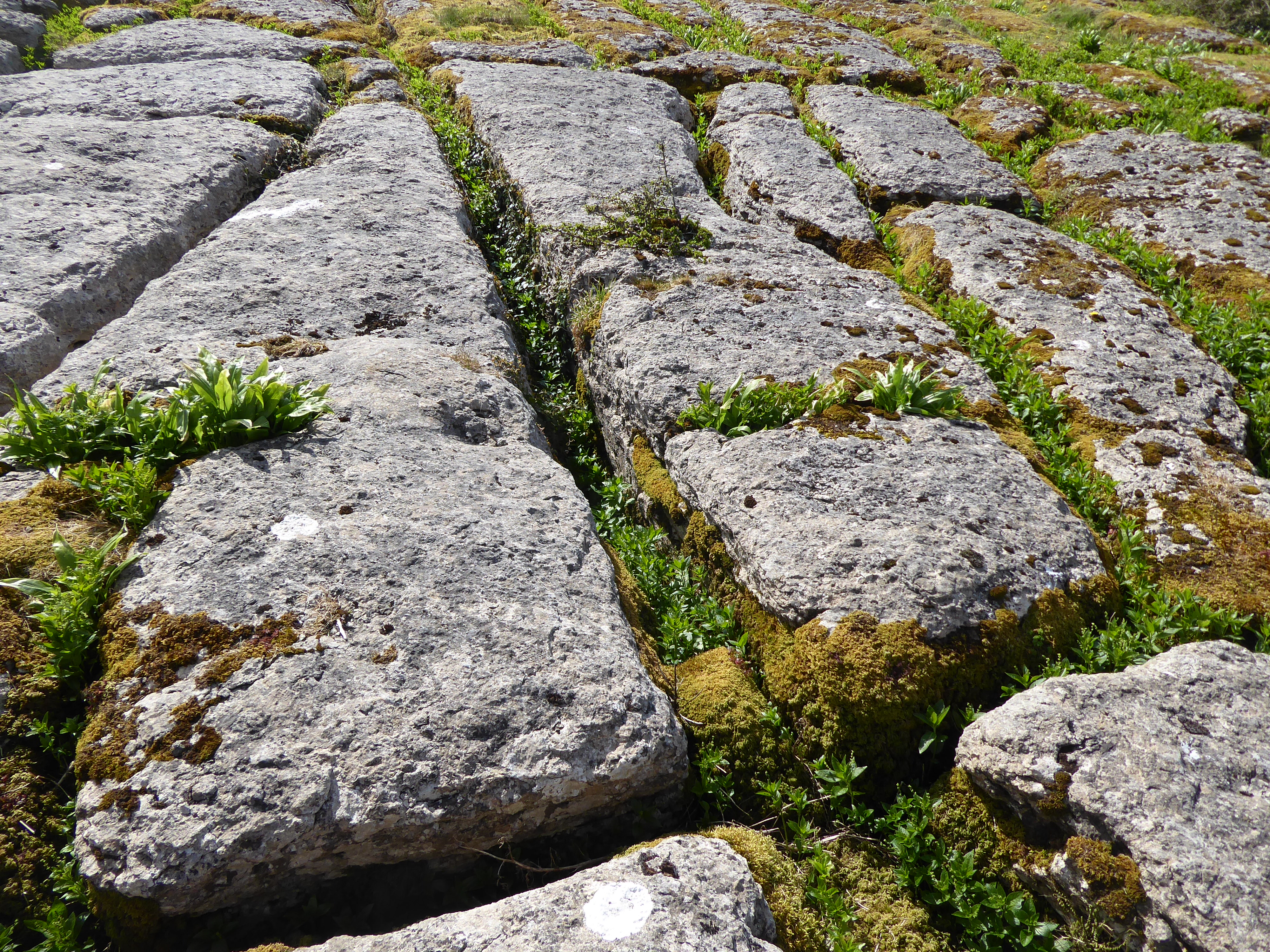
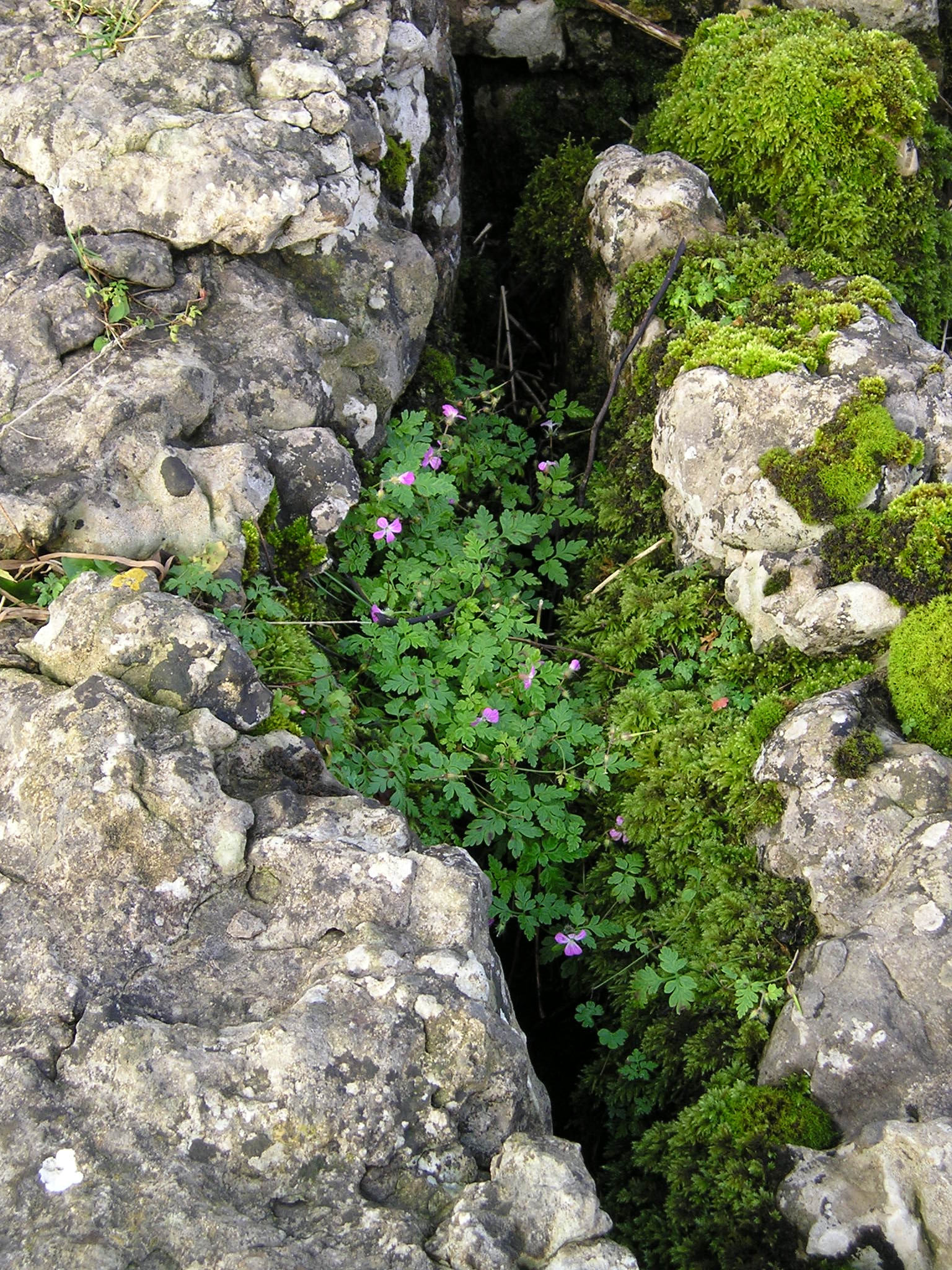
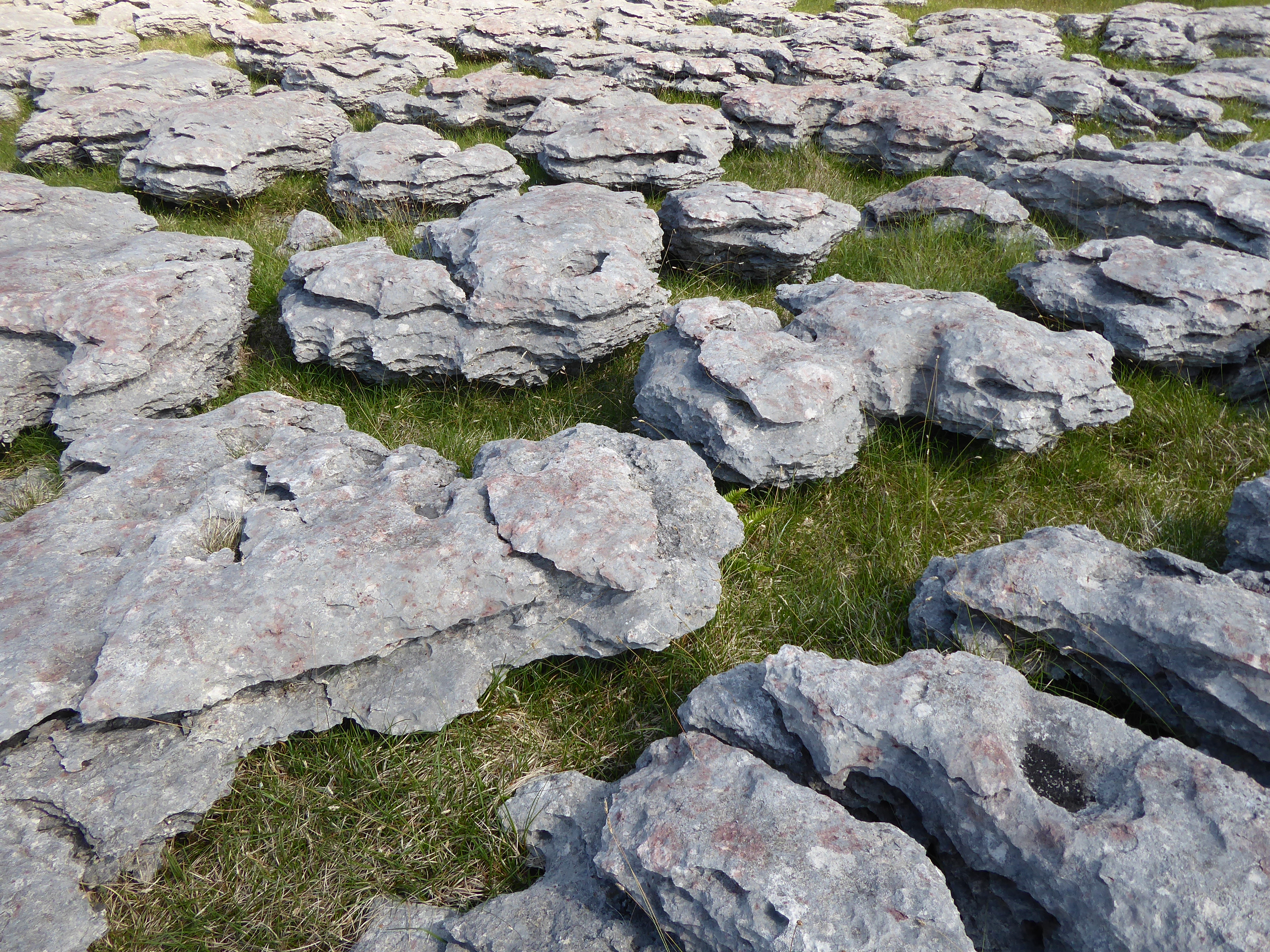
Upwards, avoiding crumbling rocky outcrops, towards the cluster of trees – and here is the limestone pavement that forms that horizontal skyline. Blocks – clints – are intersected by the channels of the grikes, and form varied patterns: rectangles and squares, in places smooth-surfaced, in others hollowed and channelled. At Clints Crags much of the pavement surface is, surprisingly, coated with mosses and, despite the grazing pressure, hawthorns, ash and elder have grown several metres tall. Fallen timber has been drilled by woodpeckers, and is crumbly with decay. Traces of summer plants remain in the grikes – scarred brown fronds of Hart’s-tongue Fern, scarlet leaves of Herb Robert.

The view to the North across the just-visible ribbon of the Solway Firth is of Scotland, marked by the familiar granite hulk of Criffel. There is snow on far-distant Scottish hills – Merrick in Galloway, and around Beattock where the turbines of the huge Clyde Valley windfarm glitter. To the South is the sheen of Bassenthwaite Lake, enclosed by the multicoloured patchworks of conifer forest, dead bracken, and the grazed hillsides of the fells – Ullock Pike and Skiddaw, places of dark slippery slatey screes, and unfriendly rock underfoot. The Dodds form a distant line and, hidden by the hills of the ‘Coledale Round’, are the fells of the Borrowdale volcanics, beyond which is granite country. These are the rock types that define the Lake District in people’s minds: that there is also limestone often comes as a surprise.

Skiddaw and Bassenthwaite Lake

Yet limestone forms a semicircle from the West near St Bees, through the Caldbeck Fells in the North and down to Shap in the East; patches then reach South past Kendal, Grange and Arnside, and around to Millom. The geological history of the origin, the over-laying and then the re-emergence of the limestone strata is complicated, but is explained clearly and diagramatically in Peter Wilson’s book Lake District mountain landforms [1]. All we need to know here is that the limey muds and skeletons of invertebrate animals were deposited and lithified during the Carboniferous period between 360-300 million years ago; towards the end of that period the limestone was covered by different sediments that became sandstones, shale and coal. Later still, between 300-200 million years ago, the sediment that became the red Permo-Triassic sandstones so characteristic of the St Bees’ and Penrith areas was laid down. What followed then was a period of uplift, and erosion of the overlying sandstones, which revealed the central dome-like core of the older rocks – the Lake District – surrounded by the bands of younger limestone. Another important factor was the action of various periods of glaciation during the Quaternary period, from about 2.5 million years ago, when glaciers buried, then scraped across the surface of the Lake District and its limestone edges, etching the landscape, scouring and scarring the surface, leaving clues to their passing.

Millom poet Norman Nicholson (1914-1987) writes, in his poem The Seven Rocks, [2] how ‘Flinty clints are scraped bone-bare’, to be further eroded and sculpted by acidic rain. The glaciers, too, picked up rocks from other areas during their passage across the land and dropped them here and there, out of geological sequence and often far from their point of origin. These boulders, referred to as ‘erratics’ as though they themselves have wandered across the landscape, can be found on the Solway shore (where the largest have long had their own names, such as Maston and Archie and Pintle, see Chapter 8 in The Fresh and the Salt) and deposited on or at the edges of limestone pavements.

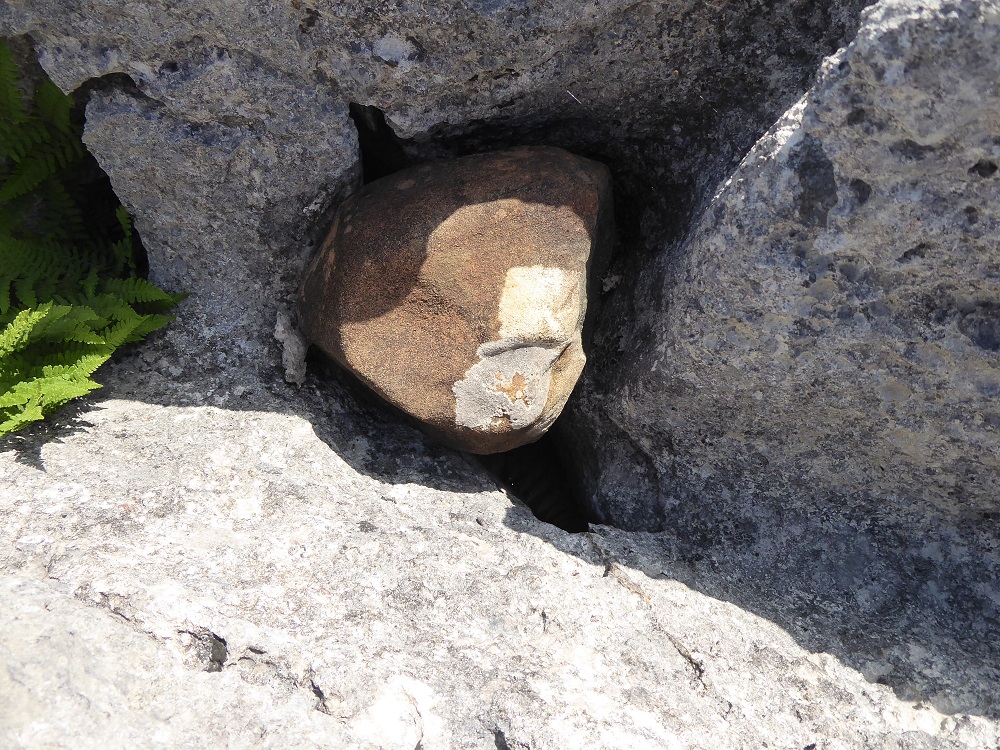
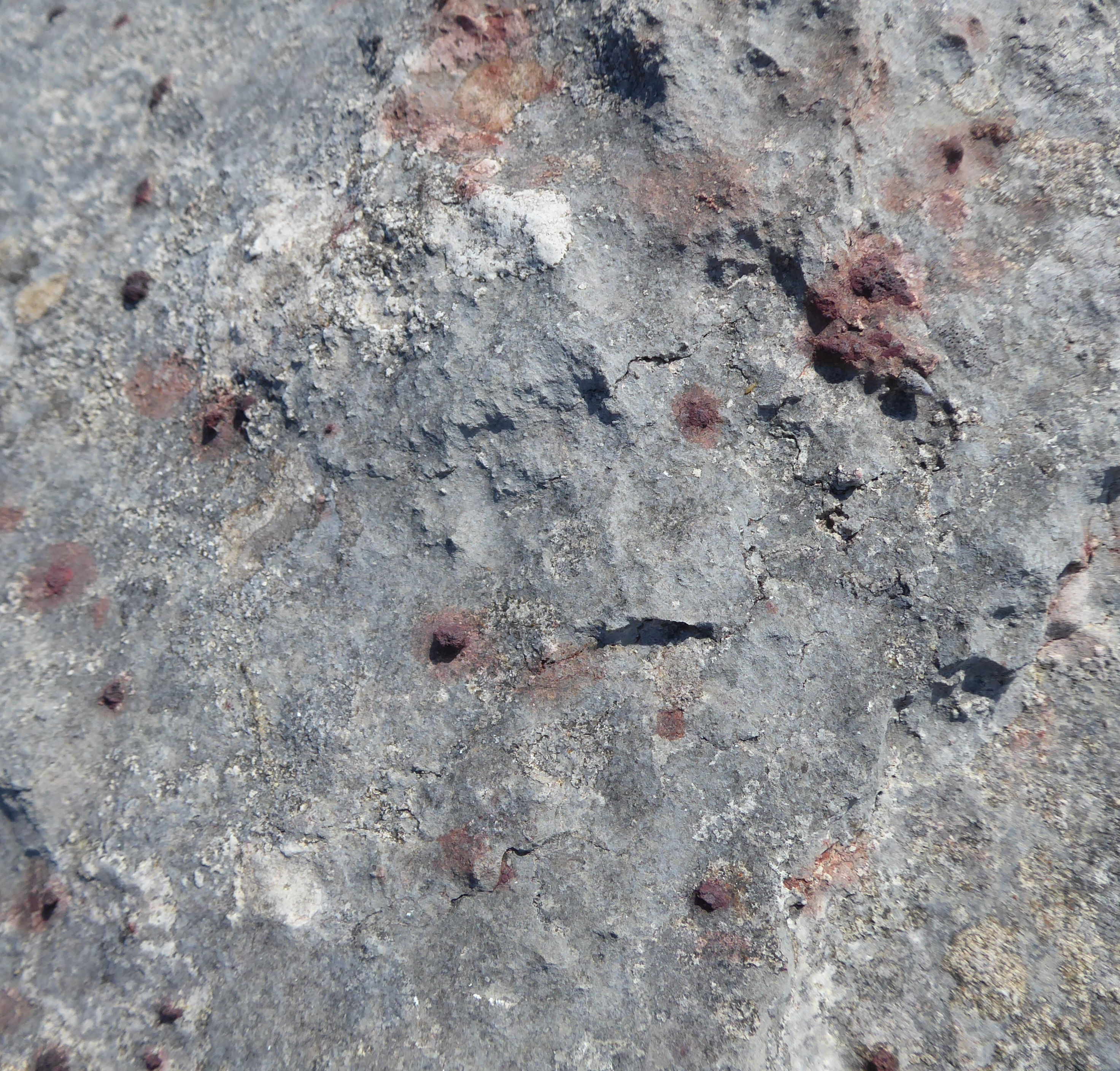
Close to the broken drystone wall that no longer fences Clints Crags, a pinkish boulder has been smoothed by the sheep who have used it as a scratching-stone. Nearby, a small lump of dark rock possibly of the ‘Borrowdale Volcanics’ series is embedded in a grike.

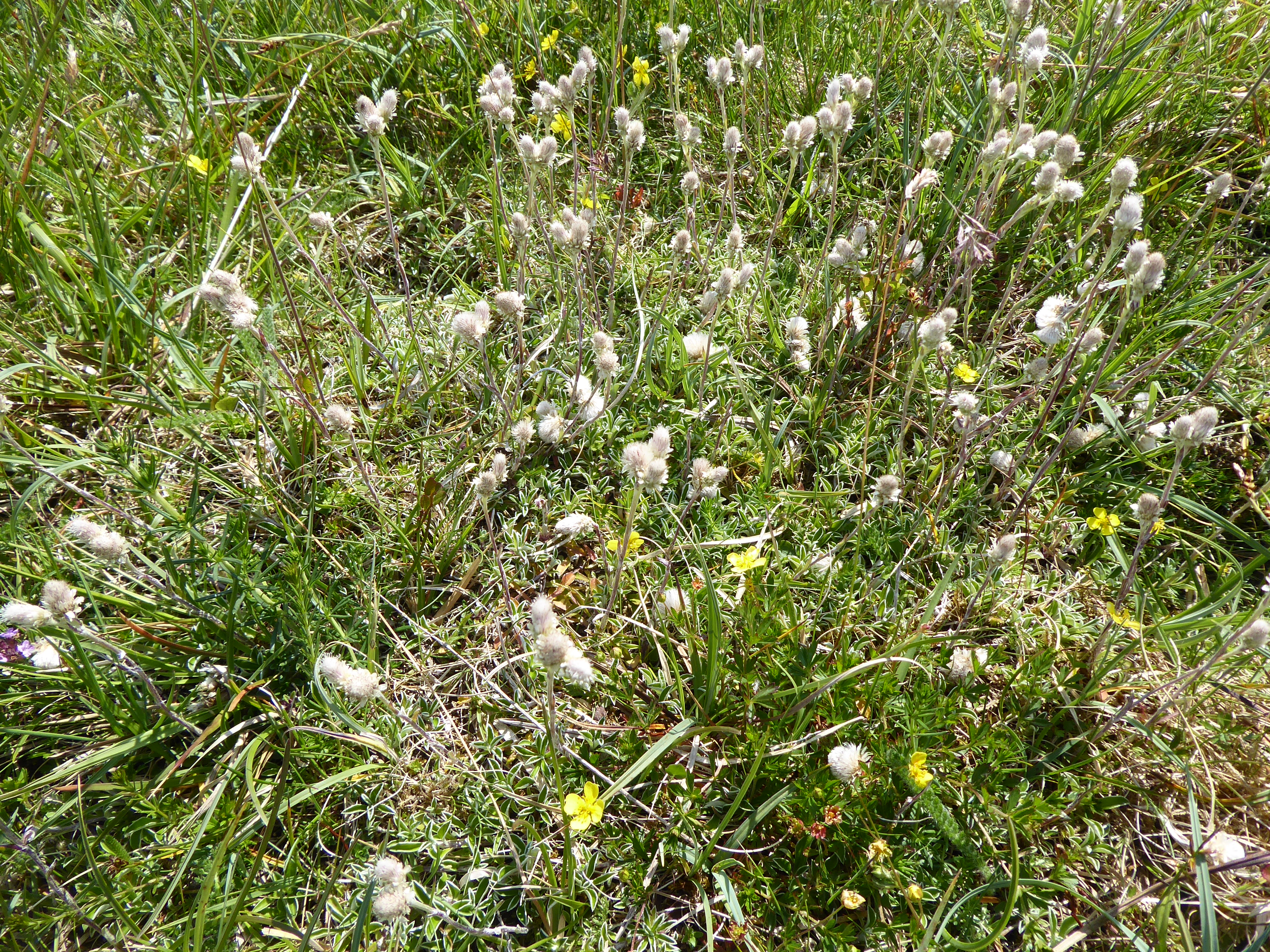
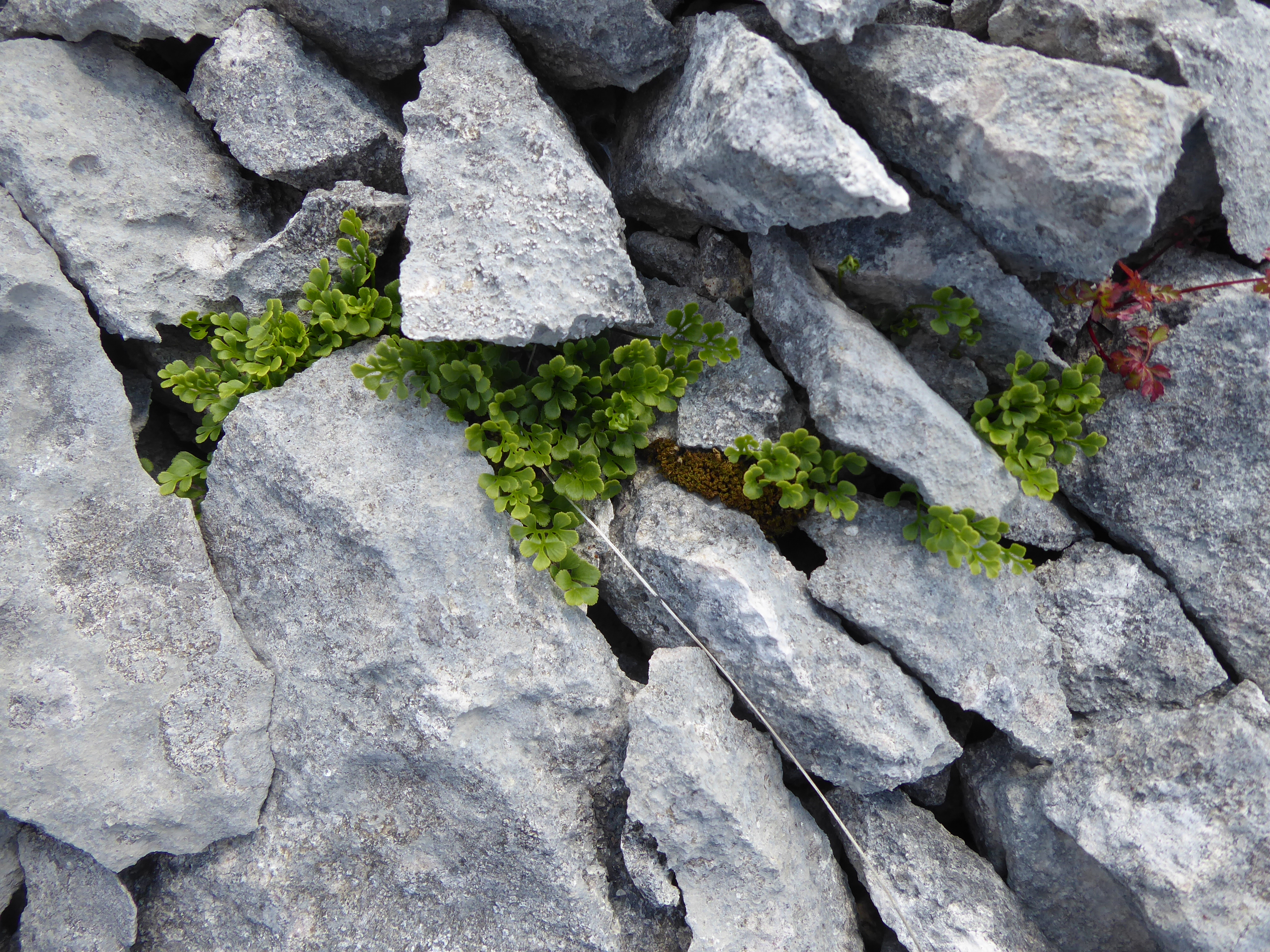
Although there are farms and other habitations in view, the limestone pavement at Clints Crags feels oddly remote and unvisited, and made a good place of escape during the various lockdowns of 2020 and early 2021. I decided I would visit every month to take notes and photos, to record the seasonal changes in the plants and the surrounding countryside (coming soon, in a separate blog-post). Limestone country has its own very special flora which, on the pavements, find shelter, dampness and stability within the channels of the grikes (see the blog-post about the plants of Great Asby). At Clints the pale-green, shiny fronds of Hart’s Tongue Ferns are immediately obvious, even in the winter; and the dissected red-tinted leaves and small pink flowers of Herb Robert can be found year-round.

But it is the moss, coating large areas of these clints, that is unusual. In early May 2020 the pavement was an astonishing sight: beneath the still-leafless trees there was a pattern of khaki rectangles accentuated by a grid of the lush, bright green of Dog’s Mercury. The regularity was unnatural on this landscape scale.Within a fortnight the Dog’s Mercury had been joined by the shiny lanceolate leaves of Wild Garlic (delicious in soup) and the white star-bursts of their flower-heads. Trees came into in leaf, then produced their seeds or berries, before being blasted bare in the autumnal gales. Low scrubby blackthorn bushes within a grike were laden with the blue-black berries of sloes.

In August I failed to take photos because the field that I needed to cross was busy with frisky stirkies, who were watching me, jostling each other with tails raised. I retreated and climbed a gate to attempt to slink by on the far side of a wall, but when I retrieved my rucksack from the ground where I had thrown it I stood up and saw that I was being watched by a mountainous brown bull. He was lying down, he looked benign – but I was on his territory and I knew I could not outrun him, so I said ‘good morning’, and left. In the winter, frost, then snow, made the pavement treacherous underfoot.

Red bull, watching

It requires patient searching to find fossil invertebrate animals at Clints. Scattered brachiopods occasionally form hollows on the clints, their concave shells crackly with hard dry moss in the summer. There are colonies of corals here and there in the walls, and sometimes the sections of crinoid stems. For whatever reason, it seems the former sea-bed was not as rich as that at Little Asby (see ‘Death assemblages’).

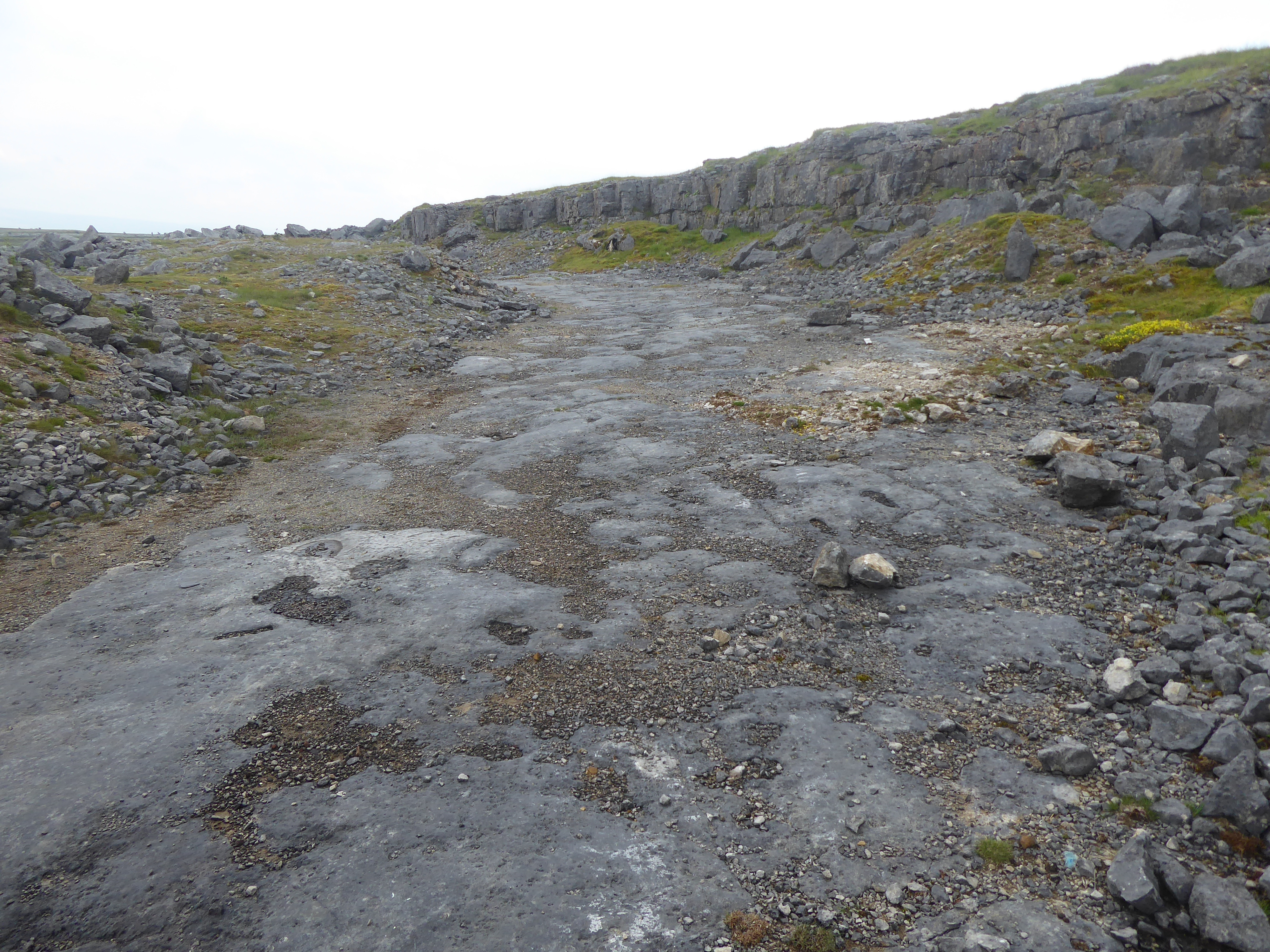
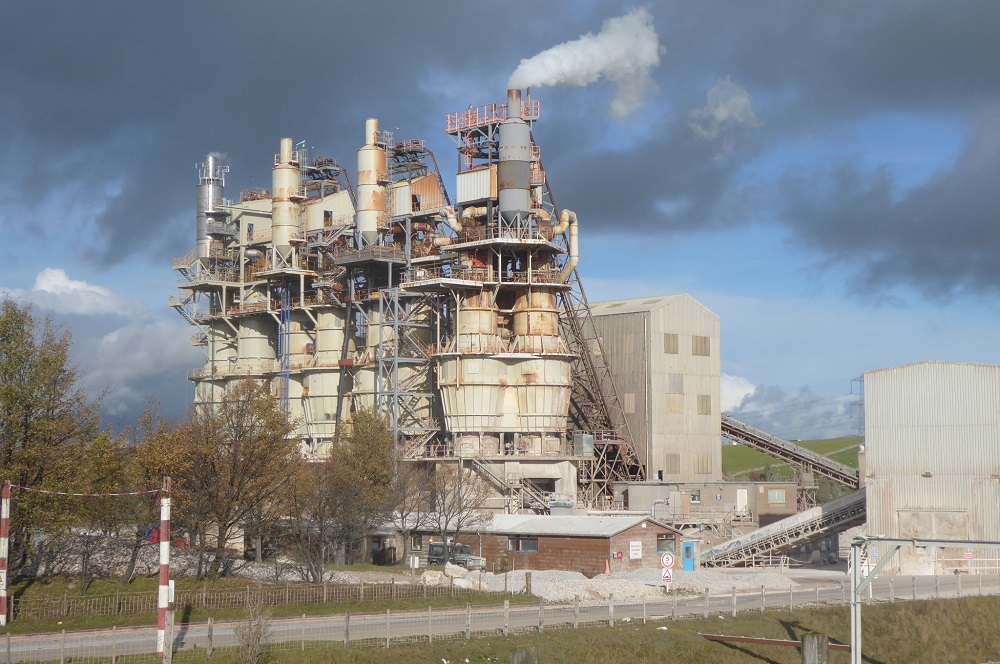
Yet the scenery around this small pavement at Clints Crags offers hints about the limestone, and how we have used it. There is the typical karst landscape of rolling hills, low scarps, and sinkholes; there is the pavement itself, with its special flora, and its different layers and shapes indicative of different environmental conditions during their deposition and erosion; and there are the ‘erratics’, reminding us that glaciers passed this way. And then there are the drystone walls, the variations in their stones and construction reliant on the stones that the builders found to hand. One of the tracks to the Crags leads past a series of former quarries, and a few miles distant the workings of the still-busy Moota quarry are visible, where the rock is blasted and crushed for road-stone. A small, abandoned lime kiln, its arched opening like an eyebrow, stares from a nearby field, and at certain times of the year piles of quicklime for agricultural use are mounded on the floor of a decrepit shed at the start of the quarry track.

In the rubbly centre of a broken drystone wall I found the stem and part of a bowl of a small clay pipe: this too is why I keep returning, looking for further clues to the human alterations of the landscape.

Remains of a clay pipe

Notes:

This blogpost is part of my ‘limestone lockdown’ project. For an Introduction to the project, and a guide to the list of related posts, see Limestone in the Lake District: an Introduction – and the ‘categories’ list in the right-hand bar.

1. Peter Wilson (2010) Lake District mountain landforms. Scotforth Books

2. Norman Nicholson (1954)  The Seven Rocks, in The Pot Geranium; Collected Poems ed. Neil Curry 1994, Faber & Faber

Posted in LIMESTONE, limestone scenery | Tagged , , , , | Comments Off on In limestone country: Clints Crags

Limestone in the Lake District: an Introduction

During the third lockdown, at the start of 2021, I re-visited some limestone kilns, a short walk from where I live. Coincidentally, I’d been re-reading some of Norman Nicholson’s poems and one in particular, The Seven Rocks, kept drawing me back – the St Bees’ sandstone, the mountain limestone, the Coniston ‘flag’ and Maryport coal. Because I desperately needed a new ‘project’ to keep me occupied through lockdown – new discoveries, new outdoor subjects to write about – I was taken with the idea of finding out more about Cumbria’s seven types of rock and their uses: but it soon became apparent that would be an unfeasibly large project. And anyway, I live at the edge of ‘limestone country’, a particularly engaging type of stone – here there are kilns, drystone walls, fossils, a local limestone pavement, quarries, and fields where powdered limestone is spread by farmers. I have long had an interest in haematite, iron ore, too – and this mineral, once so important in Cumberland’s economy, was mostly quarried from the limestone.

Clints and grikes

The limestone around the Lake District, then, is the foundation of this project, and I have been, and will continue to be, finding out more about its origins and properties, and how our species uses it. Already, very helpful, knowledgeable and kind people have spent hours with me identifying plants, finding haematite crystals, and taking me up the stairways on the majestic Shapfells kilns … and more!

Relevant blog-posts will appear from time to time – please keep checking, if you’re interested, if only for occasional unusual photos.

The topics will be loosely divided into:

Limestone country: an overview

See In Limestone country: Clints Crags

See Clints Crags. An intermittent diary of a limestone pavement

See Limestone: ‘death assemblages’ (for fossils)

Limestone pavements

See Limestone: the language of pavements

See Limestone: ‘pavement’ plants

See Limestone: ‘death assemblages’ (for fossils)

Drystone walls

See Limestone: Wandering walls in limestone country

Kilns, large and small

See Limestone: quicklime, tubs and ghostly kilns

See Limestone: the Tata Shapfell kilns

Quicklime, in steel-making; in old buildings;

See ‘Quicklime: hot mix’

Quarries: agricultural lime, ‘rock armour’ on the coasts

See Protecting the coast: limestone rock armour

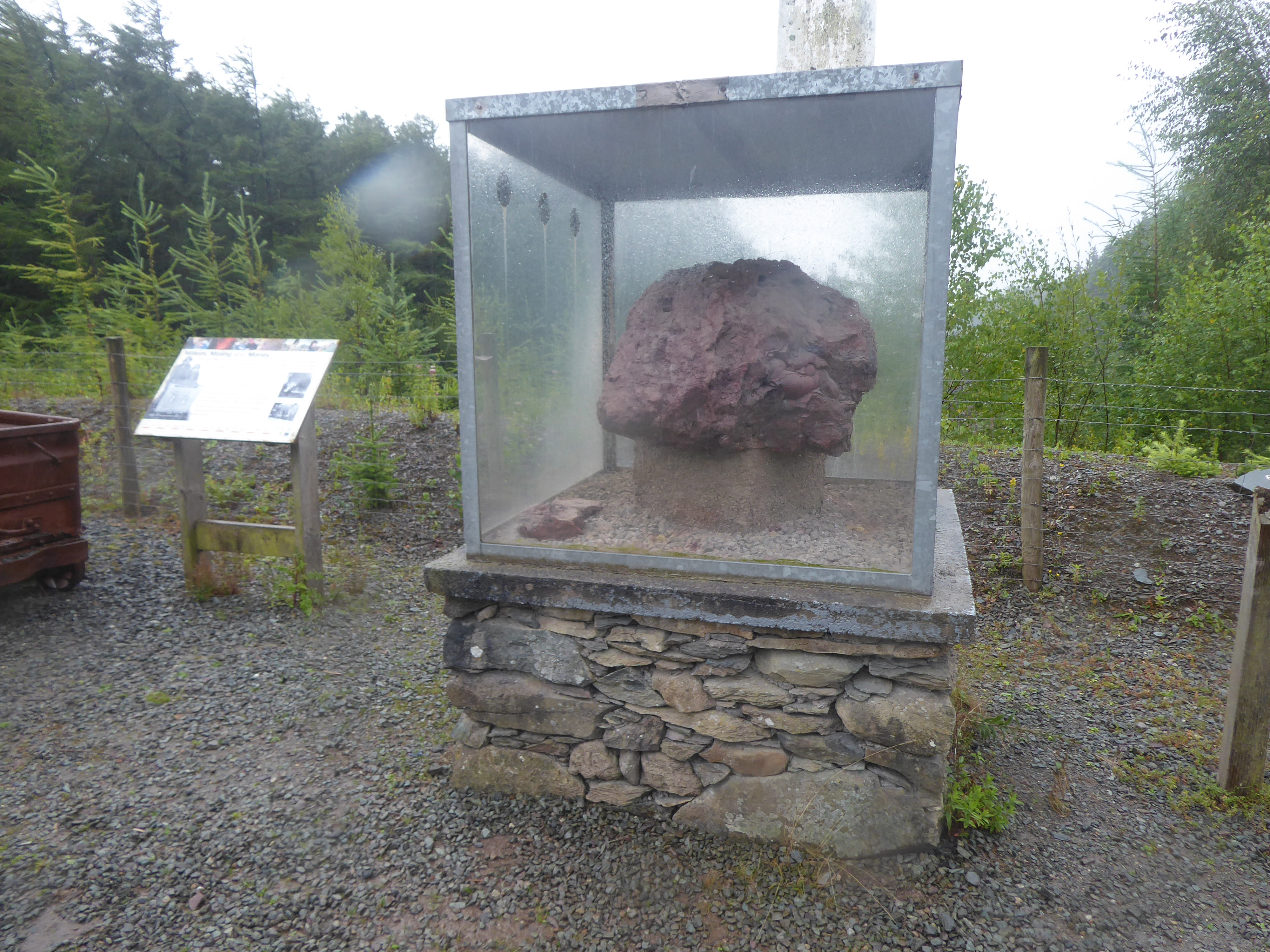
Haematite: mines, including Norman Nicholson’s Hodbarrow & Millom

See: Haematite in Eskdale

Posted in geology, industrial archaeology, LIMESTONE, limestone, an introduction | Comments Off on Limestone in the Lake District: an Introduction

Snippet 15: The continuing mystery of the piddocks

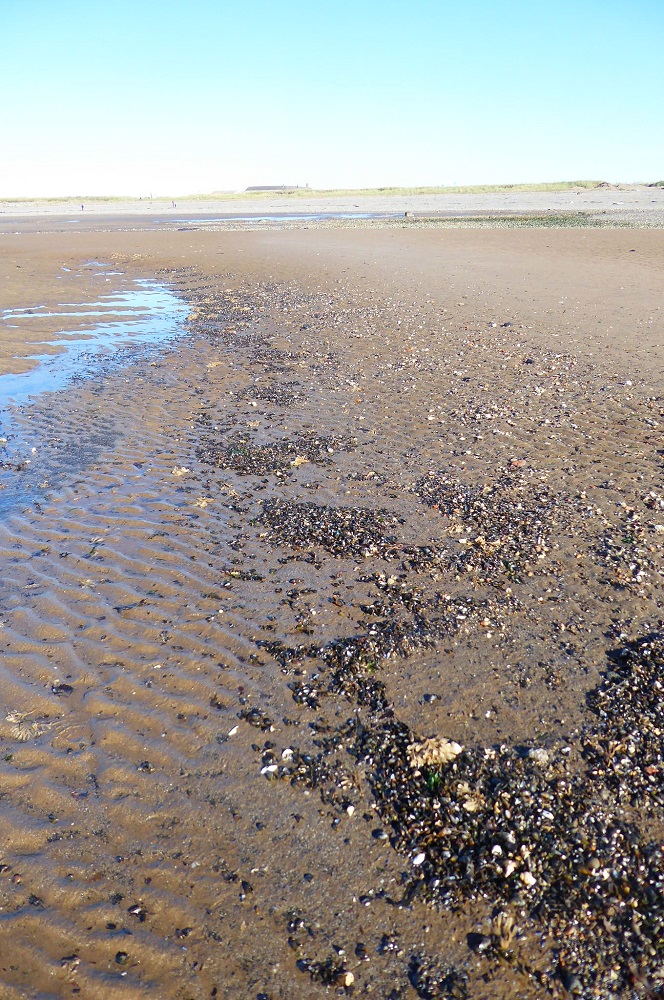
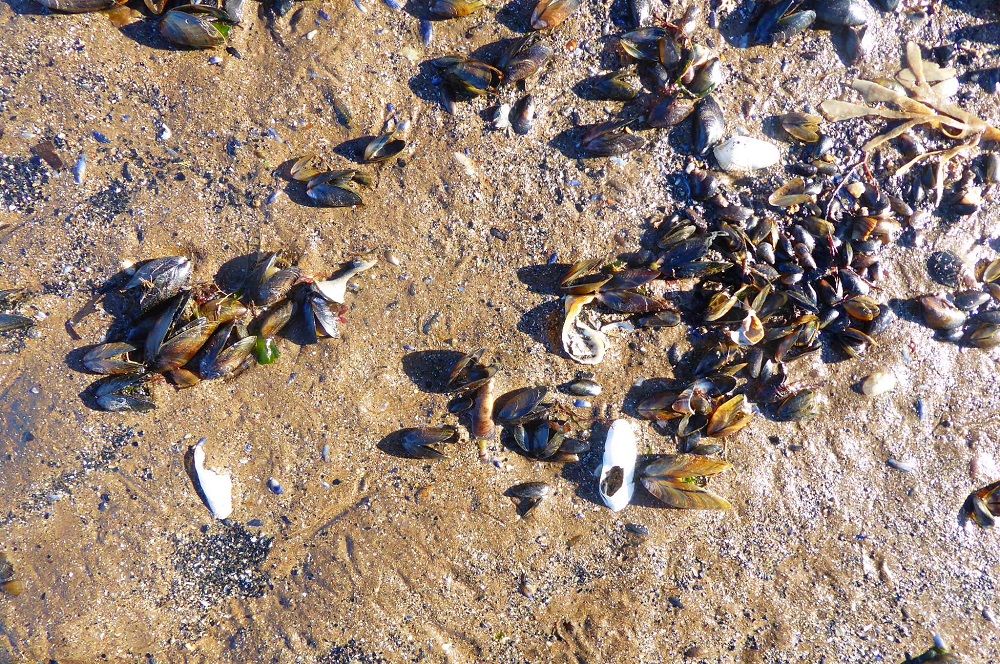
The tide is ebbing and, along the inner edge of a shallow channel on the shore, it has deposited a line of offerings, neatly sorted: predominantly mussel shells, some black, some striped, all shining wetly in the October sun; a sprinkling of broken, pale-grey whorls of the Common Whelk; a few pink tellins, their two valves agape; shards of razor shells; the legs of shore crabs, elbows bent, pincers grasping at air.

And the shells of piddocks. There are only a dozen or so, single valves, some broken but some intact. ‘Oh!’, I keep muttering to myself, astonished. ‘Oh, look! Another.’

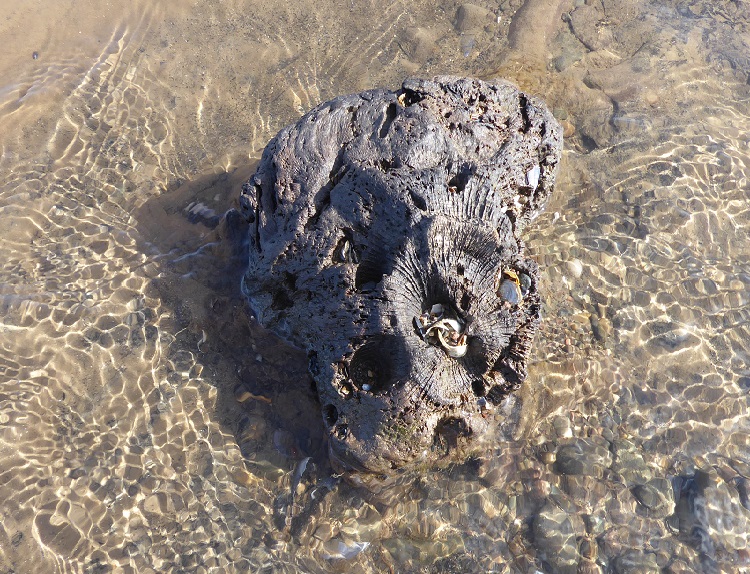
They should not be there. Piddocks, which are bivalved molluscs, develop and grow inside burrows which they bore within soft rock and shale; they enlarge the burrows but not the entrance, so that once embedded they cannot escape unless the rocks are cracked open. But here on the shore of the Solway I have also found the signs of ancient piddocks – both their shells and their burrows – in newly-uncovered banks of peat, associated with the submerged forest. These peat banks come and go, exposed then hidden again, or broken up by the storms.

Were these piddock shells released from ancient but wave-damaged peat? Are they themselves ancient – or have new peat-banks been uncovered on the bed of the Firth, and recently colonised?

Zirfaea and three Pholas

Nearly all of the shells are of the Common Piddock, Pholas dactylus. But there is an odd one out, a species I have not seen before: it is chunkier, and exactly fits the description in my old Collins Pocket Guide to the Sea-shore: ‘shell oval, solid and coarse with furrow dividing valves into anterior and posterior regions.’ The ‘teeth’ at the posterior of this shell are a little worn, but it’s definitely an Oval Piddock, Zirfaea crispata.

The website of the National Biodiversity Network notes that ‘Single valves [of Zirfaea] regularly wash onto all Dutch beaches, while live animals can be found in washed-up blocks of peat.’

As always, the objets trouvés on the shore pose many questions; our answers can only be informed or optimistic guesses. But to find piddocks always provides a thrill.

See also Snippet 14, Long-lost piddocks and the peat, for a longer piece about piddocks and peat. For much more about the Solway’s submerged forest, see ‘Cold cases: land-scape puzzles on the Solway shore’ .

There is also a chapter on the Solway’s origins – which includes the changing sea-levels, forest, peat and clay, and more – in my book The Fresh and the Salt. The Story of the Solway (Birlinn 2020): for more details and photos, see the website.

Posted in Allonby, Found Objects, sea-bed & undersea, shells, Snippets, submerged forest | Tagged , , | Comments Off on Snippet 15: The continuing mystery of the piddocks

The fog and the froth

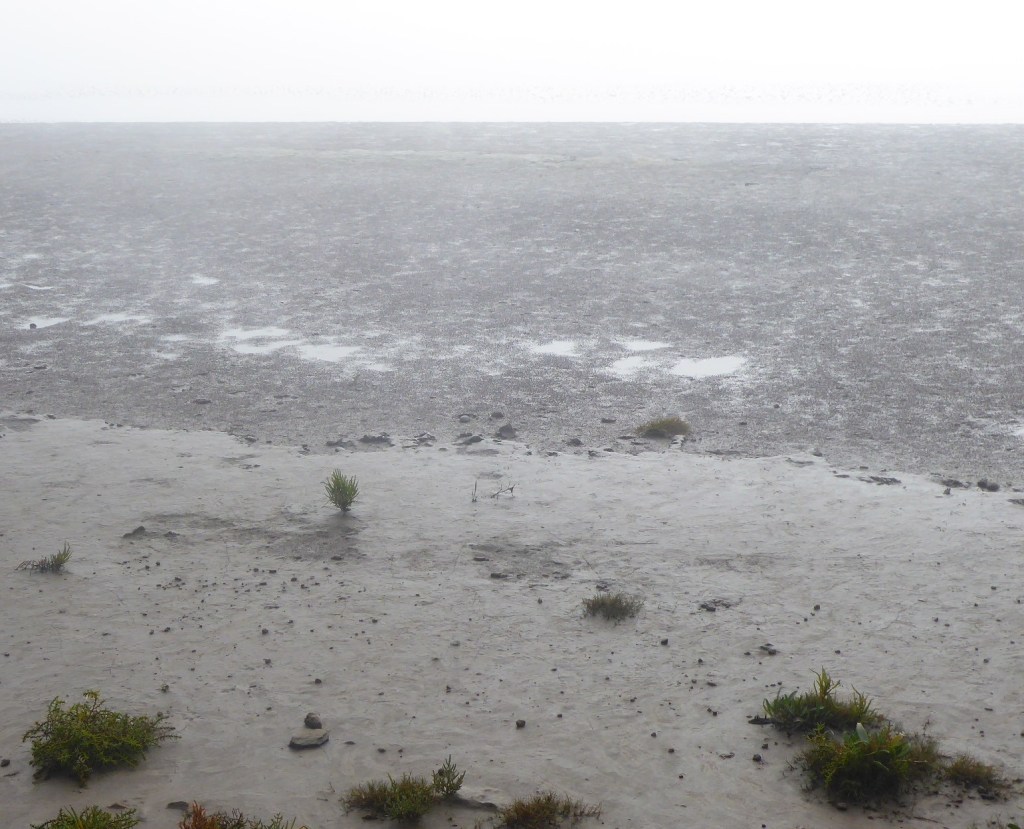
Diffuse, pale light glimmers and shifts with the fog above Skinburness saltmarsh. Two crows call harshly and fly swiftly towards a broad-winged shape, a buzzard, who slants his wings and flaps away, fading and disappearing into the whiteness.

Along the track at the marsh’s edge, the gorse and hawthorn are draped with webs, made visible by the fog’s damp breath, and the sedges’ feathery heads are bent with the weight of the water.

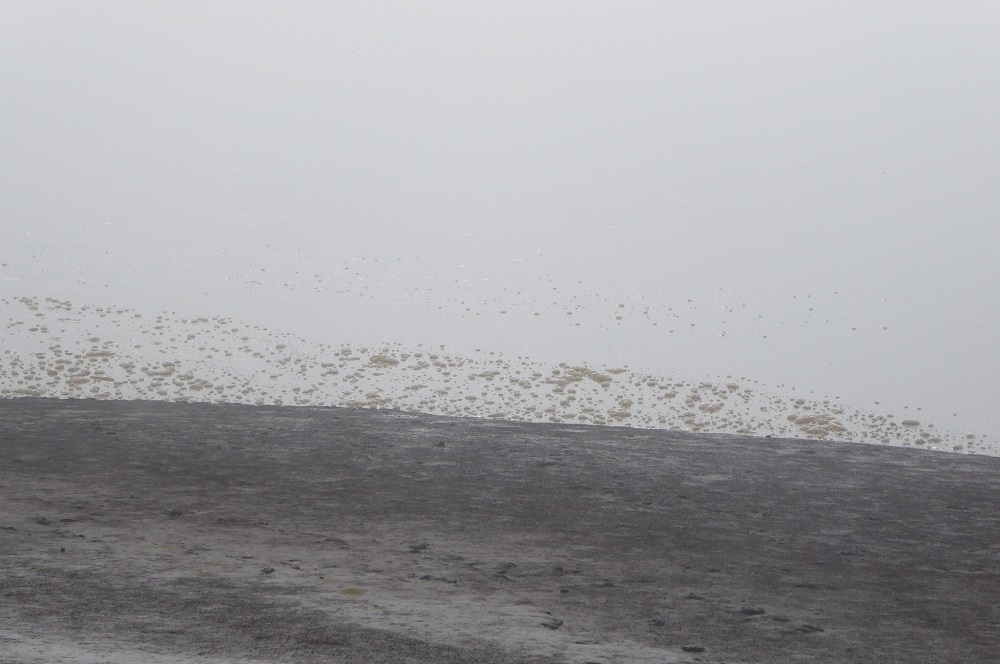
The tide is out. The bowls and scoops of the marsh’s creeks are filled instead with water that is as indistinct as a gas, fine droplets swirling, hiding the detail, hiding the colours, so that birds are dark silhouettes against the shine of the mud. A heron straightens anxiously, then loses his nerve and, neck raised, leaps into the air and flaps off heavily, ‘craak‘-ing his irritation. Curlews call, unseen, and oyster-catchers, their finery muted, lift off and circle.

Marsh asters cower scruffily at the end of their flowering, their pale-blue petals and white seed heads bruised and dishevelled.

Samphire or glasswort, Salicornia

The approach of autumn has coloured the samphire red.

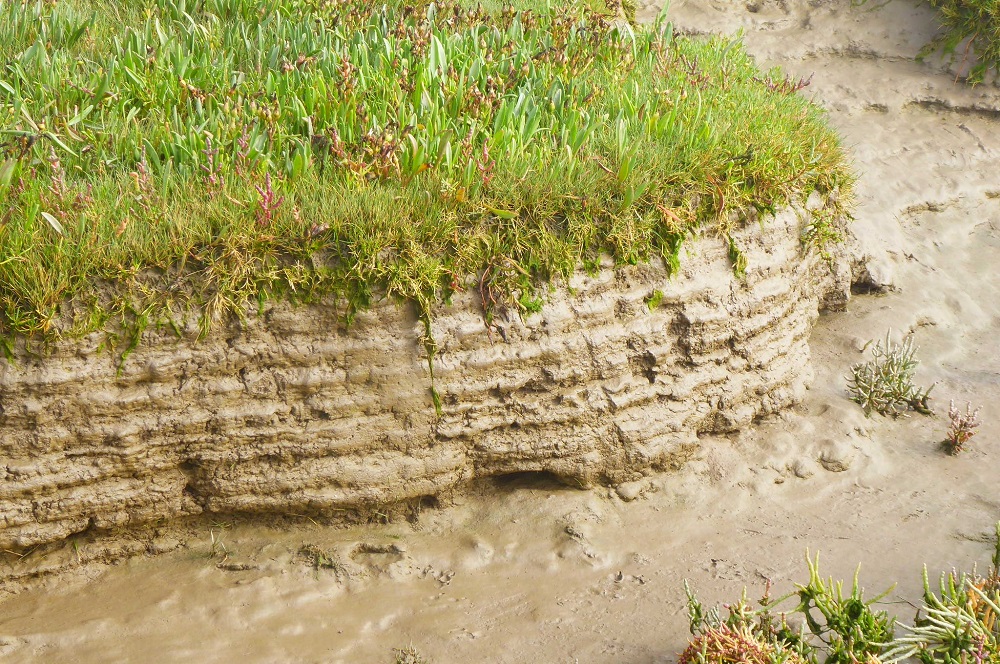
The saltmarsh keeps growing: outwards, making the latest sheep fence irrelevant; upwards, swallowing the fence posts. Its story accretes in layers like the thick pages of an ancient book.

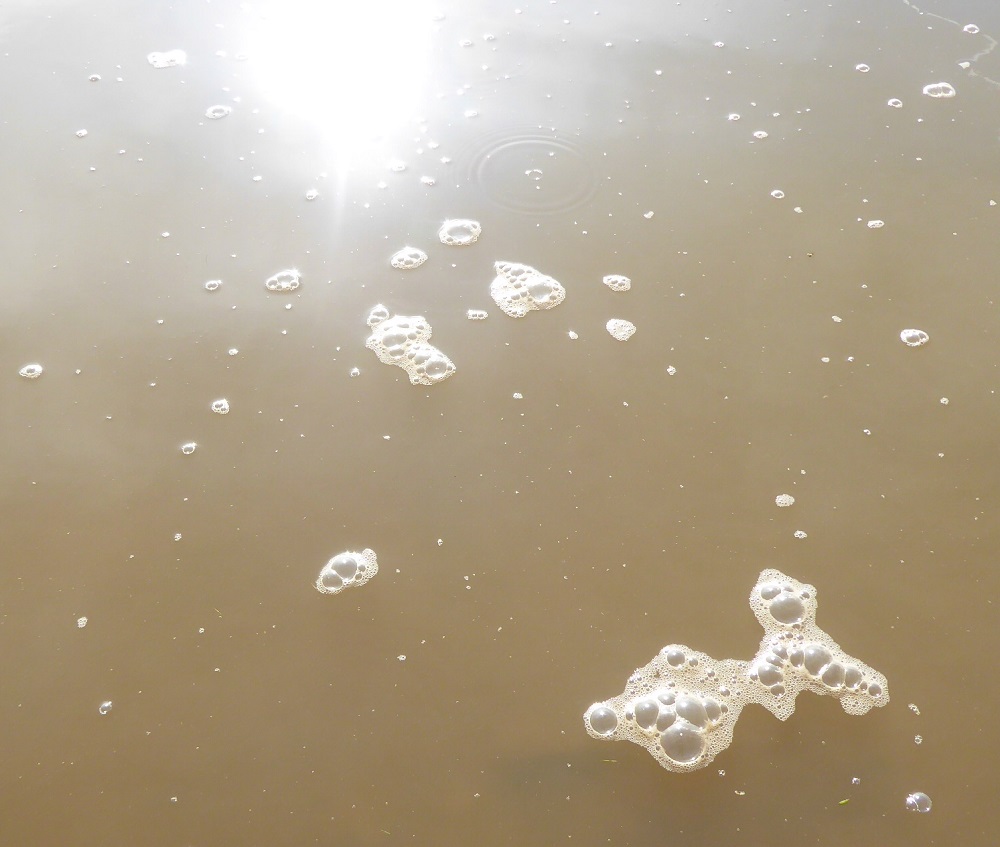
The tide has turned – the moon and sun and the tide-tables have agreed upon this. But water still flows out from the creeks, carrying froth and bubbles seawards, implying the tide too is still on the ebb. But – watch the margins – the outflowing water is rising, lifted upwards by the dense, incoming sea: pebbles on the shore are being submerged, quickly. The bubbles are suddenly indecisive – which way to go? They circle, bunching together, their surfaces brown with sediment.

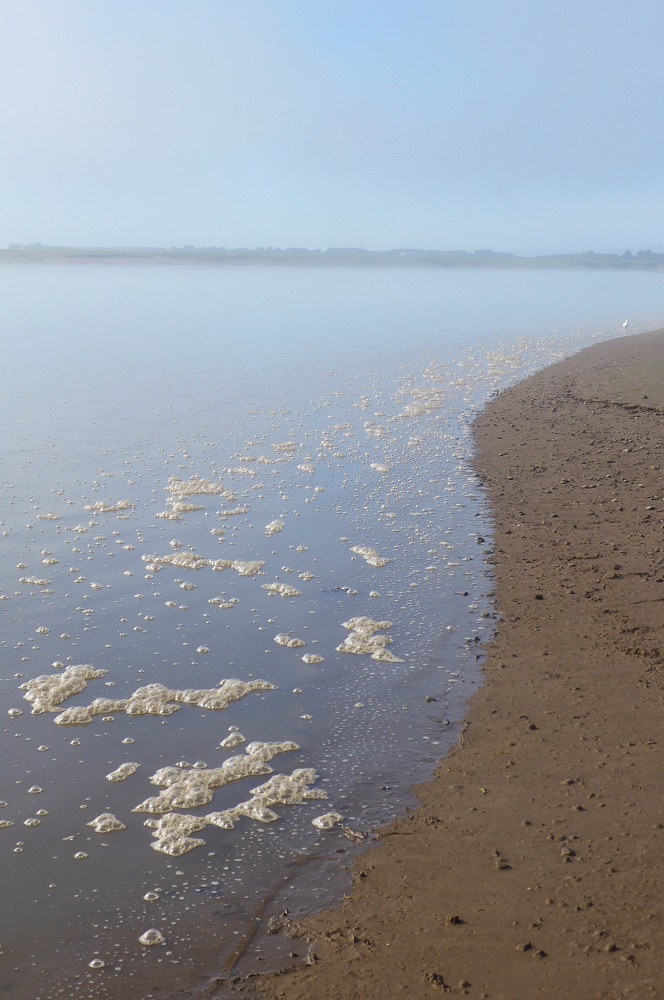
And suddenly the fog disappears, like the backdrop to a stage play suddenly swung up into the flies. Water and sky are shades of blue and silver; the bubbles glitter. And now the incoming tide is dominant, spinning the circling bubbles out into orbit on its surface, then nudging them individually back upstream.

The fog lifts, the tide starts to dominate, the gull hunts

Quietly, efficiently, the sea fills the creeks, hides the mud, embraces the feet of the scurrying waders. Tiny bubbles of air pop from the burrows of the mudshrimps, and a gull tiptoes along the edge, staring downwards, snatching as the mudshrimps emerge.

Low tide in the fog
A half-hour later …
Posted in mud-shrimps, mudflats, saltmarshes | Tagged , , | Comments Off on The fog and the froth

Snippet 14: Long-lost piddocks and the peat

The shore at Beckfoot, on a sunny, windy day in May: the Solway is a churned, pale brown, and a wavering white line far off in the Firth marks where the incoming tide is beating against a sandbank.

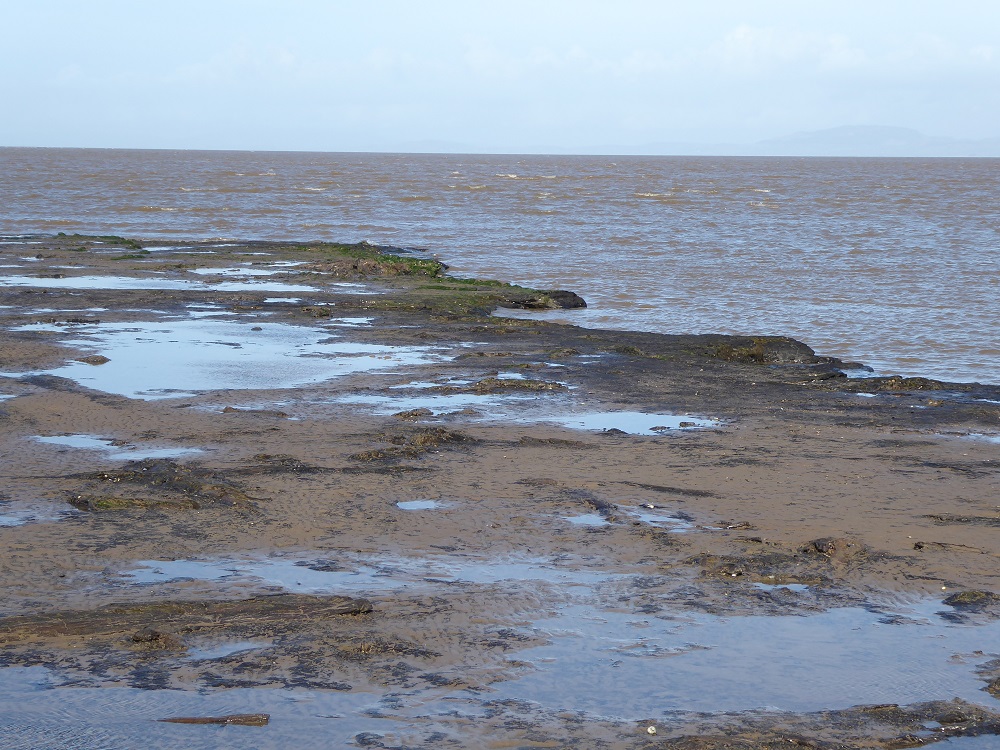
Towards the bottom of the shore a patch of darkness covers the sand and I head straight down towards it; across wave-smoothed sand that is stippled with the coils and holes of lugworm burrows; splashing through shallow pools; crossing pebbly scaurs deposited by glaciers and now slippery with weed … and the darkness is as I had hoped, a bank of peat and embedded roots and fallen trunks of trees. The submerged forest, re-emerged from its burial by sand and shingle.

The submerged forest and peat, re-emerged

During the past twenty years or so, the forest and peat have appeared and disappeared on the shore between Beckfoot and Allonby, sometimes near the top of the shore, sometimes mid-shore. Some exposures are small areas of peat with perhaps a few fragments of wood, and perhaps overlying – or underlaid by – slippery grey clay. Some exposures are more dramatic: for several years a large stretch of the mid-shore near Beckfoot was covered by a sheen of clay poking out from beneath thick peat banks in which were preserved fallen branches and the bases of trunks with radiating roots. Gradually they disappeared again, partly hidden by the shifting sands, partly broken by the waves; but I had noted the empty shells of piddocks – boring bivalve molluscs – and their burrows within the compacted fibres of the peat. That must have been at least 10 years ago. And now, at the start of 2021, the storms and tides have scoured away the sand and shingle lower down the shore, and revealed part of the Solway’s story yet again.

There is much more about this complicated dance between the sea and the land, and glacial interventions, in the ‘Changeable Depths’ chapter of my book The Fresh and the Salt, and elsewhere on this blog (‘Cold cases’) but here I want to return to the piddocks, Pholas dactylus.

Imagine a mussel with its two blue-black shells (‘valves’), and now imagine these valves as yellowish-white, and rough with rows of sharp projections like tiny teeth. Unlike the stream-lined shape of the mussel, the piddock is fatter, like a thick but tapering cylinder. From a young age, mussels are sedentary, attached to a hard surface; piddocks are sedentary too, but trapped. Like the mussel larva, the minute planktonic piddock adheres to a hard surface by a byssal thread, but then starts to burrow in, using its muscular foot and rocking its shells so that the ‘teeth’ grind and grate its surroundings. Eventually, safe inside its rock-walled burrow, it feeds by filtering out organic particles from the sea, sucking in and expelling water through muscular siphons; its body and shells grow, it enlarges the diameter and length of its burrow – but not the entrance. A piddock’s burrow is its home for life.

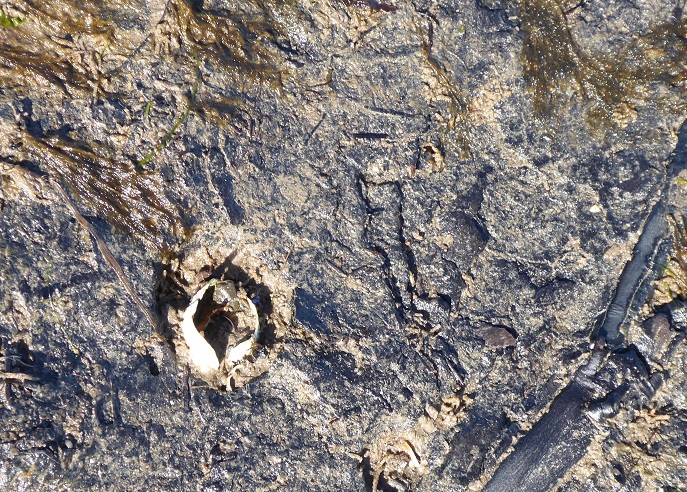
Piddocks are normally found at or below the lowest intertidal level, down to about 35 metres. According to the MarLIN website their burrows have been found in ‘a wide range of substrata including various soft rocks such as chalk and sandstone, clay, peat and very occasionally in waterlogged wood.’ And here they are, in the peat, the tips of their empty shells still visible within the sediment-filled burrows.

The forest grew across the ‘Solway plain’ perhaps 10,000 years BP (dates vary according to which stretch of the shores is considered) but was gradually encroached upon by wetlands, sphagnum and peatbogs until about 8000 years BP. The glaciers had been melting, the sea-level rising; the land rebounded, relieved of the weight of ice, the relative sea-level fell; this to-and-fro continued for several millenia but, finally, the sea won and the waters of the great estuary usurped the territory of the peatlands. There would have been a meeting of land-based life with the chill, saline waters of the sea – at first perhaps with storm-driven spray, then with waves and tidal flows. Marine and estuarine organisms would have met with a strange new environment too, but they were the ones who prevailed. Piddock larvae would have encountered a new substratum, delightfully soft compared with rock, and made their homes. These molluscs, according to David Smith, a geomorphologist who has researched the Solway’s changing sea-levels , could have been living and filter-feeding within the sublittoral peat as long as 6000 years ago.

At some stage the sea-bed and the shore-levels changed again, and the banks of underwater peat with their preserved dead trees and their living marine fauna, were gradually overlaid by several metres of sediment and shingle. Now, a few thousand years later, these traces of former inhabitants of land and sea – of trees, of compacted mosses and other vegetation, and of marine animals – have been revealed again, to present-day humans walking on the shore.

I prised out an intact piddock shell and gently opened it and, there within the accumulated mud and sand was a mudshrimp! Mudshrimps, Corophium, are found in their millions in U-shaped burrows in the mudflats and at the edges of the saltmarshes higher up the Firth; mudshrimps, the charismatic little animals that are such an important theme in The Fresh and the Salt. Here was a little Corophium, alive and wriggling its long antennae, having made a home in a newly-revealed but pre-existing and very ancient burrow!

Later I also found the shell of a hazelnut buried in the peat, another reminder of the woodland that once spread across edgelands that were inundated to become a wider, deeper Solway Firth.

The piddock shells, the nut shell – and that mudshrimp – made this re-discovery of the submerged forest a complete and unexpected joy: three small objects that raise many questions about the past but also present many questions about the uncertain future of these liminal spaces.

For an update, see also The continuing mystery of the piddocks.

Birlinn Books 2020; available from all bookshops
Posted in mud-shrimps, peat, bogs and moors, sea-bed & undersea, Snippets, submerged forest | Tagged , | Comments Off on Snippet 14: Long-lost piddocks and the peat

Fish traps on the Mawbray shore

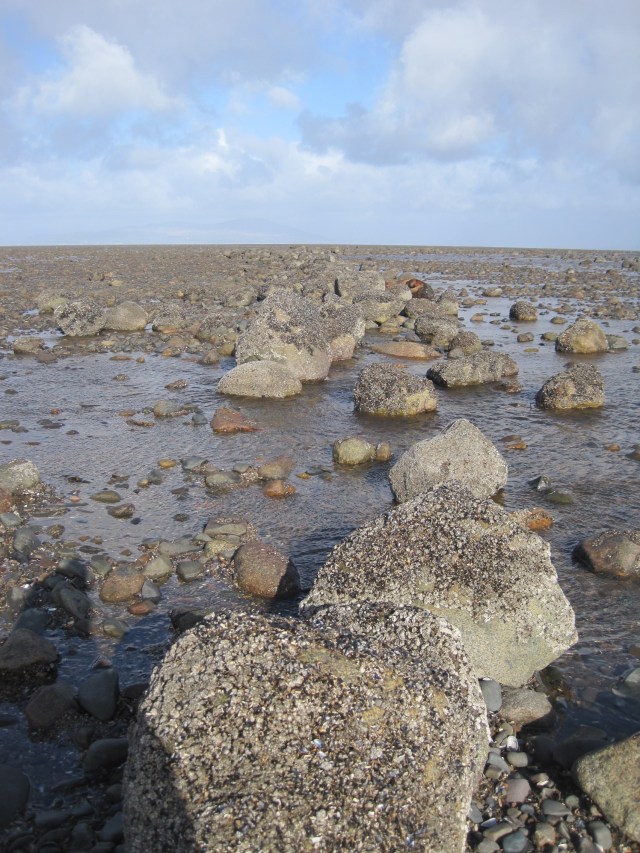
Lines of stones on shore by Mawbray Yards (photo (c) Ann Lingard)

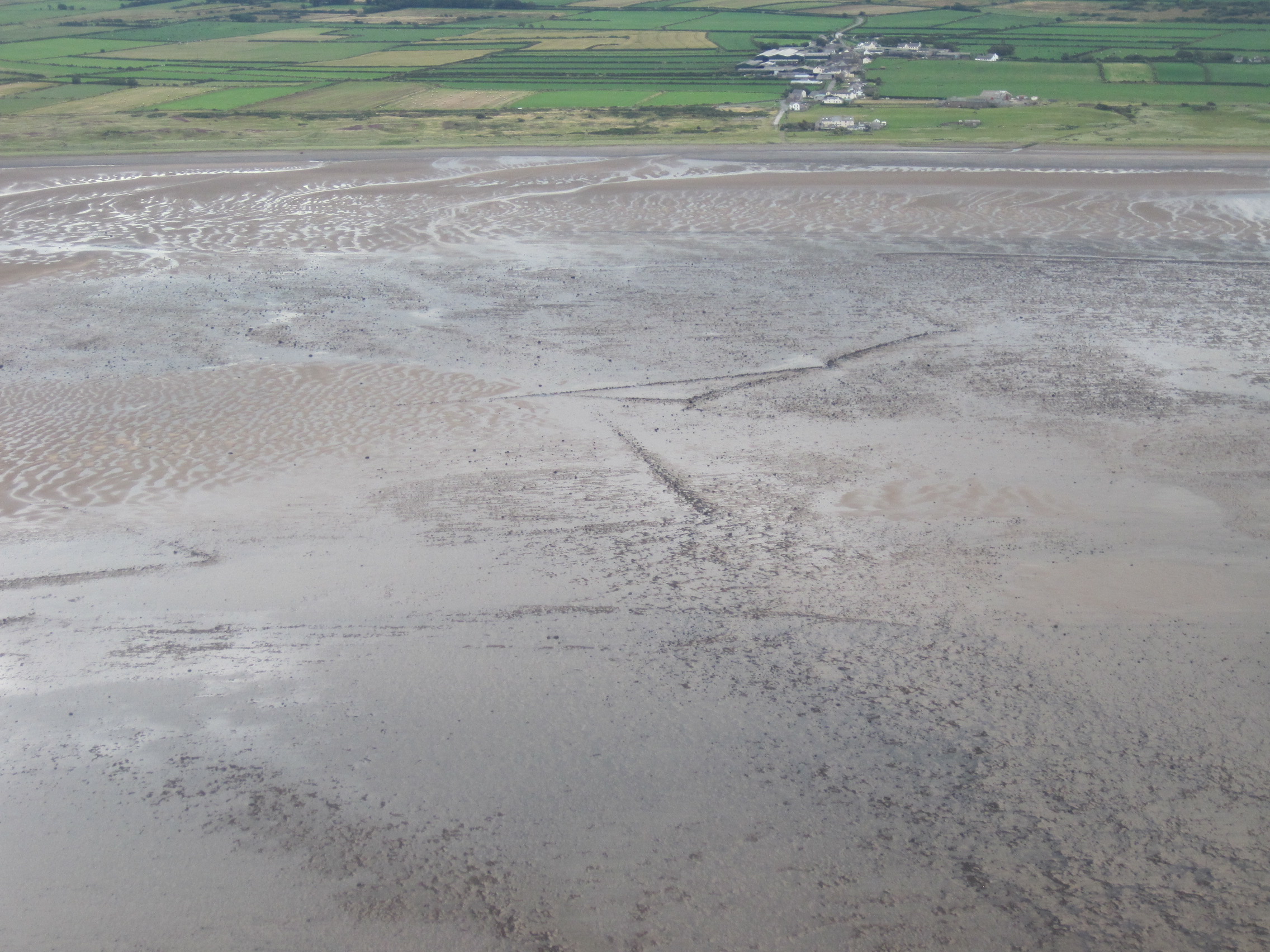
It is a low spring tide, chosen especially because it allows us to scan a vast area of the shore. Above Mawbray Banks, pilot Andrew Lysser turns the gyroplane in a circle, its rotors buzzing and clattering, and I lean out – held only by my seat-belts – and attempt to take photos of the various rows of stones below us; triangles, rectangles, straight lines and right-angles. The lines are spaced across the pebble-stippled shore, some as continuous lines, others interrupted by bands of sand.

Many years ago, while I was walking down the shore to the far-off mussel beds on the Ellison’s Scaurs with marine biologist Dr Jane Lancaster, we had come across parallel lines of boulders between which lay a fairly smooth passage of sand. My friend Ronnie Porter of Allonby, who had told me the names of the great erratic boulders and rocky scaurs on the Allonby shore, had said that these lines were known as ‘the roads’, and had perhaps been cleared to allow boats to be pulled up, or to allow baited lines to be strung across. Jane sent photos to some colleagues who speculated that they might be boundary markers for catching fish or collecting cockles. Later she forwarded two aerial photos to me, not of the parallel ‘roads’ but of a triangular shape with a linear ‘tail’ – and that of course led to further investigation.

So, in March 2014 I took the photos with me for orientation and searched the mid-to-lower shore for the geometrical shapes. As I noted then, “it was a bright morning, but the wind was eye-wateringly cold. The shore has been re-modelled by the January storms so that comforting landmarks are no longer there; sand, that once hid much of the rocky, pebbly mid-shore, has been sluiced away and moulded into domes and hollows. Stones, each formerly a little ecosystem of adherent organisms and weed, are bright with the tatters of mussel-shells and broken barnacles.”

It was thrillingly easy to find the triangle and its tail; many of the stones were greyish and rounded, others were paler granite from the Scottish side; there were several large glacial erratics which seemed to serve as markers. I spent a long time pacing the lines, noting how shallow pools of water remained trapped on the landward side of corners.

And so this led to my gyroplane flight [1], to understand the relationship of the stone shapes to the shore itself and to the longshore drift and line of the ebbing tide. From above I marvel at the straight dark lines, as though the marks have been stippled with a crumbling stick of charcoal upon the smeared brush-strokes of the pebbly scaurs. And now it seems obvious that the corners had been built to trap the ebbing tide, to capture fish as they attempt to follow the falling sea. Perhaps the long lines of stones served like low dams to guide the outflowing water into the traps? These structures were surely built by people who understood the often complex movements of water on the shore, where the tides and currents were influenced not just by the Moon but by the weather and the rainfall, influencing the rivers and becks that flow into the giant estuary that is the Solway Firth.

When Hale [2] was surveying parts of the Scottish coast for fish-traps he found similar stony structures on the shores of the Beauly Firth in North-east Scotland.  Archaeologist and aerial surveyor Jamie Crawford flew over those lines of stones for his BBC Scotland ‘Scotland from the Sky’ [3] series and – when we exchanged photographs – he agreed that the Mawbray lines indeed looked very similar.
But were the fish traps formed only of the stones, or were wooden and net structures perched on top of them?

In their archaeological investigation of fish-trapping methods in the Severn estuary, Chadwick and Catchpole [4] found a wide variety of traps based on stone. In some cases, small piles of stones indicated their use as anchors for wooden poles. Elsewhere, rows of stones apparently anchored lines of post-and-net structures. But they also found densely-packed lines of stones that acted as traps on their own, with a gap at a corner where the trapped fish would have been funnelled into a net or basket. Similarly, traps with nets, and traps made of walls of stone, have been found on the Irish coast. Mark Graham, of Grampus Heritage, has carried out many archaeological studies related to the Cistercians on the Cumbrian Solway coast, and he kindly pointed me to a paper about fish traps on the Irish coast, where – in Strangford Lough in the 12th century – “The concentration and intensification of the stone trap fisheries represents an investment by the Cistercian community underlining the status of the stone trap as a major economic resource. The export of fish to the home of the order (Holm Cultram on the Solway Firth, England) was part of a maritime trade corridor that linked Ireland and Britain that was utilised by Edward I to feed his army in Scotland in 1298.” [5] [6]

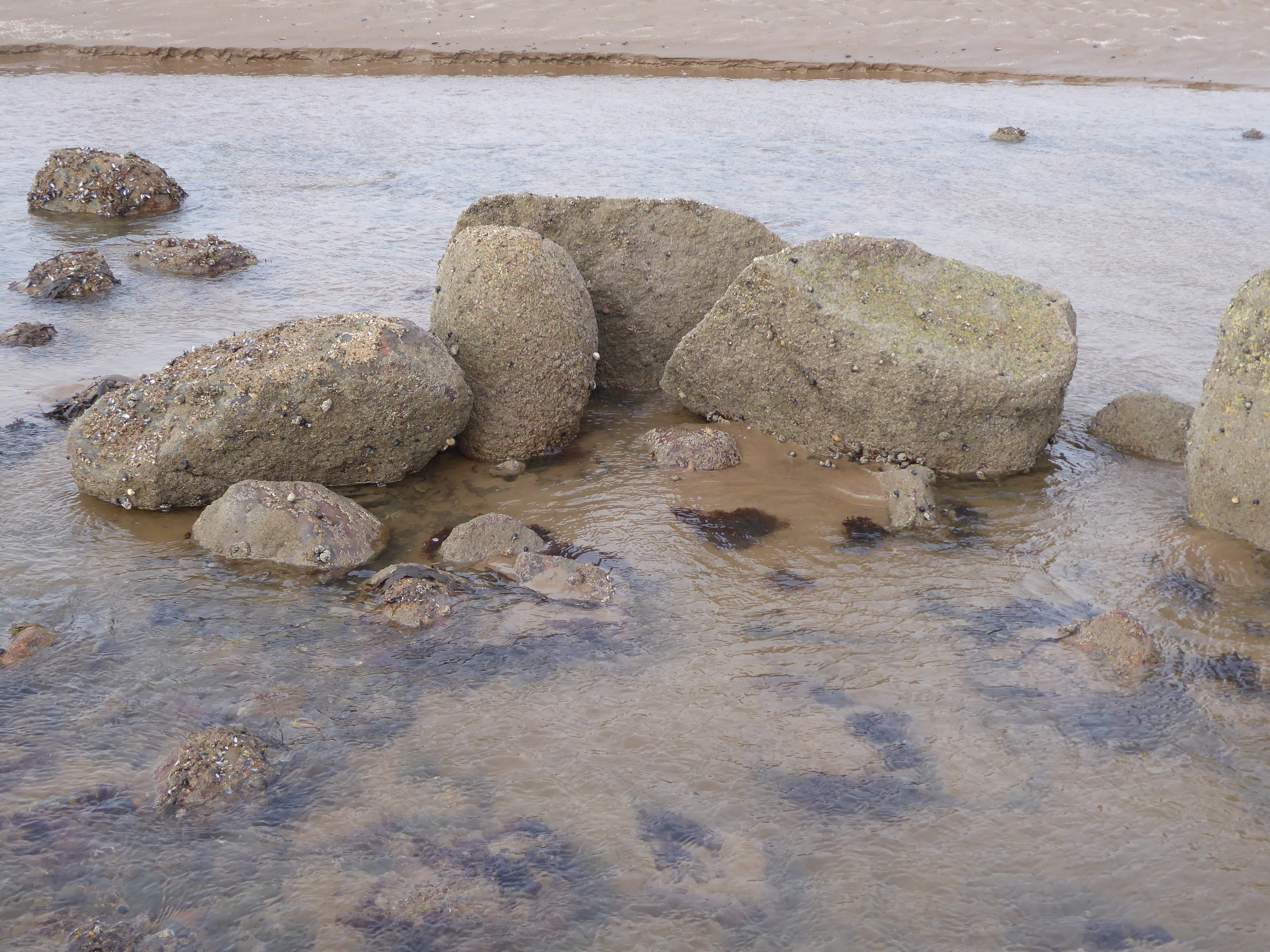
As a suitable local ‘project’ during Lockdown3, in March 2021, I went back to the Mawbray shore with a clearer idea of what to look for. The stones are much less tightly-packed together than in the traps shown in the Severn photos – but the Solway’s tides are strong and regularly shift sediment and rocks on the shores. Stone traps or weirs at Minehead in Somerset are still in use and require frequent rebuilding; see Fig 7 in Historic England report [7] where a man is lifting a very large boulder! There was an area near a corner where the rocks were closely abutted, their smooth sides facing inwards. Could this have been the entrance to a funnel? So far I have seen no signs of any wood – even though wooden structures relating to the saltpans and possibly more than 250 years old are still preserved further down the coast at Crosscanonby [11].
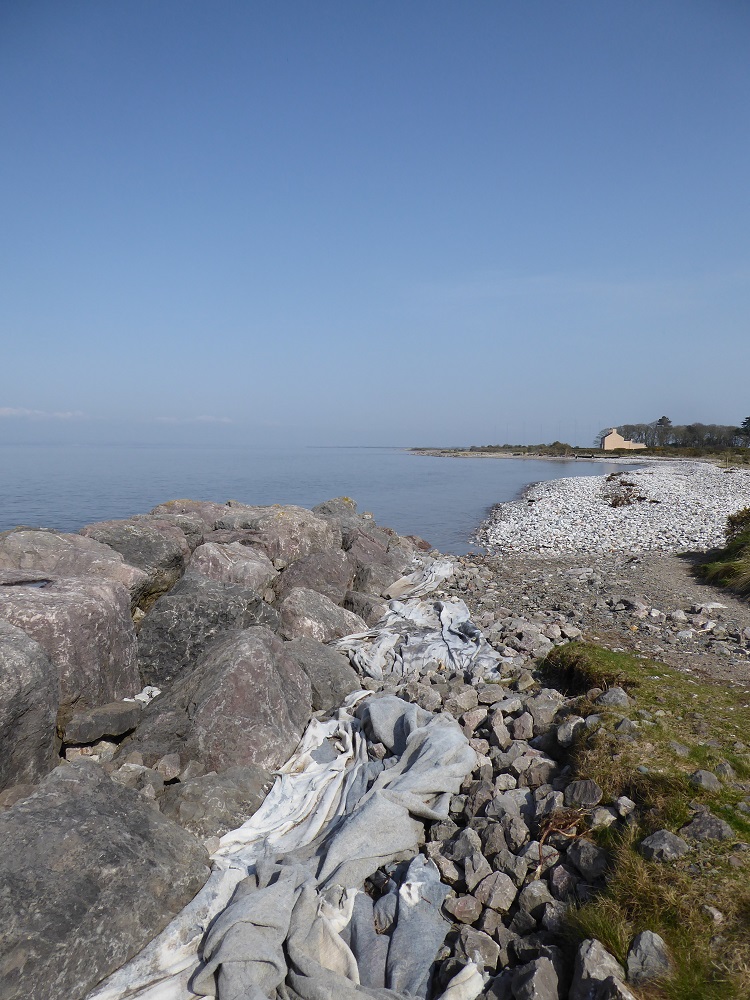
Close-packed corner stones 2021

Given that wooden structures such as stake nets and poke nets – all of which are high maintenance, both in positioning and cleaning [referenced in videos about haaf-netting by Annan Common Good, 8] have been commonly used along the Scottish shores even until recently – it’s quite possible that a simpler form of trap could have been used on the stonier southern side. Fish become trapped and are scooped up with hand-nets: flounder and plaice, dogfish and skate, codling and even bass…

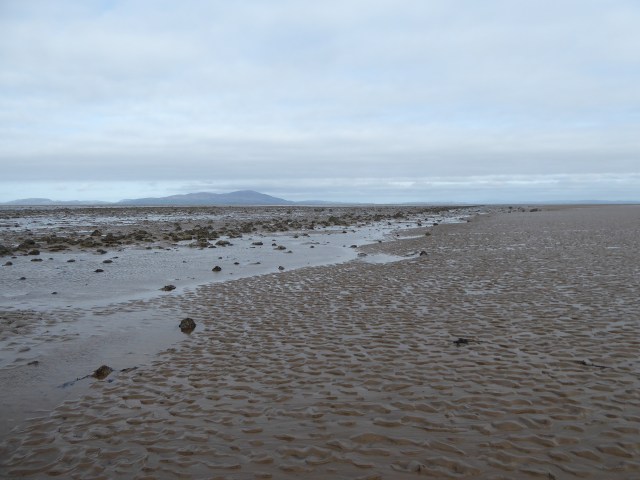
The tide was very low, the water long drained from the middle shore, but several of the shapes were still retaining shallow pools of water. I paced one long straight row and it was nearly 200 metres long. Much further down the shore, I could just pick out more dark lines and telltale glimmers of caught water. Different rows might have led the water into traps, or been built by different fisher families.

My friend and professional photographer James Smith flew his drone over the area in 2018 and again this month and the triangle, part-rectangles, and long leading edges are clearly visible.

When were they built and by whom? There is no trace of the lines on the OS maps for 1844 or 1866, nor on the Admiralty chart for the area of 1875. A brief note in the NW Coastal Zone Rapid Assessment [9] states that “The trap is similar to those recorded at Nethertown and St Bees and is therefore interpreted as medieval in date” [my italics], although there is no obvious evidence for this assumption.

The traps could be older; they could be younger; they could be a mixture of ages, some re-purposed to create others. Their stories seem to have been lost even from oral history: my local enquiries have produced no answers. We will probably never know (see my article [10] on the Impermanence of Colonisation).

My thanks to my industrial archaeologist friend Dr Peter Stanier for tracking down some relevant papers; to Mark Graham for the paper on Irish fish traps and for discussions; and to Don O’Meara, Science Advisor and Inspector of Ancient Monuments in the North-East, Historic England for discussions.

[1] Gyroplane flight https://solwayshorewalker.wordpress.com/2015/09/07/the-design-of-the-solway-an-aerial-perspective-part-2/

[2] AGC Hale (2003) Fish-traps in Scotland: construction, supply, demand and destruction.
RURALIA V conference proceedings, January 2003. Online at http://ruralia2.ff.cuni.cz/wp-content/uploads/2018/04/16 Hale.pdf

[3] Jamie Crawford, Scotland from the Sky https://www.bbc.co.uk/programmes/m0004bnb; unfortunately no longer available on iPlayer; twitter @jdcrawf

[4] AM Chadwick & T Catchpole (2010) Casting the net wide: mapping and dating fish traps through the Severn Estuary Rapid Coastal Zone Assessment. Archaeology in the Severn Estuary, 21, pp47-80 https://www.gloucestershire.gov.uk/media/6097/archaeology_in_the_severn_estuary_2010-62756.pdf

[5] P. Montgomery & W Forsythe (2015) Intertidal fish traps in Ireland. Journal of Marine Archaeology 10, pp117-139 https://www.researchgate.net/publication/281523109_Intertidal_Fish_Traps_from_Ireland_Some_Recent_Discoveries_in_Lough_Swilly_Co_Donegal

[6] See also chapters 4 (Marshes and Merses) and 8 (Sea-food) in Ann Lingard (2020) The Fresh and the Salt https://thefreshandthesalt.co.uk/book/

[7] Historic England (2018) River Fisheries and Coastal Fish Weirs: Introductions to Heritage Assets. Swindon. Historic England. https://historicengland.org.uk/images-books/publications/iha-river-fisheries-coastal-fish-weirs/heag226-river-fisheries-coastal-fish-weirs/ 

[8] Annan Common Good https://www.annan.org.uk/haaf-netting/index.html

[9] Pp323-4. NW Regional Coastal Zone Rapid Assessment, Phase 2 Project; Historic England: https://research.historicengland.org.uk/Report.aspx?i=15775 .

[10] Ann Lingard (2021) The Impermanence of Colonisation, in Dark Mountain 10 https://dark-mountain.net/this-tidal-life/

[11] Saltpans at Crosscanonby https://solwayshorewalker.wordpress.com/2021/03/19/the-saltpans-at-crosscanonby/

Posted in aerial views, archaeology, fishing, stones | Tagged , , , , , , | Comments Off on Fish traps on the Mawbray shore

The saltpans at Crosscanonby

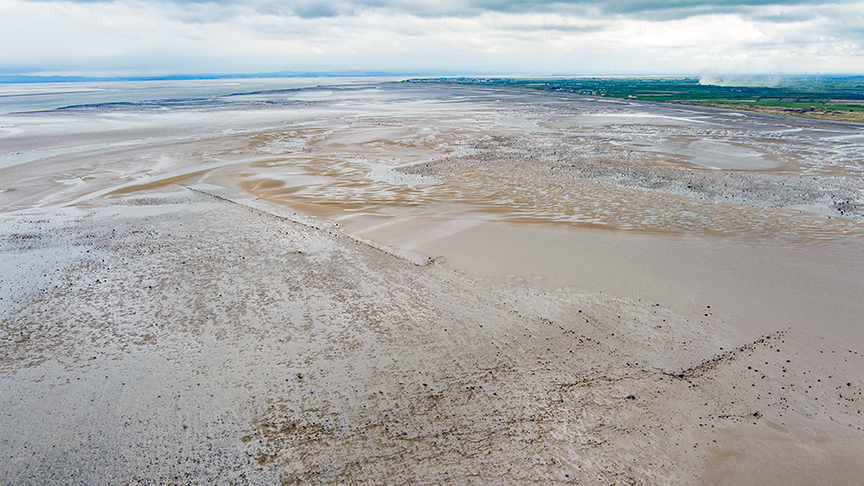
Saltpans and Roman Milefortlet 21 (Photo: Andrew Lysser)

The tides and currents have sorted the sizes and colours of the shingle, and here on the upper shore near Crosscanonby I am walking over shapes that are large – and predominantly red: lumps and discs of the New Red Sandstone characteristic of the St Bees’ formation to the South-West, but also bricks; bricks of all ages, some broken and faded, some still sharp-edged and clearly stamped with their place of origin along the Cumbrian coast. Here too are slim black ovoids of sea-smoothed coal, and speckled white pebbles of granite that originated in the hard rock on the far side of the Firth. Between this shingle-band and the sea the bitter wind is de-focussing the shore with sweeping sheets of sand, and the distant figures of two sea-anglers are blurry as they leave the turning tide and walk companionably across the dark, scattered pebbles of the glacial scaurs, their long rods wavering above their heads like antennae.

To my left the land at the top of the shore rises abruptly to form a low and undistinguished hill – yet Swarthy Hill was enough of a rise for the Romans to use it as vantage point from which to keep an eye on the coast and sea, and to build one of their Milefortlets, Number 21. Head down, eyes streaming, I take my bearings from the hill and the wall of stone-filled gabions that protects the coast below it, and I fight the wind, working my way in a transect down the shore, looking for remains of the seaward works of the salt-pans.

Several years ago I took a flight along this coast in a gyroplane so as to get an aerial view and a better understanding of the inter-relationships of places and structures and the sea. Swarthy Hill and these Crosscanonby Saltpans were our turning point before we headed northwards back to Carlisle, and it was possible to pick out the land-based structures – the main pan, a rough outline of the brine pit and the rough darkly-vegetated ash-heap.

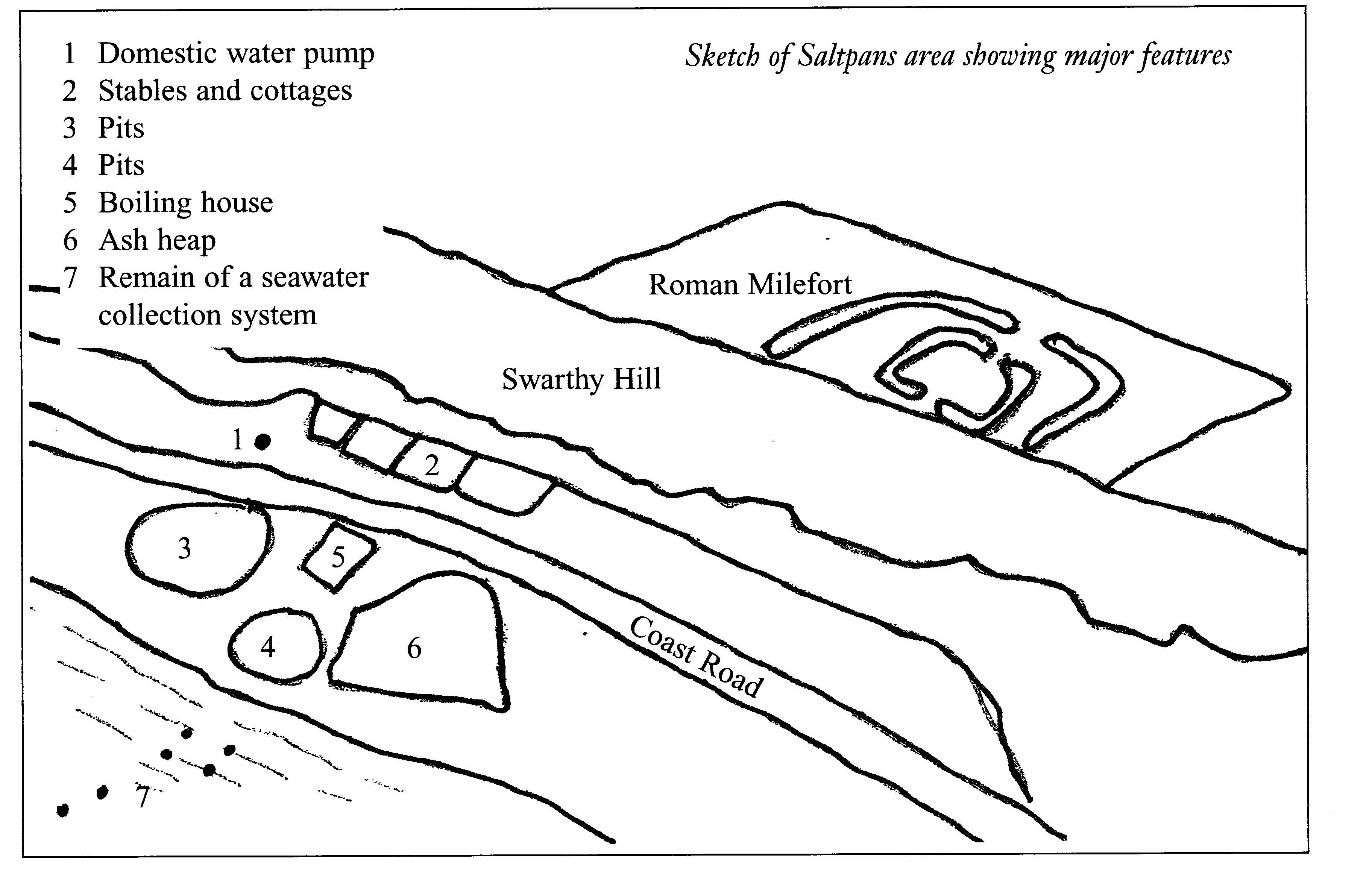
The Saltpans, the property of the Lamplugh family, were constructed in 1634 and were worked until the late 18th century. The works are (or perhaps more accurately were – see below) reckoned to be the best-preserved direct-boiling saltworks in England. A diagram from More Plain People [1] shows outlines of the original saltworks: two circular pits (pans), the remains of a boiling house, an ash heap and, across the road, a row of stables and cottages at the base of Swarthy Hill. In the early 20th century, there was also a caravan site and a small collection of holiday huts but as the Firth nibbled away at its edges, so the caravan site had to be abandoned and the final hut “fell into the sea in 1966”. Continuing erosion and storm-damage, and the construction of a cycle-path, have obliterated even the memory of the dwellings.

From ‘More Plain People’ [2]

There are much older, medieval saltworks developed by the Cistercian monks of Holme Cultram Abbey on the Upper Solway’s saltmarshes, and there are traces of other 18th century works along the coasts [2]. Salt was necessary for preserving meat and fish – non-local salt was used in the Allonby herring fishing industry until even the mid-20th century [2]. Importantly, salt was also a valuable commodity to be traded.

As with any industry it had its own lexicon: sleech (salty sand), kinch (the pit where the sand or salt water was collected); ‘badgers’ – the licensed traders of salt; and place names like Salta and Saltcoates.

At Crosscanonby, though, it seems the salt was obtained by ‘direct boiling’ of seawater – in other words, seawater was pumped up to the works and heated. It’s thought that seawater was pumped to the lower, brine pool for storage and to allow some of the sediment to settle; then pumped into the bigger pan (sometimes referred to as the kinch) and from there into the boiling-house. Here it was collected into large iron pans which (according the the author of the Salt Makers chapter in More Plain People), “probably measured 9ft by 8ft and 6 to 8 inches deep”. The water was then slowly heated and evaporated to concentrate the salt as crystals, and these were collected into wicker baskets or boxes to drain before being transported and sold. The energy – for the pumps and the heating of the pans – was provided by coal, probably from the nearby Dearham coalmine. John Martin [3] notes “There is a large heap of ash showing that only the poorest quality of coal must have been used as it contains such a large amount of fused material and burnt slate.”

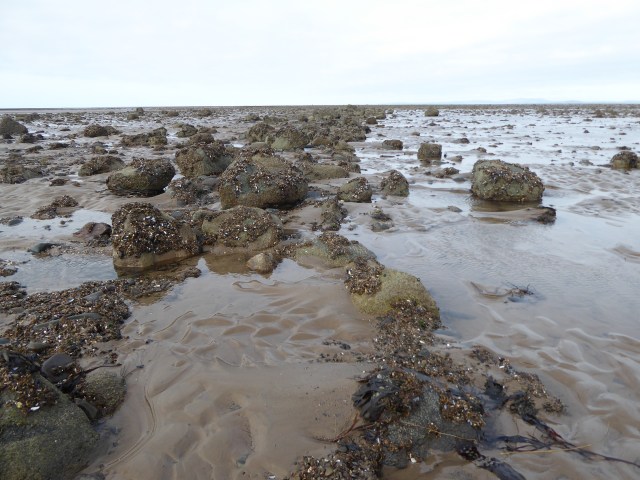
Over the years the tides have partly-hidden, then re-exposed and pummelled the wooden structures on the shore so that unpicking their stories has not been simple. On this day of battering wind, I reach the square box-like structure that pokes up about 50 metres down-shore from the gabions. The remaining timbers are still solid, the sides of the box buttressed by diagonals buried in the sand. I feel the sodden wood, which has been part of the saltpans’ history for more than two hundred years.

What was its function? For a long time it was thought the structure formed the base of a tower: water was pumped up to the top of the tower and then fed by gravity through pipes to the brine pit at the top of the shore. The model in the exhibition room at Holme Cultram Abbey shows just such a process.

Model of saltmaking at Holme Cultram Abbey

But more recently, Andrew Fielding has re-investigated the archaeological remains and, talking in a Coastal Conversations seminar [4], thinks that the ‘box’ structure was nothing to do with a tower, but was actually something like an inspection hatch through which ran a pipe. On opposite sides of the box are semi-circular cut-outs, into which a pipe would have neatly fitted.

Possible ‘Inspection hatch’: note semi-circular cut-outs for pipe (photo taken March 23rd 2021: Ann Lingard)

In October 2019 Fielding was fortunate to find part of a wooden pipe on the shore, in line with the hatch and the brine pit, and he suggests that water was brought in at shore-level and then pumped up to the works. Further down the shore, there are still sections of four posts sticking up from the sand, and perhaps these marked the original water-intake or another hatch.

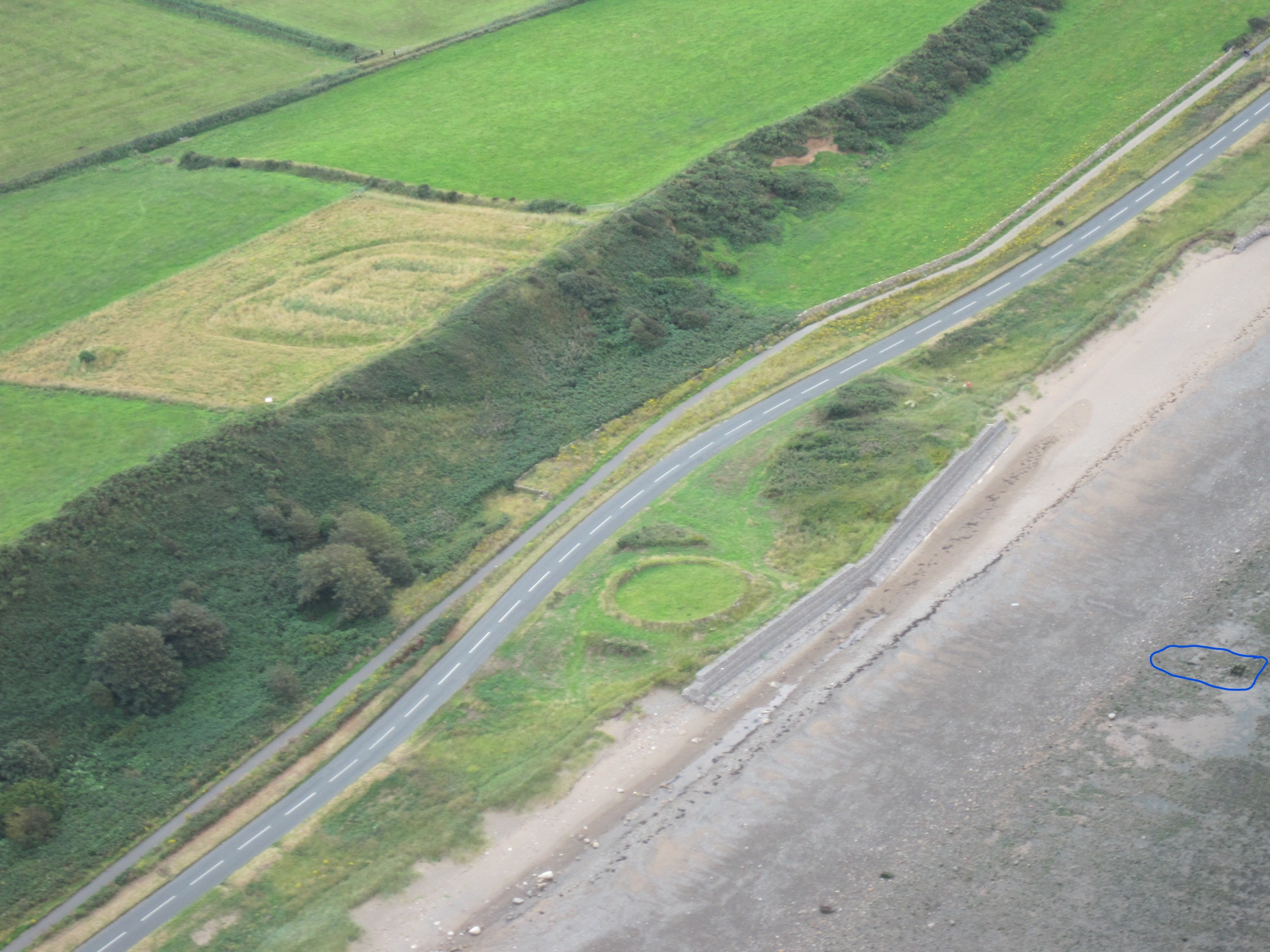
I found the hatch and I found the posts; kneeling down in the wet sand I could see that the posts, the hatch and the brine pit formed a straight line. Circling, (but often distracted by the patterns of the blowing sand and the colours of the shingle), I hunted for traces of the pipe, wanting to see its texture and diameter, and more easily visualise the role it played; but it had gone, either buried again or broken. Later, however, when sorting through my related photos, I noticed a thin dark line on the shore between the hatch and the pans (circled in blue on the photo on the right): surely part of the pipe, caught in an aerial view in 2015. Unknowingly, I had seen it – an opportunity missed.

And then, returning to the shore a month later – I found the pipe! It had been partly uncovered again and at first looked merely like a balk of timber, but I scrabbled away the pebbles and sand and found the hollow centre. This tree might have been cut down more than 250 years ago – and then a hole was augured lengthways through the trunk to make a pipe, that would flex and would not rust. This seems like a very special piece of timber.

The wooden pipe

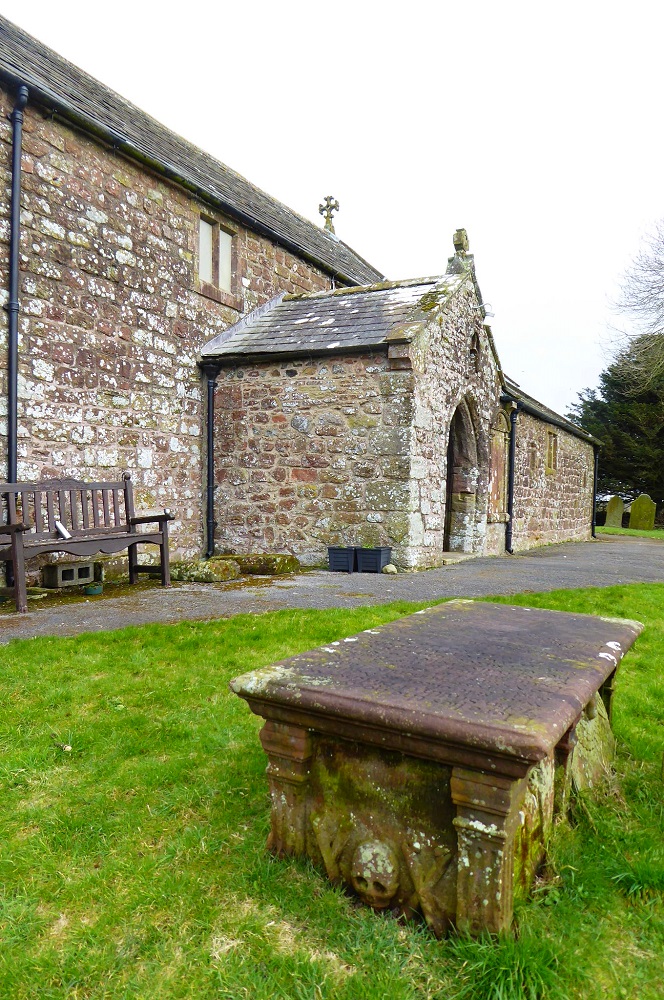
Salt was taxed, and tax requires tax inspectors or specialised Salt Officers. In the churchyard of St John’s at Crosscanonby and placed prominently near the church’s door, is a large lichen-speckled, red sandstone tomb:

“Here lies the body of John Smith of Birkby who was salt oficer at Netherhall and Cross cannonby Pans for 29 years, He was a good Neighbour, faithfull to his Friend and cheerfully relieved y poor. He departed this Life .. day of March ….Anno Dom 1730. Aged 64 years.” 

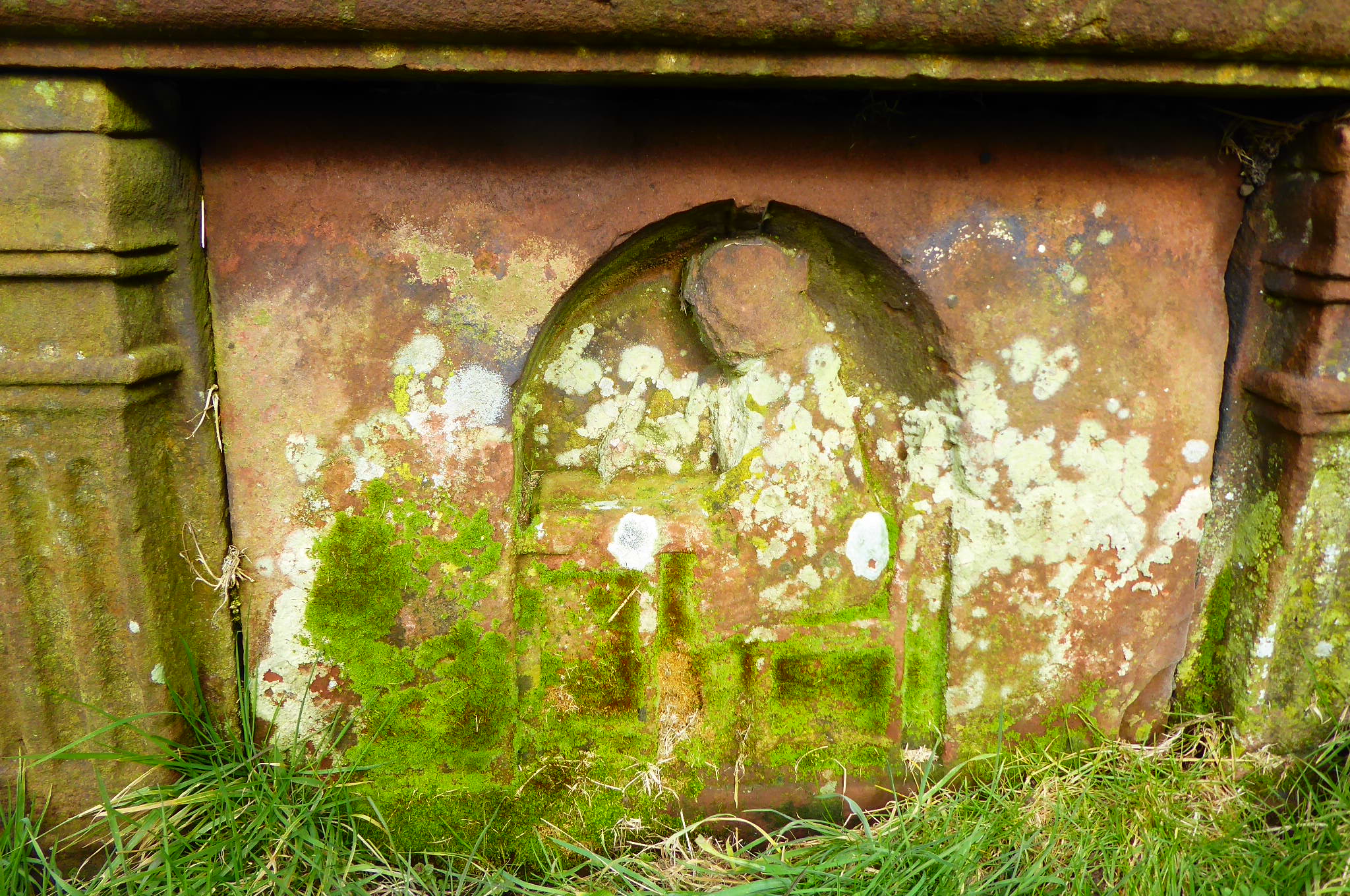
Around the sides of the tomb are relief depictions of skulls, bones, and cautionary words. Unusually, although it is now fuzzy with moss and eroded edges, there is also an engraving of John Smith in side view, seated at a desk, quill pen in hand: doubtless checking the tax returns for the Lamplughs’ salt manufactory.

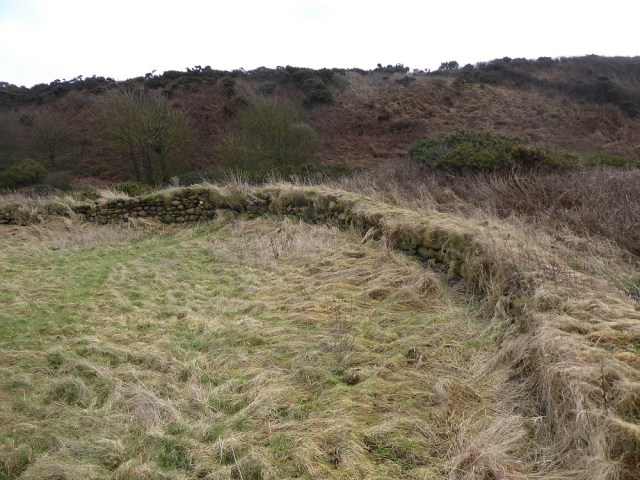
For many years, volunteer work-parties for the Solway Coast AONB tidied the Crosscanonby saltworks, strimming and cutting back brambles and rank grasses so that it was still possible to investigate and admire the stone walls of both pans. But storm damage and erosion, cuts in funding and the pandemic have meant that the works are no longer so closely cared for; the overall arrangement is becoming difficult to decipher.

The floor of the larger saltpan, with its walls of cobbles and blocks of sandstone, was lumpy with rich brown molehills on the day I visited. I wonder if the soil there has a high concentration of salt and, if so, do the earthworms taste different?

[1] More Plain People, Holme St Cuthbert History Group, 2007 p92

[2] For more on Solway saltworks see Chapter 8, Sea-food in The Fresh and the Salt. The Story of the Solway (Birlinn Books 2020)

[3] John Martin, Salt, 1988 on the website Industrial History of Cumbria,

[4] Andrew Fielding 2020. Coastal Conversations, Salt production along the Solway Firth, organised by the Solway Firth Partnership and the Solway Coast AONB. The relevant section on Crosscanonby is between 13-17 minutes in the video.

Posted in aerial views, Allonby, coastal heritage, salt | Tagged , , , | Comments Off on The saltpans at Crosscanonby

Ice

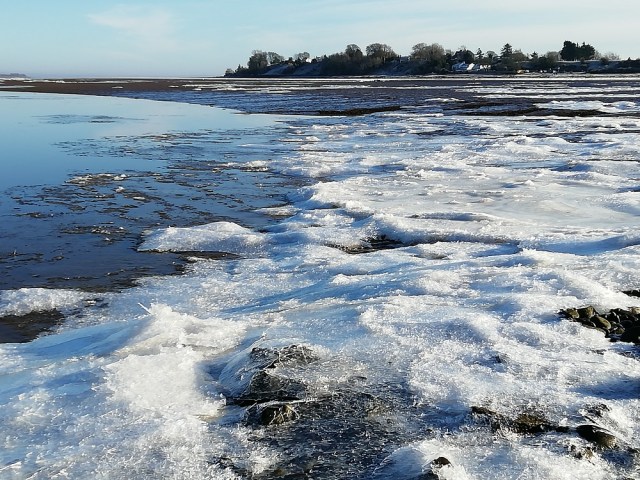
In January and February this year, people living at Bowness and along the Upper Solway started posting photos of tidelines – not of drifts of hornwrack, kelp and driftwood, but of ice and snow. As the freezing weather continued, so the ice built up over the shores, and was then lifted off during the high spring tides and stormy seas and re-deposited in piles.

To walk across the frozen shore was thrilling and hazardous – the shapes and the colours a source of wonder; the channels in the mud outlined by glistening white curves; folded and crumpled sheets, stippled with white and grey; uneven piles of opaque white sponge-y floes.

Artist Alison Critchlow [1] was inspired not only by the visual aspects, but also by the ‘crumpy’ (her word) sound of walking over it, and the crackling of shards as the tide pushed them across the shingle. She told me, “I want to draw the sensation and sound of those walks and so I’m trying out new ways of making marks. I thought it would be interesting to replicate the way I was experiencing it … So in the drawings I am thinking about the transparency, the thin plates, their movement floating in on the tide and the sound of walking out across and through it. Also that marvellous bubbling effect that happens sometimes and the wonderful sound of the incoming tide dissolving the frozen tideline.”

For me, the mutability and impermanence of the ice is another expression of the mutability of the Solway’s shores.

Alison, too, finds inspiration in “witnessing a movement held still, a fluid made solid. The colours, fluid/solid shapes and the transparent nature of it are visually fascinating. I also want to draw its fragility. The ice forming and building up is mesmerising, not least because its formation can be seen in every crystal… It is breathtakingly beautiful and it seems to me makes visible a fundamental process in the shaping and reshaping of our planet.” She says, “Drawing this process feels important. Replicating the icy layers, [their] build-up and removal, [using] floating ink, tearing, printing, marbling, dying, spraying, sanding, adding, drawing over and under, I have even painted onto bits of ice and let them thaw onto the paper.”

There have, of course, been periods of intense cold before. On Boxing Day 2010 surprisingly thick floes lay tumbled along the tideline. I wish now that I’d paid more attention to the size, structure and longevity of those floes; and that I’d been more curious as to their origin in relation to the Solway’s margins. So often, it requires hindsight to raise the important questions: the answers might have told me more about the origin of the disaster in 1881.

In January 1881 water froze along the shores and rivers, and when the next high spring tides arrived, the sheets of ice lifted off and pushed westwards by the ebb; cracking and breaking into floes, some reportedly six feet thick, many of which were swirled against the cast-iron pillars of the railway viaduct that crossed the Solway between Bowness and Annan. The damage was immense, and the events of those several days – the sights and sounds – are described elsewhere [3]. A presumed victim was the ‘Hare in a fix’– a hare which was trapped on a floe that was being swept out on the tide (raising interesting questions about the population of hares on the Solway’s margins in the late 19th century, and their intelligence – but perhaps the hare was brighter than we think? See [4]).

As for this year’s floes – where did they form? With travel restrictions and extremely icy roads, it wasn’t possible to tour around to look. Roger Golding’s photos from Bowness show a covering of ice and remnants of snow on the upper intertidal flats: here the thin layer of freshwater run-off from the saltmarsh perhaps combined with spray from the saline waters of the Firth would have formed an ever-thickening layer.

Seawater freezes when its temperature drops to -1.8 degrees Celsius. In an estuary the salt concentration varies with the weather and the state of the tide; the concentration of salts in the sea is normally 35 parts per thousand, but as it mixes with fresh water from rain and the rivers and becks this alters; fresh water, being less dense, can ‘float’ on top of the salt water, depending on the turbulence, and freezes at a higher temperature. But tasting the ice to try to determine its origin wouldn’t help: salts are excluded from the crystalline structure formed by the linking of the water molecules – so the ice would be (almost) suitable for a G&T. At the Poles, excluded salts may form syrupy ‘brine channels’ between the plates of ice, but melted sea-ice does not make a good ‘British’ cup of tea, and Franklin, Scott and other polar explorers relied on freshwater ice from glaciers (or snow).

The Solway’s ice does not have the clear brilliance of a Fox’s glacier mint – it is opaque, and sometimes discoloured with incorporated sediment. There are rough crystals like those in the Slush Puppies that churn sickeningly inside glass cylinders in seaside cafés; there are solid white layers, and weak bubbled strata. The more I look at it and consider it, so I realise the greater is my ignorance: the formation of these ice-floes and thin sheets is a research project in itself: for materials scientists, chemists, rheologists – and poets, artists and writers too.

The growing ice-sheet quite dramatically reduces the area where wading birds can feed, so that they have to fly and forage further afield, burning extra calories in the process: but they are at least homeothermic (endothermic or ‘warm-blooded’) like mammals. The recent pictures from Texas, where turtles stunned by the unusual freezing weather were being brought indoors to warm up, are a reminder that ‘cold-blooded’ animals like amphibia and reptiles are very reliant on the ambient temperature and their own behaviour (such as basking) to survive. This is even more true of the trillions of invertebrate animals that live on and within the shores and saltmarshes, the ‘invertebrates on the edges’ that are part of the complex and inter-connected web of life, of prey and predator [5 and 6]. Some are known to have anti-freeze molecules in their blood, but others are not so fortunate and if unprotected within burrows, or under stones or algae, may well die.

In 1860, naturalist Philip Henry Gosse wrote: “After the intense and protracted frost of February 1855 the shores of South Devon were strewn with dead and dying Anemones … which rolled helplessly on the beach” [7]. There are more recent reports of dying, stranded starfish on the Scottish east coast, paralysed and killed by the freezing weather at the very low Spring tides, and last month piles of burrowing bivalve Molluscs, razorfish mixed with some large clams, were washed up at Mossyard Bay near Gatehouse of Fleet on the Galloway coast, the razorfish shells still glossy, their pale muscular feet and siphons extended in death: cause of death very likely the low sea temperatures, and especially the freezing of the sands and mud during low Spring tides.

(I am very grateful to the Solway Firth Partnership for forwarding these photos, which were taken by Peter Garson, to whom all credit is due.)

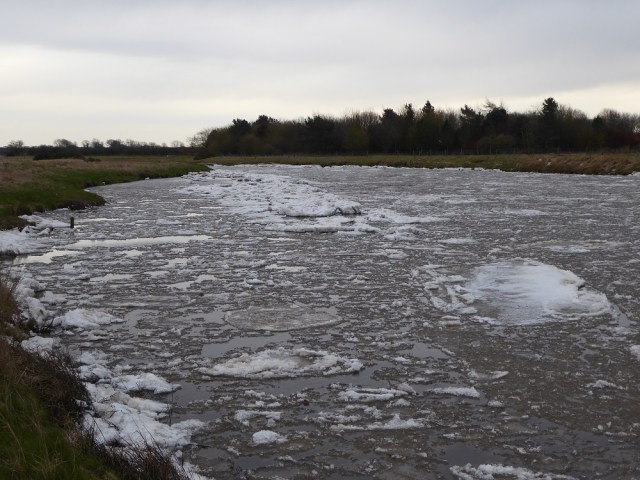
In early February I drove towards Bowness, hoping to see the floes on the shore (I missed them, they’d already been shifted by the tide) but the River Wampool – where four months earlier I had watched and heard a tidal bore [8]  – was choked with ice that was moving sluggishly downstream with the river and the outgoing tide; a friend who lives near the mouth of the river at Moricambe Bay reported that the ice had come in from the bay ‘on every tide’.

Out on the Wampool, thin plates of ice were piled against the bridge supports, and raised high along the banks; the scene was eerie, empty of life and sound, as if the moving waters had been silenced by their floating blanket.

Solway ice: painting by Alison Critchlow

My thanks to Alison Critchlow and Roger Golding for their willingness to let me use their photos and for talking about the winter’s ice. I’m especially grateful to Alison for sharing her sketches and paintings – do look at her website.

[1] Alison Critchlow’s website

[2] Roger Golding’s website

[3] The Solway Junction Railway and the Solway viaduct website

[4] What happened to the ‘Hare in a Fix’ ?

[5] Invertebrates on the Edges, Chapter 1 in The Fresh and the Salt (Birlinn Books, 2020); see also the related website

[6] Life in the sand: an essay in The Clearing

[7] PH Gosse (1860) Actinologia Britannica: a history of the British sea-anemones and corals. London, Van Voorst, the Dahlia Wartlet anemone p214;

[8] The Solway tidal bore

Posted in ice | Tagged , , , , | Comments Off on Ice

Climbing on the Solway’s sea-cliffs: guest post by Judith Brown and Dog Holden

Godfrey ‘Dog’ Holden and Judith Brown have been friends for years, climbing together extensively during the 1990s and early 2000s. Here they look back on discovering those early delights of climbing on the Solway sea-cliffs in Dumfries & Galloway.

Cliffs above Rascarrel (photo: Ann Lingard)

On a clear, bright day of the kind that does occasionally occur in Cumbria, despite rumours to the contrary, the sea-cliffs of the Scottish Solway coast caught both the sun and the eye of my great pal and climbing partner, Dog Holden, as he made his daily commute to work.

Driving north along the roads of the English side of the Firth, the view across the estuary is particularly fine, the low morning sun often illuminating the cliffs and bathing the hills of the distant hinterland in a soft, hazy light.

“I thought surely the big sea-cliffs I could see across the Solway Firth must be great for climbing,” Dog explained. “But when I asked climbing friends from Cumbria they knew nothing whatsoever about them – and that just whetted my appetite to find out more.”

Back in the 1980s the hills and sea-cliffs of Dumfries and Galloway were not particularly well known within the climbing community, and – in those pre-google days – information was hard to come by. Moreover, despite being so clearly visible from the English side, it was a long drive around to get there, especially before the A35 was ‘improved’.

“On the first exploratory trip, I had to follow my nose as well as the map to find the cliff that had especially impressed me as having good climbing potential. Well, it was certainly quite big and steep, but it mainly consisted of barely consolidated sands. The name of the area is Sandyhills, which I suppose should have been some sort of clue.”

Although disappointing from a climbing point of view, the quiet beauty of the area made a deep impression, inviting future visits and further investigation. This revealed that there were indeed good cliffs for climbing further West of Dumfries, close to Kirkcudbright.

“At an early opportunity we made the trip to Borgue, close to Gatehouse of Fleet and from there to a good although rather busy campsite at Brighouse Bay,” Dog says. “I was with my late wife, Anne, who was not a climber, and our beloved Labrador, Harter, who was a great hill walker, but not built for rock-climbing, so this trip was purely investigative. We had only the sketchiest of information but by following the coastline east we eventually found our way to a complex area of sea-cliffs which clearly offered good climbing potential. These were below the hill named Meikle Ross with fine views over the island of Little Ross and the beautiful seascape to the sweep of the Cumbrian coast. One could even make out the steep headland of St. Bees Head, south of Whitehaven, and the Isle of Man on a clear day.”

In fact it turned out that quite a lot of climbing had been done in the Meikle Ross area. Furthermore there were several areas of coastal cliff further west – as far as Burrow Head on the southern tip of the so-called Isle of Whithorn and up the west coast around Portpatrick.

Reconnaissance done, it was time to tackle the actual climbing. Over a long weekend sometime in the early 1990s, Dog and I, armed with a few vague route details on some bits of paper, embarked upon our first experience of climbing on the Solway sea-cliffs. We chose Meikle Ross, on the coast to the West of Kirkcudbright, as the place to give it our first shot.

Climbing on sea-cliffs has complications and considerations over and above those involved in climbing on inland crags. Many host large colonies of sea-birds during the nesting season and so must not be climbed during the spring and early summer in order to avoid disturbing the birds during this critical period. Some cliffs can only be accessed at low tide, making timing critical.

But the main challenge tends to be actually locating the crag. Unlike an inland crag, sea-cliffs are generally invisible to the approaching climber, except in the unlikely event of arriving by boat. The bases of most sea-cliffs are gained either by a death-defying scramble or, more usually, by means of an abseil. This adds a degree of tension to sea-cliff climbing. Once down, you are committed to making a successful ascent of the route. The only other way back up would be to climb up the abseil rope – assuming you have left it in place and not pulled it down after you to use as your climbing rope. Although such an escape is possible in extremis, it involves both technical skill and a deal of ‘faff’ and is considerably harder than they make it look in the movies.

Limehouse Blues cliff, with rickety fence for an abseil belay (photo: Dog Holden)

To further add to the excitement, the tops of the Solway sea-cliffs tend to consist of very steep grass growing in about an inch of top-soil, devoid of stout, well-rooted trees on which to secure the abseil rope. We were forced to resort to abseiling down the cliffs from a rather rickety fence that served to stop the sheep from straying onto the steep grass. We used an extra rope for this exercise, given the height of the cliff and the distance up the slope to the fence-line. There is a handy mid-height ledge system running across the main cliff, the so-called “Limehouse Blues” area which makes most of the routes accessible even at high tide.

The rock hereabouts and on much of the coast west of Kirkcudbright is a “greywacke” sandstone. This tends to be brittle and so needs careful handling. However, winter storms often clear the cliffs, or at least the lower sections, of loose rock so there are not too many unstable blocks and few rubble-strewn ledges.  (An exception is the crag at Burrow Head which is pretty unstable).

Given the general lack of climbing ‘traffic’ on these crags back then the cliffs carried a generous covering of flora, including a tough short sea-grass and cushions of attractive sea-pinks. On that first day’s climbing I found the thrift flowers made a cheering contrast to the daunting steepness of the rock. For some inexplicable reason, the pull of gravity always feels stronger when climbing above the sea. So, although the actual climbing routes were generally clean of vegetation, I was rather over-sensitive to the occasional feel of brittle, grey-green lichen crumbling beneath my feet. However, I was only the ‘second’, Dog having led the route with his usual calm aplomb. I was climbing with the full security of the rope above me – though with the suspicion that my leader was probably anchored at the top to nothing stronger than a fence-post.

Such minor inconveniences aside, we found the climbing at Meikle Ross to be excellent with some striking and pleasant routes. Lichen notwithstanding, the atmosphere was not as intimidating as so many sea-cliffs are.  Everybody we went on to introduce to the area very much enjoyed the quality of the climbing and the “feel” of the setting.

This first trip began our fairly extensive exploration of the whole of southern Galloway, including the Isle of Whithorn and crags along the west coast. One of the latter, at Laggantulloch Head, south of Portpatrick, is particularly remote and formed of excellent granite, rather than the more typical greywacke. Granite is the predominant rock of the Galloway inland crags, including the dramatically named Dungeon of Buchan in the remote Silver Flow area at the heart of the Galloway Forest Park – spectacular climbing accessible by a very long walk/cycle rather than a short, scary abseil.

Much easier of access, especially from Cumbria is the delightfully situated Clifton Crag, not on the coast but with the sea close by and with excellent views across the Firth.

What was particularly enjoyable about the coastal climbing 20-30 years ago was both the aspect and seclusion. Although possibly busier today, now that there is a good climbing guide to the area, it is doubtful whether it gets too much traffic. This is partly due to its remoteness from the main mountain areas and centres of population but also due to the general seriousness. Sea-cliffs are not climbing walls. Climbing them always carries the frisson of an uncertain outcome, which is the hallmark of true adventure. Like the sea itself, they are mutable, constantly changing. Although this is true of all crags, the pace of change on sea-cliffs is intensified through the working of waves and wind, of salt and sand. For example, although some of the crags now have metal abseil posts in place, those posts themselves corrode quickly in the salt sea air, becoming potentially more dangerous than the rickety fence-posts we used.

Judith Brown at the top of Meikle Ross (photo: Dog Holden)

All aspects of sea-cliff climbing require judgment and self-sufficiency to a high degree. That is part of the satisfaction of climbing on these crags, a satisfaction fully realised by the surroundings. During the climb one is focused on the rock, the lichen, the sea-pinks, maybe glancing up to a sky that is – hopefully – blue and cloud-free; occasionally looking down to check the placement of your feet but letting your eye be caught by the play of light on water and seaweed and on the bands of golden sandstone. You hope that your movements are in tune with the beauty and the solitude.

At the top, climbing turns to a graceless scrabble up the lethally steep grass and it is with some relief that you reach the doubtful security of whatever metal or wooden post your leader is tied to. But then you move to safer ground, among the grazing sheep, where you can relax and enjoy the view of the Cumbrian coastline and the northern fells, looking splendid across the Solway Firth.

Looking across to the Lakeland fells (photo: Ann Lingard)

For more information about climbing in Galloway see the relevant chapter in the Scottish Mountaineering Guidebook “Lowland Outcrops” – the section is written by Stephen Reid of Needlesports in Keswick, who has an unrivalled knowledge of the Galloway hills and crags.

John Biggar also has a good website with many photos and detailed information about the areas described here and many more besides.

There are several free, beautifully-illustrated booklets about the Dumfries and Galloway coast and its rocks and placenames, available as downloads from the Solway Coastwise project.

Judith Brown’s book ‘Happy Climbing Tells No Tales’ (Open Mountain, 2007) was shortlisted for the Boardman Tasker Award for Mountaineering Literature in 2007 (copies are still available at Needlesports in Keswick).

Posted in Guest Posts | Tagged , , | Comments Off on Climbing on the Solway’s sea-cliffs: guest post by Judith Brown and Dog Holden

‘Cold cases’: land-scape puzzles on the Solway shore

“Mr Cash went to Beckfoot … the submerged forest was not visible and I regret to say the residents he inquired from had not even heard of it”. So wrote Brian Blake in his 1955 book The Solway Firth, which is illustrated by black-and-white photographs taken by J. Allen Cash. Fortunately, Mr Blake himself did find the forest later, and was “delighted with [his] luck” when he walked South from Silloth.

I first went to look for the forest back in 2004, and regularly found the stumps and roots of the ancient trees in roughly the same area of the shore near Beckfoot for many years. But it was not just the trees that made this forest area special: as I wrote back in 2004,

“the patches of black are like shadows along the sharp edges of channels in the sand. Walk down towards them, and the shadows resolve themselves into banks of peat. Poke them with your toe and feel how dense and sodden they are, smoothed by the friction of waves and sand. Walk on them and feel their sponginess. And gradually you will become aware that the dark organic mass is not only peat, but supports here a horizontal tree-trunk, or there a stump that radiates roots. Wander around and you will find trunks and branches, single and entangled, embedded in the peat and sand; and erect stumps, 20-30 cms high, their tops flattened as though cut by a chainsaw. The wood is still fibrous, soft and dark; you can crumble it and tease it apart, as though it were any rotting log in a woodland. But the difference is that this woodland thrived about 8000 years ago.”

The trees had died, their roots waterlogged as by a beaver-dam, their bodies gradually preserved as the sphagnum mosses grew ever upwards in the wet climate of the time, and compressed into acidic, anaerobic peat.

The forest and peat could be seen for more than a decade, but a few years ago during a sequence of winter storms, the peat was thrashed and fragmented by the waves, the wet and fragile wood vanished, and nothing remained visible of the woodland that had stretched across that earlier Solway Plain. But that patch had been just a small area: underneath the new and ever-changing profile of the mid-shore near Beckfoot – where shingle had been swept away, rocky scaurs (relics of glacial deposits) had been exposed, and sand had been piled in sessile waves and tiny ripples – the horizon containing the forest and peat and clay would still be present. It was a comfort to know that this evidence of the formation and changing development of the turbulent Solway Firth was still there – but hidden, from sight and perhaps from memory.

Vanished forest: shingle, sand-waves and a distant rocky scaur

January 2020

So, in January this year, after weeks of strong north-westerly winds and storm surges and Spring tides, I went down to Beckfoot again – wondering, hoping, that the secret of the submerged trees might once more have been revealed. The shore looked so different from the previous autumn that I was failing to find my usual ‘markers’. The cloud was low and the air was grey, and across the Firth Scotland had (very sensibly) taken leave of the Union and was no longer to be seen. A mixed flock of gulls sat and preened near the water, keeping a silent watch on my movements, and I apologised as thirty or more oystercatchers failed to hold their nerve and rose up in a flock, trilling with indignation.

I zig-zagged between the the tidelines, hoping to find ‘treasures’ like goose barnacles attached to flotsam, but the long mounds of tangled wrack and twigs were too tightly woven together by the waves. Dark shapes ahead were merely small boulders and rounded pebbles of a newly-exposed scaur.

Looking up to watch a curlew come gliding over the dunes, its outspread wings motionless as it let itself be carried by the wind towards the distant water, I saw that, higher up the shore towards the battered dune faces, there were smooth dark plates of … something. Not peat, as I had expected, but sheets of heart-stoppingly slippery, grey clay: the same type of clay that in the earlier exposures had lain beneath the peat layer that had preserved the forest. Had the peat been broken up and washed away, or was this one of those places where salt- or fresh-water had temporarily inundated the peat bog? Perhaps there had been a meeting of sea and river water, where the suspended sediment had flocculated and fallen – or perhaps the sea had broken through a barrier and washed out clay that had been deposited at the bottom of a still, small lake?

The clay’s surface was speckled with embedded fragments of wood – and there was a tree-stump with radiating roots; there were some fallen branches or perhaps more roots, half-buried in the clay. And more stumps, sticking up defiantly despite their age.

Intriguingly, the surface of the clay was pock-marked with tiny holes, the entrances to burrows. I broke off a piece and found the burrows had been filled in with yellowish sand.

November 2020

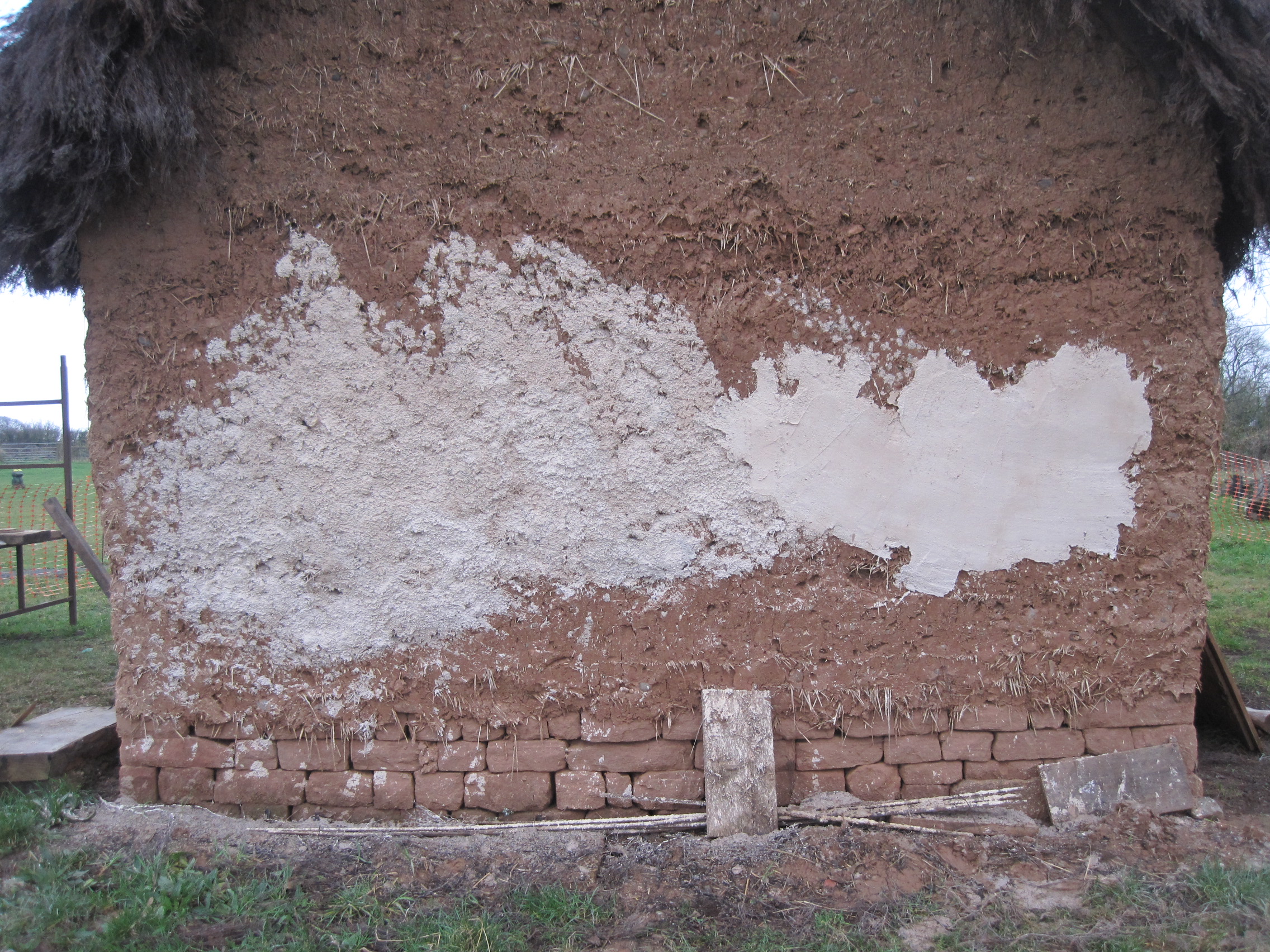
So much has happened – and not happened – during this year. One dramatic event happened on the Allonby shore, a short distance West of Beckfoot, during the high spring tides and storms of November. This wild weather broke open the dunes at Allonby to reveal a band of glistening clay at least one metre thick; the clay’s surface was patterned with bright brown deposits of iron salts, and black fragments of embedded vegetation decorated the smooth horizontal plates. (On a later walk I saw similar torn and decaying fragments of seaweed and twigs decorating the edge of a shallow pool, washed in and then dropped by the leaving tide.)
At the north end of this band of clay, a dark headland of peat jutted onto the shore. It was speckled with sand, and twigs and pieces of small branches were embedded – but these seemed more like collected flotsam rather than the remains of growing trees. A piece of what looked like black paper projected from deep within a broken edge and, picking at it, I was puzzled to find that it was a partly-exposed ‘mermaid’s purse’, the empty egg-case of a thornback ray. Nearby, the surface of one area of peat was coated in a hard crust of red-stained sand.

It’s like a detective story, a very cold case, with a complicated time-line. From the time the glaciers melted, about 10,000 years ago, until the present day, the levels of the sea – the Firth – relative to the land, have changed many times. You can see it most obviously where lines of pebbles sandwiched by layers of sand are exposed in the dunes – these are ‘raised beaches’ that show the different levels of the shore over time.

The height of each incursion doesn’t mark a simple water-line along the shore, for there would have been hollows and sandbanks, that either kept out or trapped the water: along the shore today you cross undulating sand-waves, find your way interrupted by water-filled channels, and discover that the former course of a beck across the shore has been changed by newly-banked shingle. Marine débris sinks in the still water, layering its patterns onto the settled sediment.

Sandwaves

The patterns of newly-exposed clay and peat at Allonby suggest this might have been a soggy area like the lagg fen that circumscribes a bog, where trees find it hard to grow; after the sea-level rose and the fen was inundated, the hollow trapped water-borne detritus; sometimes sand was deposited on top of the peat; a ray’s egg-case was caught in a crack and later buried. Later, when the peat and clay were higher and drier, fresh water seeped down through the peat and onto the clay, carrying red iron salts that accumulated in holes and hollows. And here at Allonby these colourful ferric salts accentuate another puzzle: tubes with hard, ochreous-red walls projecting upwards from the clay.

Tubes and burrows

Peat and clay are not dead and sterile environments – all manner of creatures, from invertebrates to single-celled bacteria and micro-algae – are adapted to make these substrata their homes.

Piddock holes in the peat

Piddocks are extraordinary: these bivalve molluscs (think of them as much fancier relatives of mussels) normally live, protected, inside rock below low-tide level. The animal’s shells are intricately patterned with sharp, toothed ridges and, by extending and retracting its muscular foot, and shoogling its file-like shells, the piddock gradually bores in, living within the burrow, enlarging the diameter – but not the entrance – as it grows, feeding on particulate matter in the sea-water. Burrowing would be laborious, unless the larval piddock finds and colonises a bank of peat that has been uncovered by the sea. Twice I have been excited to find peat that has been riddled with piddock burrows – one time the white shells of the long-dead animals were still trapped inside. That newly-revealed peat contains piddocks and their wide-diameter burrows, shows that this is not the first time it has been uncovered: it must have been exposed to the sea at a subtidal level for at least several years before it was buried again beneath the sand.

And what of the tubes in the clay at Beckfoot, found in January this year? Some were U-shaped, many were infiltrated with sand.

Mudshrimps dig U-shaped tubes of this approximate size; the tubes of mud-dwelling ragworms are more branched. Clay is much denser than the mud where these creatures normally live – but perhaps it was softer and muddier before it was compressed … It’s frustrating not knowing who constructed those shelters, and when.

And finally, to those strange reddish tubes jutting upwards from the Allonby clay: some of them are nearly a centimetre in diameter; their walls are hard, the material filling the cavity difficult to identify. Further along the exposure, though, are narrower tubes, and tubes in longitudinal section, some of them branching, many with traces of red pigment outlining the edges. What creatures constructed these?

But that is the wrong question, the wrong ‘Kingdom’ – the origin is plant not animal. In places filaments stretch between the broken ends of tubes and it’s clear that the burrowers were roots, and the walls of the tubes have formed around them, the clay hardening and taking up the ferric salts. Some are fine and fragile, others stout and thick-walled.

These tubes, then, are much more modern and unconnected with inundation by the sea. At the edge of the eroded face of the dunes, the mat of vegetation that stabilised the surface now teeters, and roots of the grasses and other plants dangle in the air.

Red clay

Having seen this new evidence of the Solway’s geological history, I went back to Beckfoot to see whether more sections of the submerged forest had been uncovered. But the small area of trees and peat that had been revealed in January had vanished – all that remained was the clay; peat and trees had been battered and swept away when the very high spring tides and strong winds had churned the sea into brown, froth-edged breakers.

However, the layer of red clay was still visible further to the North. It occurs at various places between Allonby and Beckfoot, and is coarser and more granular than the grey boulder clay. It would be possible to roll it into a ball, and press a stick through it to make a hole, smoothing the edges with your thumb. You could make a loom-stone or a fishing-weight, similar to those that I and others have found along the shore.

For more about the Solway’s geological past and the ‘dance’ between the land and sea, see The Fresh and the Salt. The Story of the Solway, published by Birlinn Books September 2020, and the related website.

Posted in Allonby, dunes, peat, peat, bogs and moors, sea-bed & undersea, submerged forest | Tagged , , | Comments Off on ‘Cold cases’: land-scape puzzles on the Solway shore