
A man was walking along the shore, heading north-east towards Mawbray and Beckfoot. Perhaps in his late sixties, slightly stooped, he was carrying a plastic carrier-bag and occasionally bending down to poke amongst the shingle. I too was going in that direction, to meet my group of low-tide shorewalkers at Dubmill Point, and I stopped to chat. Ever curious as to what people find on the shore, I asked what he’d been collecting. Nothing marine, it turned out, just some provisions from the shop in Allonby, but he told me he always kept an eye open for the clay fishing weights. He had more than two hundred!
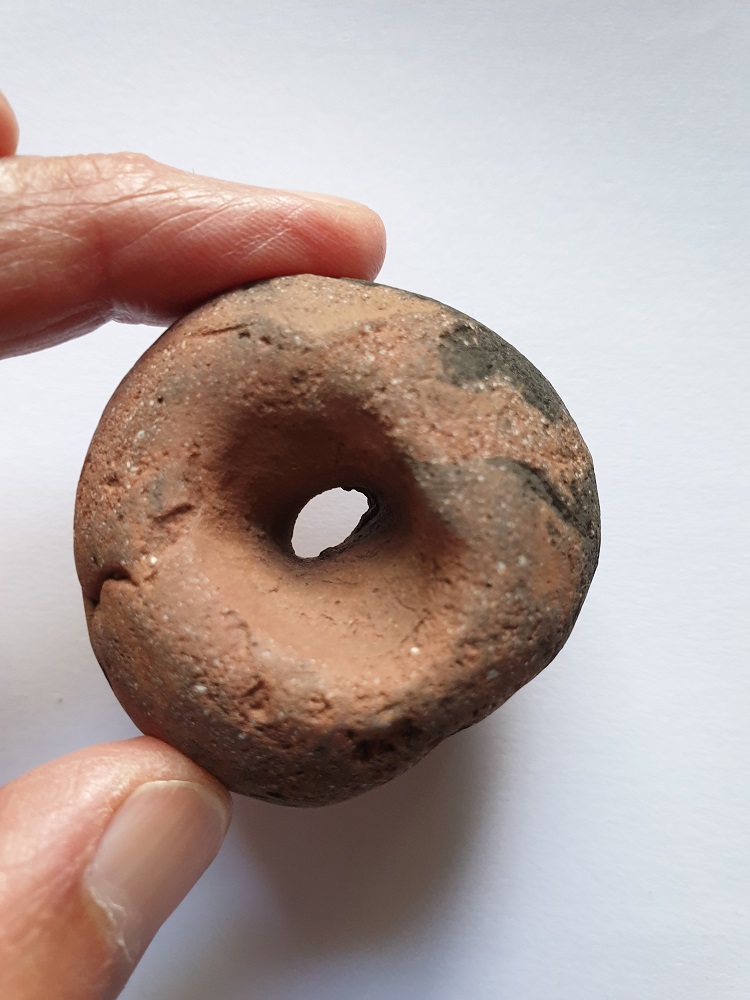
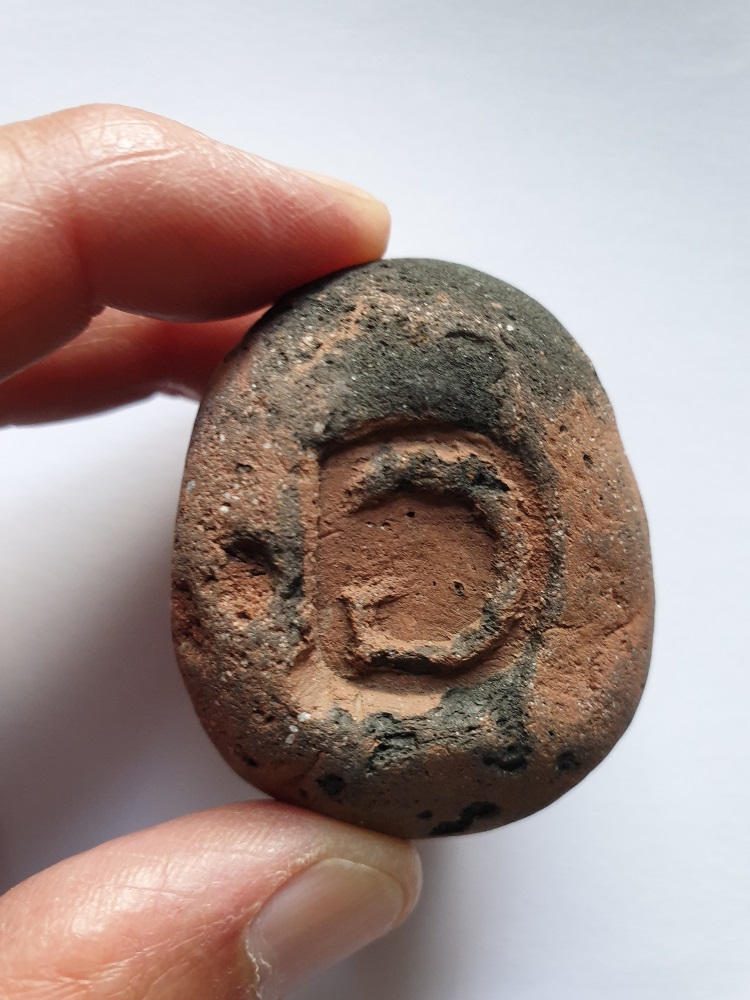
I was very impressed and very envious: in the twenty-plus years of my own walking on that shore, I have only found about ten. A few minutes later a couple walked down from their car to join me, and I told them about the red clay fishing-weights, or ‘net-sinkers’ (which are also – in a different context – known as loom-stones or warp-weights). And as I spoke, there, lying on the shore – amongst the pebbles of red sandstone, dark slate, pale granite and the blues and greens of wave-smoothed slag – was a fishing-weight. Moreover, it wasn’t just the usual spherical shape, but was flattened on one side with an ornate letter ‘G’ or perhaps ‘C’ engraved in the surface. The coincidence – the synchronicity – was almost unbelievable, and still, several years later, makes me shake my head in disbelief.
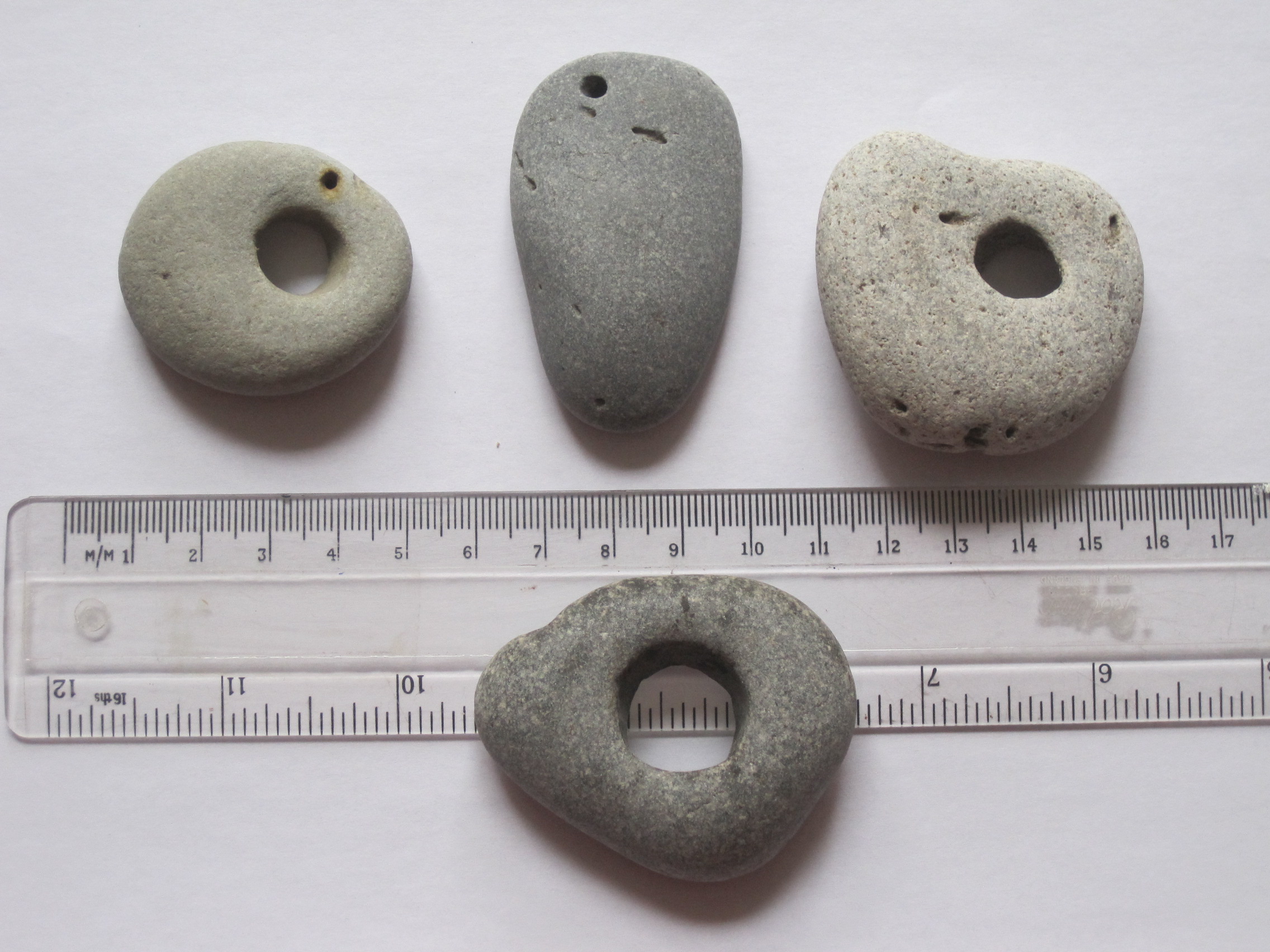
In addition to my red clay weights I have several made of grey stone, probably Skiddaw slate, each perforated by a hole. There are similar stones listed as probable fishing-weights on the British Museums ‘Finds’ website The holes are not man-made – they have been drilled by a bivalve mollusc, the Common Piddock, Pholas dactylus. The animal bores its way into a hard substrate, rotating its hard, ridges shells like an auger. As it grows, so it enlarges its burrow – but not its entrance, so it can never leave. Piddocks are found on the Solway coast: I have found burrows and shell remains in both the peat and the timber of the submerged forest. If indeed they had been used as weights, these hole-y stones were re-purposed bored pebbles.
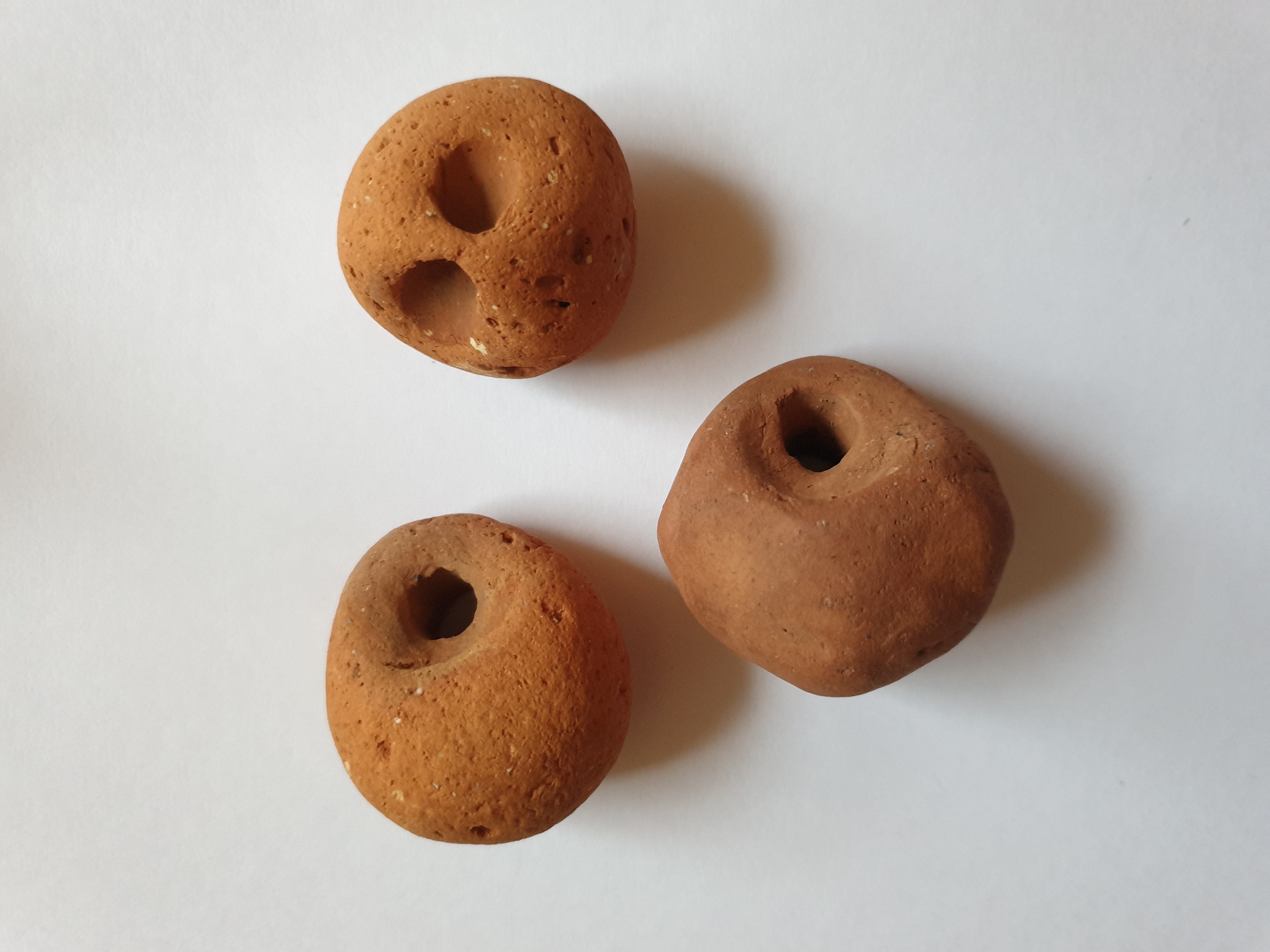
But my other weights are red, made either of smooth clay or more granular, white-speckled, ‘fireclay’. They are roughly spherical, ranging from about 4-6 centimetres in diameter. The edges of the holes show wear, presumably by the rubbing of the thread that tied them to the net (or loom). They weigh between 40 and 80 grams – they’re not heavy, and fit snugly in your palm.
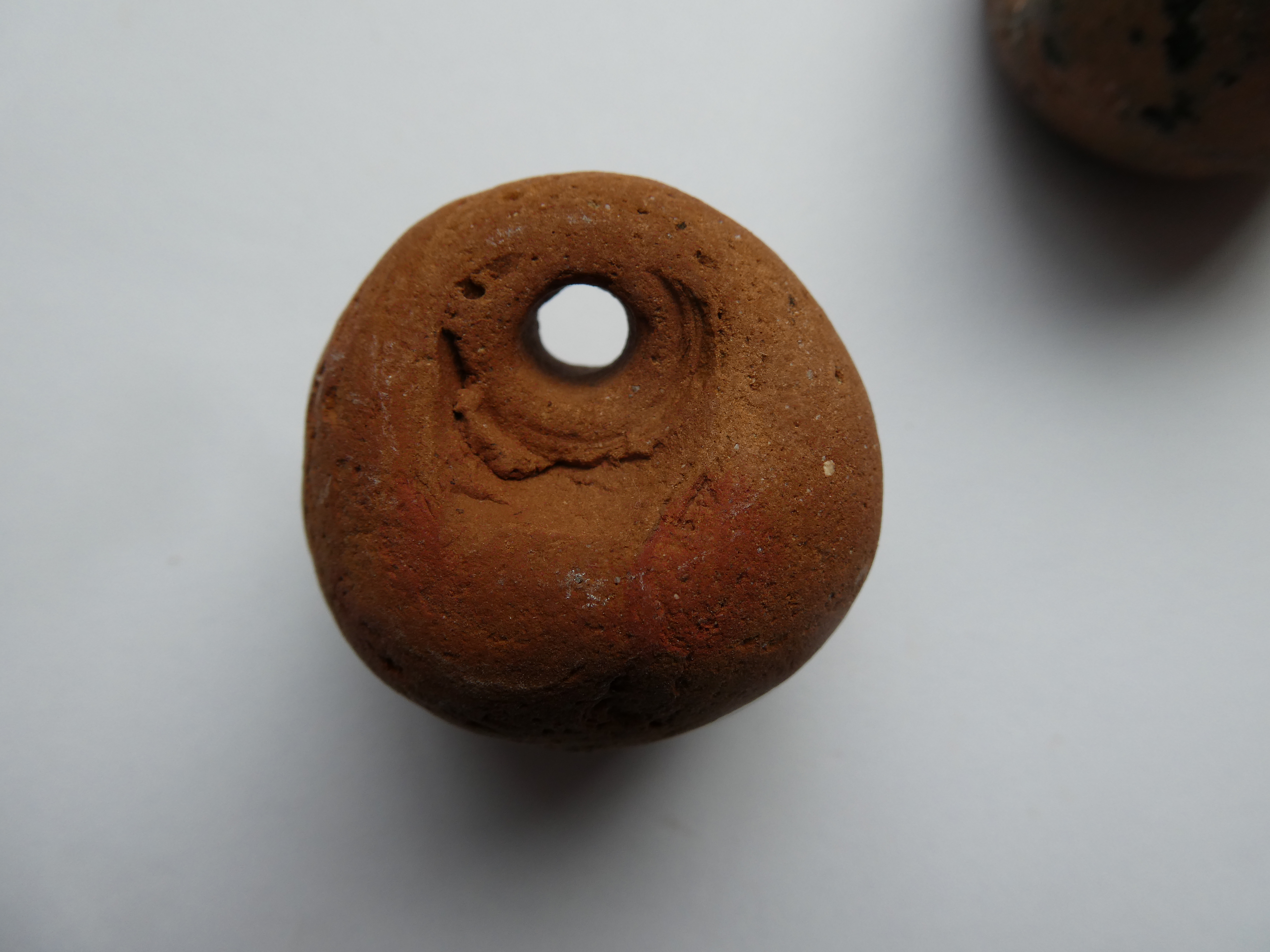
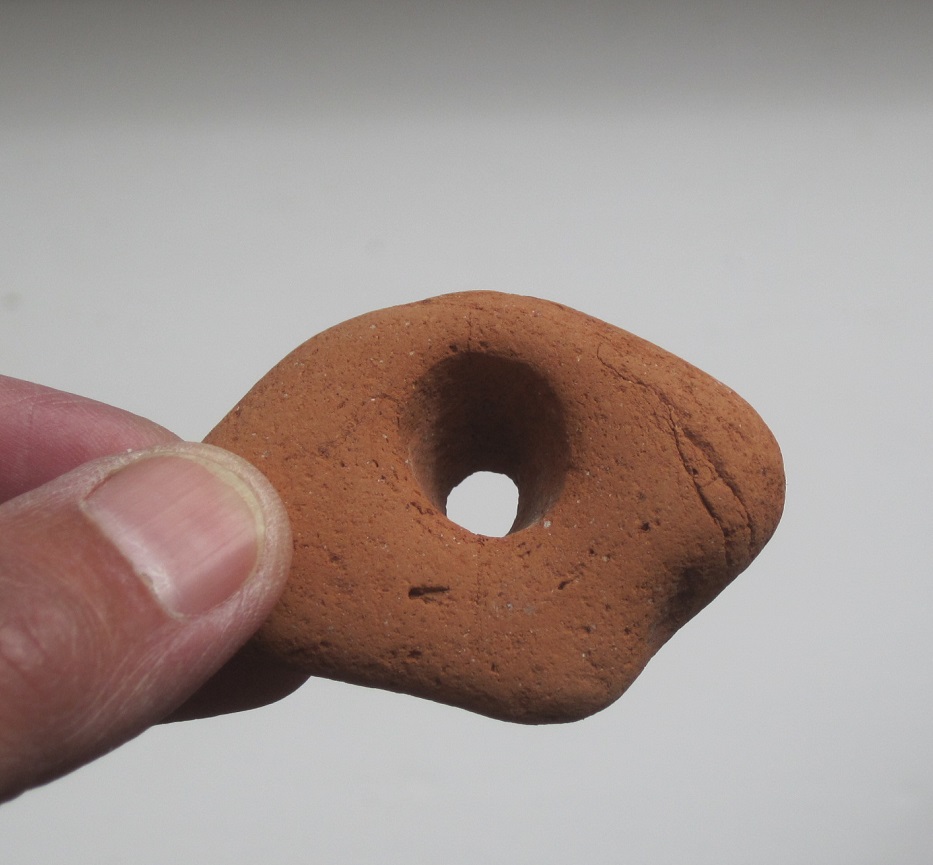
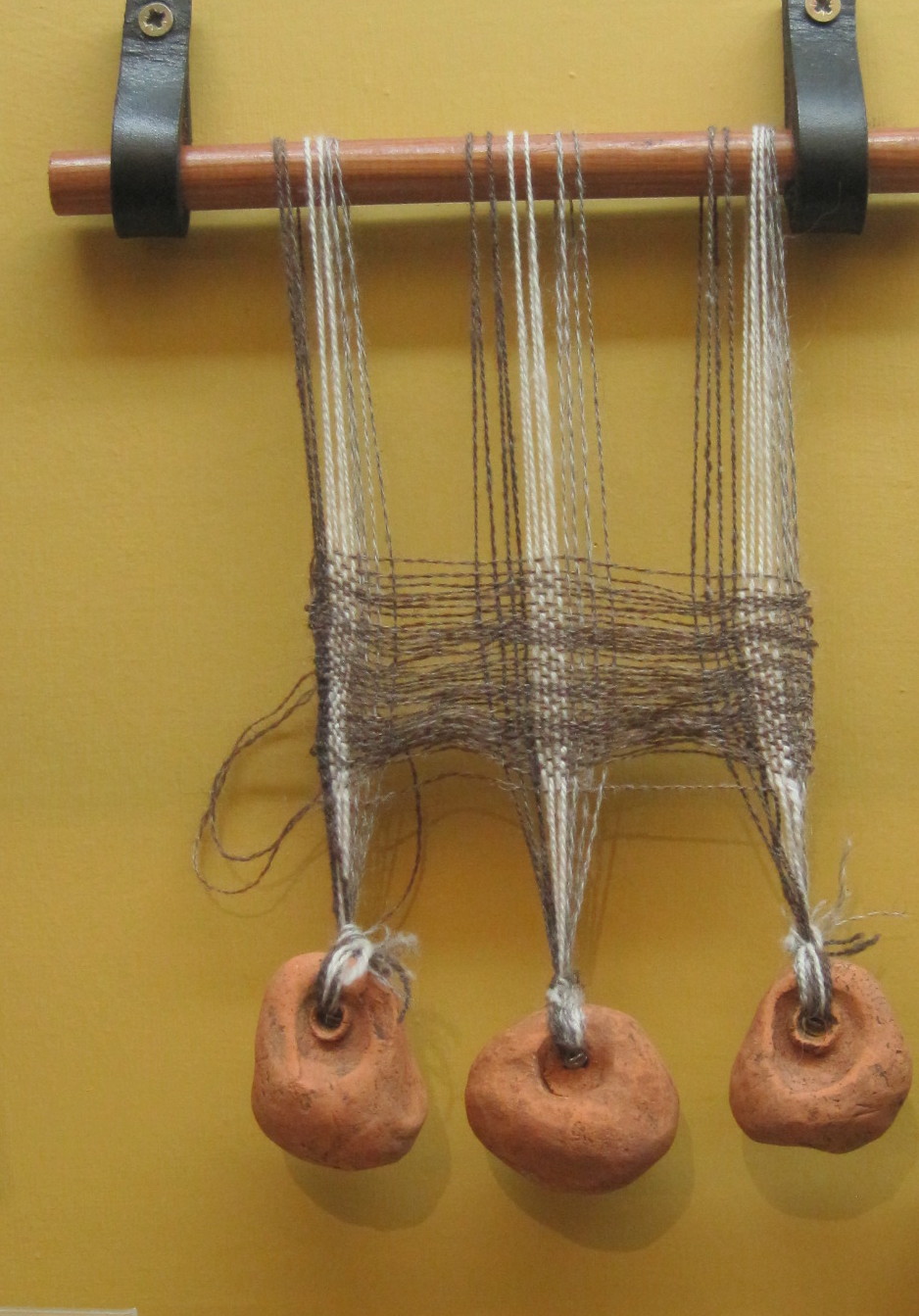
So what are they? Similar objects from this region are on the British Museum’s Portable Antiquities website, and are identified as warp-weights, or loom-stones, used for weighting the dangling warp threads on a vertical loom. In Dumfries Museum on the other side of the Solway, red clay weights very like mine are set up to do just that.
The man with the carrier bag found all his weights on the shore, and my late friend, Ronnie Porter, whose family have lived in the Allonby area for four generations, also had a fine collection of similar clay weights. He told me that one time, after the big tides had uncovered a new rocky scaur on the shore, he found a line of ‘about eight’ of them amongst the newly exposed rocks and pebbles – and one can easily imagine how they might once have been attached to a rope at the base of something like a gill net. Ronnie himself was certain that the ‘stones’ were once used to weigh down fishing nets that were – like the herring nets – anchored on the shore. More recently, he said, his family’s own nets were attached to an anchoring post and the bottom of the net was weighted with a line of lead weights while the top of the net floated free, buoyed up by corks. Ronnie very kindly gave me one of his collection, most of which were scattered amongst the ornamental pebbles in his front garden. He once had many more, which he had threaded on strings to hang beside the door, but one night those all disappeared.
The British Museum website suggests weights found near Mawbray are medieval or post-medieval, although there have also been suggestions that they go back to Roman times. A line of Roman forts and milefortlets extended South from the end of Hadrian’s Wall at Bowness-on-Solway to Maryport, and there was a Roman burial site at Beckfoot, so that is not impossible.
There’s no mystery about the origins of the types of red clay. The grainy-red fireclay, used locally in making bricks, is often found as deposits on the Cumbrian West coast, usually associated with the coal drift mines. Brick works – like that at Camerton near Workington, owned by the McKay family – were often linked to the coal mines
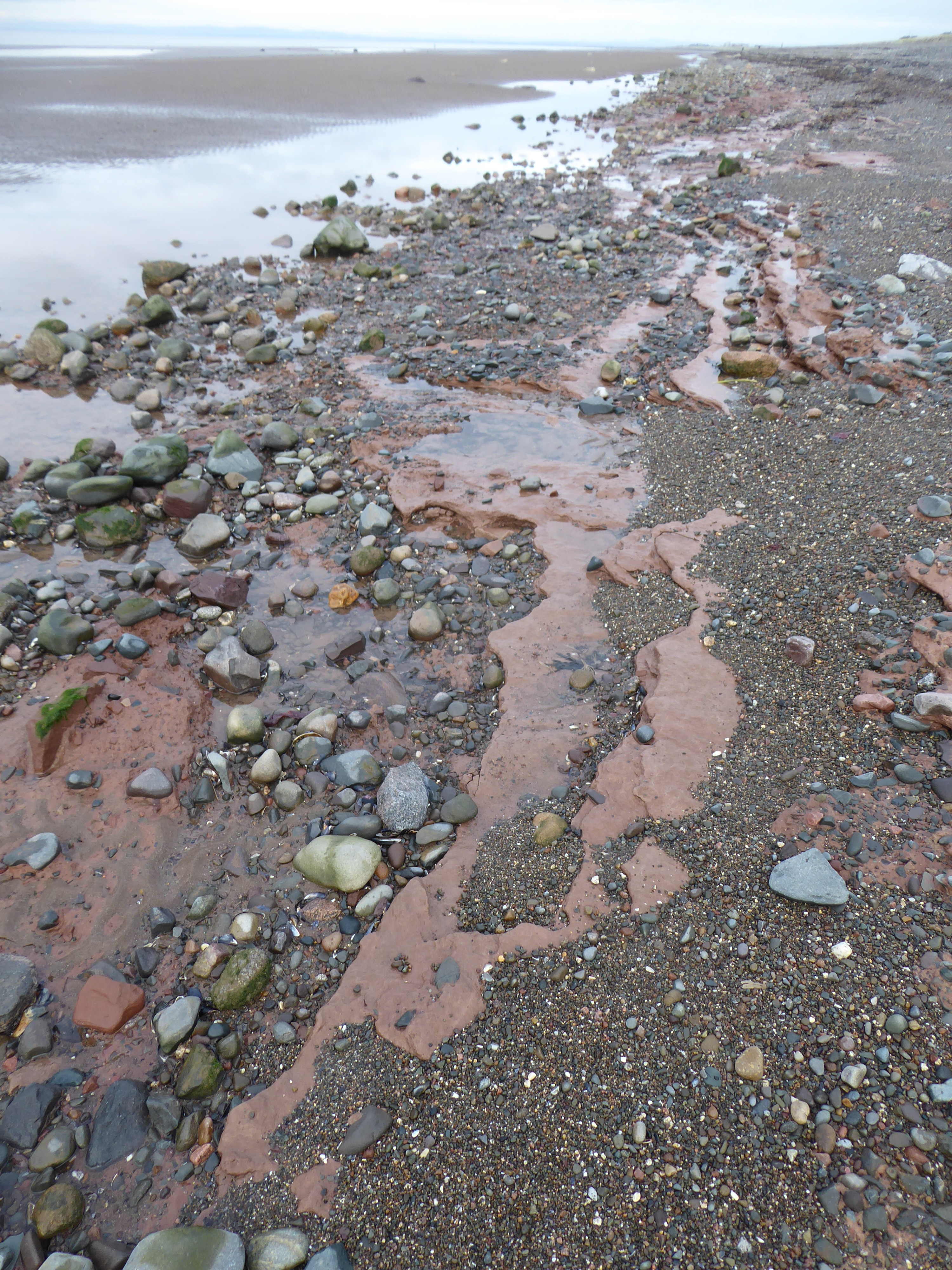
And occasionally patches of uniformly smooth red clay are exposed on the shore between Allonby and Beckfoot; whether or not you find one is a matter of chance, depending on the action of the tides and waves in clearing or depositing the sand and shingle. But if you wanted to make weights, you would keep searching, and dig and collect the clay when it appeared. Perhaps the children were sent out to search or – much more fun – instructed to roll the gathered clay into balls between their palms, and to poke holes in the balls with sticks.
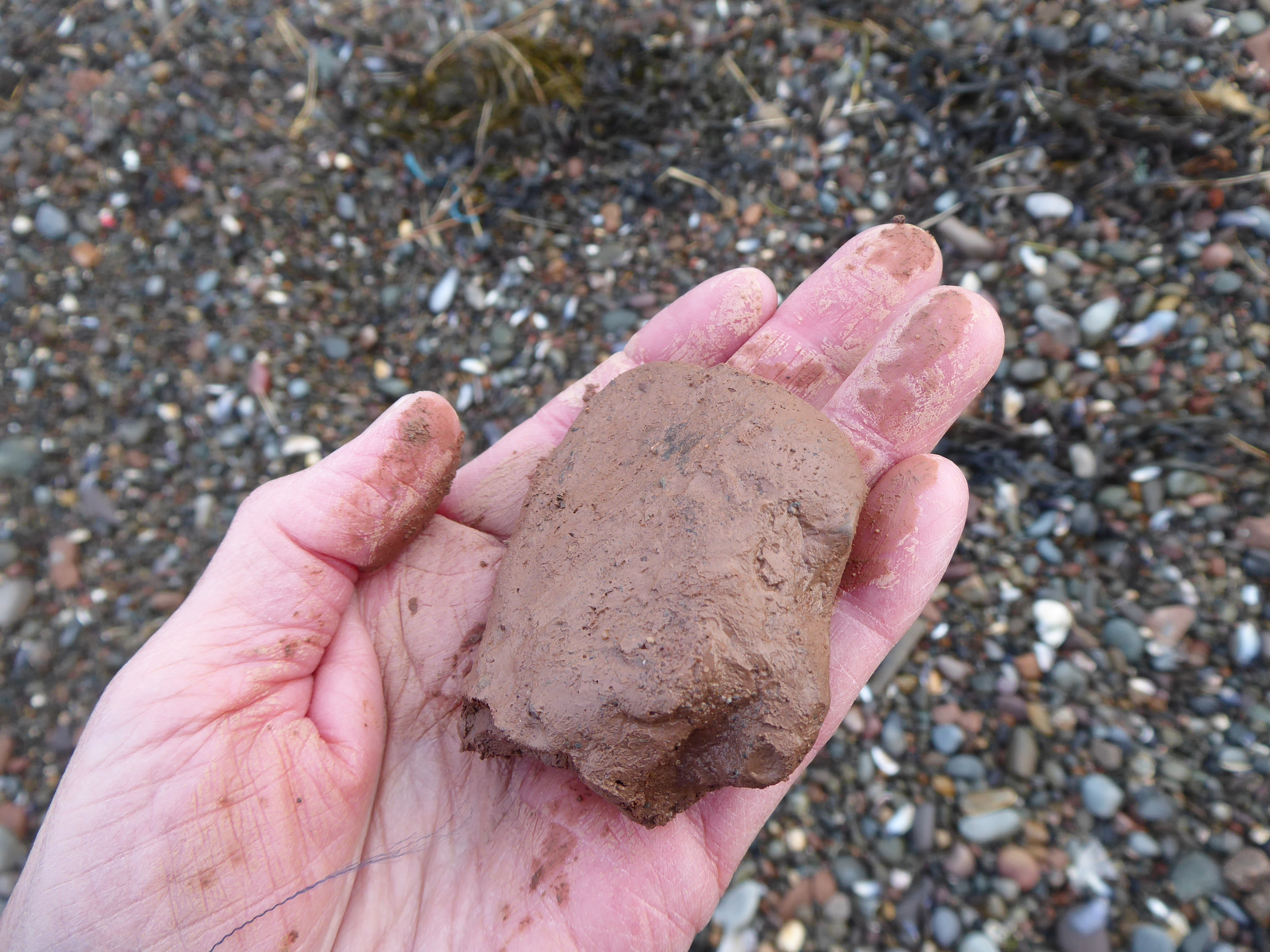
The weights would have needed to be fired to harden them before use, but after that there was no reason why they could not be dual-purpose, used for whichever need was greatest at the time – for weaving or for net-sinkers. Perhaps they were bartered – for some carded fleece or a few fish?
The weights have many stories to tell, all of which – like so much else on the shore, such as those of the fish-traps at Mawbray and the named boulders – are now lost.
Note: see also photos and information on Julia Garner’s blog about the weights she has found at Mawbray – one of which is quite large and has a thumbprint visible in the clay!

