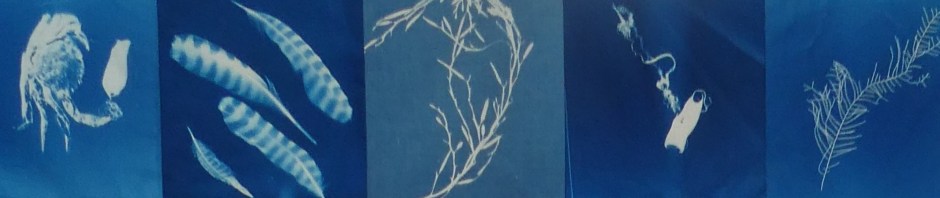
Over the past year I have created a visual patchwork of stories from the shores of the Upper Solway: a different way of representing some of the inhabitants of our saltmarshes and shore pools. Here too are the ghosts of former inhabitants, thrown up on the ever-changing tidelines.
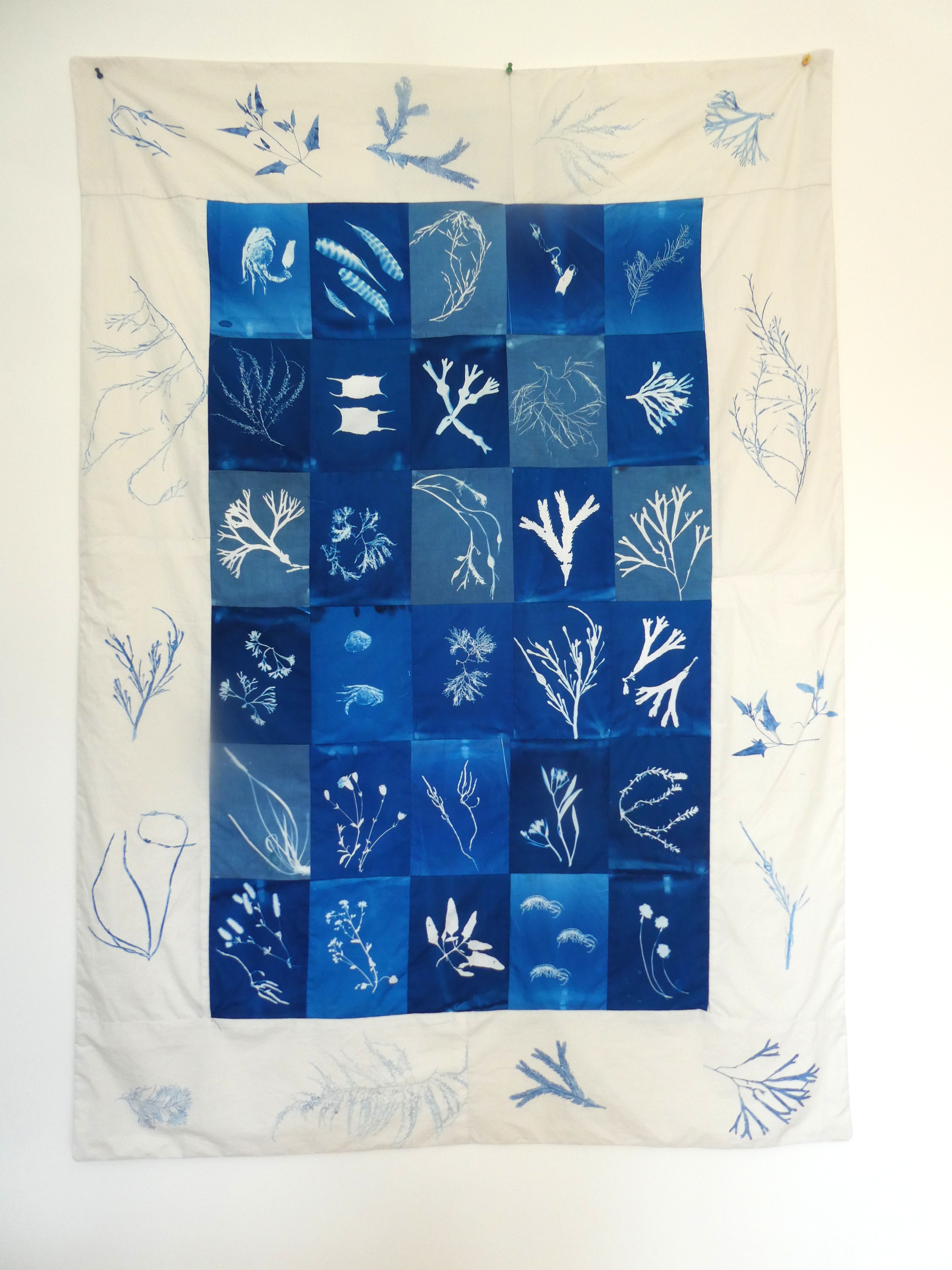
Their shapes and textures have been captured using the cyanotype and collagraph techniques.
First: the names behind the images:
CYANOTYPES (white on blue):
In the central blue cyanotype section, the top two rows are of animals, macroalgae (seaweeds) and other objects collected from the tidelines in Allonby Bay. The middle two rows are from pools on the shore at Allonby and Parton. The bottom two rows are from the saltmarshes at Grune Point and at Port Carlisle.
Tidelines (from left to right)
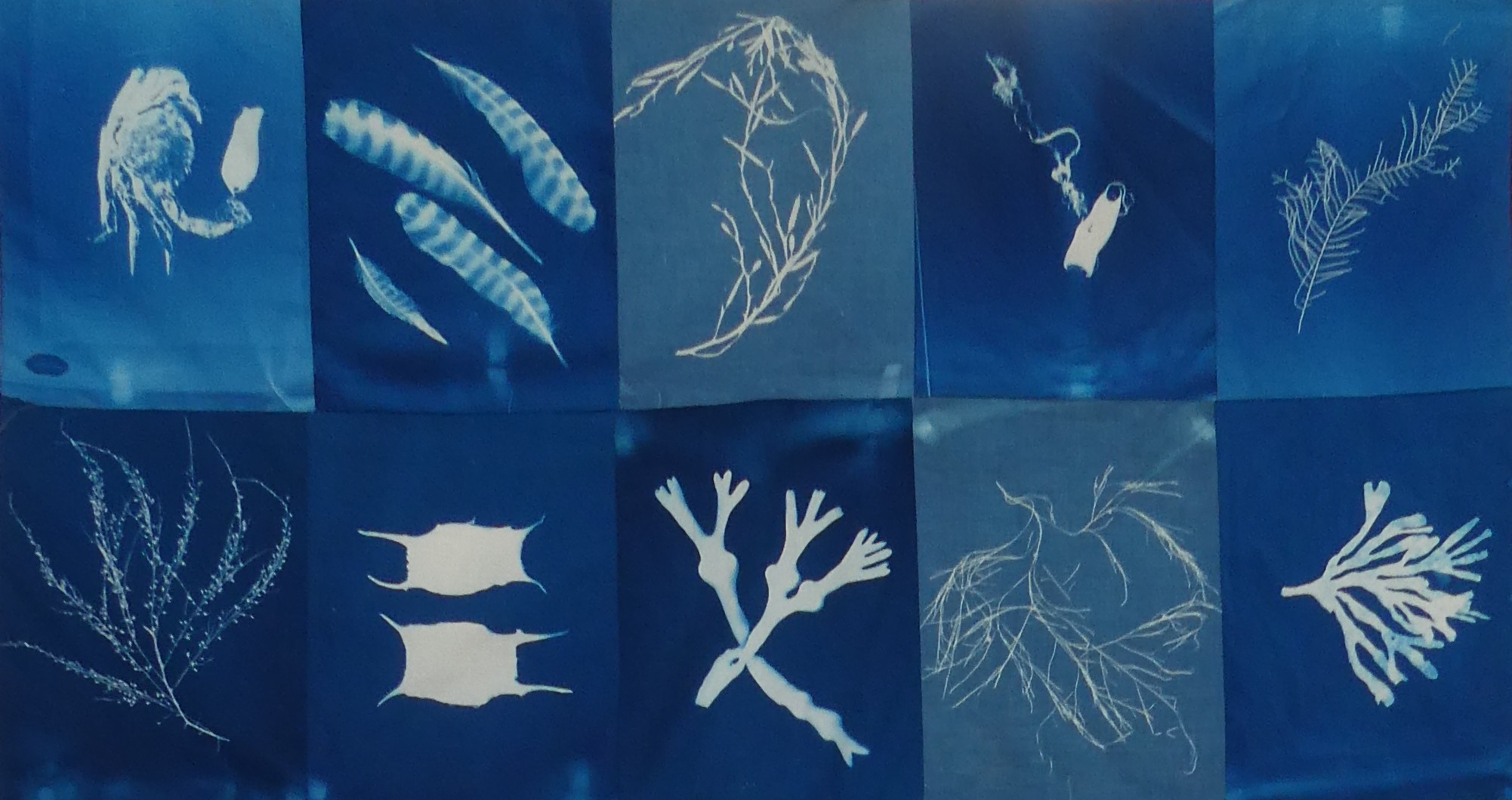
Top row: Shorecrab skeleton with ‘mermaid’s purse’ (empty catshark egg case); Gull feathers; Cast-up frond of seaweed Sea Oak, Halidrys; Catshark mermaid’s purse; Colony of hydrozoan Sertularia
Bottom row: Wireweed seaweed, Sargassum; egg cases – mermaids’ purses – of Thornback Ray; fronds of seaweed Fucus vesiculosus; fronds of seaweed Spyridia griffithsia; Colony of bryozoan, Hornwrack, Flustra foliacea
Shore pools
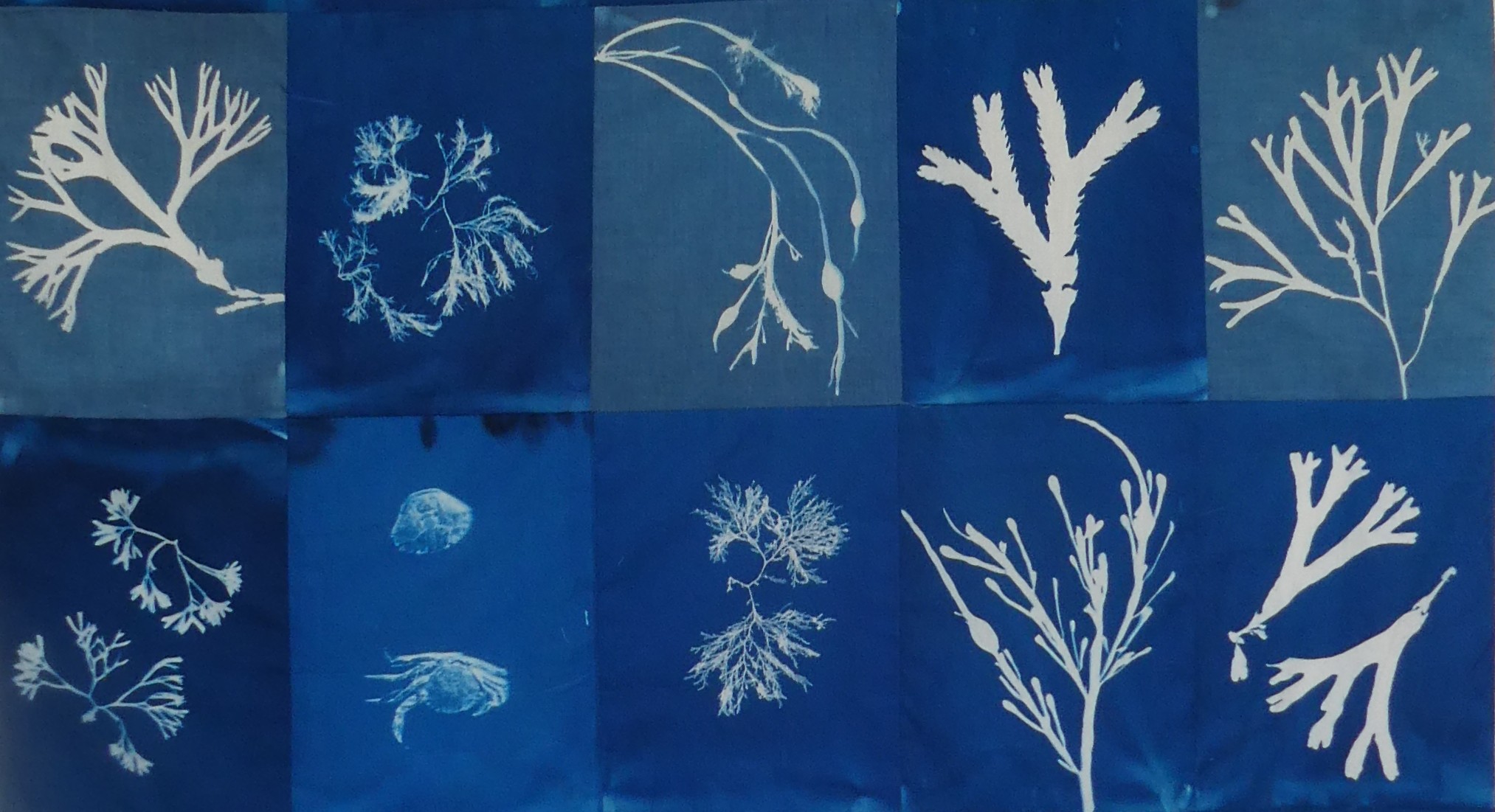
Top row: Frond of seaweed Bladder Wrack, Fucus vesiculosus; Fronds of pink seaweed Corallina; Frond of seaweed Egg Wrack, Ascophyllum with wispy fronds of parasitic red seaweed Polysiphonia; Frond of seaweed Serrated Wrack, Fucus serratus; Frond of immature Bladder Wrack, Fucus vesiculosus
Bottom row: Fronds of seaweed Channel Wrack, Pelvetia caniculata; empty crab shells (representing the live crabs that were in the pools!); Fronds of red seaweed Heterosiphonia; Frond of Egg Wrack, Ascophyllum; Frond of seaweed Spiralled Wrack, Fucus spiralis
Saltmarshes
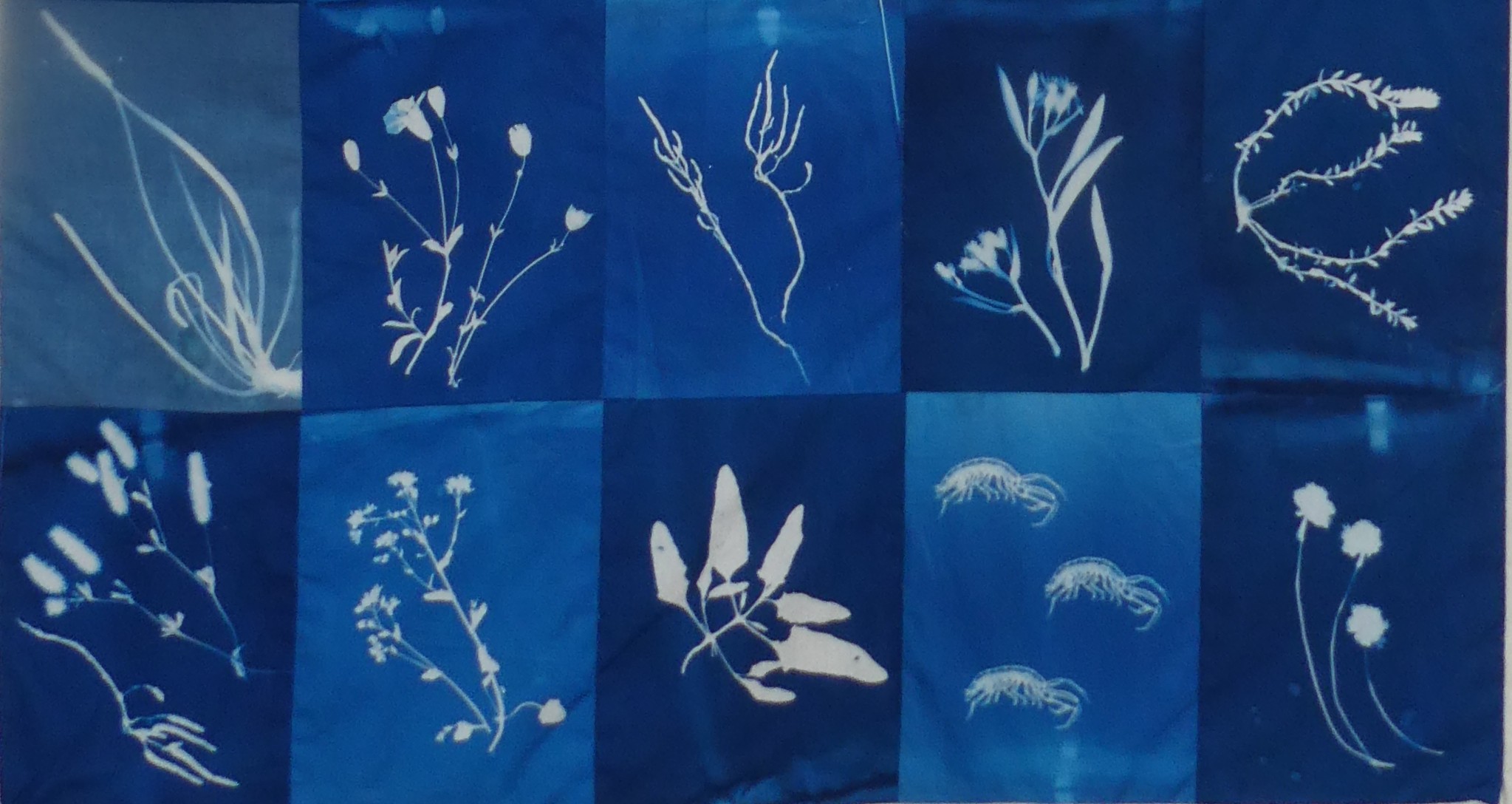
Top row: saltmarsh grass; Sea Campion, Silene, flowers and seed heads; Samphire, Salicornia; Sea Aster Tripolium pannonicum; ??
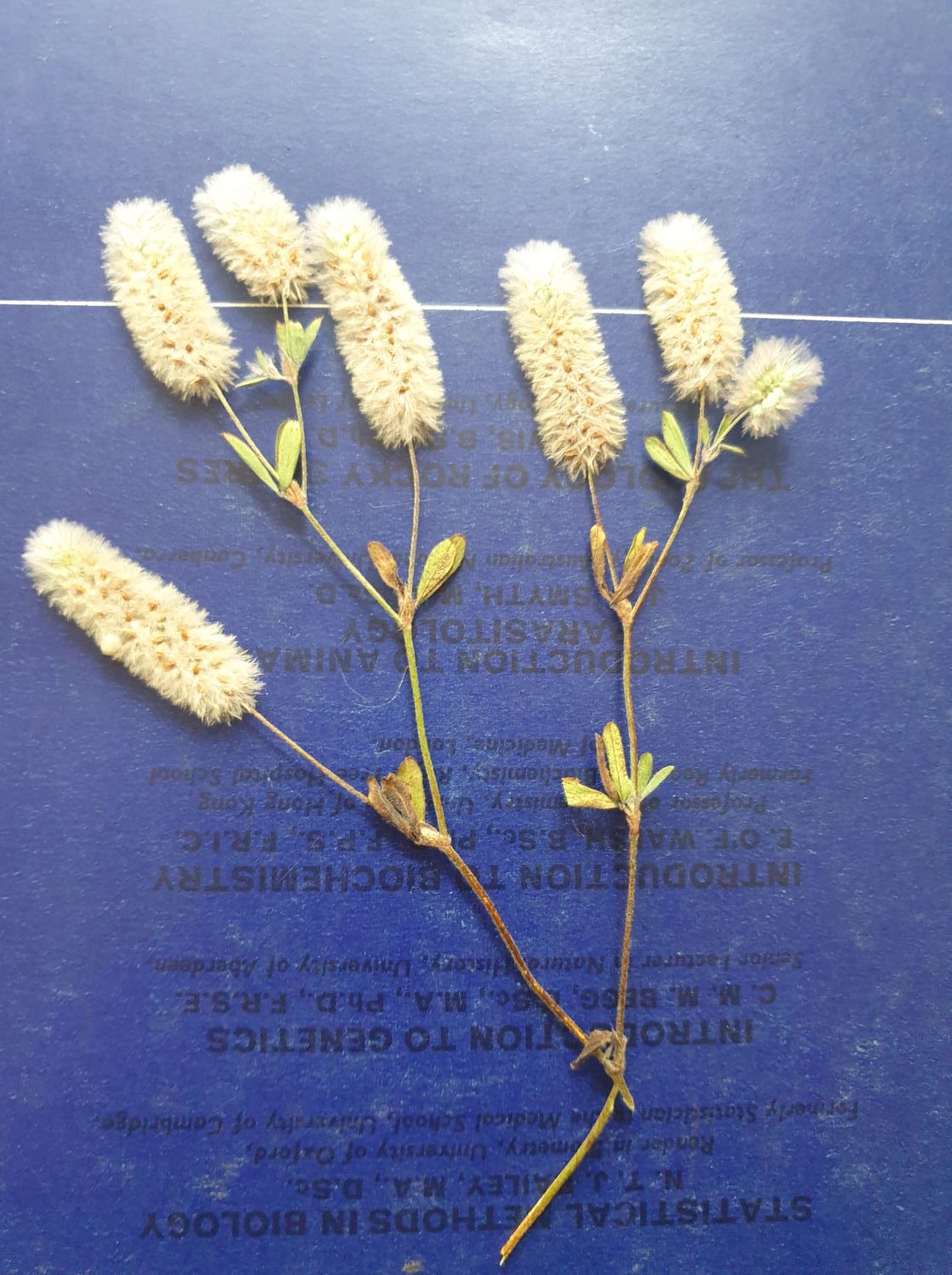
Bottom row: Hare’s-Foot Clover, Trifolium, and Samphire, Salicornia; Scurvy Grass, Cochleara; Frosted Orache, Atriplex; Mudshrimps, Corophium; Thrift (Sea Pink), Armeria
COLLAGRAPH BORDERS (blue on white):
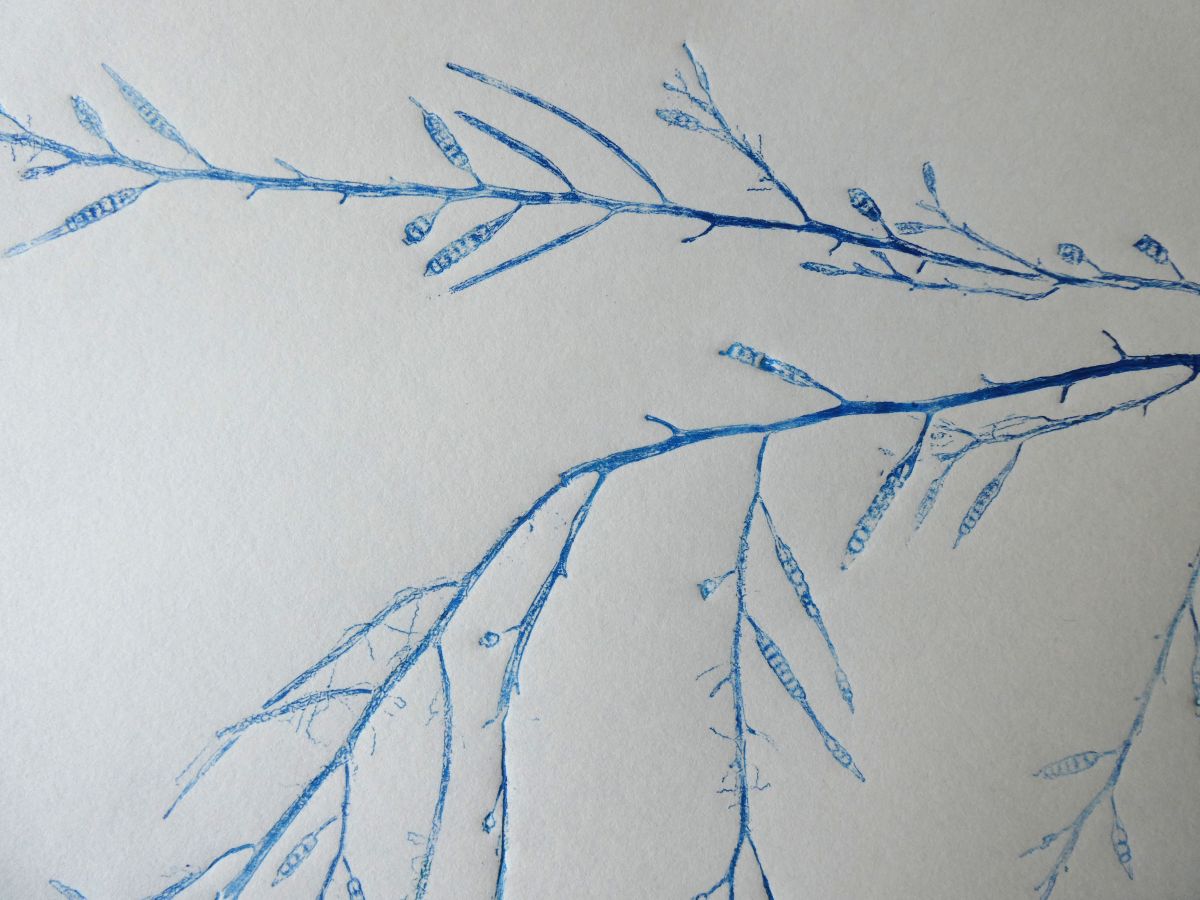
Top border (left to right): Ascophyllum, Orache, Fucus serratus, Sargassum, Pelvetia
Right border (top to bottom): Halidrys, Orache, Ascophyllum
Bottom border (left to right): Sertularia, Sargassum, Fucus serratus, immature Fucus vesiculosus
Left border (top to bottom): Halidrys, Ascophyllum, Thongweed Himanthalia
THE SALTMARSH COLLECTION
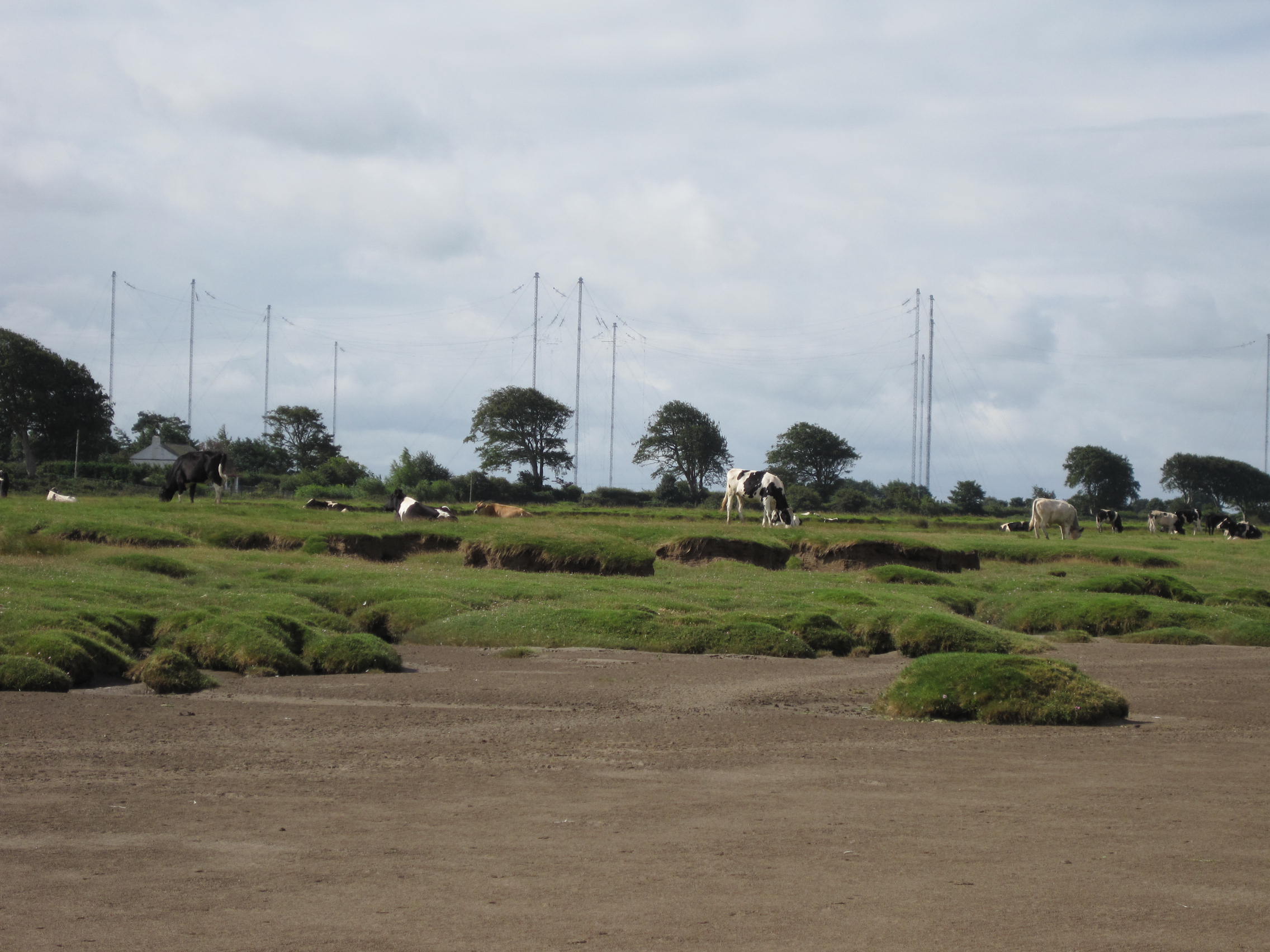
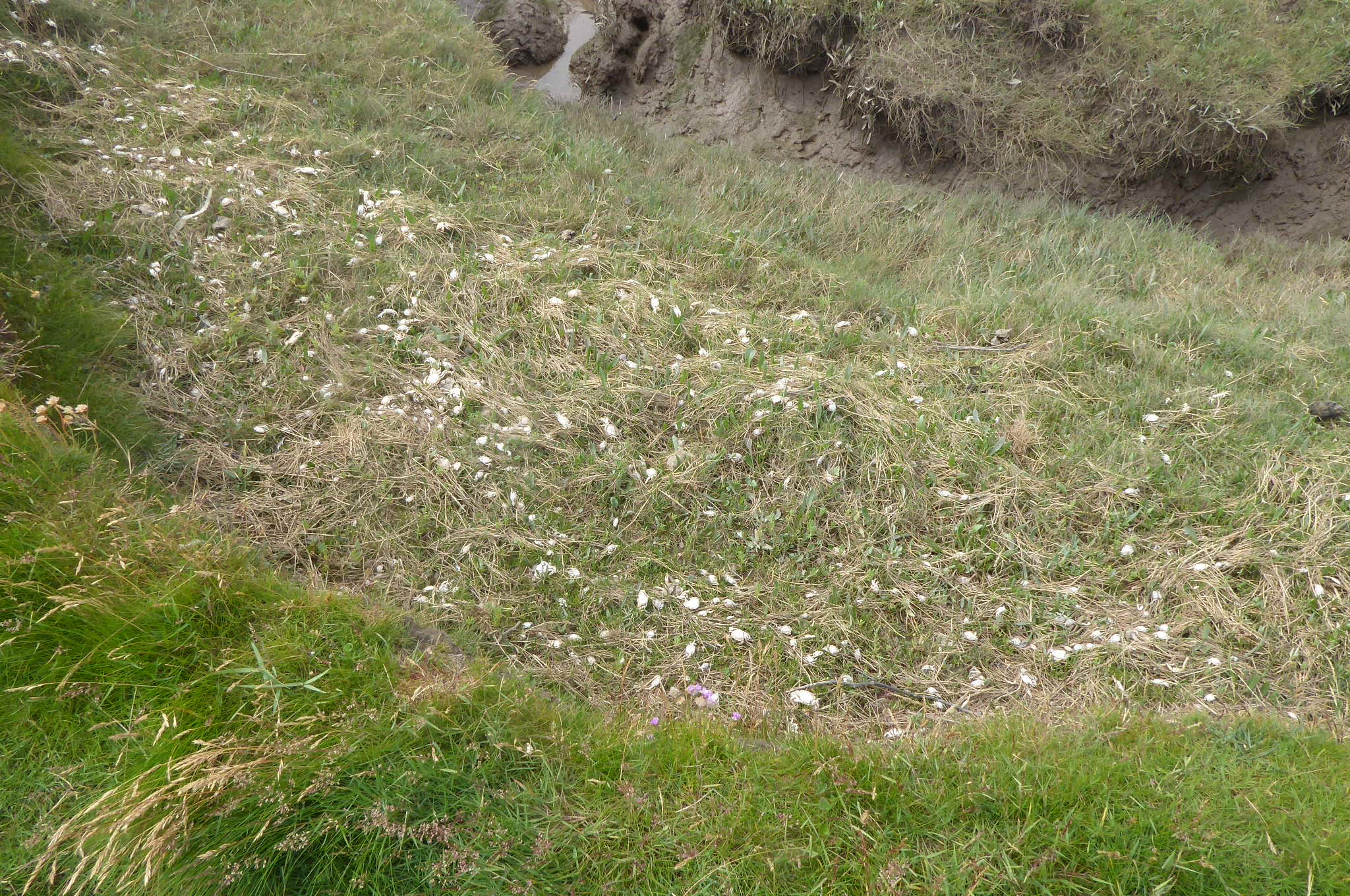
I started creating the images for the patchwork (or possible quilt – I hadn’t decided on the final form) in the autumn of 2025, and by then several of the flowering plants of the saltmarshes were over – so I had to wait until early summer this year to collect specimens of these species. The samphire (delicious steamed then drenched in butter and eaten with fish) was still available, but already turning an autumnal reddish-gold. Furry Hare’s-Foot Clover was still in flower on the top tiers of the marshes, although the sea-pinks, Thrift, were nearly over. The multitudinous burrows of the Mudshrimps, Corophium, speckled the surface of mudflats and saltmarsh creeks, and the empty shells of Shore-crabs had been dumped by the tides in hollows in the grazed marsh grass.
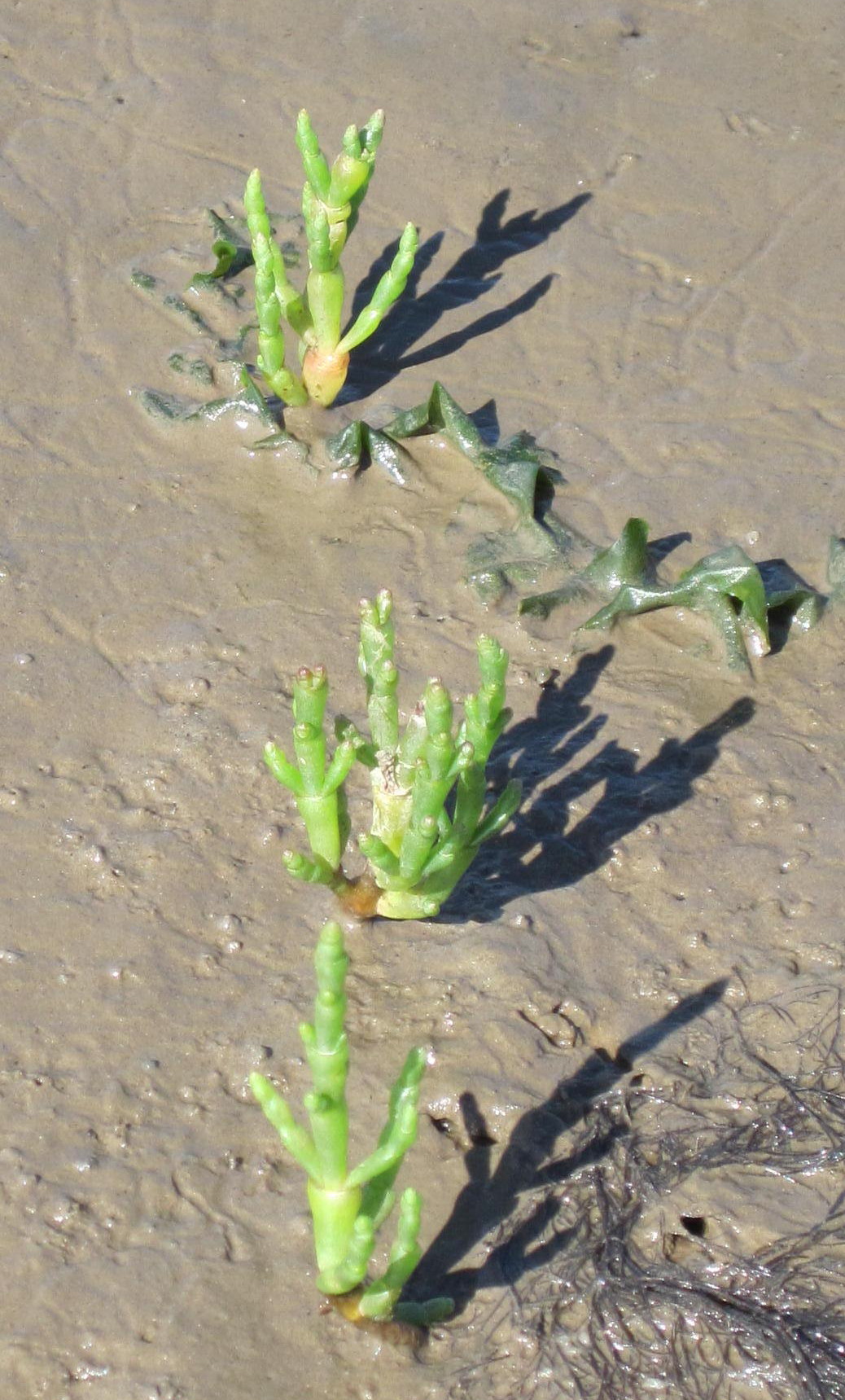
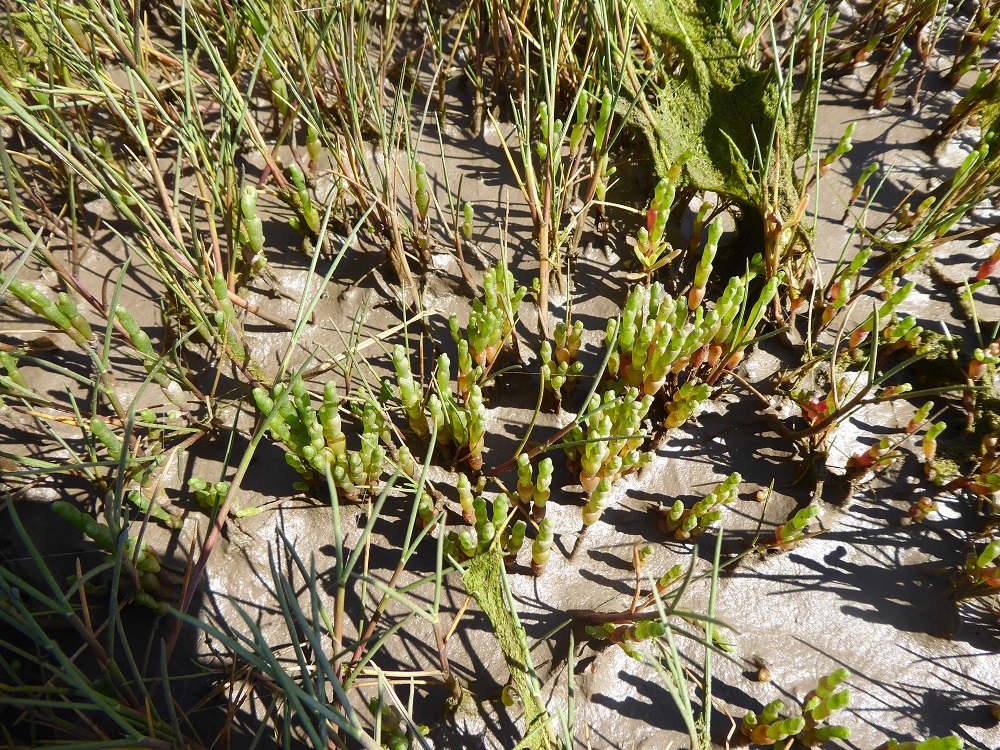
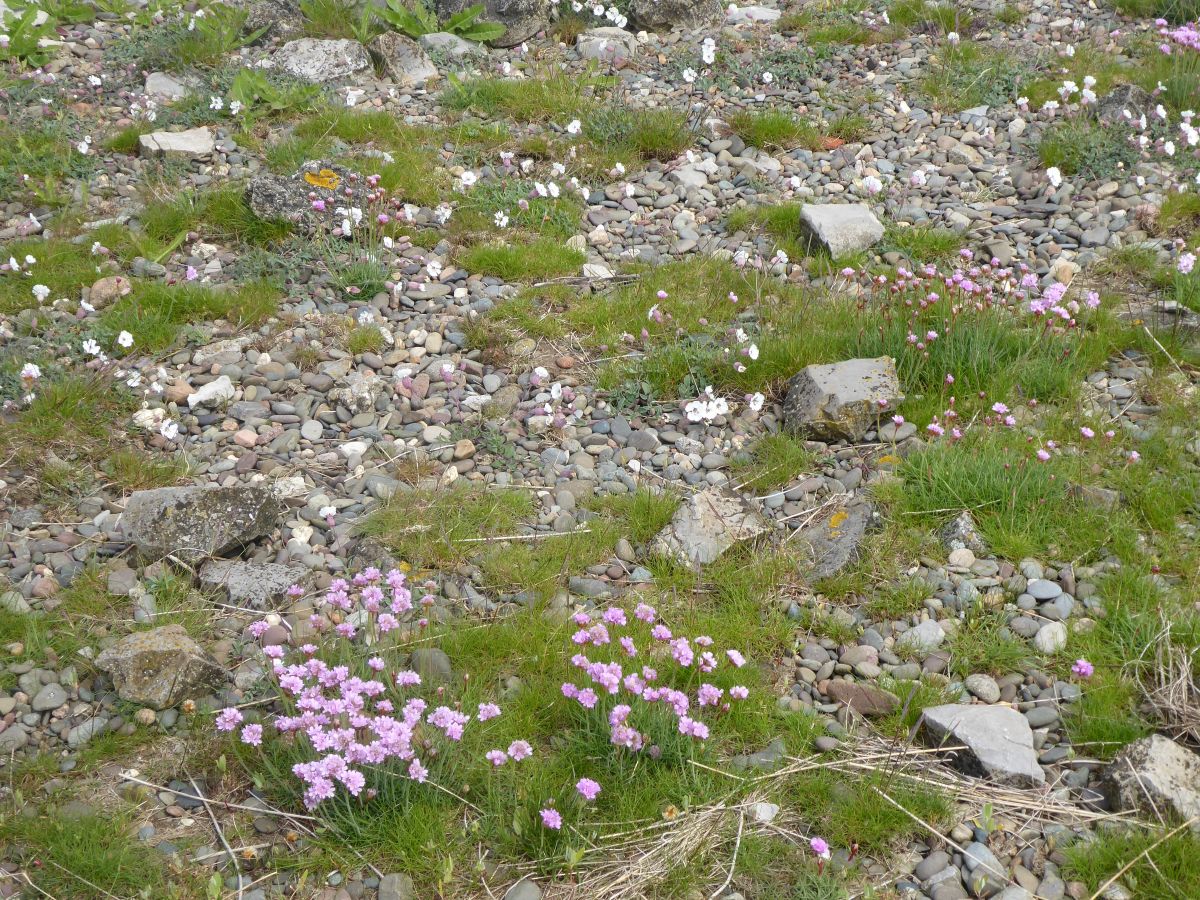
There is more about the plants and the structure – and the unexpected fascination – of the Solway saltmarshes, in my blogpost about my saltmarsh writing workshops.
1.Sea Asters and Sea Campion
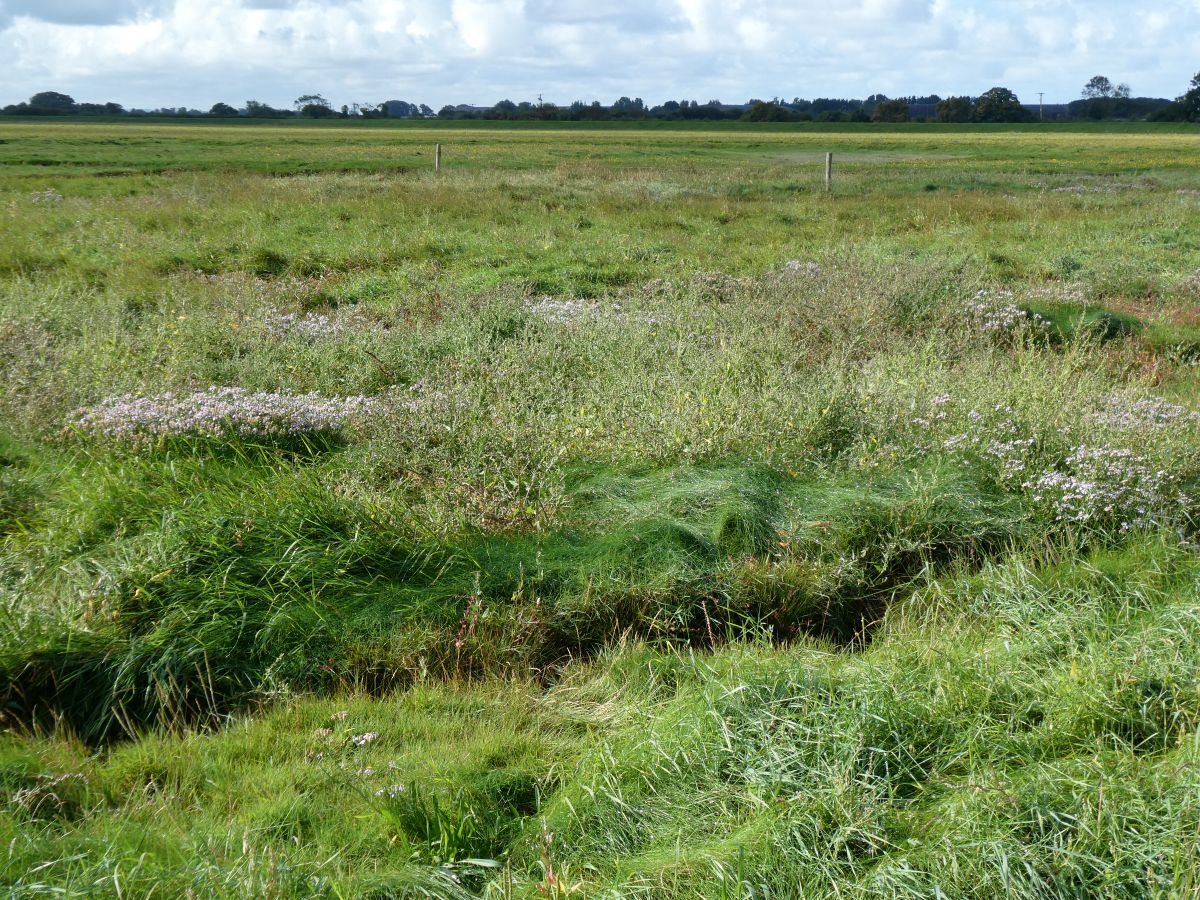
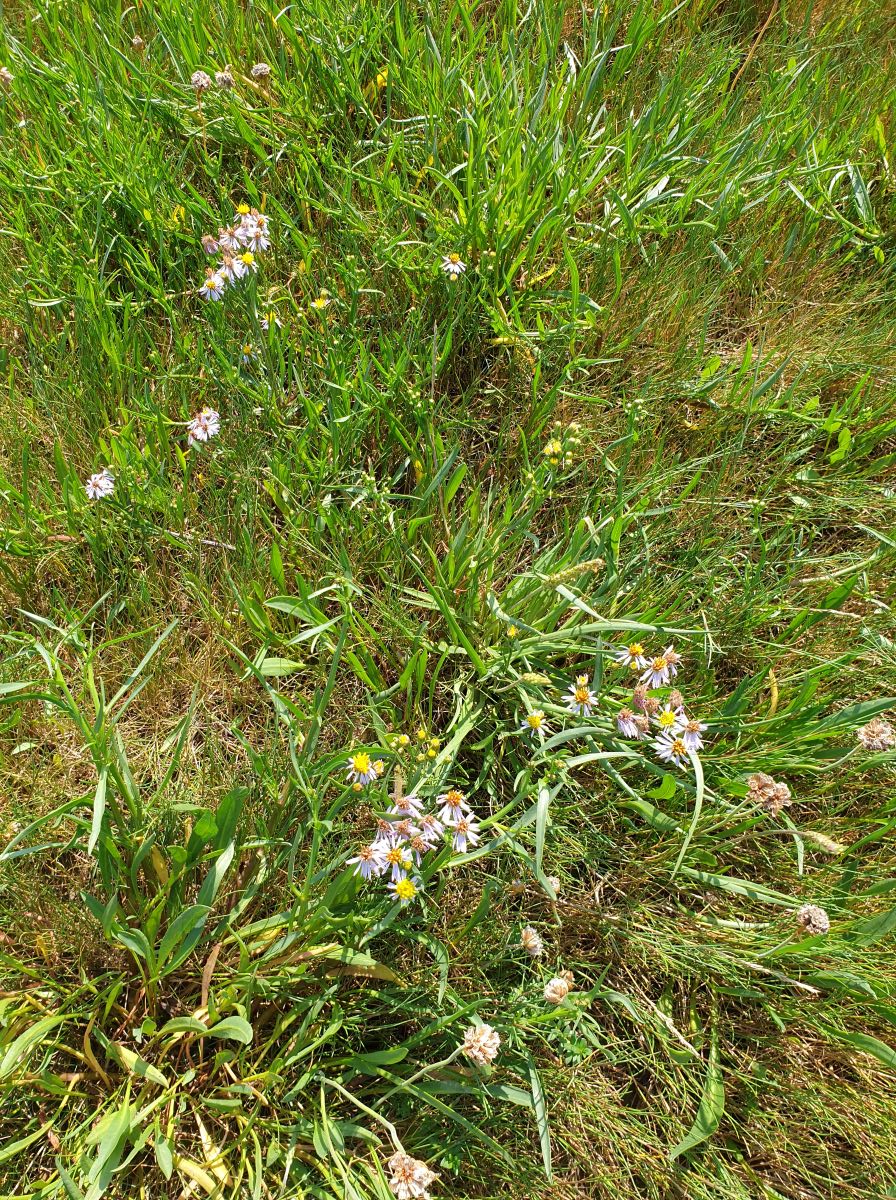
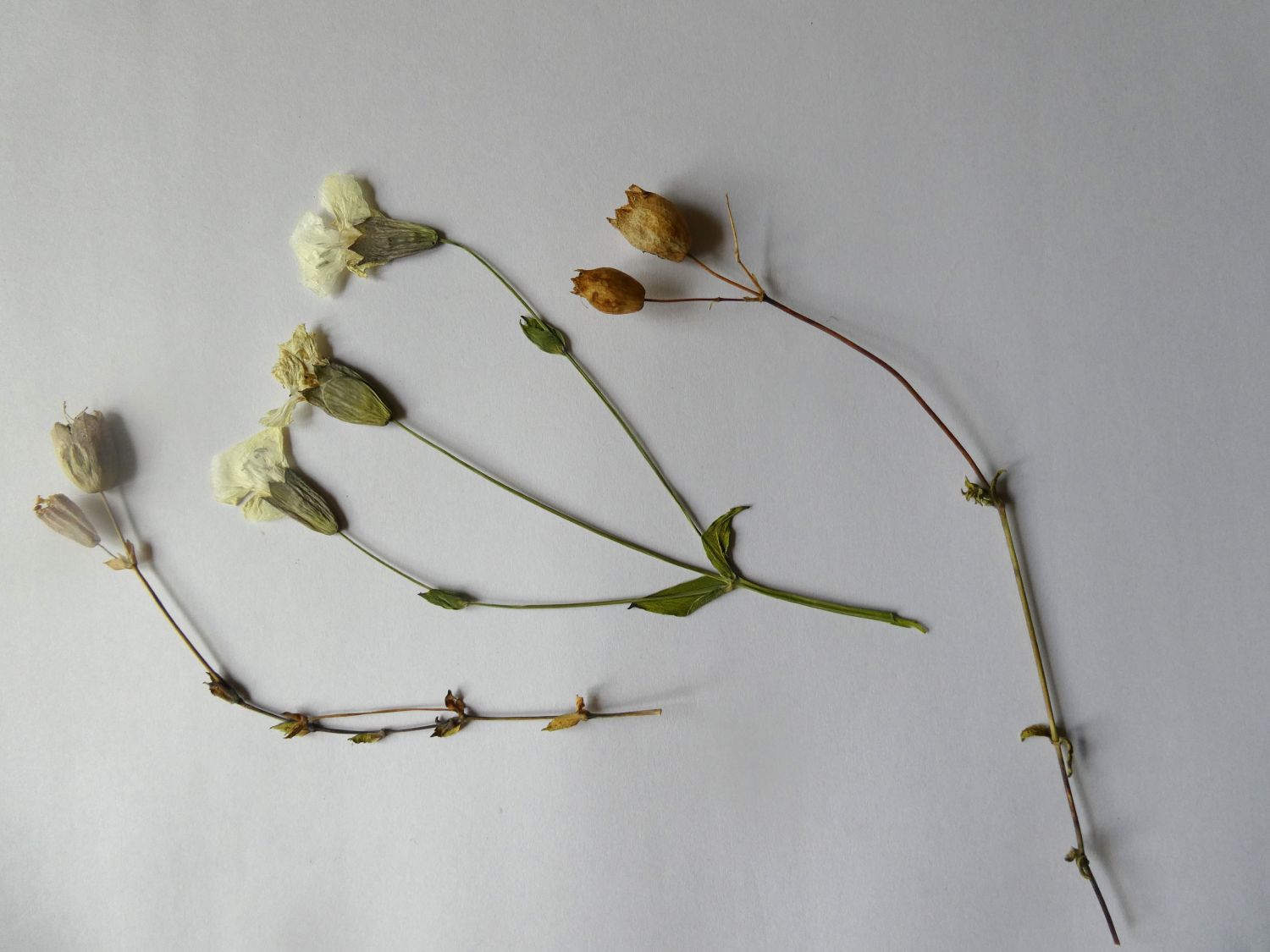
In the summer the pale-blue Asters formed scruffy patches of brightness on the middle tier of the marshes; at Port Carlisle, where I occasionally row in the crew of the skiff Bowness Belle, the marsh is particularly rich in asters. Sea Campion is common along Grune Point, dotted along the topmost tier where the ground is drier, among the shingle.
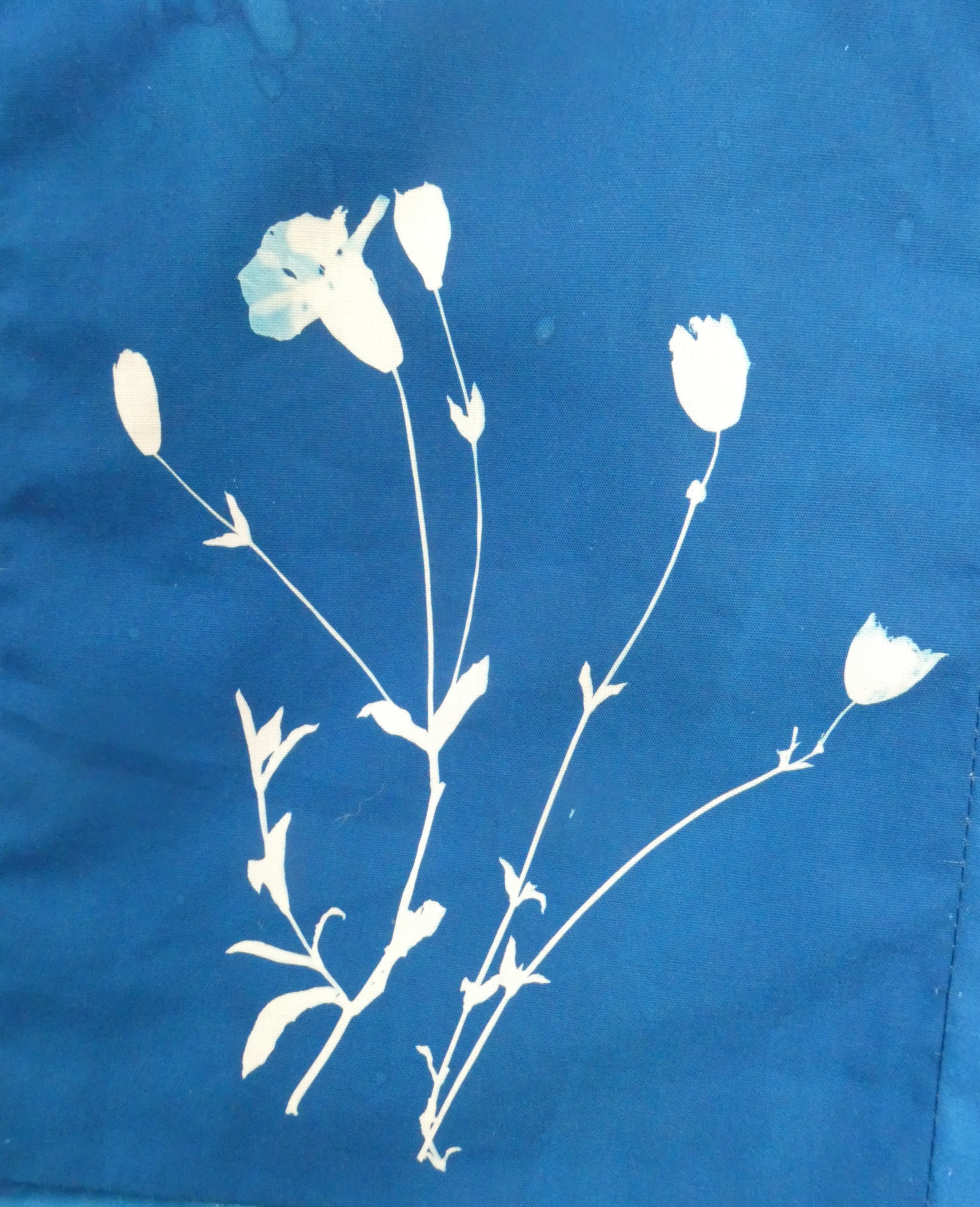
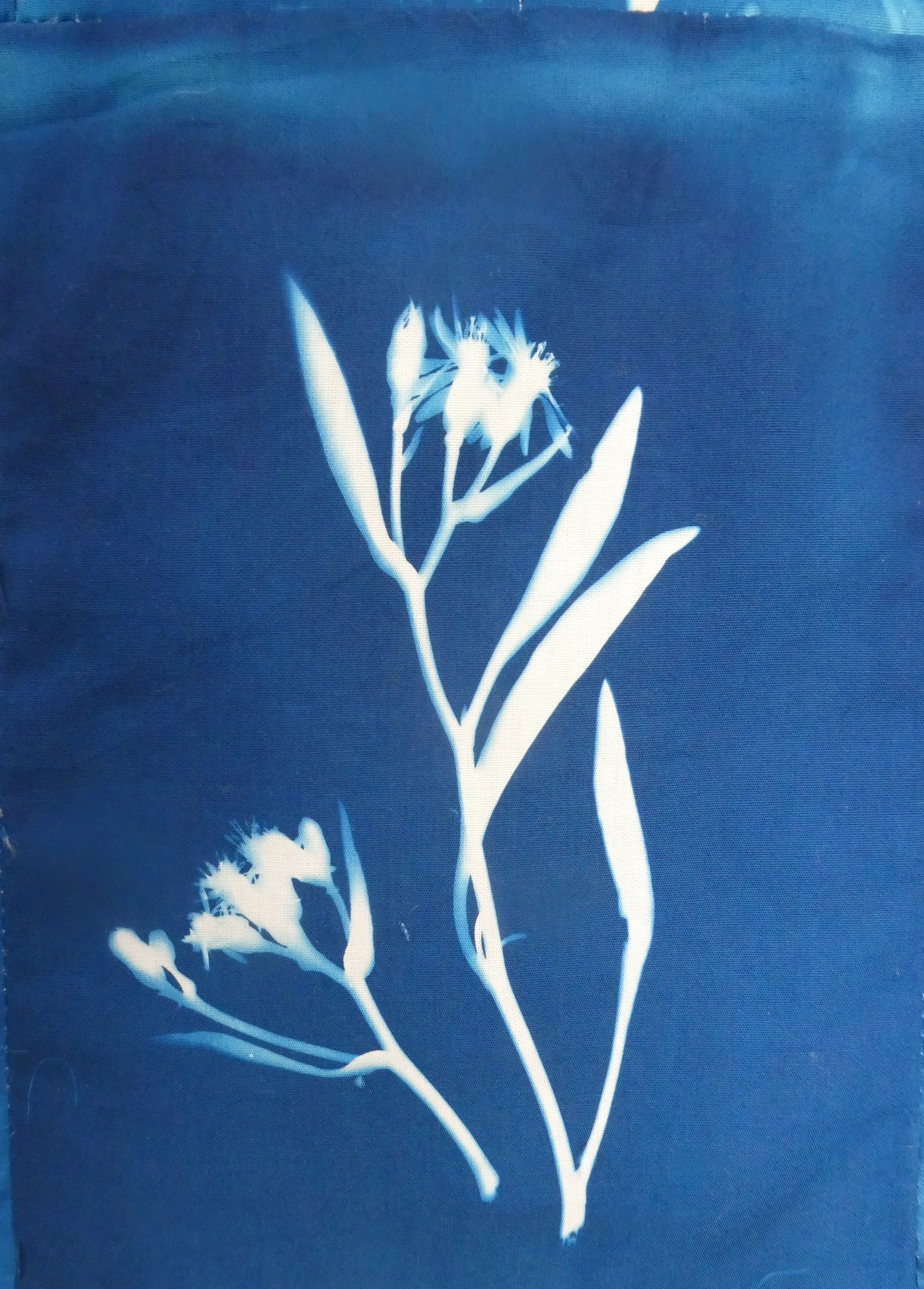
The challenge with cyanotyping is balancing the length of exposure to the sun so as to allow the rays to pass through the petals and highlight their subtlety, and yet at the same time to get enough contrast to show the plant’s characteristic shape. Using freshly-collected plants didn’t work well because there was such a gradation between the delicate and the thick plant tissue (petals versus seed-pods of the Campion, for example), so I pressed them first to reduce the bulk.
2. Mudshrimps, Corophium
Mudshrimps have fascinated me since my undergraduate days. As the years go by I discover more and more about them – they might have reached the Canadian shores in the muddy ballast of ships setting sail from Annan, for example. And I’ve written about the ‘charisma of Corophium’ here and in the chapter about mudflats in my book The Fresh and the Salt. A friend even refers to me as ‘Mrs Mudshrimp’! They are found in enormous numbers, living in U-shaped burrows, in the mudflats at the edges of saltmarshes along both sides of the Upper Solway.
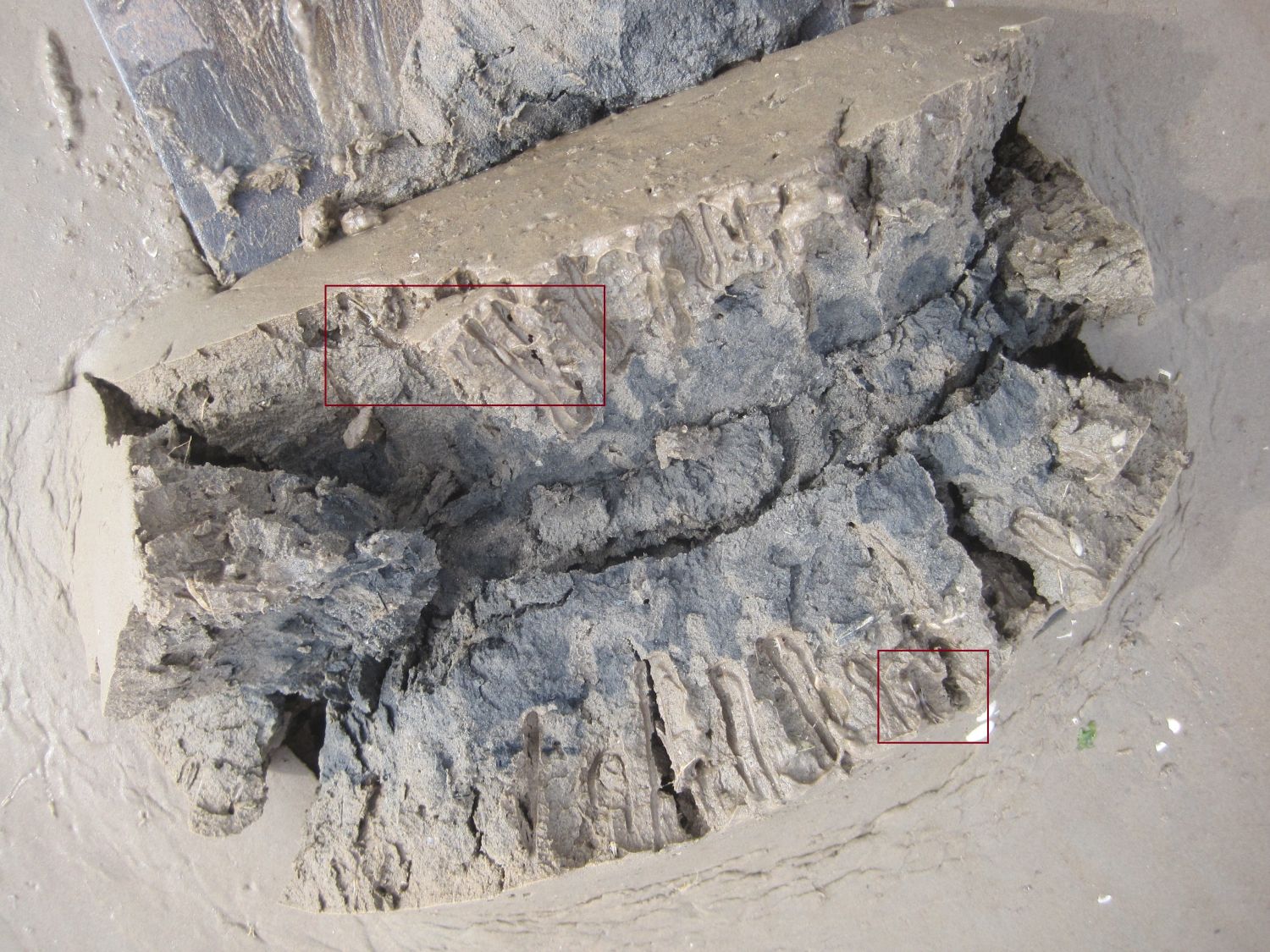
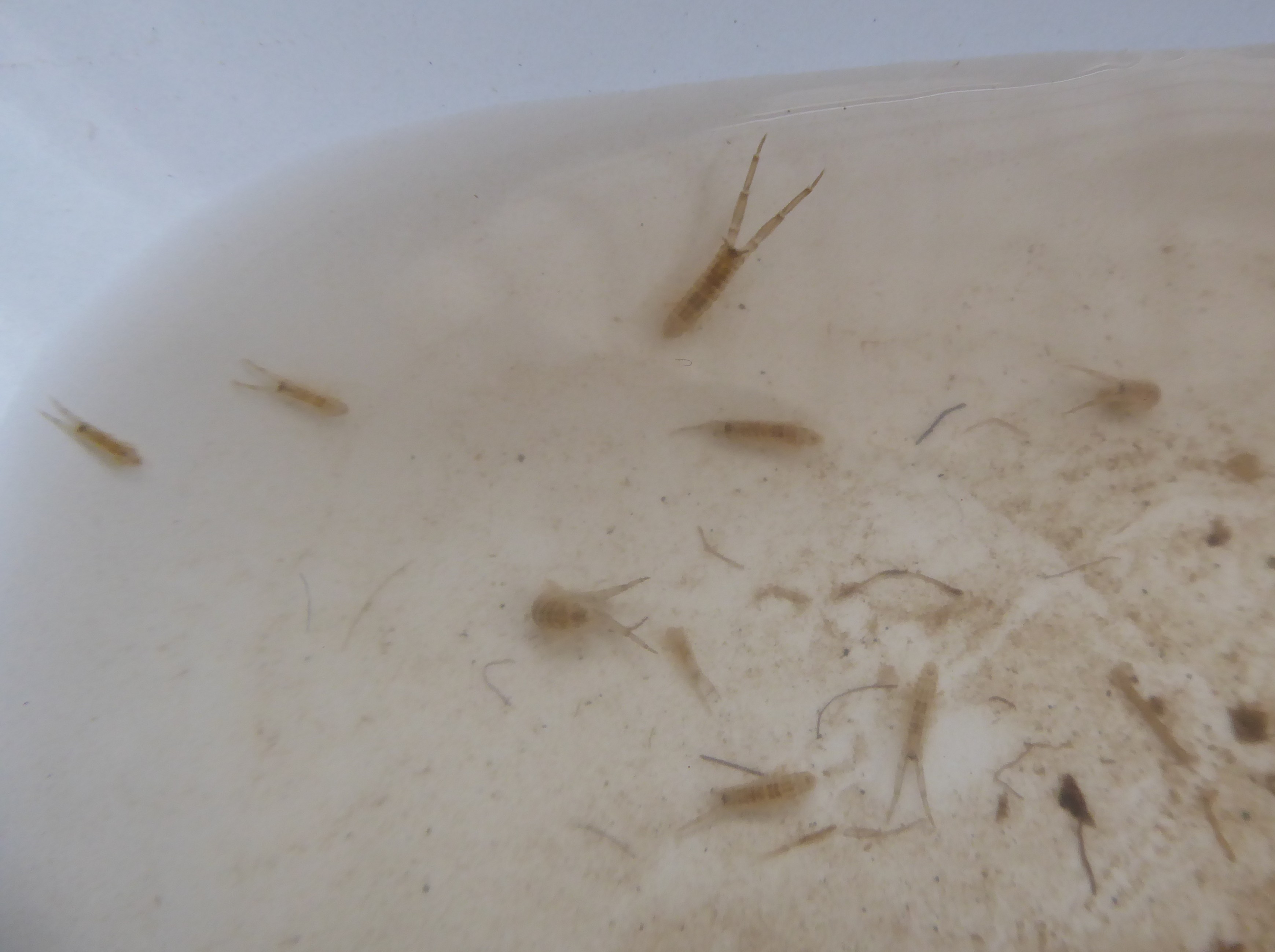
The shrimps are less than a centimetre long but have a characteristic pair of very long antennae, and by supporting their burrow walls with a fine ‘silk’-like material are important eco-engineers of saltmarshes and mudflats (as well as providing a bountiful food supply for wading birds).
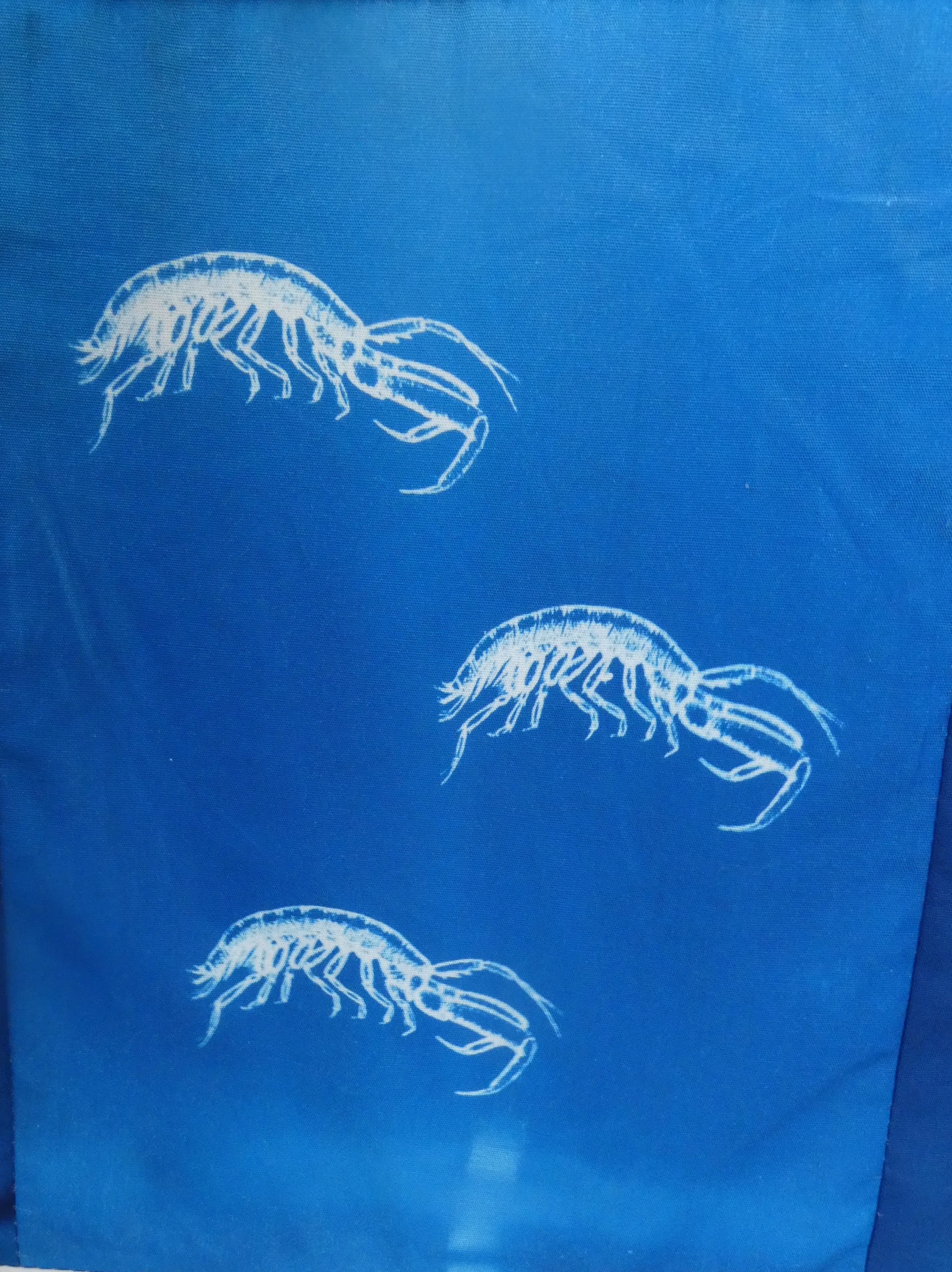
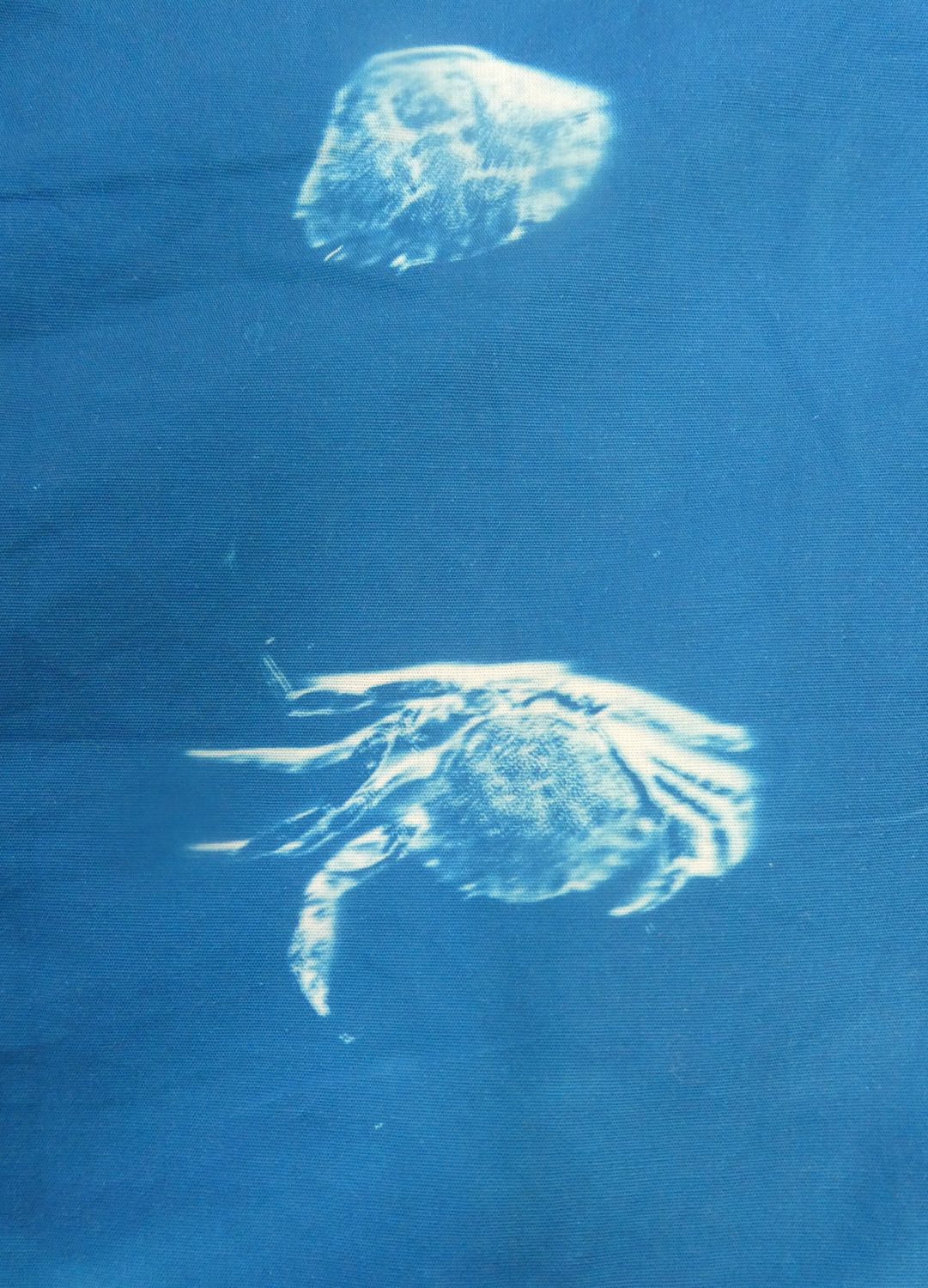
The cyanotype images were made from photographs rather than from live small animals. After photographing shrimps in a bowl of seawater, the images were converted to black and white, and edited to get good contrast before printing onto acetate sheets. First cyanotyping attempts on treated paper were too indistinct as too much sunlight passed through the black print. Kim Tillyer, talented artist and tutor in cyanotyping, suggested I should print two identical acetate sheets and staple them together – and this worked well, for both the mudshrimps and the crab skeletons.
3. Scurvy Grass and Orache
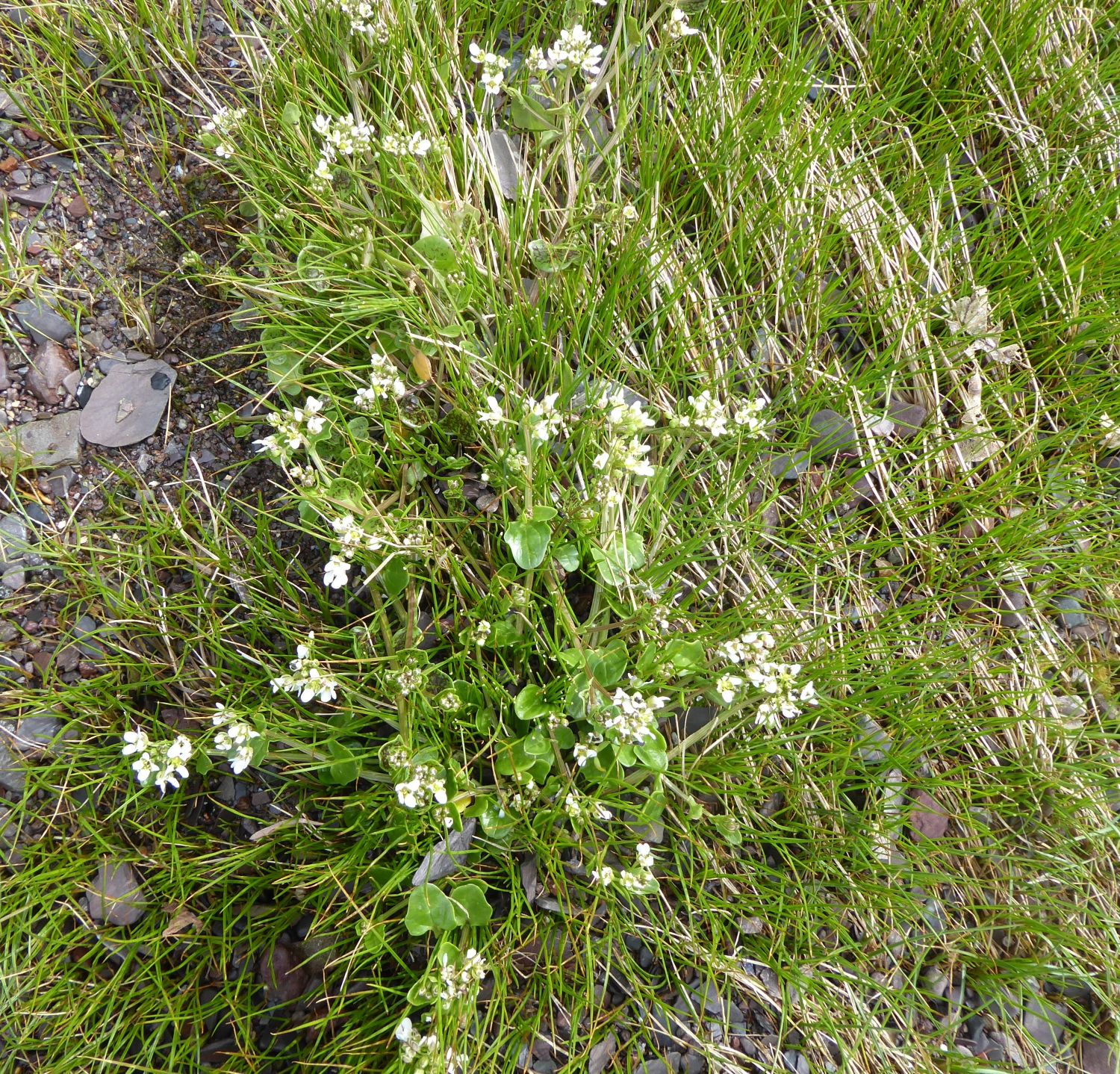
A plant predominantly of the middle tiers, its white flowers appear in summer. The leaves being rich in vitamin C, it was reputedly eaten by sailors to stave off scurvy. Cumberland poet Norman Nicholson noted, “It must have been nearly as unappetising as boiled cabbage.” The petals are delicate, and the plants were pressed and dried to make the cyanotypes.
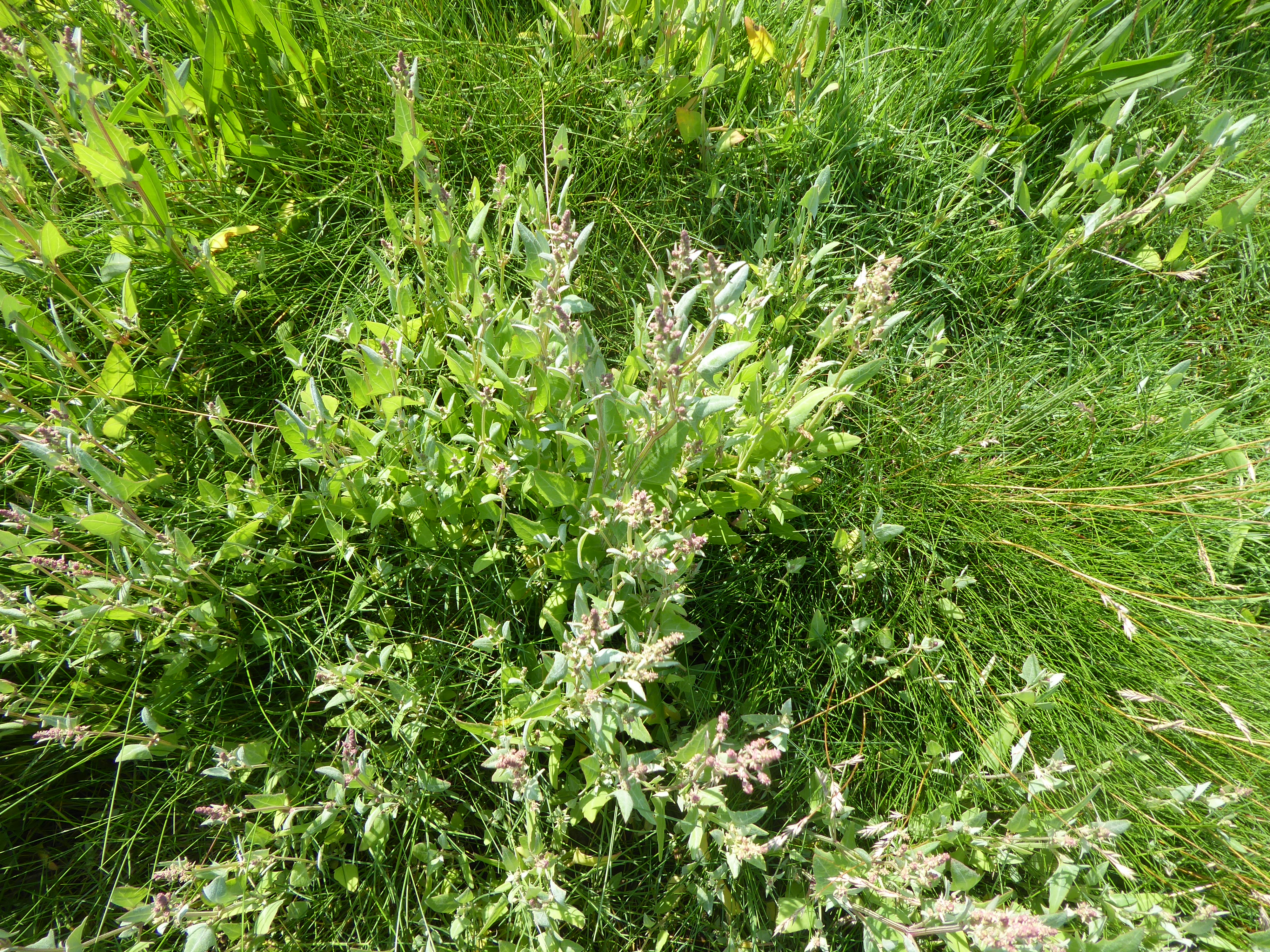
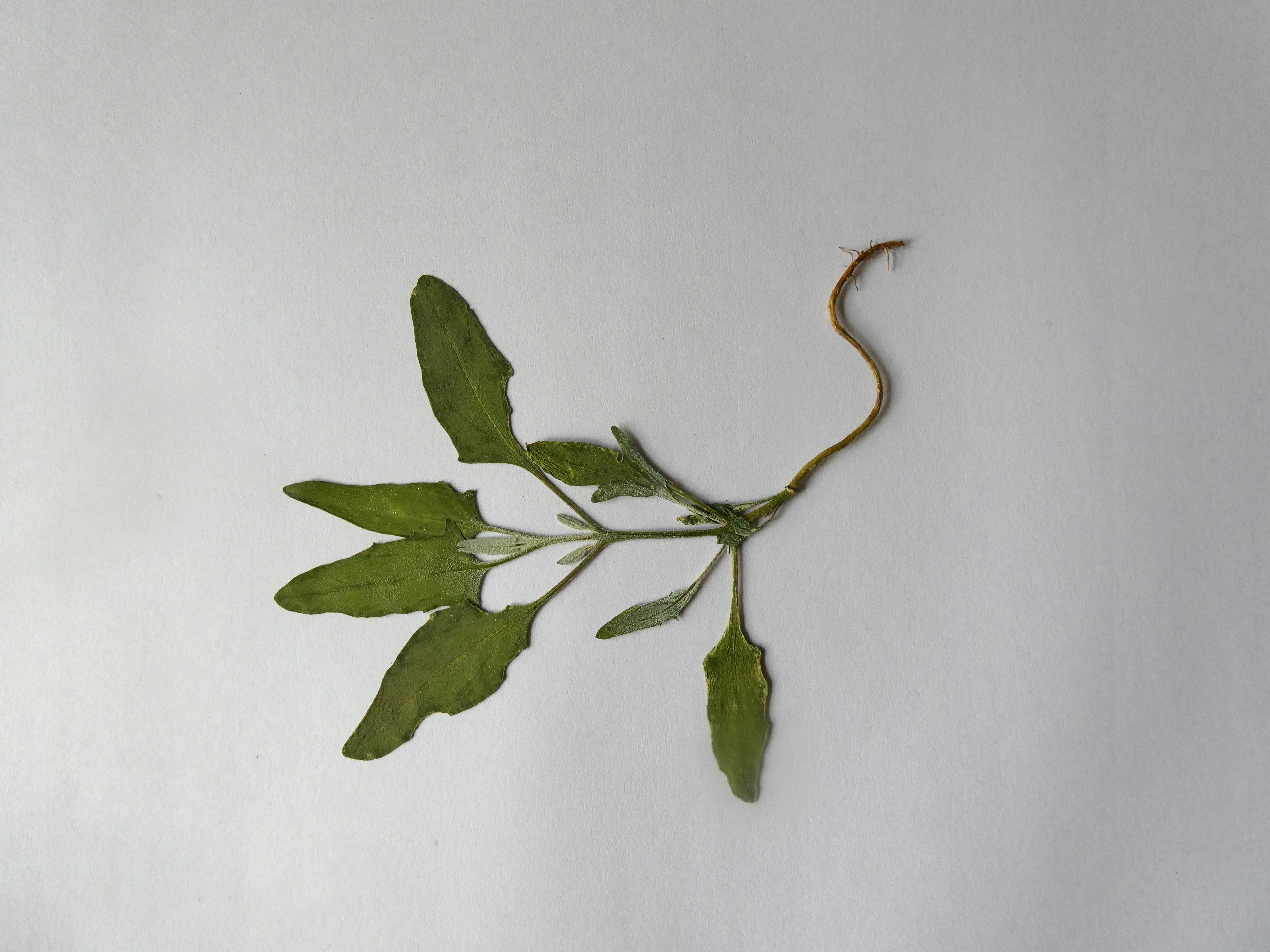
The flowers of Orache appear in the summer; the leaves of the young plant have a striking shape.
THE TIDELINES COLLECTION
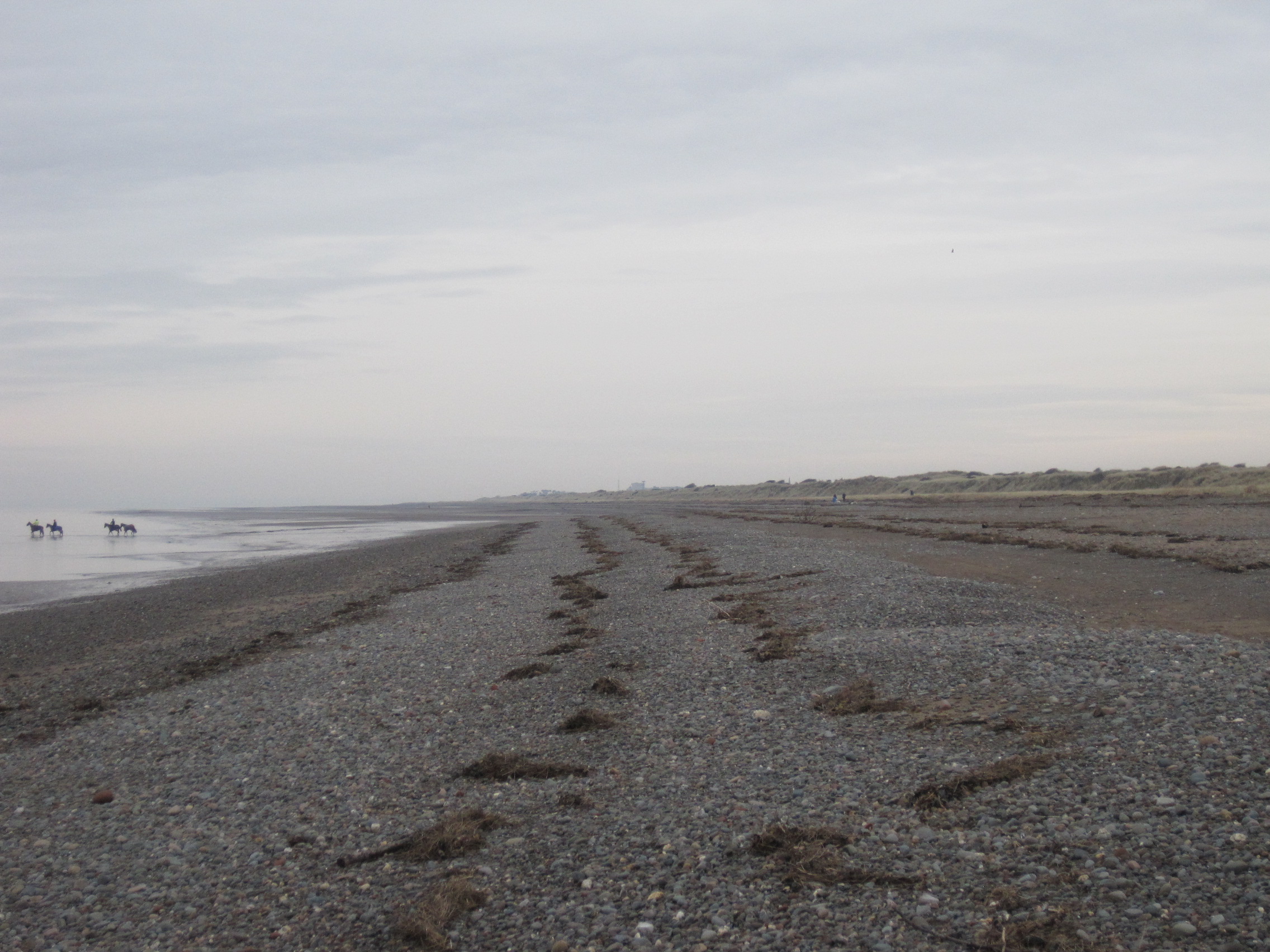
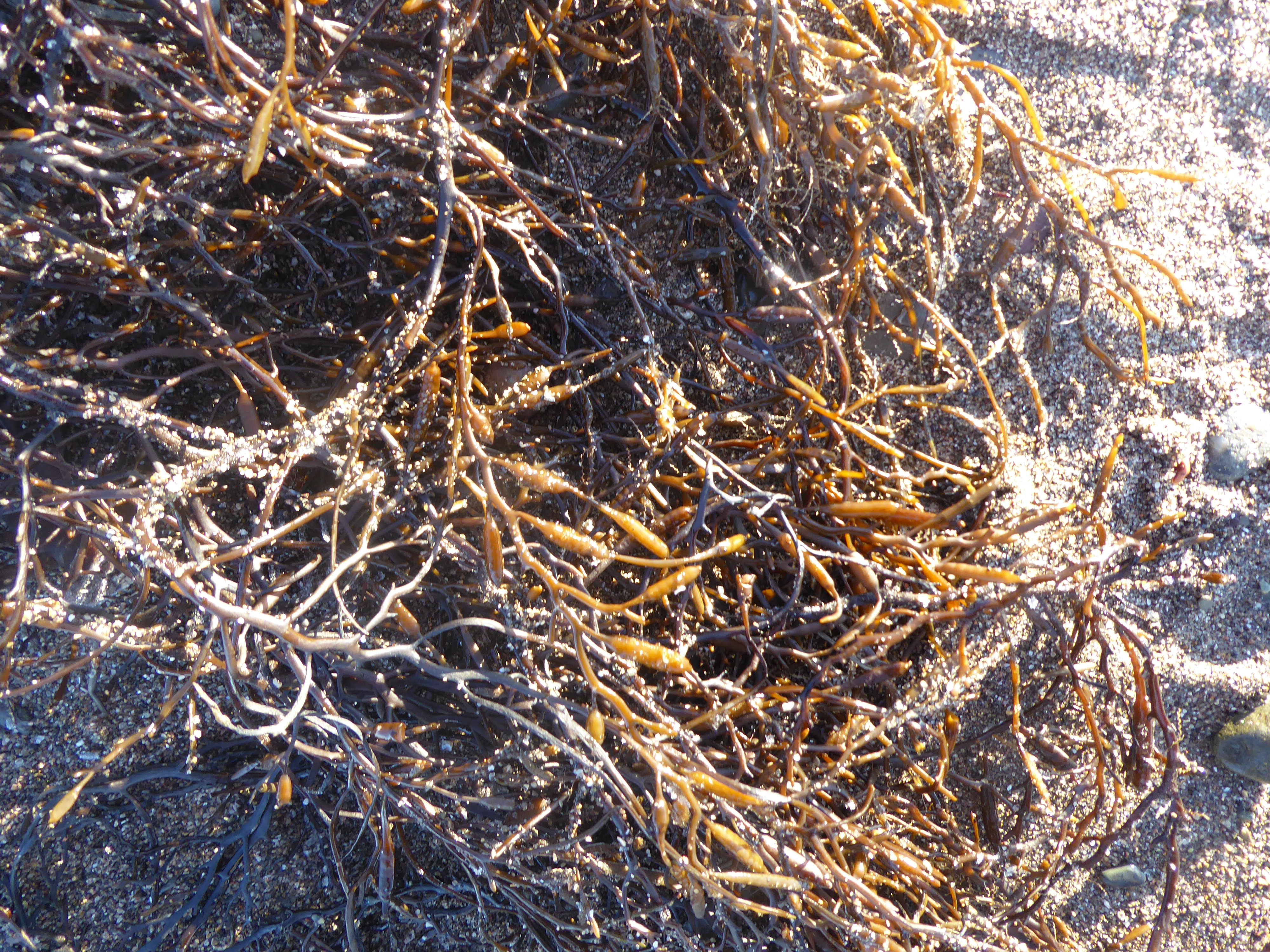
Every day the position of the tideline, which marks the line of high water, changes; day by day, week by week, depending on the season and the weather, objects found on the tideline vary. The waves sort the objects by size and shape, and according to the currents that swirl along the shore. After walking the tidelines many times, you can begin to guess where feathers will accumulate, or mermaids’ purses, or the skeletons of heart urchins, or tangled piles of wrack underneath which sandhoppers leap in panic.
1. Mermaids’ purses
The rectangular egg cases of Catsharks, a type of dogfish, are fixed to subtidal seaweeds by coiled tendrils – a marvel, since the fish don’t have dextrous fingers. Egg-cases containing live embryos are often held in tanks at the aquarium in Maryport, backlit to show their squirming, developing occupants.
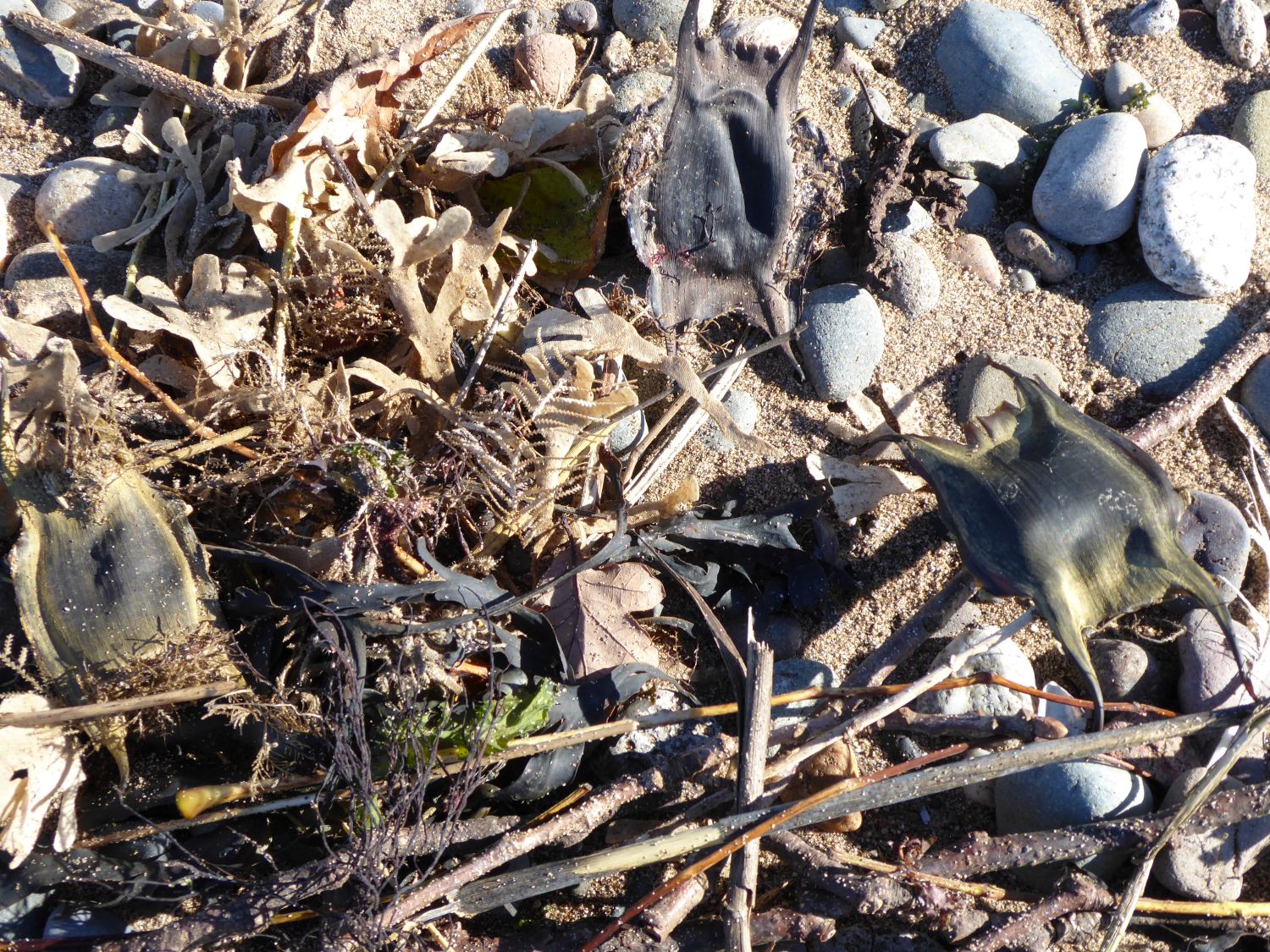
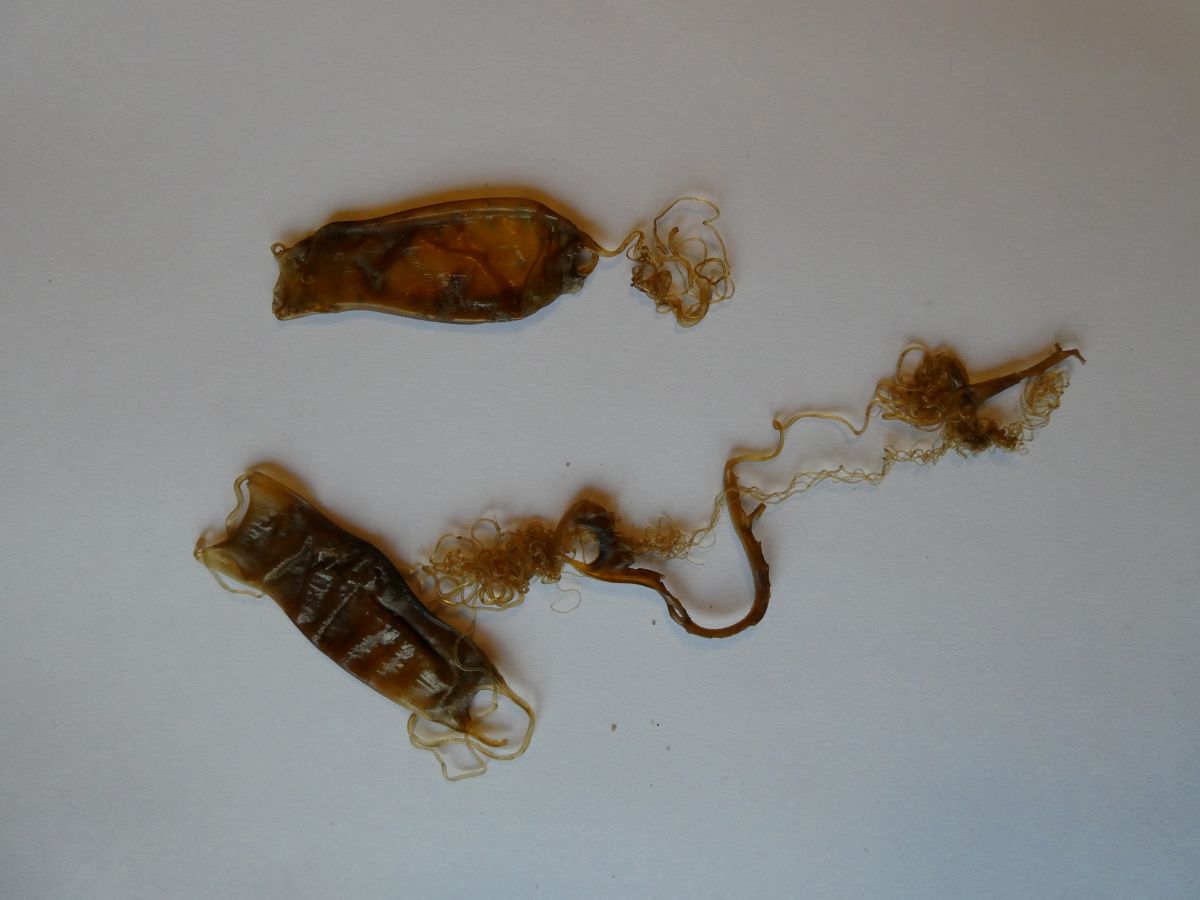
The square black egg cases with pointed corners are from Thornback Rays, a fish which is locally very common. I once made the mistake of trying to return a stranded ray to the sea, and my hands were badly lacerated – the clue should have been in the name. (Googling ‘are the sharp scales of thornback rays poisonous?’ was, fortunately, reassuring.)
The cast-up empty egg-cases are thick and stiff. I found the best way to cyanotype them was first to soak them in warm water to soften them, and then to puncture and press them so that they dried flat.
2.Colonial animals that look like plants – Hydrozoa and Bryozoa
At first glance their branching shapes might suggest they are plants – or more accurately given this is on the shore, macroalgae (seaweeds) – but the Hydrozoan Sertularia and the Bryozoan Flustra are colonies of microscopic animals. Look more closely, with a magnifying glass or microscope, and each branch is seen to be made up of tiny cups or chambers. In life, each one of these receptacles was home to a single tiny animal that fed by reaching out its slender tentacles and trapping particles from the surrounding water; the ‘fronds’ are colonies of identical individuals. They feed in the same way as the majority of aquatic animals that are sedentary, fixed in one place (barnacles and mussels are other examples) – by ‘filter feeding’.
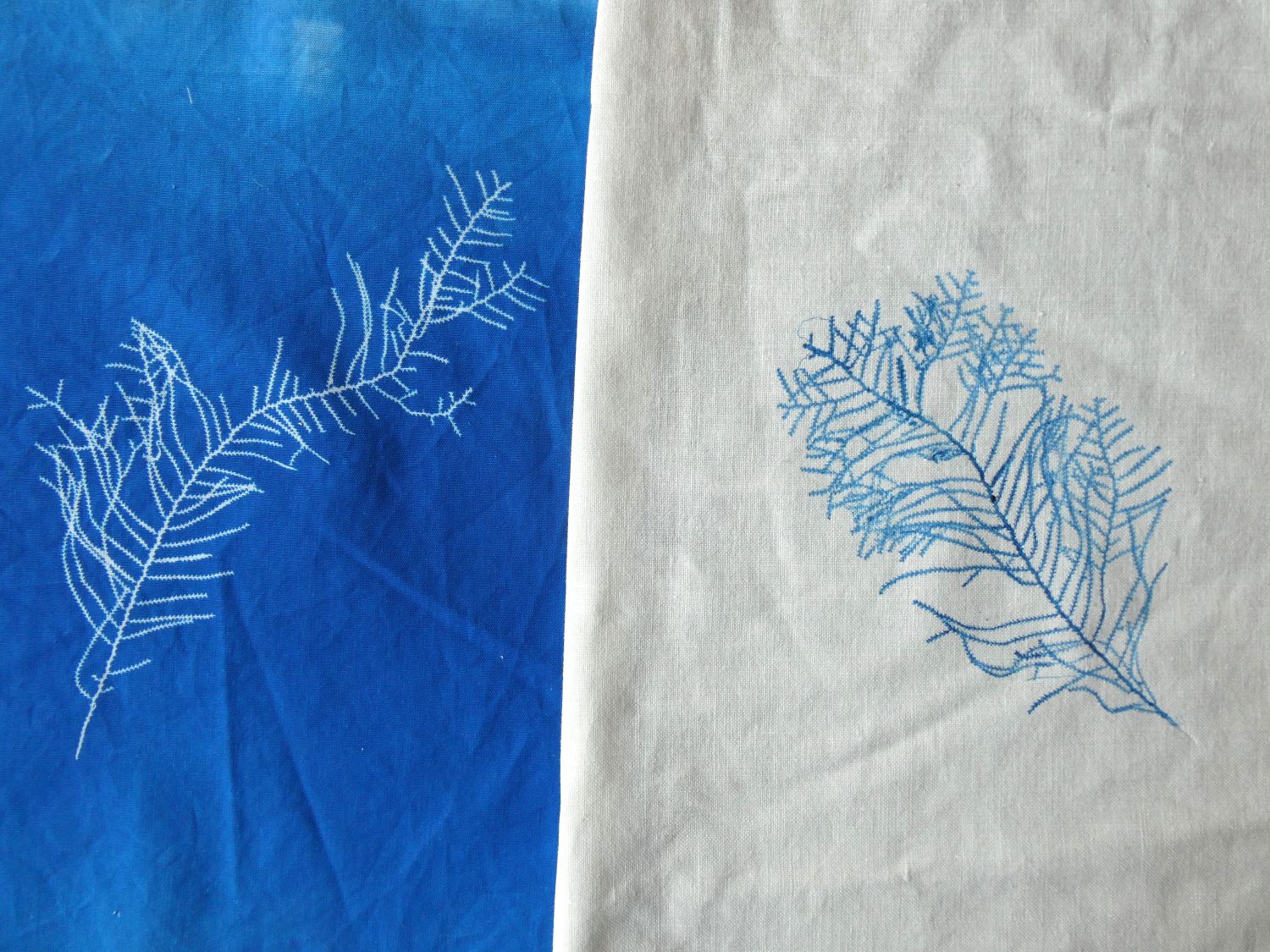
Hydrozoans are related to sea-anemones and when alive the Sertularia are often found attached to seaweeds like the broad fronds of oarweed; their dead skeletons are occasionally found tangled in the tidelines. The Hornwrack, Flustra, doesn’t live in the intertidal zone but the colonies are found growing below the low tide mark – it’s easy to find large numbers of their pale dead fronds piled up along the tidelines.
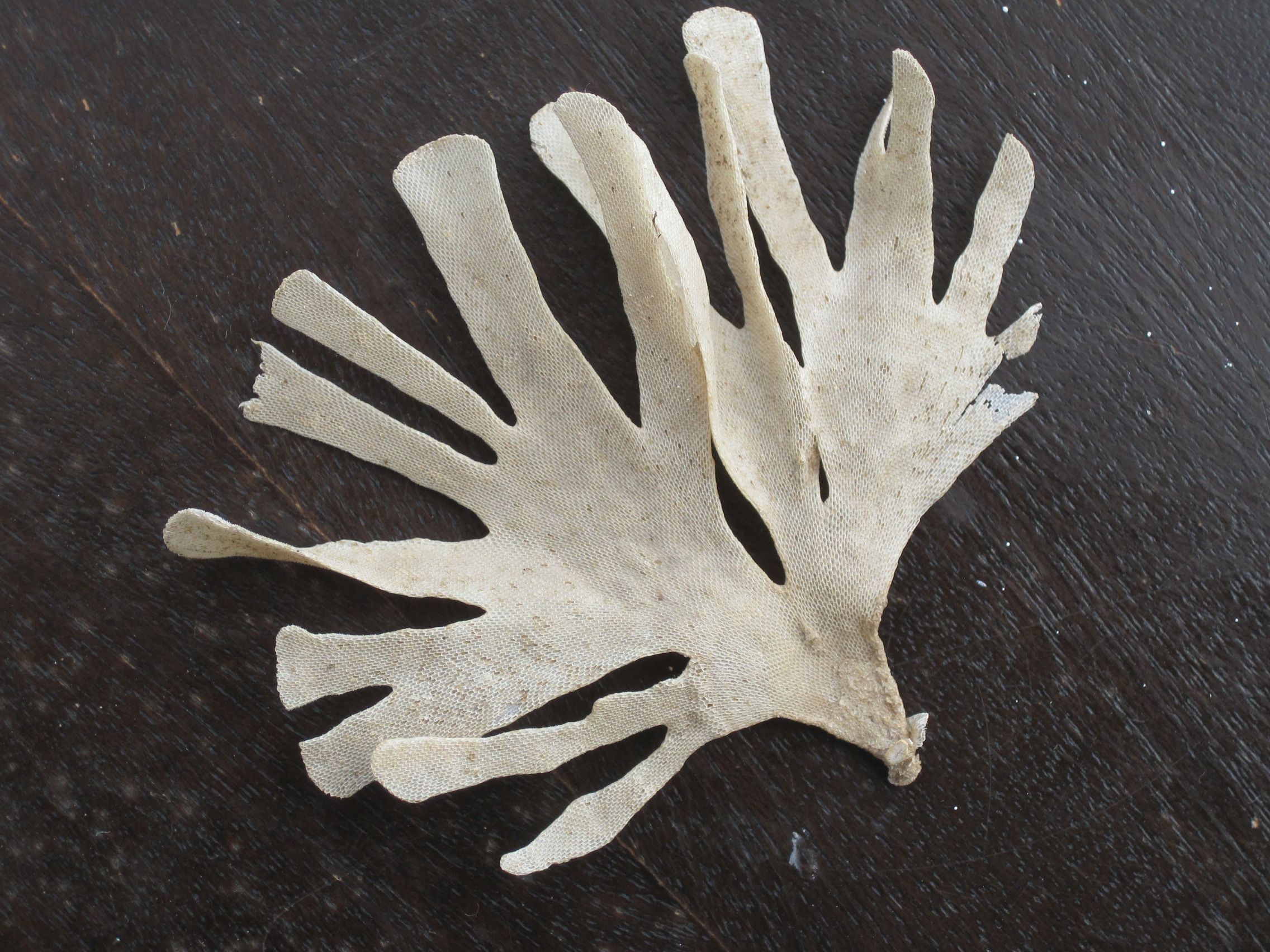
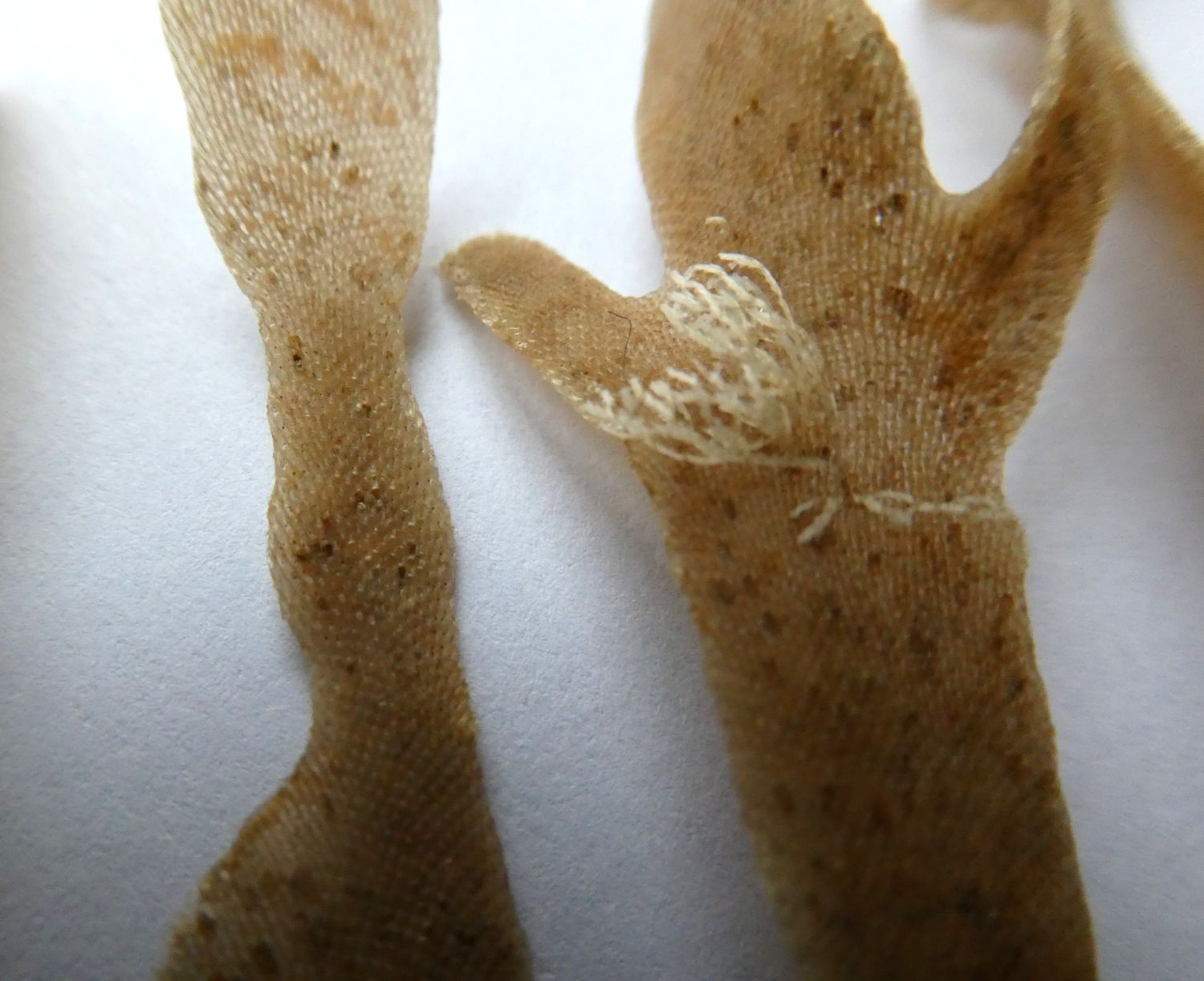
3. Sargassum – wireweed, sargasso weed. A macroalgal invader! It has long willowy fronds with finely-detailed branches that are decorated with tiny bubble-like sacs. These pneumatocysts contain air and ensure that the fronds float. I used occasionally to find wireweed jumbled amongst other debris in the tideline – but this year I also found it flourishing in rock pools on Parton beach. Originally found in large masses floating in the mid-Atlantic Sargasso Sea, it grows quickly, and is obviously now here to stay.
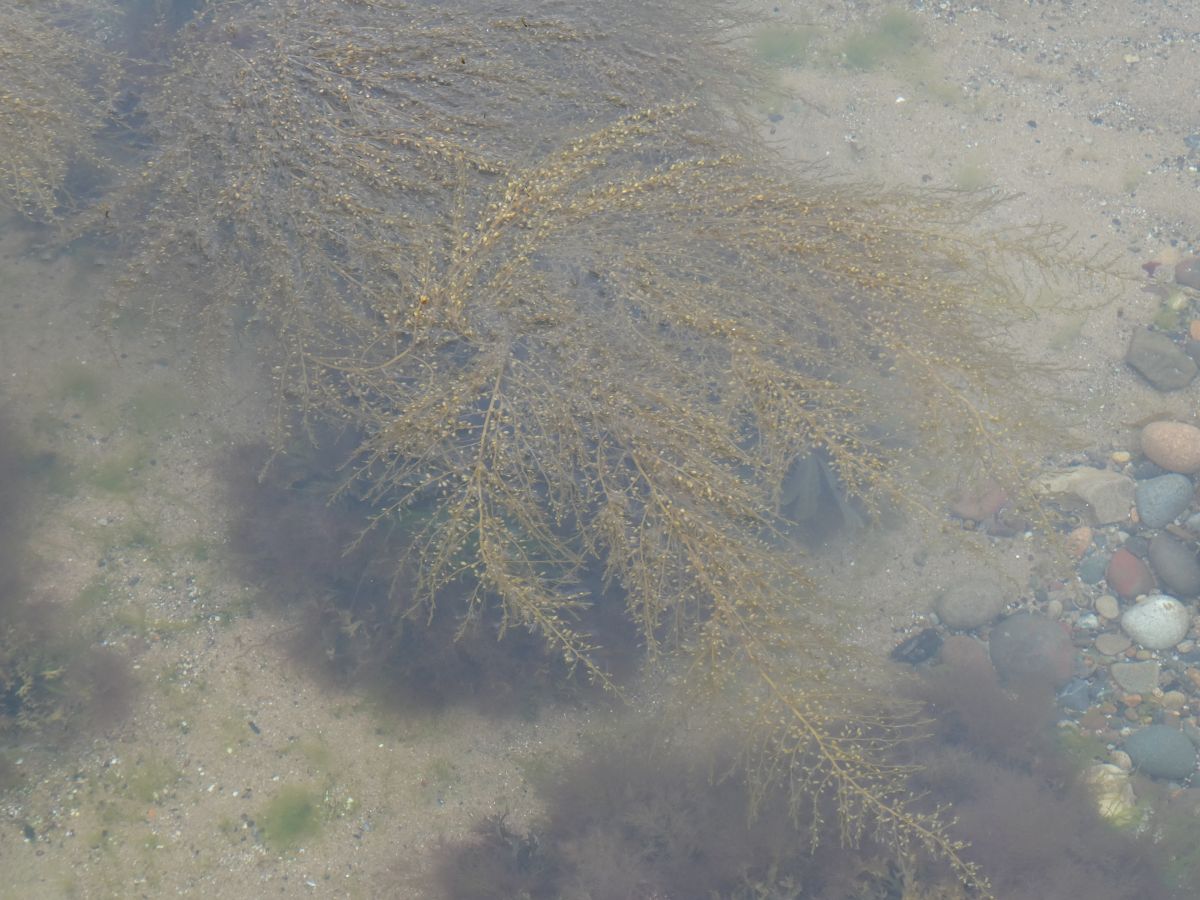
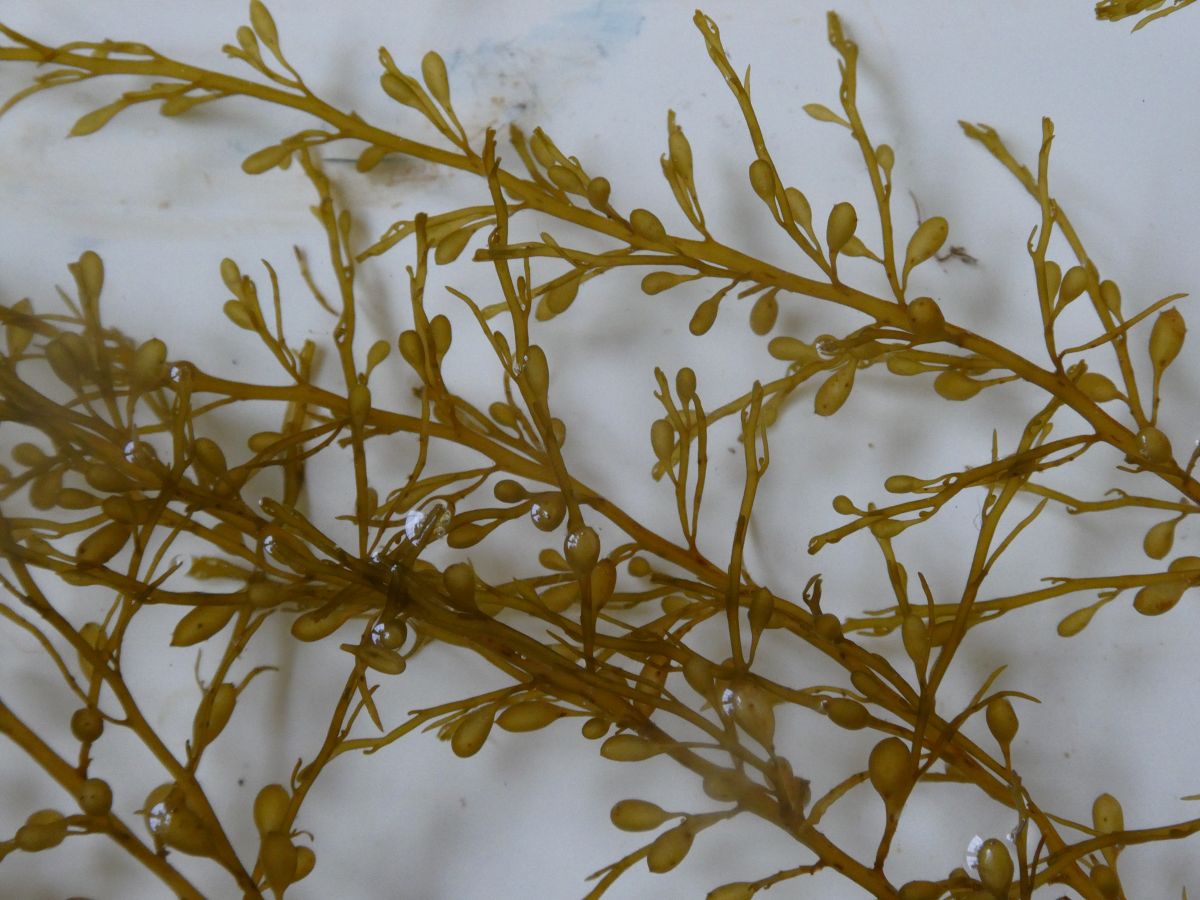
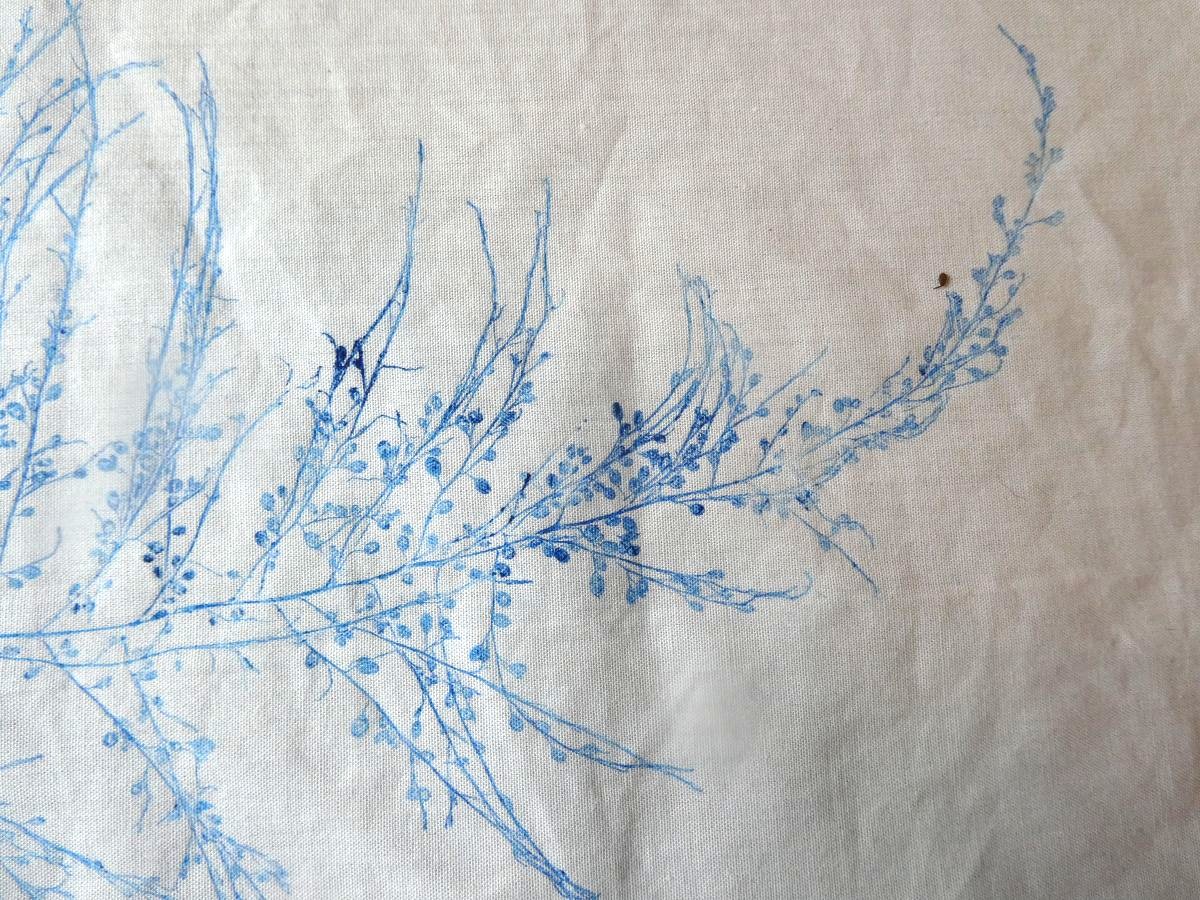
The delicate fronds are difficult to coat with sufficient pigment, so the collagraphed images in the border are rather pale.
4. Sea Oak, Halidrys
A brown macroalga, found cast up on the tideline here on the Solway. It grows in rock pools, although I haven’t found any growing at Allonby, and also subtidally – which is presumably where most of the tangled tideline specimens originate. I love the exquisite details on the elongated air bladders (receptacles) that are picked out especially clearly by the collagraph technique.
THE ROCK POOL COLLECTION
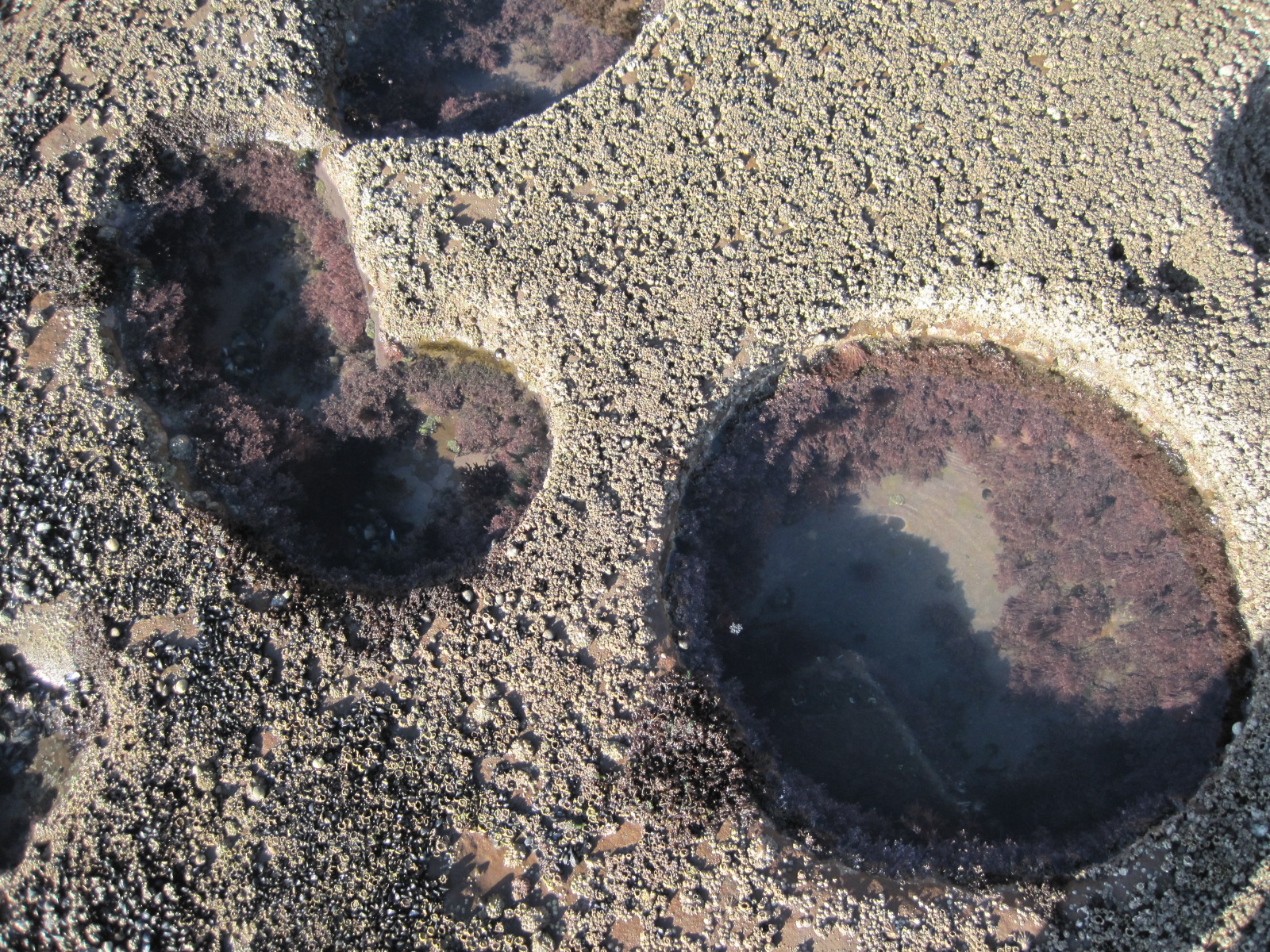
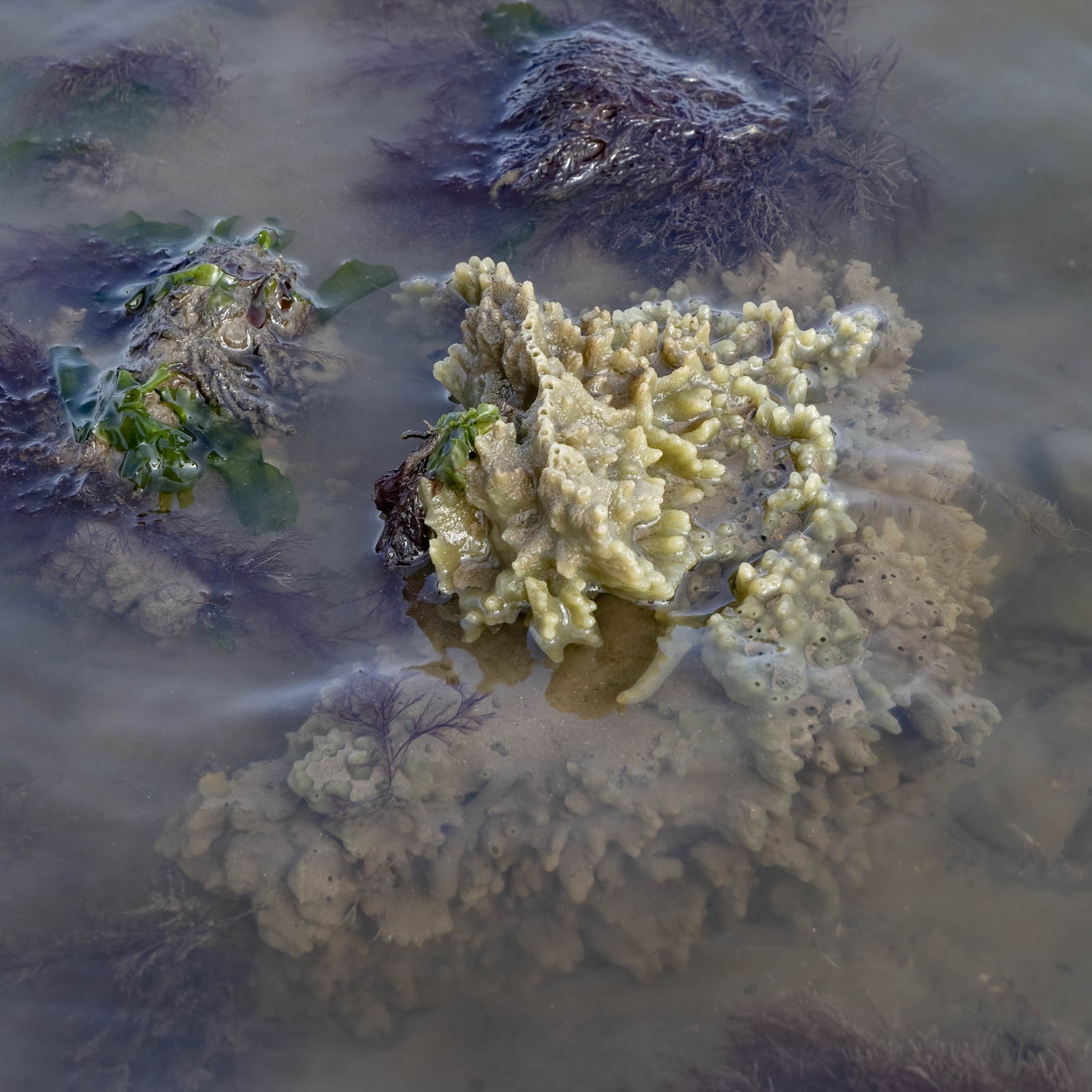
At the north end of Allonby Bay the pools are actually lagoons of water trapped within the honeycomb worm reef; ‘proper’ rock pools are at Parton, Maryport and St Bees. The range of species found, both algal and animal, is nothing like as diverse as, for example, on the south-west English coast around Plymouth – and, as explained below in the ‘techniques’ section, I have in any case limited myself to using sturdy algae that would print well. But you can see some of the other rock pool inhabitants in this gallery of hands – ‘Look!’ – holding out their found objects. And in a different blogpost, you can see some of the delicate green or red macroalgae, from the Solway and elsewhere, which have been floated onto card and dried.
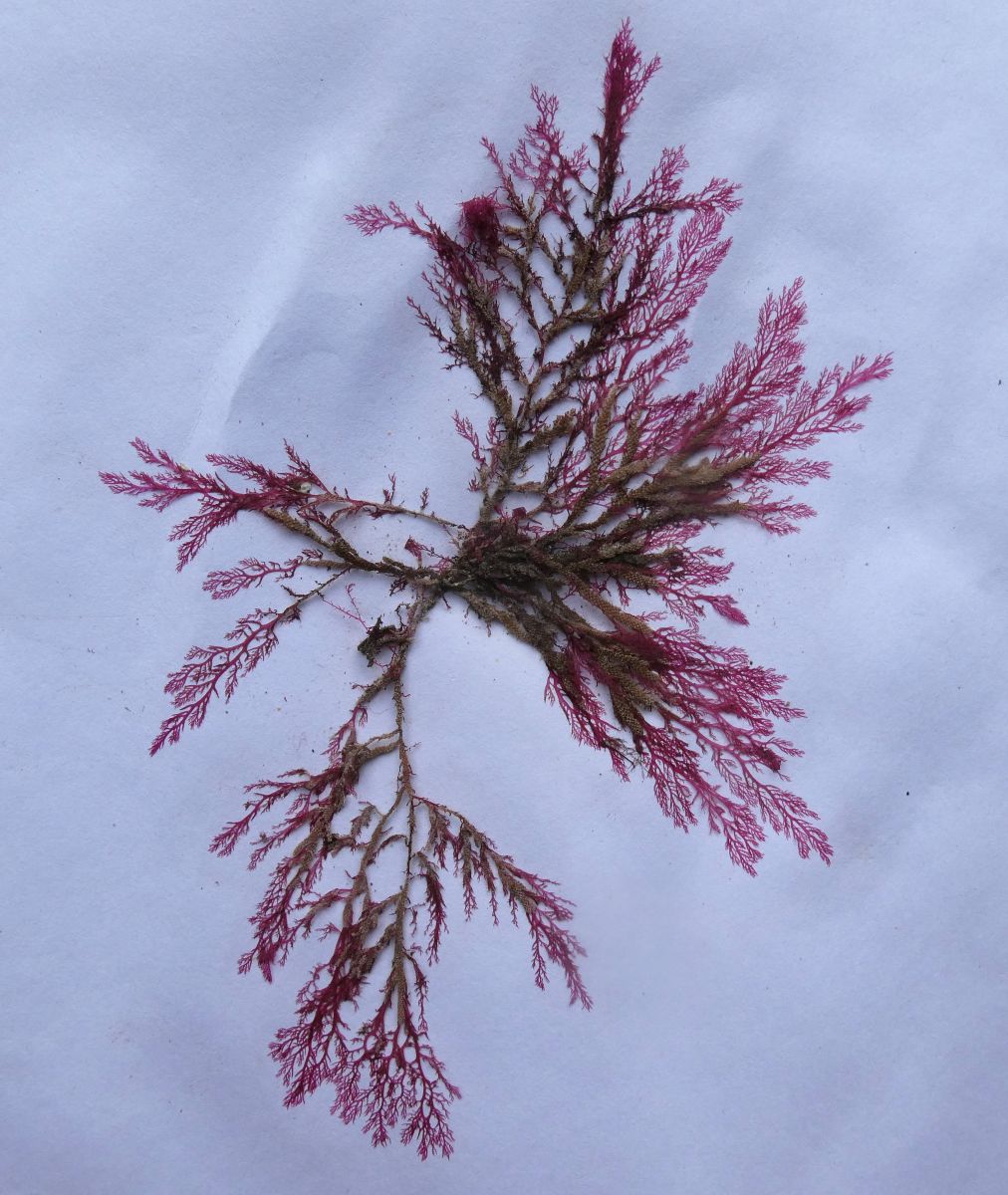
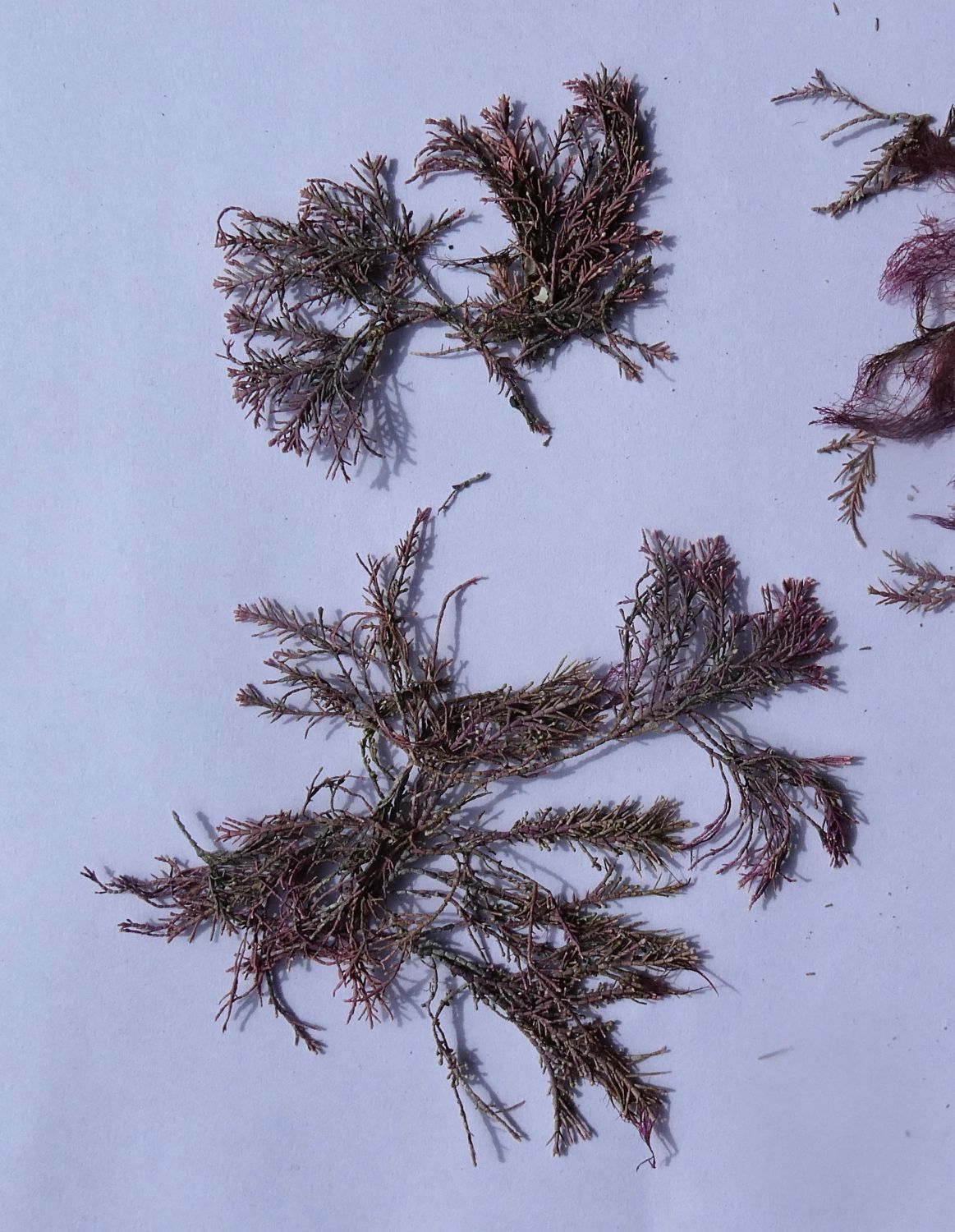
The outlines of the bushy macroalgae, Corallina and Heterosiphonia, appear rather similar in the cyanotypes – but Corallina is a tough little calcified seaweed, pale pink in colour, which lines the edges of pools (see the photo of the Fleswick Bay pool, above). Heterosiphonia is a feathery, branched red which appears dense and tangled out of the water.
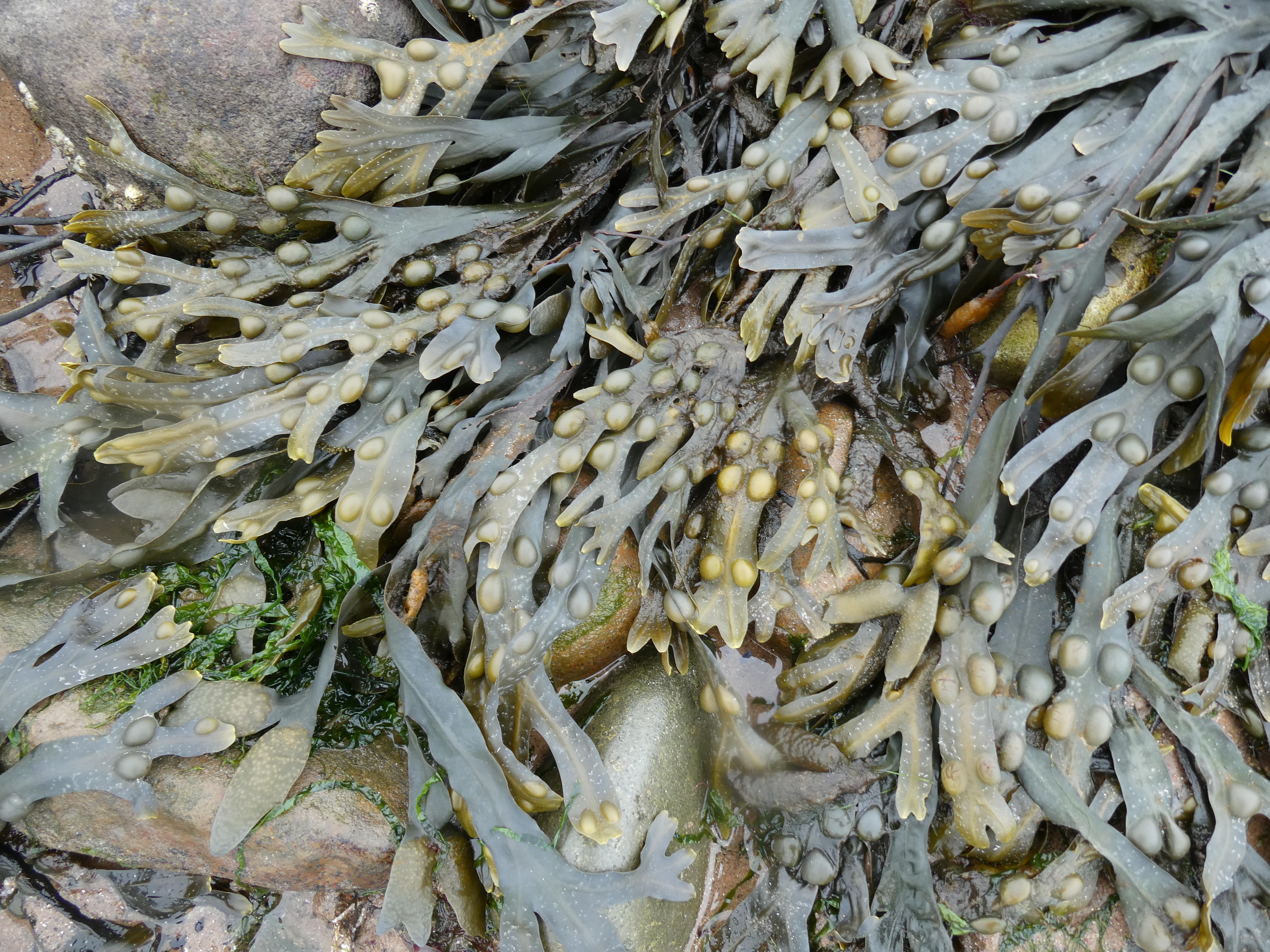

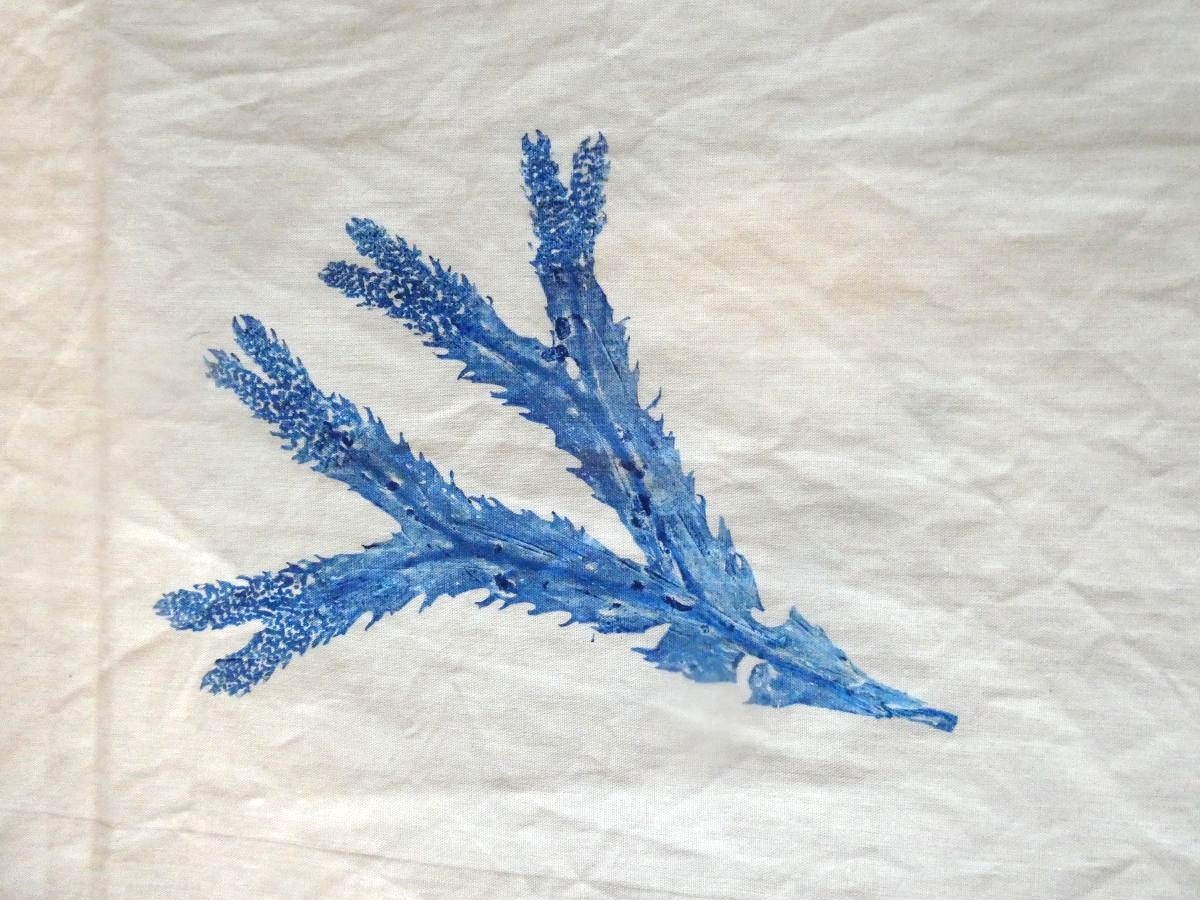
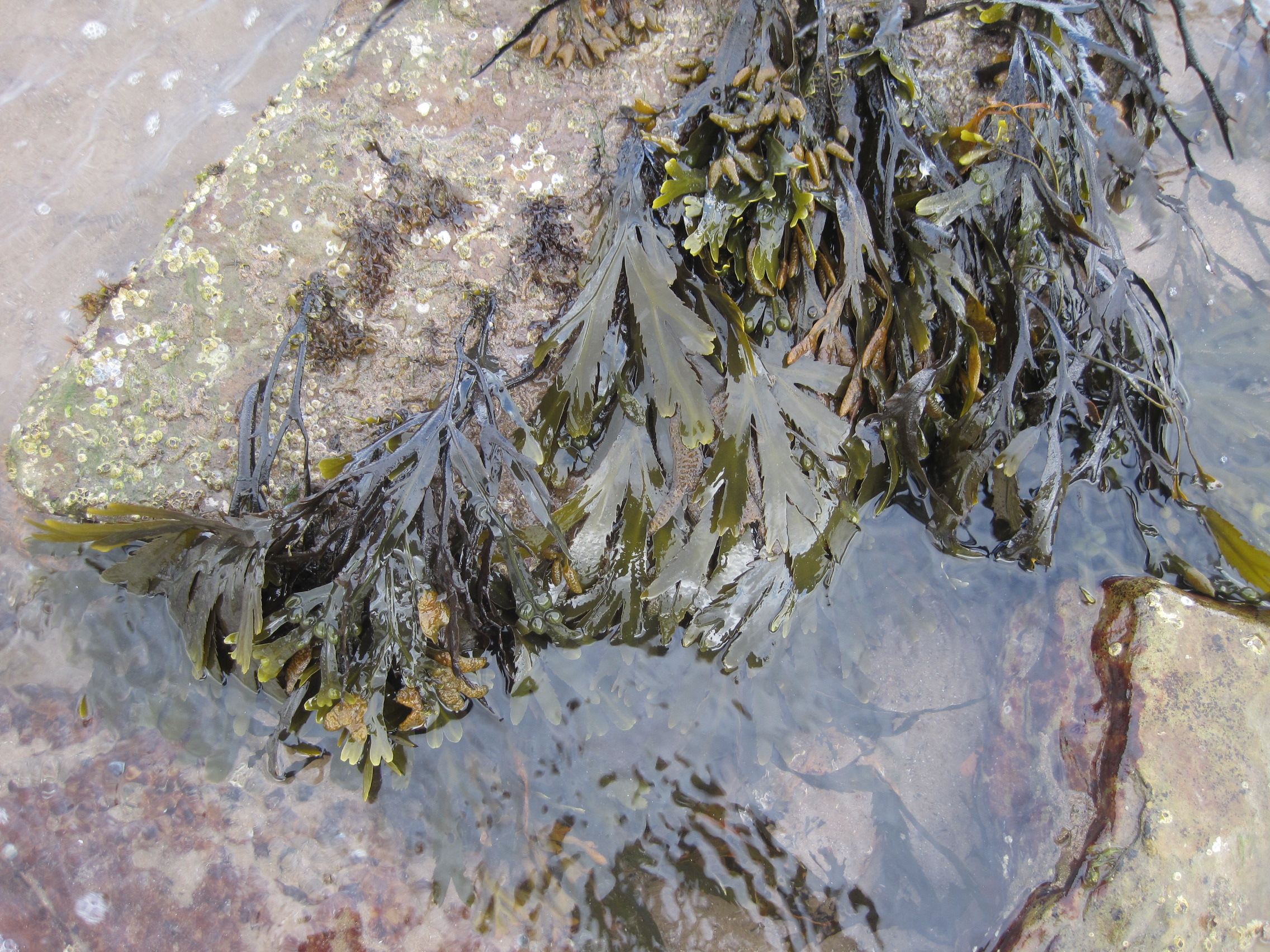
The Wracks – Bladder, Serrated, Spiral and Channel – each have their preferred zone on the intertidal shore. All are tough browns, able to withstand the pummelling and suction of the waves. Pelvetia, the Channel Wrack, can stand being exposed to the air for longest so lives at the top of the intertidal zone and has an attractive appearance. Bladder Wrack will probably be familiar to you due to its paired ‘bladders’ or vesicles which pop when you step on them. The Serrated Wrack has a dramatic saw-toothed outline, and the details of the reproductive structures at the tips of the fronds show up especially well in the collagraph.

TECHNIQUES
I’ve written about the history of cyanotyping and the excellent and very accurate images of seaweeds produced by Anna Atkins (how did she get such sharp edges with bulky specimens?) elsewhere in this blog, where I’ve also included details of the chemicals and the recipe. Since writing that article my technique has improved through practice and trial-and-error – and I’ve used various ‘hacks’ to help. The cyan blue background can be enhanced if required using the oxidising effect of hydrogen peroxide solution. H2O2 is no longer readily available because it can be used for making bombs. But it’s an ingredient of Sainsbury’s spray-on stain remover for dirty washing, and a couple of squirts into the water used for washing the cyanotype enhances the blue very effectively!
When the sun didn’t shine over NW Cumbria and I had the urge to play around with some Solway material, I exposed the treated cloth and specimens to the light of a 20W ultraviolet bulb in a box.
The cloth used for the cyanotypes is plain white cotton sheeting; off-white for the collagraphs.
I learnt basic collagraph techniques at an evening course run by Jack Tatham at Market Place Print Studio in Cockermouth where, later, I was able to use their Open Access Scheme to hire the use of the large and elegant press for the afternoon, and to benefit from Jack and Emma Baker’s advice and enthusiasm. The colour of the oil-based paint was Cyan Blue.


